Best Restaurants in Graz: Styrian Dishes and Where to Eat Them
Our picks for the best restaurants in Graz, from Styrian tapas at Der Steirer to Gösser Bräu, plus the dishes to order and how the addresses line up.
On this page
Graz is Austria's self-styled capital of culinary delight, and the strongest meals here are Styrian rather than generic Austrian: fried chicken under a dark crust, beef salad slicked with pumpkin seed oil, sour beef, and pork with sauerkraut and sharp mustard. This guide picks the places worth building a lunch or dinner around, explains the menu words that decide your order, and shows how the addresses sit against the Mur, the Schlossberg and the farmers' market.
Styria's larder does the heavy lifting: red runner beans, horseradish, apples, wild garlic in spring, cured and smoked ham, and pumpkin seed oil poured over everything from salads to vanilla ice cream. A Graz kitchen that sources regionally will taste different from a Vienna one, and the picks below are chosen for exactly that.
What Graz does well at the table
Austria's second-largest city, roughly 200 kilometers southwest of Vienna, holds the Genuss Hauptstadt title — capital of culinary delight — and has done since 2008. The claim is not marketing noise: the farmers' market behind the opera house runs six mornings a week, and the city is compact enough that a market breakfast, a sit-down lunch and an afternoon sandwich stop can all fit one walking day.
Plan around two rhythms. The market and the lunch counters belong to midday, when office workers fill the inner city; the sit-down Styrian kitchens and the coffeehouse carry the evening. Graz is a university town, so the center stays busy late, but the restaurants below are about food rather than nightlife, and the wider set of city sights is mapped in our Things to Do in Graz guide.
How to read a Graz menu
Backhendl is Styrian fried chicken, coated in a crisp, dark-gold crumb and usually served with a lemon wedge and salad; it appears as a main and, at Gösser Bräu, as a salad topping. Käferbohne are red runner beans, sold dried in hessian sacks at the market and cooked into warm salads and stews; Kren is Styrian horseradish, grated fresh and sharp enough to cut through smoked ham.
Beef salad with pumpkin seed oil is the dish to order first if you want to understand the local register: cold sliced beef, onion, vinegar and a green-gold oil that tastes nutty rather than heavy. Sour beef, marinated and served cold with a sauce, is the other classic you will see on nearly every traditional menu.
Der Steirer on Belgiergasse: small plates, big range
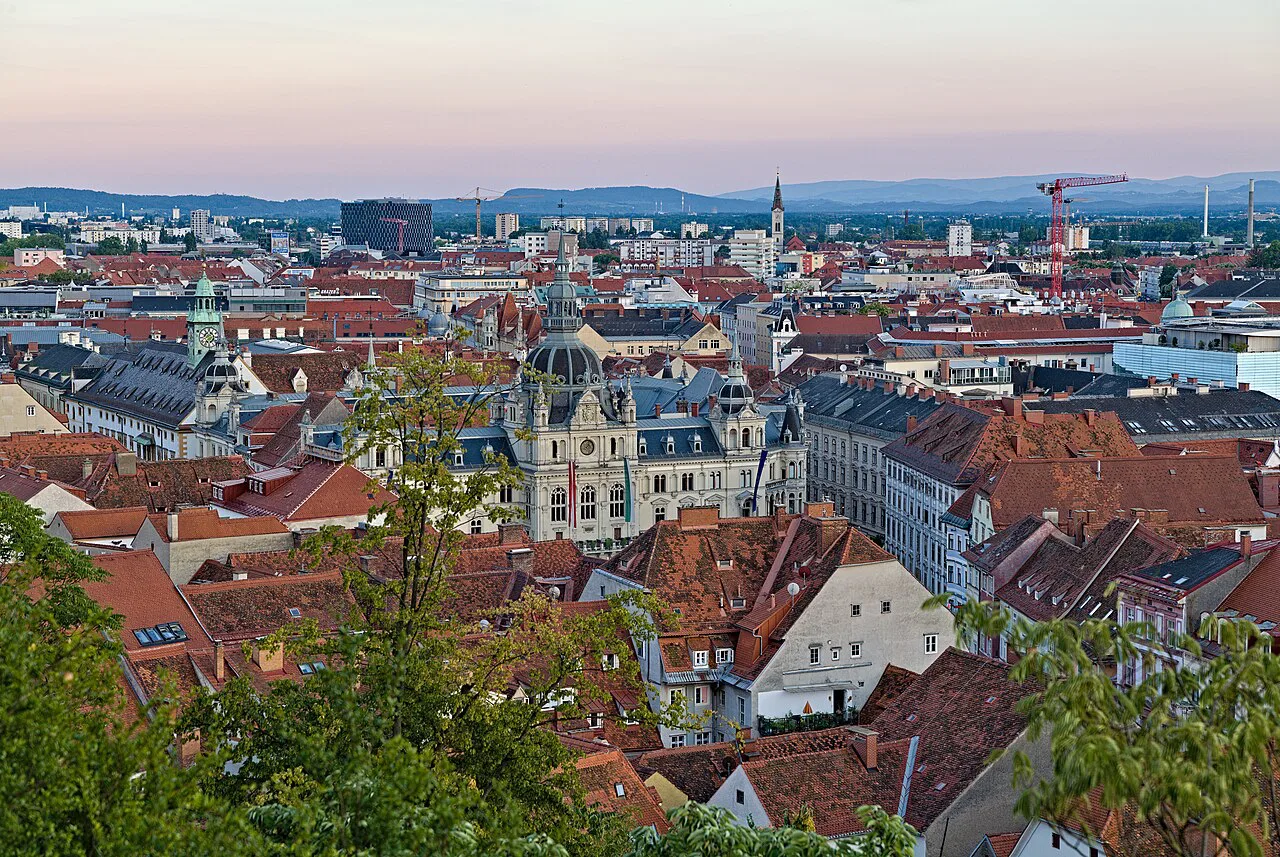
Der Steirer at Belgiergasse 1 serves Styrian cooking in a relaxed room with young waiters, and its smartest move is the Styrian tapas format: beef salad, paprika goulash and baked chicken salad arrive in miniature, so a first meal in Graz covers several dishes without committing to one. It is the pick when you want to taste the whole menu rather than order blind.
Belgiergasse sits in the old center, a short walk from the Mur river and the Kunsthaus, so it slots naturally into an afternoon on the west bank.
Gösser Bräu on Neutorgasse: beer-hall comfort
Gösser Bräu at Neutorgasse 48 has been serving Austrian cooking in a rustic room for more than 120 years, and the menu reads exactly as a Graz beer hall should: fried chicken salad with pumpkin seed oil, sour beef, and a pasta specialty with cabbage, with beer alongside. It is the most straightforward place on this list for a plate of plain cooking in a wood-paneled room.
Altsteirische Schmankerlstube on Sackstraße: reserve first
Altsteirische Schmankerlstube at Sackstraße 10 delivers the old-Styria interior people picture: dark wood, white table runners, dimmed lighting, and a menu of good plain cooking and regional specialties. Sackstraße runs through the old town below the Schlossberg, so it pairs with the clock tower and the lanes around the Hauptplatz.
The room is small and popular, so a table is not guaranteed on arrival; calling ahead is the sensible move for a weekend dinner. Treat it as the cozy, slower meal of the trip rather than a quick stop between sights.
Laufke on Elisabethstraße: a young kitchen
Laufke at Elisabethstraße 6 is the contemporary counterweight to the wood-paneled rooms: a young team cooking Styrian and authentic dishes with products from the region, in a setting that feels current rather than nostalgic. It suits travelers who want the same local ingredients handled with a lighter touch.
Senf und Söhne: a lunchtime butcher's plate
Senf und Söhne — Mustard and Sons — is a café-restaurant where the manager picks his cuts each morning, steeps them with herbs, onion and peppercorns, and slow-cooks through the morning before opening at lunchtime to Graz's office workers. The plate is a butcher's sampler: pork belly, beef brisket, ox tongue and a fatty sausage, with house sauerkraut, pickles and mustard.
This is a midday address, not an evening one, and the cooking is rich and unapologetically meat-led — order it when you want one substantial plate rather than several small ones. A crisp local Gösser lager is the traditional accompaniment, and you can read more about the brewery behind it in Gösser Beer: Austria's Göss Brewery, the Gösseum and the Beers.
Frankowitsch: the afternoon sandwich stop
Frankowitsch is the Graz institution for open sandwiches and delicately crafted cakes, eaten at outdoor tables with a long glass of Aperol spritz in hand. It is a grazing stop rather than a seated dinner, and an easy afternoon break while you watch the city stroll past.
The farmers' market behind the opera house
The farmers' market is the culinary lifeblood of the city, held in the square behind the opera house six mornings a week. Stalls carry hessian sacks of dried red runner beans, black and red beetroot, Styrian horseradish and many varieties of apple, alongside cottage-industry jams, cakes, pine syrup and fruit schnapps; two resident butchers sell rare-breed Weiz mountain lamb and cured and smoked ham.
At one corner of the market sits Schnabelweide, a café whose menu follows whatever is available that morning — Styrian fried chicken with a mahogany crust, scrambled egg, and similar market-driven plates. Arrive before the stalls thin out if you want the full choice.
What a meal costs and how to plan the day
Restaurant prices in Graz vary with the setting, so the posted menu at the door is the figure to trust in euros before you sit down. For a sense of how modest the market economy is, a stall pitch at the farmers' market rents for about 10 euros a day, which is why small producers can sell there at all.
Build the day around anchors rather than a strict schedule: market and lunch on one side of the Mur, the Schlossberg and old-town lanes on the other, with a coffee or cake stop between. The full set of city sights is mapped in our Things to Do in Graz guide if you want to slot meals against the Kunsthaus and the clock tower.
Which Graz table to book first
For a first visit, try Der Steirer for the small-format Styrian spread, then use Gösser Bräu or the Schmankerlstube for a plain-cooking dinner and Senf und Söhne or the market café for lunch. Reserve the Schmankerlstube ahead if you want the dark-wood room on a weekend.
Whatever you choose, order the beef salad with pumpkin seed oil once and the Backhendl once — they are the two dishes that explain why Graz calls itself Austria's capital of culinary delight. For the practical details, see the Graz Altstadt.
Explore more Graz guides
Frequently Asked Questions
What food is Graz known for?
Styrian cooking: Backhendl (fried chicken), beef salad with pumpkin seed oil, sour beef, red runner beans, Styrian horseradish and cured ham, plus the produce sold at the farmers' market behind the opera house.
Sources
Notes for your next Austrian town break
Optional updates when we add or revise town guides.
You might also like

Continue reading
More guides you'll find useful