Churches in Graz: Gothic to Baroque Picks and How to See Them
Graz's churches run from the hidden Stiegenkirche to the cathedral and Ferdinand II's mausoleum. Here is what to see inside each and how they fit a walk.
On this page
Four churches and one imperial mausoleum make the core of a Graz church walk, and all of them sit within a few minutes of each other in the old town. Start at Schloßbergplatz, work through the cathedral, the hidden Stiegenkirche and the Franciscan tower, and finish at Ferdinand II's mausoleum. This guide explains what each interior actually looks like, how the mausoleum fits a tower climb, and where the Monday and Sunday snags fall.
What Graz's churches offer in a single afternoon
Graz is unusual in how tightly it stacks its periods: a Gothic cathedral with baroque fittings, a stairway church first documented in the Middle Ages, and a Counter-Reformation mausoleum with turquoise domes are all inside the Innere Stadt. You can cross between them on foot rather than planning transport, which makes a church-focused afternoon realistic. The trade-off is that none of them is a blockbuster sight on the scale of a Melk or a Hohenwerfen, so the reward comes from looking closely at interiors rather than from spectacle.
Treat the sequence below as a walking logic, not a ranking. It runs from Schloßbergplatz into the old town and ends at the mausoleum, so you gain height at the finish rather than at the start. If you only have time for two stops, the cathedral and the mausoleum give you the widest contrast between Gothic structure and baroque show.
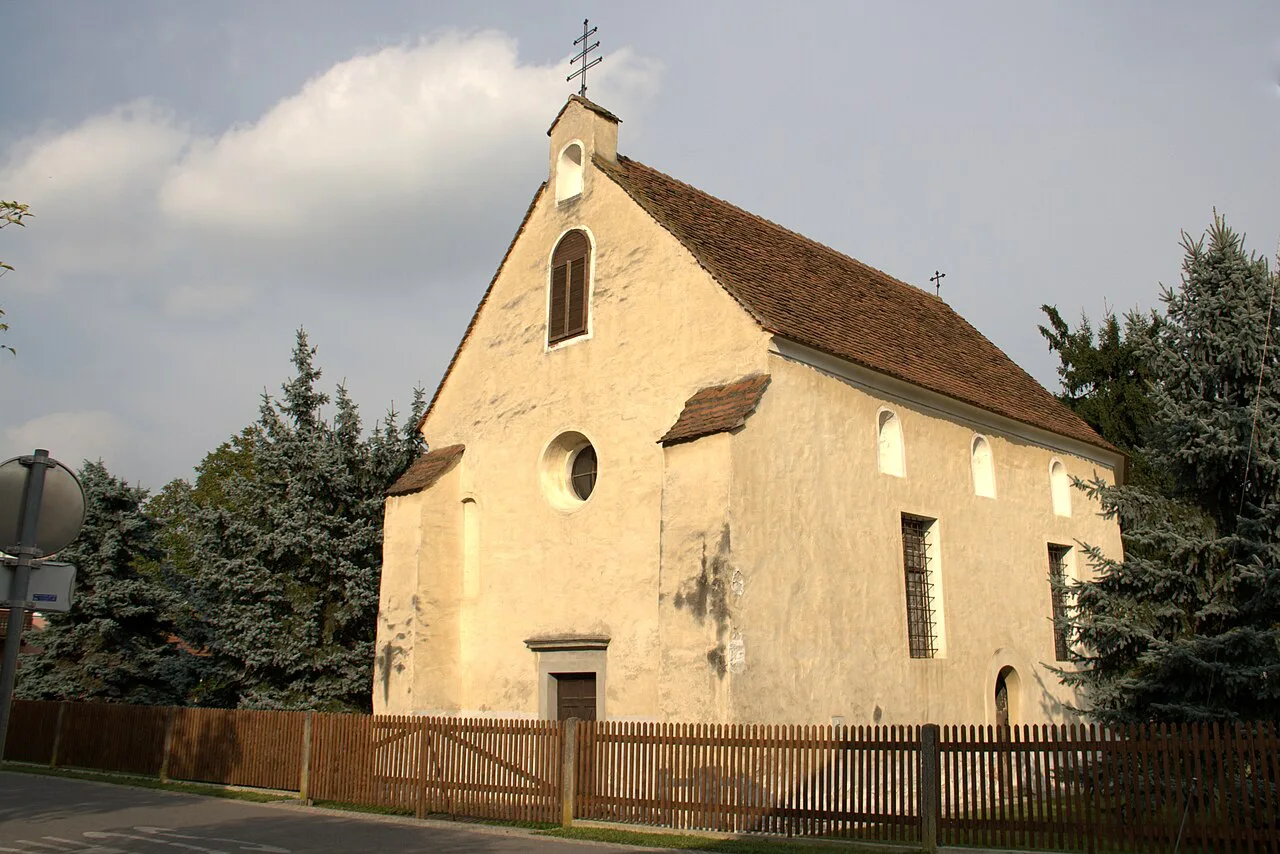
Graz Cathedral (Dom): plain outside, rich within
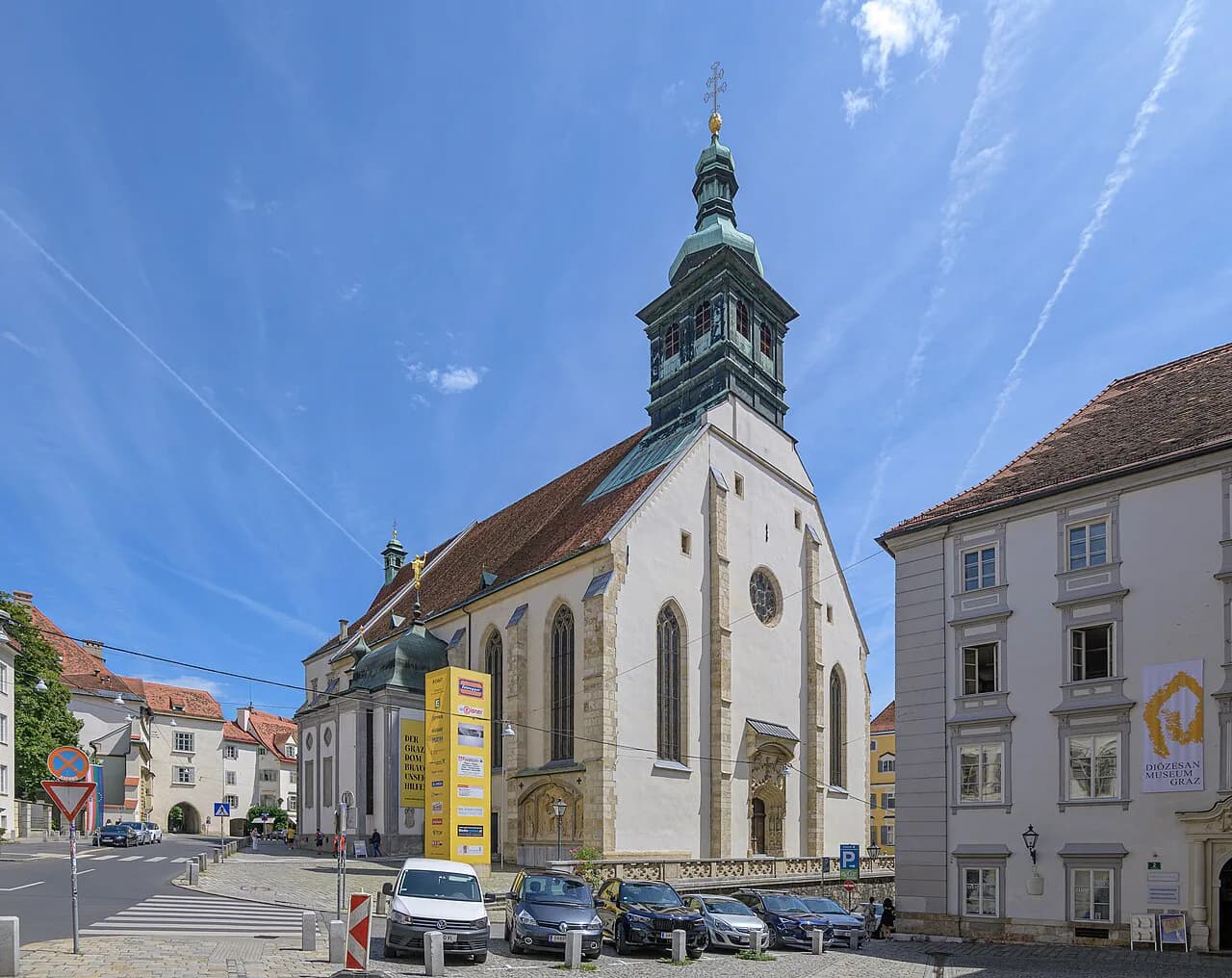
The cathedral is easy to walk past, because its exterior gives little away. Inside, the building reads as a Gothic structure fitted out in baroque style, which is exactly the pairing to look for as you move through the nave. Set aside twenty minutes or so to read the furnishings rather than hurrying through to the next stop.
The Dom sits at the center of the historic Altstadt, within the compact old-town core that the church walk covers on foot. Treat it as the anchor of the route and build the other stops around it rather than planning transport between them.
Stiegenkirche: the church behind the Sporgasse
The Stiegenkirche is reached by a staircase set back off the Sporgasse, which is why so many visitors pass the entrance without noticing it. It is first documented in 1343 and is described as the city's oldest parish church, a status that makes the modest approach all the more surprising.
Climb the steps and you trade the busiest shopping stretch of the old town for a quiet interior in under a minute. The detour is short, so the sensible move is to fold it into the Sporgasse walk rather than treating it as a separate stop.
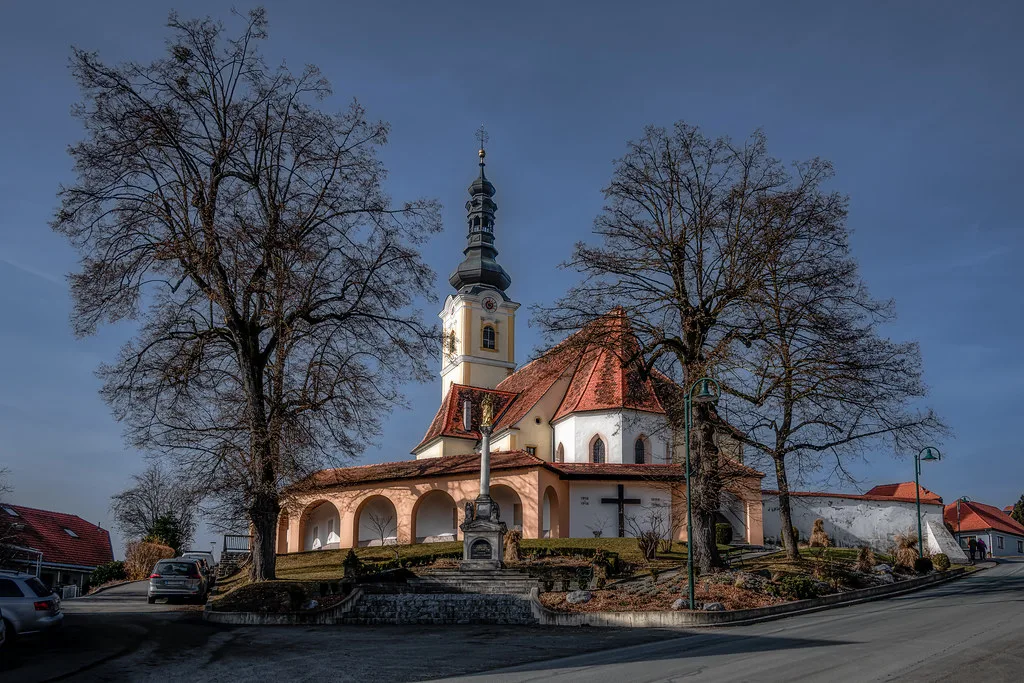
Franciscan Church and its tower
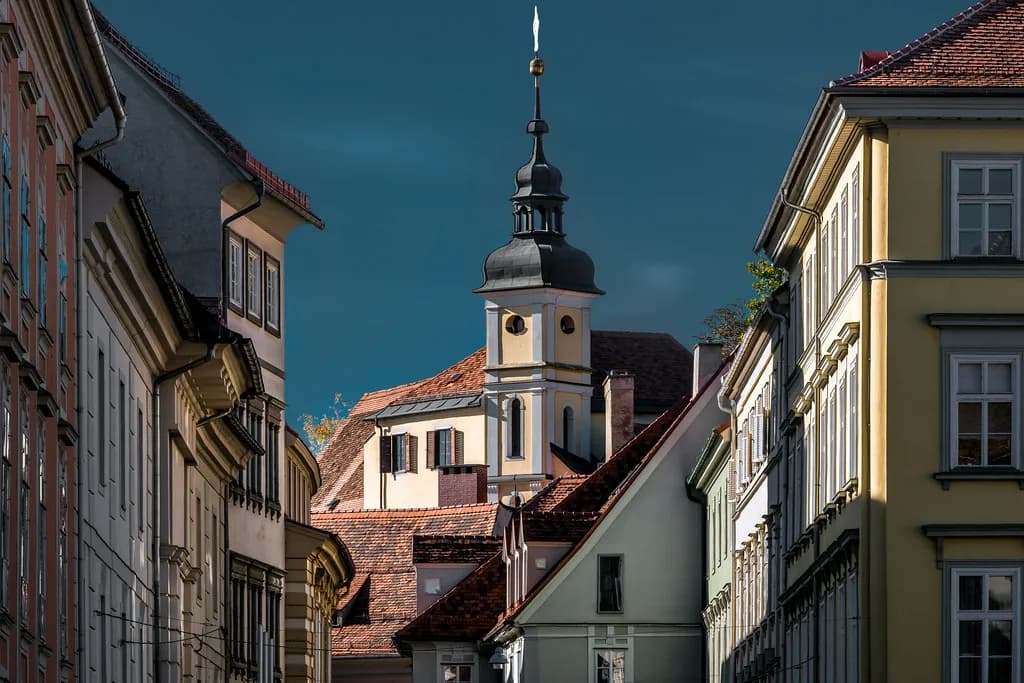
The Franciscan Church belongs to the oldest monastery complex in the city, and its high tower is one of the landmarks you will spot from several points in the old town. Step in for the interior, then use the tower as a wayfinding marker for the rest of your loop.
It sits close to the cathedral and the Sporgasse, so the three stops follow each other without a map. If you are working through a short list, pair the Franciscan interior with the cathedral and skip the rest rather than rushing all five.
Parish Church of the Holy Blood (Stadtpfarrkirche zum Heiligen Blut)
The Parish Church of the Holy Blood shows its history in layers: Gothic elements sit alongside baroque work and later modern additions, so the building changes character as you move through it. That mix is the reason to give it a proper look rather than a glance from the doorway.
It is the third church on the standard guided church route through the old town, and it sits comfortably between the Franciscan Church and the cathedral on foot. Read the interior from front to back with the periods in mind, and the modern interventions stop looking like accidents.
Mausoleum of Emperor Ferdinand II: domes, burial place and tower view
The Mausoleum of Emperor Ferdinand II is the visual payoff of the walk, with turquoise domes that stand out against the surrounding roofs. The operator's route describes an imperial place of rest inside, and the tower climb adds church bells and a rooftop panorama over the old town.
Book roughly an hour here, more than any single church on the route, because the tower is the part that takes time. One closure matters: the tour operator states that the mausoleum interior is closed on Mondays, so a Monday visit means seeing it from outside and hearing the history without going in. That single fact is the strongest argument for scheduling this walk on any other day of the week.
Other churches if you have more time
If the main loop leaves you wanting more, Leechkirche, Dreifaltigkeitskirche and Kirche Mariahilf appear among the next places to look up; each adds a further stop without pulling you far from the center. Work them in after the mausoleum or on a second pass through the old town rather than compressing everything into one afternoon.
Spreading the walk over two days also solves the timing problem, since a Monday only removes the mausoleum interior from the plan while the churches themselves stay available.
A walking route ordered by proximity
Begin at Schloßbergplatz, where the operator's tour meets in front of the Romanian Orthodox church, then take the Franciscan Church and its tower first, followed by the Parish Church of the Holy Blood, the cathedral, and the Stiegenkirche off the Sporgasse on your way back through the shopping streets. Finish uphill at the mausoleum for the tower view.
The order is set by geography rather than fame, which keeps backtracking to a minimum and means you can drop any stop without wrecking the route. Check the broader list of Things to Do in Graz before you lock the day in, so the churches fill the gaps rather than the whole schedule.
Practical trade-offs: masses, Mondays and guided tours
Sunday masses can limit how much of a church interior you can see, so plan a church-heavy morning for a weekday if the interiors matter to you. Monday is the sharper constraint: the operator reports the mausoleum interior is closed, and only the exterior and the tower story remain. Neither restriction applies across the board to every church on this list, so keep the two cases separate when you plan.
Guided church tours run about three hours and bundle visits to the Franciscan Church, the Parish Church of the Holy Blood, the cathedral and the mausoleum, with the tower entrance included in the product rather than sold separately. The operator notes that Sunday masses can limit the church visits and that the mausoleum is seen only from outside on Mondays, so confirm the price in euros with the operator before you commit.
Which Graz church walk should you take?
On any day but Monday, do the full loop from Schloßbergplatz and end with the mausoleum tower, because that is where the walk earns its payoff. On a Monday, the operator reports the mausoleum interior is closed, so keep to the churches and save that climb for another morning. The city's other churches and sights are easy to add once the core route is settled.
Explore more Graz guides
Frequently Asked Questions
Do I need tickets for Graz's churches?
The guided church tour bundles entry to its stops, including the Mausoleum of Emperor Ferdinand II tower, into the product rather than selling it separately. Going independently, treat the mausoleum as the one stop with a ticketed tower and check any admission requirement at the entrance.
Can I visit the mausoleum on a Monday?
The tour operator states the mausoleum interior is closed on Mondays. On a Monday tour the guide covers the history from outside, so the tower climb and the burial place require another day.
How much time do Graz's churches take?
The four churches plus the mausoleum fit into an afternoon, with about an hour reserved for the mausoleum and twenty minutes or so each for the cathedral and the parish church. A guided church tour covering the same stops takes about three hours.
What language is spoken in Graz?
German is the everyday language, and church names appear in German, so knowing the German forms of the church names helps you find them.
Sources
Notes for your next Austrian town break
Optional updates when we add or revise town guides.
You might also like
Continue reading
More guides you'll find useful