Graz Altstadt: A Walking Guide to the Old Town's Squares and Lanes
Walk Graz's Altstadt square by square: Hauptplatz, Herrengasse, Sporgasse, the Glockenspielplatz and the arcaded courtyards that make the old town distinct.
On this page
Graz's Altstadt is best walked as a loop of squares and lanes rather than a checklist, and half a day covers the core without rushing. The historic center is a UNESCO World Heritage site, and its draw is the combination of a medieval street plan with later Renaissance and baroque facades, so the pleasure lies in the sequence of streets and plazas rather than any single building. This guide lays out how the center connects on foot, which squares reward a detour, and where the walk naturally ends.
Individual sights and any guided tours are covered on their own pages, so check details with each operator before you set out. This guide handles the streets, squares and courtyards themselves.
What the Graz Altstadt is and where it begins and ends
The Altstadt is the historic core of Graz, the capital of Steiermark (Styria), and it holds UNESCO World Heritage status for its surviving ensemble of burgher houses, courtyards and squares. Its boundaries are practical rather than dramatic: the Schlossberg rises on one side, the Mur river runs along another, and the main shopping street, Herrengasse, cuts through the middle. Treat the ring of squares around Herrengasse as the heart and the river and hill as the edges.
For a wider view of the city beyond the old town, the broader list of things to do in Graz puts the center in context with the Schlossberg, museums and the Mur river.
What distinguishes this center from other Austrian old towns is the pairing of a Bavarian farmstead street layout with Italian Renaissance arcades, a combination described as unique in Graz tourism material. You see it in the courtyards tucked behind facades: the street line stays medieval while the buildings open into arcaded inner yards. Walking with that in mind changes what you notice, because the arcades are often a few steps off the lane rather than on it.
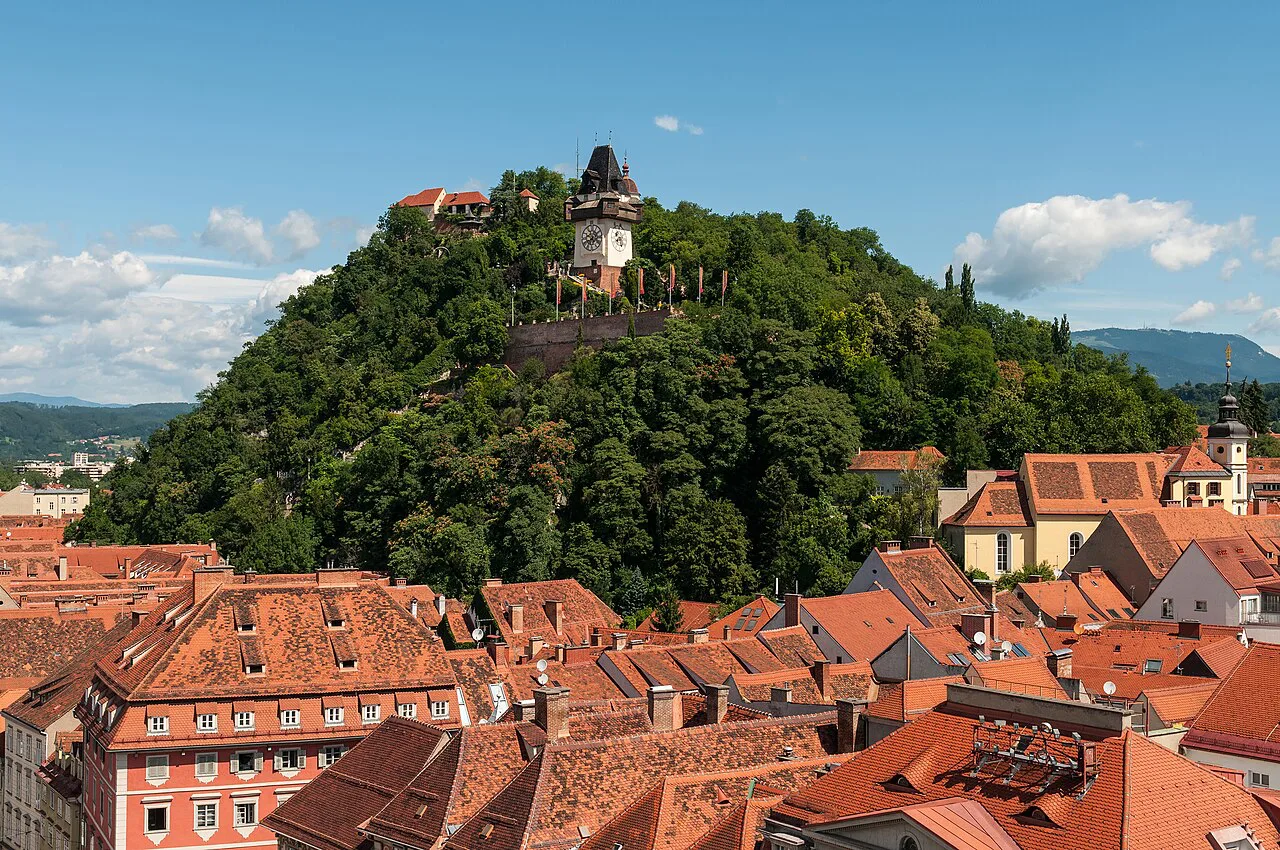
How the old town is laid out: Herrengasse, Sporgasse and the ring of squares
Think of the Altstadt as two long spines and a scatter of squares. Herrengasse is the central shopping street, lined with ornate burgher houses and the Landhaus, while Sporgasse is one of the oldest streets, with cobblestones, hidden inner courtyards and small shops. Around them sit the larger and smaller squares, from the Hauptplatz with the Rathaus to the Kapaunplatz, Franziskanerplatz, Färberplatz, Mehlplatz, Glockenspielplatz, Bischofplatz and Tummelplatz.
Some squares you will cross without planning to, such as the Hauptplatz and Jakominiplatz, while others appear only when you wander the side lanes. That is the argument for walking without a strict route: the small squares are the reward for taking the less obvious turn. Build in slack for one or two unplanned detours.
Hauptplatz and the Rathaus: the center of the walk
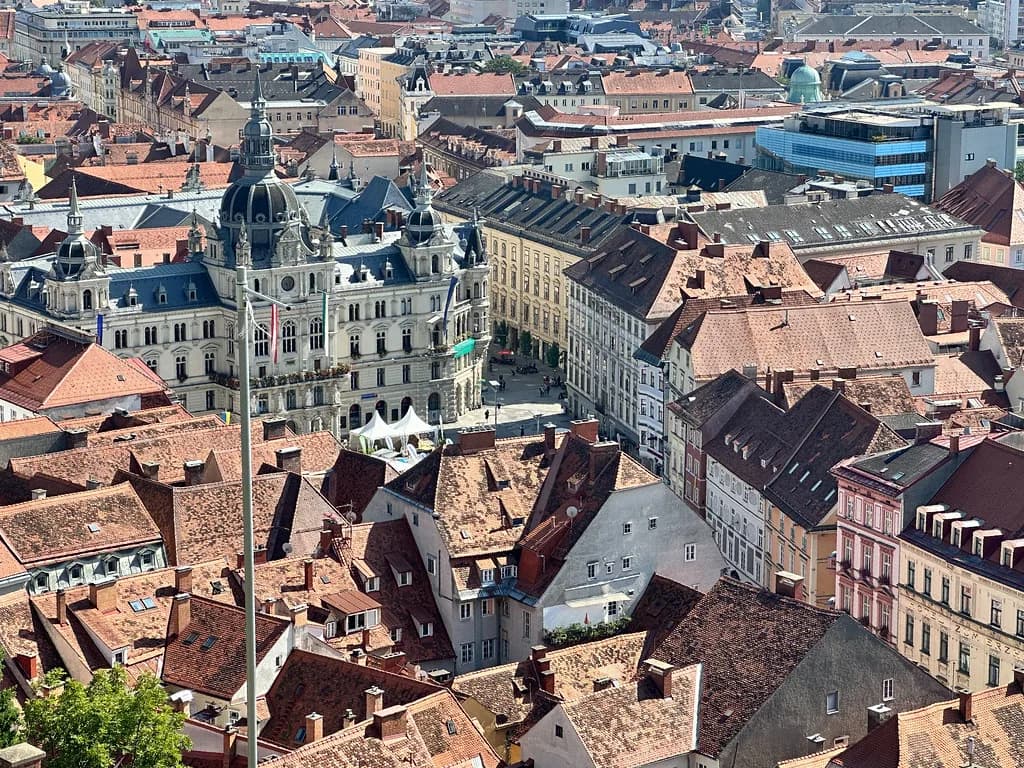
The Hauptplatz is the busy middle of the Altstadt, framed by burgher houses from different periods and dominated by the neo-Gothic Rathaus. Small lanes open off it with cafes and market stalls, so it works as a starting point and a place to orient yourself before heading into the quieter streets. Rather than linger here, use it to get your bearings and then move on toward Herrengasse.
Because the Hauptplatz is a thoroughfare, the atmosphere shifts with the time of day and the season. If you want the square with room to look at the facades, go early and leave the middle of the day for interiors or the side lanes.
Herrengasse and the Landhaus: the main shopping street's burgher houses
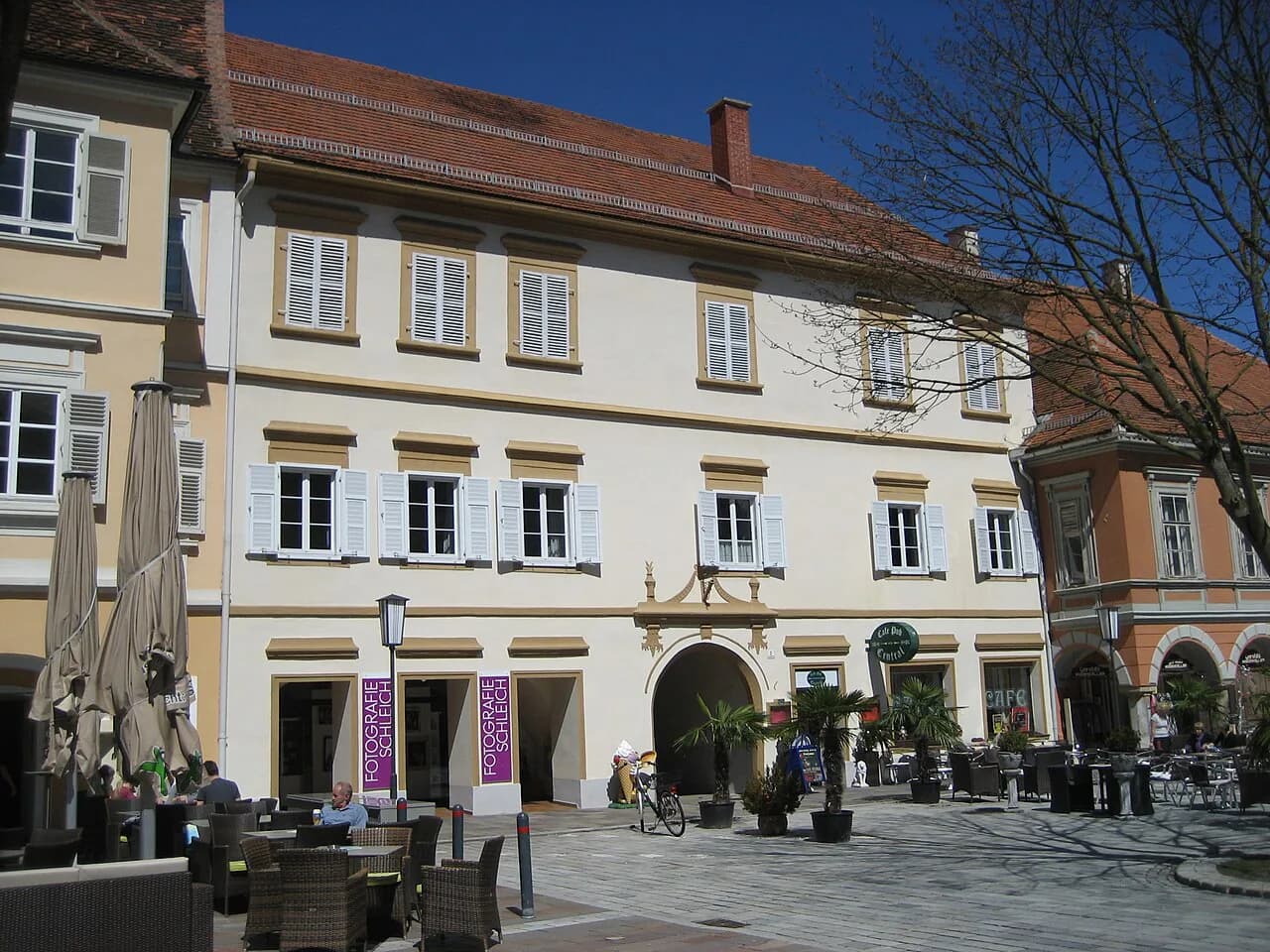
Herrengasse is where the Altstadt's commercial life and its architecture overlap. The street is known for its richly decorated citizen houses and the Landhaus, and it also hides the Bemaltes Haus, whose facade is covered entirely in frescoes. Walk it once at street level for the shopfronts, then look up: the upper floors carry much of the ornament.
This is also the easiest stretch of the old town to combine with errands, since it functions as the city's central shopping street. Expect company on weekends and around midday, and treat the side courtyards as the quieter version of the same street.
Sporgasse and the Gemaltes Haus: the oldest lanes and hidden courtyards
Sporgasse is one of Graz's oldest streets, with cobbled paving, tucked-away courtyards and small shops, and it delivers the old-town feeling more immediately than the main shopping street. Pair it with the Gemaltes Haus, the painted house whose frescoed facade is one of the center's distinctive sights. The pleasure here is pace: slow down, look into openings, and accept that some of the best courtyards are easy to walk past.
If you only have a short window in the Altstadt, Sporgasse is the lane to keep. It connects the central squares without funneling you through the busiest shopping traffic.
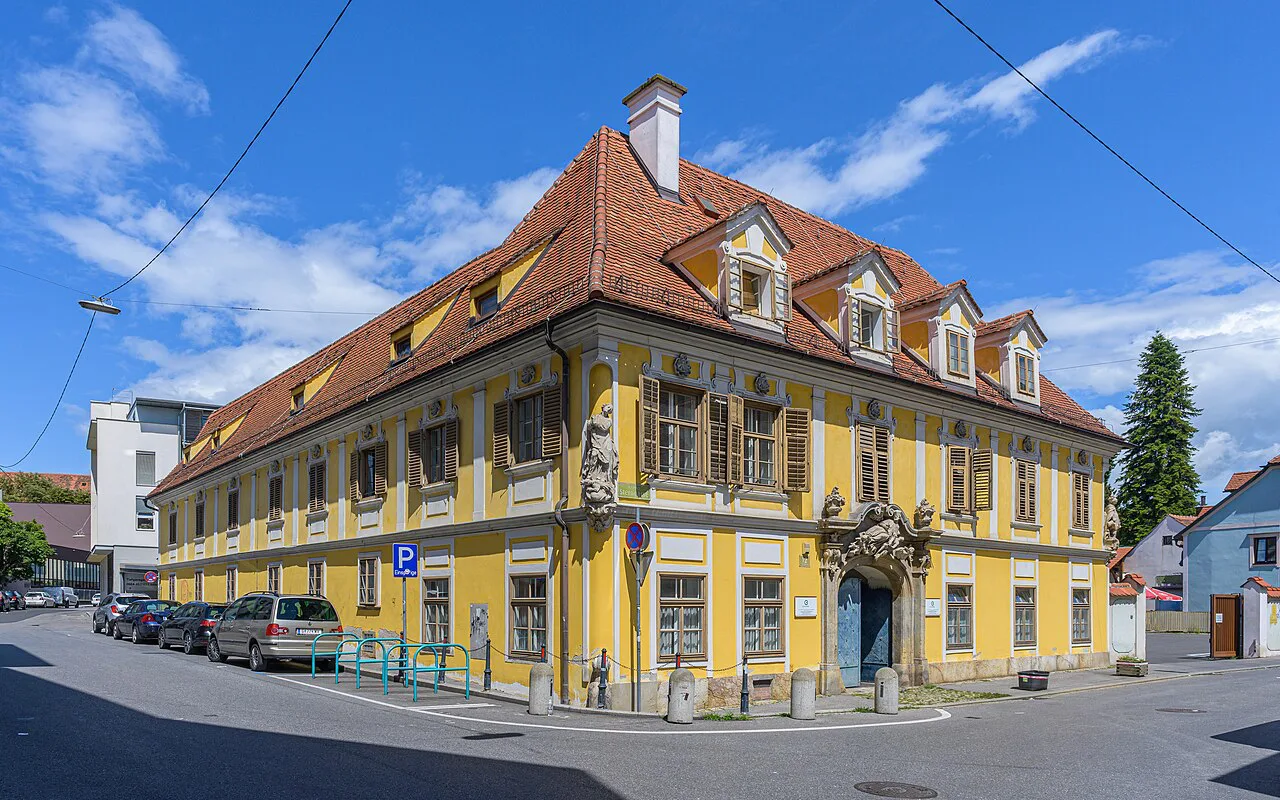
The smaller squares: Glockenspielplatz, Mehlplatz, Färberplatz, Franziskanerplatz and Tummelplatz
The ring of smaller squares is where the Altstadt becomes enjoyable rather than merely handsome. The Glockenspielplatz holds the famous Grazer Glockenspiel, while the Mehlplatz, Färberplatz, Franziskanerplatz and Tummelplatz each offer a different scale of open space and a different reason to pause. The Kapaunplatz and Bischofplatz round out the set, and you will likely meet several of them by accident.
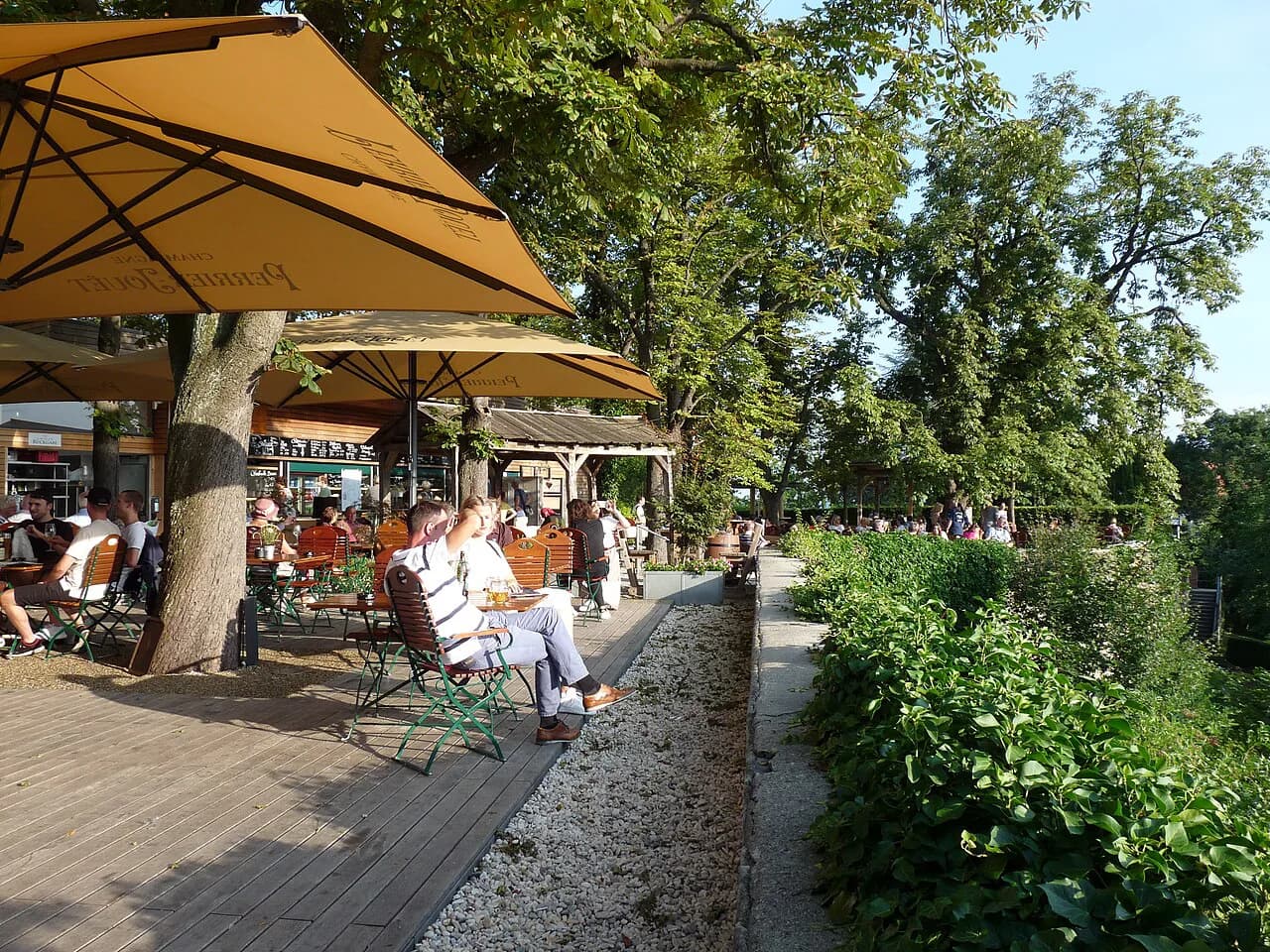
Use these squares as your rest stops rather than the Hauptplatz. A cafe seat on a small square gives you the facades without the through traffic of the main plaza.
The Grazer Glockenspiel: where to stand on the Glockenspielplatz
The Grazer Glockenspiel sits on the Glockenspielplatz, and the square itself is the place to be when it plays. Time your arrival around the bells rather than treating the square as a passing point, and use the wait to look at the surrounding houses.
The square is compact, so a spot near the center gives you a view of both the clock and the facades. If you miss the chime, the square still earns its place in the walk as one of the prettiest small openings in the center.
Arcaded courtyards and the Renaissance-Bavarian layout that sets Graz apart
Graz's old town is not only a street plan but a layer of inner courtyards behind the facades, and the arcades are the feature worth seeking out. The combination of Italian Renaissance arcaded architecture over a Bavarian-style street layout is what makes the center distinctive, and guided walks through the Altstadt exist for visitors who want that context explained on site.
In practice, this means looking through archways and into passages as you walk Herrengasse and Sporgasse. Some courtyards are open to passersby and others belong to businesses, so read the entrance before you step in and keep your voice down where people live or work.
The Schlossberg edge: Schlossbergplatz, Schlossbergstiege and the Uhrturm as the walk's endpoint
The natural finish to an Altstadt walk is the Schlossberg edge, where the Schlossbergplatz meets the climb. The Schlossbergstiege is the stepped route up, and the Uhrturm, the clock tower, is the landmark that tells you the walk is done. The steps take effort, so save them for the end rather than starting the day with the climb.
The hill also holds the Schlossberg museum, the Glockenturm, the Kasematten and the Türkenbrunnen. Decide in advance whether you will take the lift or the Schlossbergbahn or walk up to the Uhrturm.
Modern additions in and around the old town: Murinsel and Kunsthaus Graz
The old town's western edge brings the contemporary city into view. The Murinsel, a floating island structure on the Mur river, and the Kunsthaus Graz, the modern art museum known for its unusual shell, sit close enough to the historic center to fold into the same walk. They give the route a contrast at its end rather than a uniform diet of historic facades.
Treat both as optional stops and check their own pages for what is on and what it costs. If your time in the Altstadt is short, the squares and courtyards deserve priority over the newer landmarks.
A practical walking order with rough walking times between the squares
A straightforward order starts at the Hauptplatz, moves along Herrengasse to the Landhaus and the Gemaltes Haus, cuts into Sporgasse, then loops through the Glockenspielplatz, Mehlplatz, Färberplatz, Franziskanerplatz and Tummelplatz before finishing at the Schlossbergplatz. The distances between these points are short, and the whole sequence is comfortable on foot within a few hours without counting stops.
Do the lanes before the hill. Save the Schlossbergstiege and the Uhrturm for last, when the light on the rooftops is at its best and you are ready to stop walking.
Getting into the Altstadt and parking: why the center is easier on foot
The Altstadt is a walking zone in practice: the squares and lanes are close together, and the trams and pedestrian flows around Jakominiplatz and the Hauptplatz make the center easier on foot than by car. Park at the edge and walk in rather than trying to move between sights by vehicle.
Parking near the center is handled through garages rather than street parking in the old town. Check the garage you plan to use in advance, since capacity and rules are set locally.
What the Altstadt costs: free streets and squares, paid individual sights
Walking the streets, squares and courtyards of the Altstadt is the free part of the visit, and this guide is built around it. Sights above the streets carry separate entry: the Schlossberg, the museums and the Kunsthaus are each ticketed, and the Graz attractions hub gathers the paid options in one place.
Budget for coffee and lunch on the squares rather than for entry fees if your time is short. A half-day loop through the lanes and courtyards can be done without paying for a single sight.
Practical constraints: Monday closures, tour times and midday crowds
Museum opening days and guided-tour departure times vary by operator, so check the day you plan to visit rather than assuming a standard schedule. The streets and squares stay open whatever the museums do. If a guided walk is part of your plan, book it around your other stops instead of the reverse.
Midday is when the Hauptplatz and Herrengasse fill with shoppers, so put the small squares and courtyards in the middle of the day and the main plaza at either end. The Altstadt is small enough that this reshuffling of the order costs you almost no extra walking.
Should you walk the Altstadt first or climb the Schlossberg first?
Walk the Altstadt first and climb to the Schlossberg at the end. The lanes are the reason to come, the squares are the heart of it, and the hill gives the walk a destination rather than a detour.
Start at the Hauptplatz, follow Herrengasse to the Landhaus, take Sporgasse and the painted house, wander the small squares around the Glockenspiel, then finish at the Schlossbergstiege and the Uhrturm. If you want the paid sights as well, the Graz Attractions: 7 Visitor Guides covers them individually.
Explore more Graz guides
Frequently Asked Questions
Is the Graz Altstadt free to walk?
The streets, squares and lanes of the Altstadt cost nothing to walk. Sights above the streets carry separate entry: the Schlossberg, the museums and the Kunsthaus are each ticketed.
How long does the Altstadt walk take?
The core route from the Hauptplatz through Herrengasse, Sporgasse and the small squares to the Schlossberg edge is short enough to cover comfortably in a few hours, including stops. Allow extra time for any paid sights you add.
Do I need a car to see the Altstadt?
No. The center is compact and the squares and lanes sit close together, so walking is the practical way to move between them. Leave the car at a garage on the edge rather than driving between sights.
Sources
Notes for your next Austrian town break
Optional updates when we add or revise town guides.
You might also like
Continue reading
More guides you'll find useful