Graz History: What Visitors Can Still See, Era by Era
Graz history told through buildings you can visit: the Schlossberg, the old town's arcades and courtyards, the Landeszeughaus armory and Eggenberg Palace.
On this page
Graz history fits into one walkable core: the city grew up around a hilltop fortress, and the layers from medieval town to Habsburg seat to design capital sit within a few minutes of each other. Start on the Schlossberg for the layout, drop into the old town for the Renaissance arcades and courtyards, then cross the Mur for the modern chapter. This guide ties each era to a named building or monument you can stand in front of, in the order that makes the city easiest to read. For the practical side, see our Things to Do in Graz guide.
Graz history in one answer
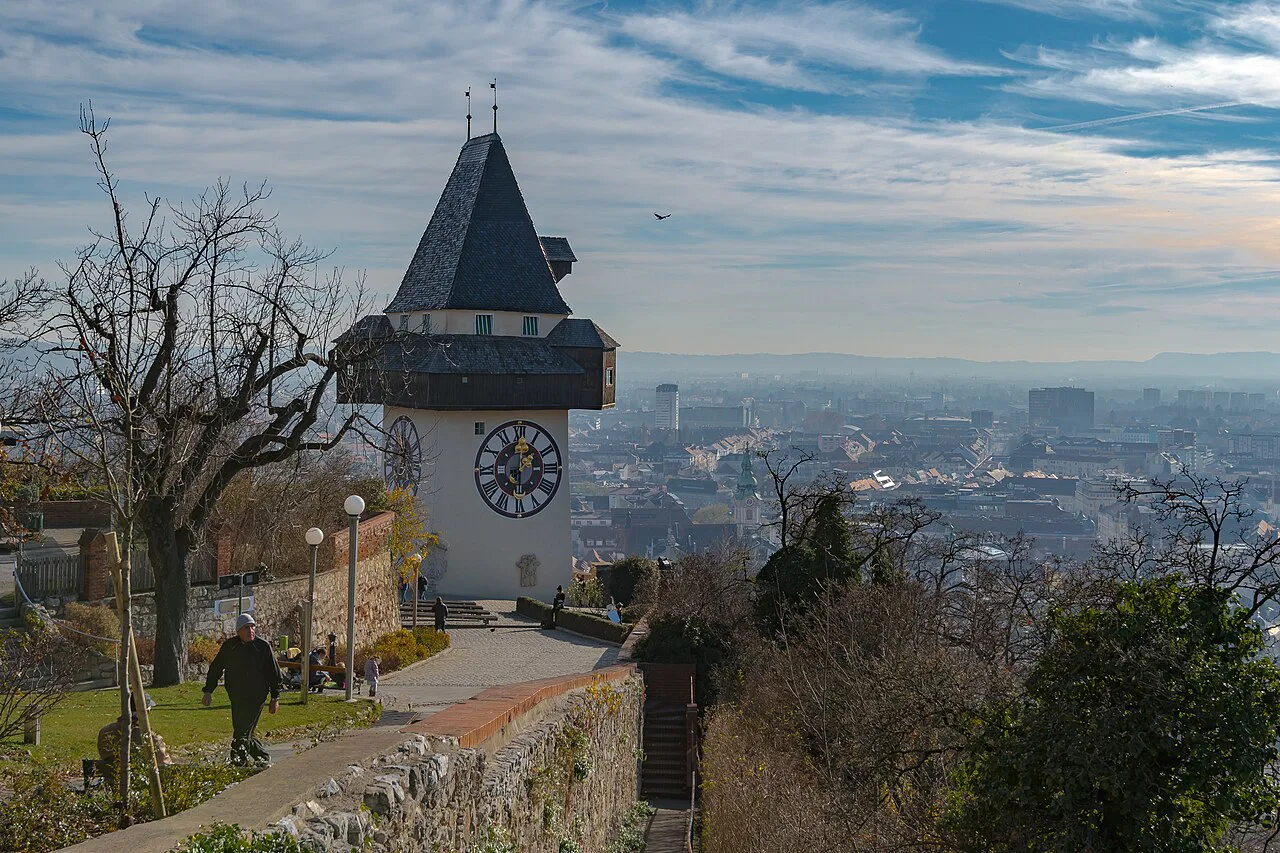
The roots of Graz go back to Roman times, when a small fort stood where the city center is now; Slovenians later built a larger fortress on the same high ground. That hill is still the anchor: the Schlossberg rises directly behind the historic center, and its Clock Tower watches over the rooftops. Everything else in this walk radiates from that point.
Two things make the layers easy to see. First, the UNESCO-listed old town sits compactly below the hill, so the medieval and Habsburg town is a single continuous district rather than scattered sights. Second, the modern additions were deliberately placed at its edges: the Kunsthaus Graz on the riverbank and the Murinsel in the Mur itself. To plan those stops alongside the historic core, start with our Graz Altstadt guide and our Things to Do in Graz guide.
Start at the Schlossberg and the Clock Tower
Begin here for orientation rather than for a single sight. From the historic center, 260 steps or the Schlossberg funicular bring you up to the hilltop viewpoint, where the Clock Tower opens the view across rooftops, narrow lanes and the green edges of the city. The hill is the reason the town is where it is, and the panorama makes the rest of the walk legible.
Plan this as a morning stop, since the hill is exposed and the old town below is where you will want shade and coffee later. The funicular spares your legs if you would rather spend the energy on the courtyards and the armory.
The old town: Landhaus arcades and hidden courtyards
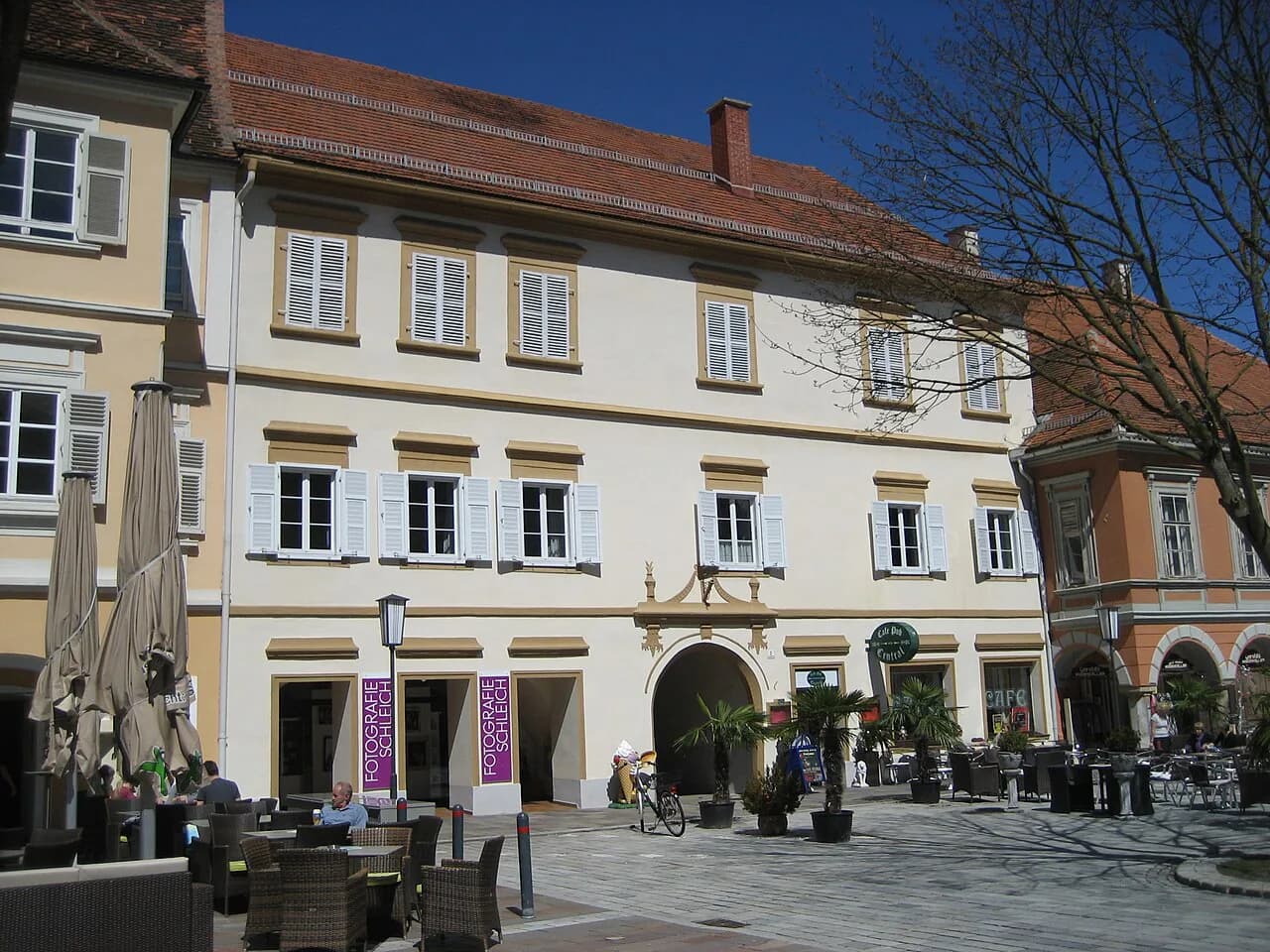
The historic center is the densest part of the story. You can walk from the Renaissance arcades of the Graz Landhaus into the creative Lend district in a few minutes, which is exactly the contrast that gives the city its character: centuries-old courtyards on one block, young urban life on the next.
The pleasure here is looking behind the facades. The old town hides inner courtyards that open off the main lanes and reward a slower pace, so leave time to step through an archway rather than only photographing the street front. Kaiser-Josef-Platz, with its farmers market, works as a natural meeting point for a break.
The Landeszeughaus: Styria's martial past
If you want one indoor stop that makes the Habsburg era tangible, choose the Landeszeughaus. It holds tens of thousands of pieces of weaponry and armor and is presented as the world's largest historical armory, with original pieces rather than replicas. The scale is what lands: rows of pikes, muskets and plate armor collected for a province that had to defend itself.
Treat it as a proper museum visit rather than a quick look, and check current opening days before you build a day around it. It pairs naturally with the old town arcades a few minutes away.
The friendly alien arrives: Kunsthaus Graz
The modern chapter has a face, and locals call it the friendly alien. The Kunsthaus Graz is a contemporary art museum whose blob-like form looks like it landed among the historic roofs, and the nickname has stuck precisely because the contrast is so blunt. As a history stop, it marks the point where the city chose to put new architecture beside the old town instead of imitating it.
The same design-era confidence shows up around the Schlossberg, where modern additions sit against the historic fortress. See the two together and the city's argument becomes clear: the old layers stay, and new ones are allowed to be unmistakably new.
Murinsel: a floating shell in the Mur River
The Murinsel is the other signature design piece: a floating structure shaped like a shell, sitting in the river between the old town and the Lend. It is the easiest place to read the design turn, because the riverbank here is where the historic city meets its newer cultural quarter.
Crossing the Mur on foot is part of the route, not a detour: it takes you from the Schlossberg side to the Kunsthaus and back into the Lend. Use the crossing to reset the walk between the historic and contemporary halves.
Eggenberg Palace: a cosmic calendar in stone
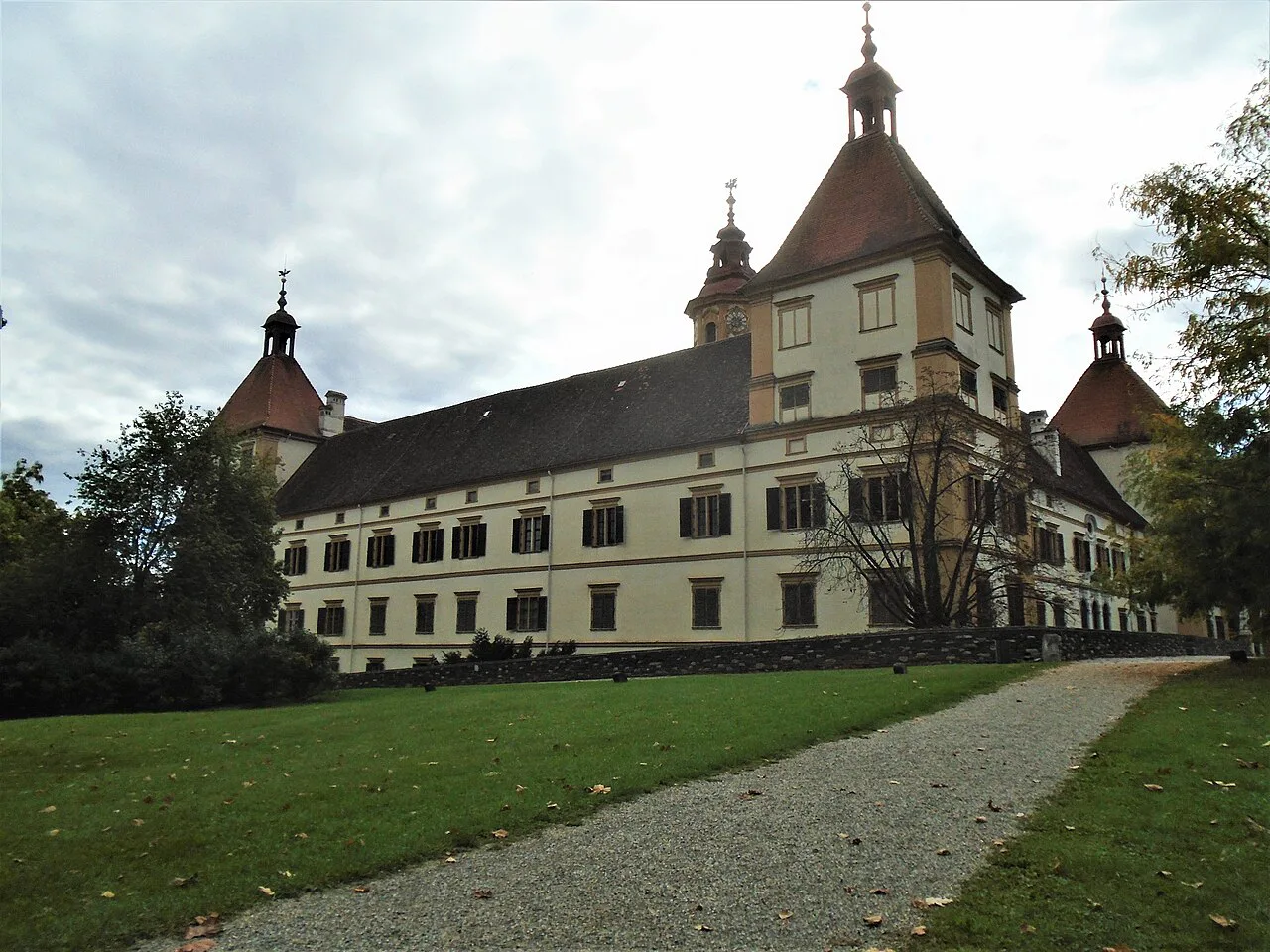
Schloss Eggenberg (Eggenberg Palace) is the UNESCO World Heritage palace on the city's edge and the deepest single stop for the Habsburg era. Its architecture is built around a cosmic calendar in stone, an astronomical program worked into the structure itself. Budget a half day if you want to see it properly, since it sits outside the compact center.
Pair it with the armory as the two indoor history anchors of a Graz stay, since both reward a committed block of time rather than a hurried look.
Details to look up for
Two details reward anyone who keeps their eyes off the pavement. The double spiral staircase at the Burg is a Renaissance optical illusion, and the Painted House covers a facade in painted history. Both are quick stops that add a layer to the walk.
Listen for the carillon and its 24 bells, which gives the old town a soundtrack at set moments of the day. It is an easy accompaniment to the walk, not a detour.
Where to break the walk
Two pauses keep the day from becoming a march. The farmers market at Kaiser-Josef-Platz is the natural lunch stop between the old town and the Lend, and the Kunsthauscafé is the meeting point for the creative crowd beside the museum.
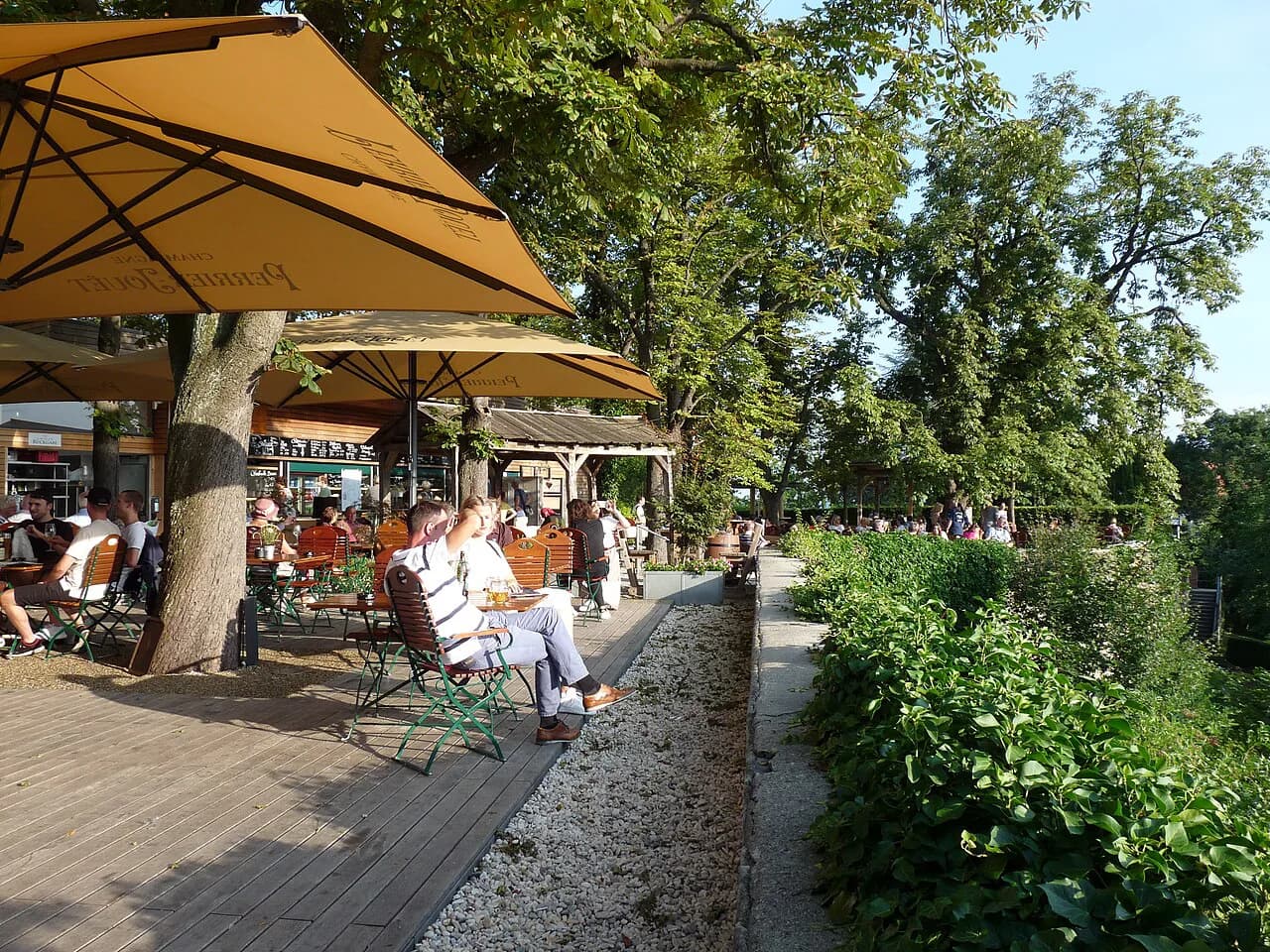
If you want the view with breakfast, the café-lounge Das Freiblick sits on the sixth floor of the Kastner & Öhler department store and looks over the old town rooftops. Book the rooftop stop for one morning and keep the market for another, so neither becomes a rushed stop.
Beyond the center: Schöckl and the green edges
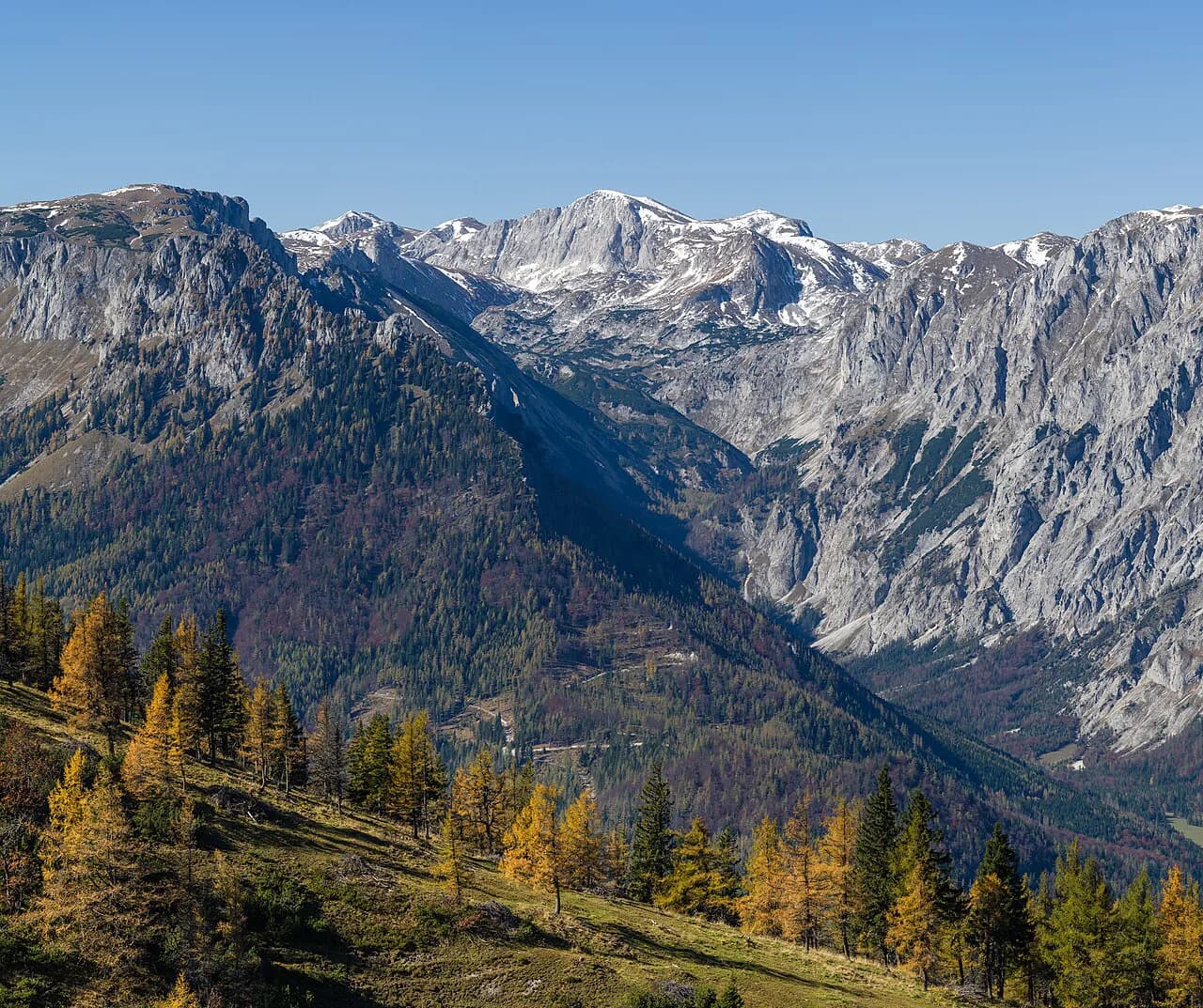
Graz is roughly 40 percent green space, and the Schöckl, Graz's house mountain, rises to 1,445 meters above the city. On a clear day the hill country explains why the town grew here, between the Mur valley and the wooded slopes of Styria.
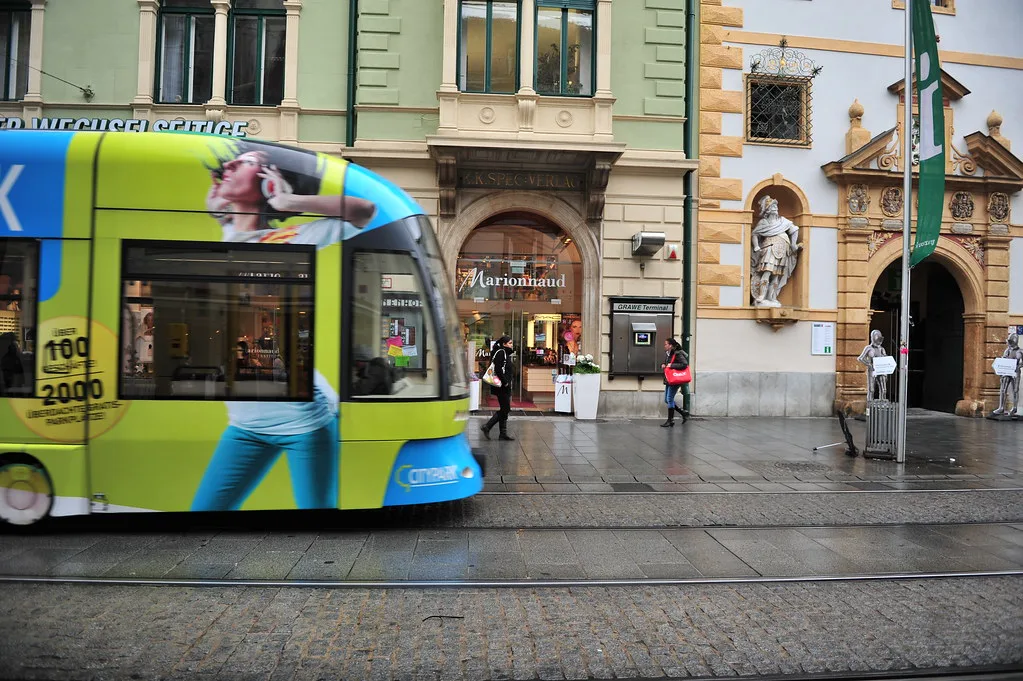
The city itself is easy to cover on foot and by tram, so save the surrounding countryside for a half day when the historic core is done. The seven scenic hills around Graz give the same sense of the setting without leaving town.
Which Graz history stop should you book first?
Book Eggenberg Palace first if your trip is short, because it is the one history stop that sits outside the center and needs a scheduled visit. If you have a full day in the core, do the Schlossberg and Clock Tower in the morning, the Landhaus arcades and Landeszeughaus after, then cross the Mur to the Kunsthaus and Murinsel for the modern chapter.
Either way, leave the armory and the palace for indoor hours and keep the courtyards, the market and the riverbank for the open part of the day. That order lets the city's layers read in sequence rather than as a checklist.
Explore more Graz guides
Frequently Asked Questions
What language is spoken in Graz?
German is the everyday language in Graz, and Austrian German is the local standard, so signs, menus and transport information appear in German. English is widely understood in museums, cafés and hotels, but a few German phrases help in markets and smaller shops.
Is Graz bigger than Vienna?
No. Vienna is Austria's capital and largest city, while Graz is the second-largest city in the country and the capital of Styria. For a visitor, that means Graz's historic core is compact enough to walk in a day, with the Schlossberg, old town, river and Kunsthaus all close together.
What is Graz famous for?
Graz is known for its UNESCO-listed old town, the Schlossberg and Clock Tower above it, the Landeszeughaus armory, Eggenberg Palace, and the modern Kunsthaus Graz and Murinsel that gave the city a design-era identity. The mix of Renaissance courtyards and contemporary architecture is what visitors remember.
Sources
Notes for your next Austrian town break
Optional updates when we add or revise town guides.
You might also like
Continue reading
More guides you'll find useful