Bruck an der Mur: Old Town, Kornmesserhaus and Schlossberg
Bruck an der Mur packs a Gothic Kornmesserhaus, arcaded courtyards and a Schlossberg lookout into a compact old town. Here is what to see and how to walk it.
On this page
Bruck an der Mur earns a stop because its old center compresses an unusual amount of architecture into a short walk: the Gothic Kornmesserhaus, the Eiserner Brunnen iron fountain on the Hauptplatz, several arcaded courtyards, and a Schlossberg lookout over the roofs. The town sits on the Mur in the Steiermark (Styria) and was first recorded as "ad pruccam" in 860. This guide builds the visit from the main square outward, notes which sights you can step into, and shows how the town fits a rail or road route through the region.
Expect half a day rather than a full sightseeing day: the historic core is small, and most of what you see is exterior architecture. The trade-off is that the courtyards of private houses are visible but not yours to wander, while the Rathaus arcades, the churches and the E-Werk visitor center are places you can actually go inside.
What Bruck an der Mur is and why it earns a stop
Bruck an der Mur is one of Austria's oldest towns, a former trading center that burned several times and rebuilt its wealth in stone and stucco. Its historic core is small enough to cross on foot, which makes it an easy leg on a Styria route between Graz and the Alps.
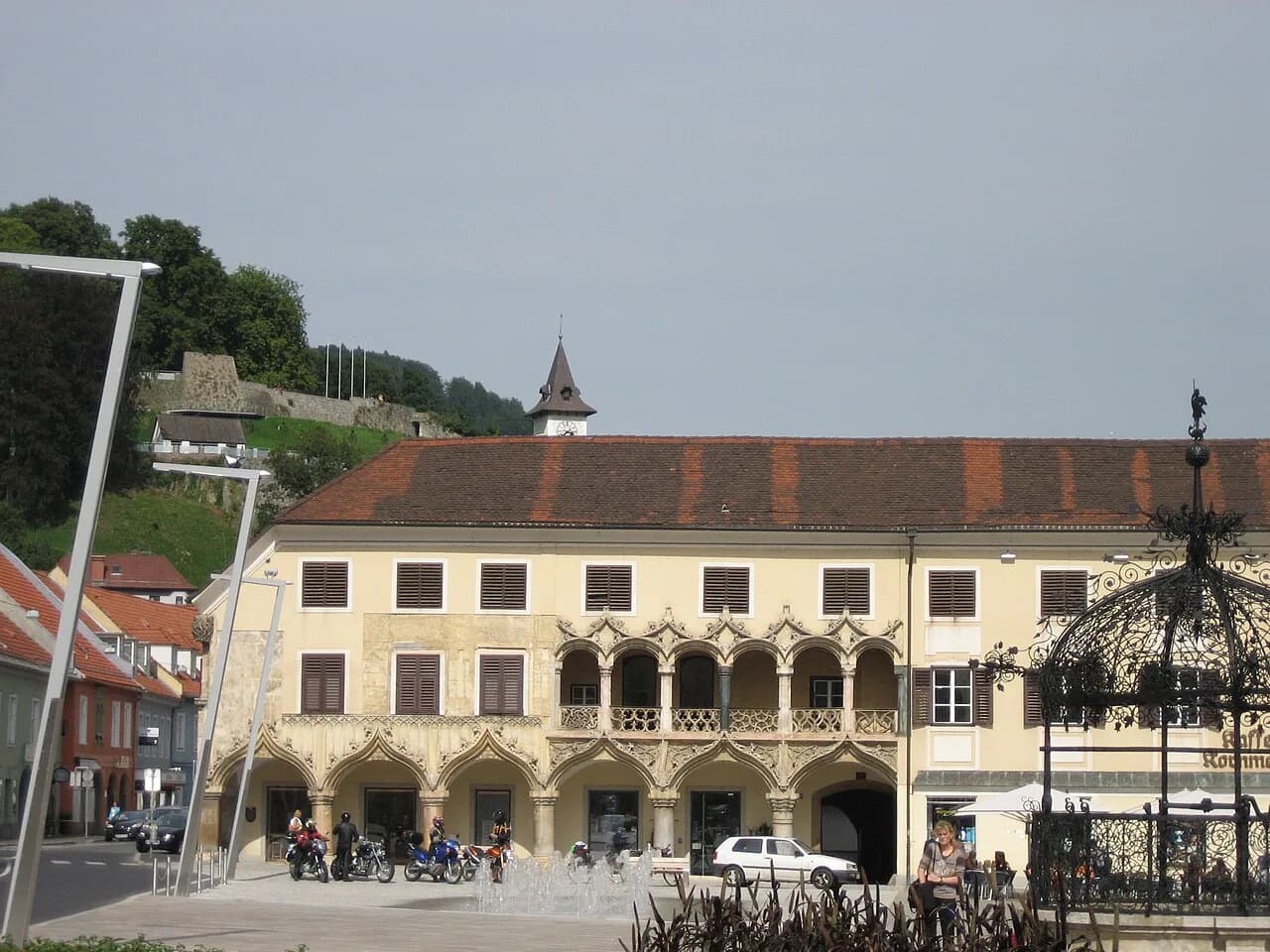
The town is nicknamed Kornmesserstadt after its signature building, the Kornmesserhaus, named for the hammer works owner Pankraz Kornmess in the early 16th century and counted among Austria's finest Gothic secular buildings. That single house, the main square and the castle hill are the reason to get off the train.
Keep Bruck and neighboring Kapfenberg separate in your planning. Kapfenberg, the larger of the two, holds Burg Oberkapfenberg with its medieval exhibitions and falconry display, while Bruck's draw is its old town; the two are joined in regional listings but are different stops.
The Hauptplatz: iron fountain and Marian column
Start on the Hauptplatz, where the Eiserner Brunnen stands directly opposite the Rathaus. The iron fountain is a piece of Styrian smithing art, and its position on the square has not changed since the 17th century.
The other fixed point is the Mariensäule, erected by the townspeople in 1710 to protect Bruck from plague, fire and flooding, with the Virgin Mary on top of the tallest column. Around these two monuments stand burgher houses from different centuries, so the square rewards a slow circuit rather than a quick photo.
The Kornmesserhaus: Bruck's Gothic landmark
The Kornmesserhaus is the one building to study closely. Regional tourism ranks it among the most beautiful Gothic secular buildings in Austria, and the town treats it as the centerpiece of its architectural heritage.
Read the facade from the square rather than hunting for an entrance: the ornament and proportions are the point, and the house is a landmark to look at, not a museum with a ticket desk. Give it ten minutes, then move on to the courtyards nearby.
Arcaded courtyards and historic houses
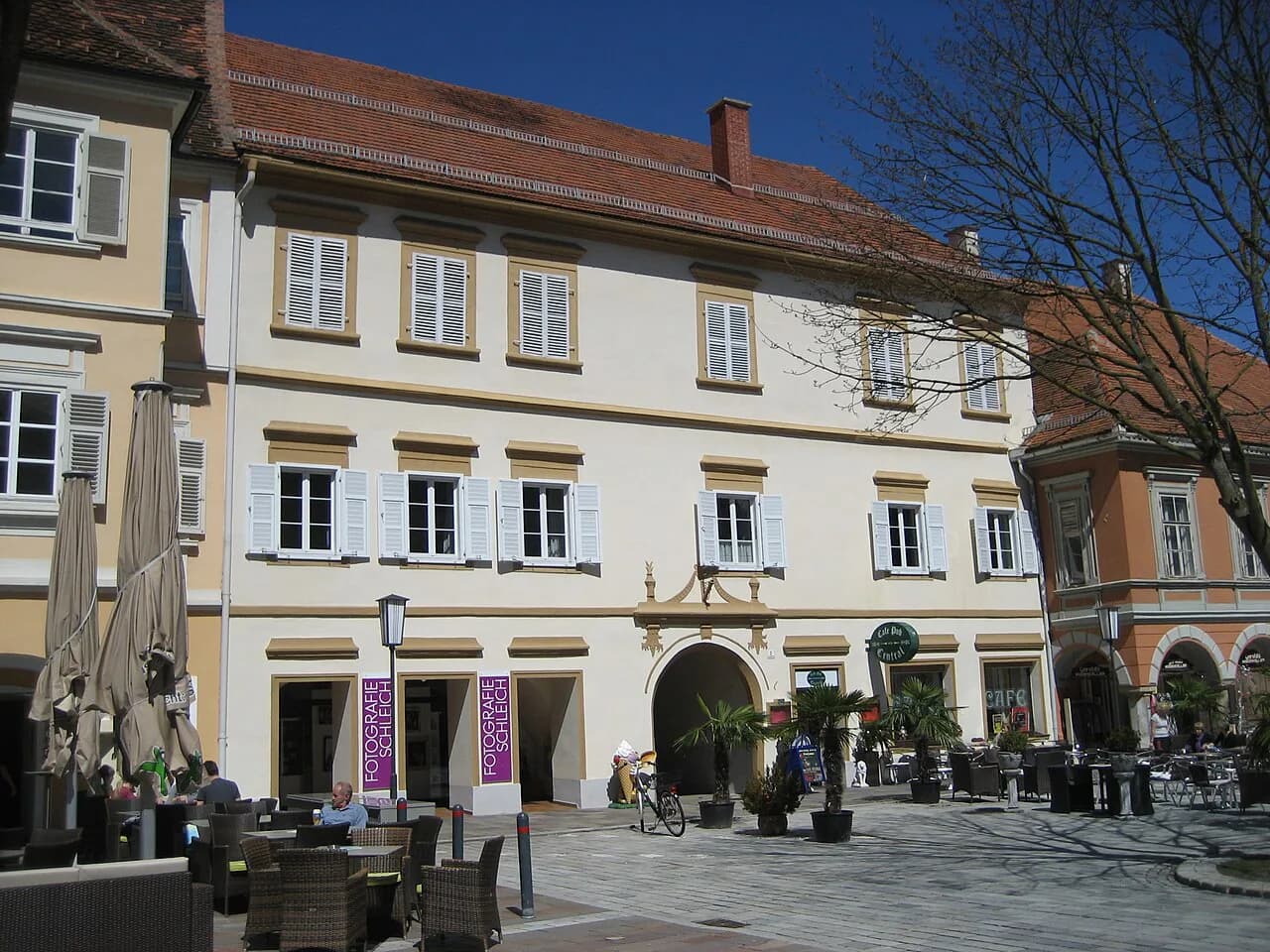
Several of Bruck's oldest houses hide arcaded inner courtyards behind their facades, and knowing which is which saves disappointment. The Fabriziushaus is one of the oldest buildings on the Hauptplatz, with a late-Gothic arcaded courtyard, and the Flößmeisterhaus, with its double round-arched Renaissance windows, recalls the era when the Mur was a working waterway.
The Apothekerhaus has two-story columned arcades from around 1530 and a pharmacy tradition reaching back to 1715, but the building is in residential use today. Treat it as architecture seen from the street, not a sight you tour.
The Antauerhaus counts among the most significant buildings of the inner town, built when a Bruck physician set up a sanatorium there in the early 19th century that was modern for its day. The Baderhaus, a former bathhouse from the 16th century, now holds a food business and private rooms with unusual furnishings, so it doubles as a possible lunch stop on the walk.
The Rathaus and its 16th-century arcaded courtyard
The Rathaus has housed the town council since 1629, and its arcades from the 16th century are open to the public. That makes it one of the few interiors in Bruck you can enter without a tour, and a natural pause between the square and the churches.
Step into the courtyard, look up at the arches, and carry on; there is no exhibition to work through. The point is the transition from the busy square to a quiet arcade in a few steps.
Churches: frescoes, a triangular chapel and a Gothic cross
The Stadtpfarrkirche was built in the 13th century and holds notable treasures inside; the town tourism office promotes church tours as the way to see them, so ask about a guided visit rather than assuming the doors are open at any hour.
The Minoritenkirche is known for high-quality 14th-century frescoes and is also the starting point of the Literaturpfad that climbs to the Schlossberg. The Heilig Geist Kapelle, restored on the initiative of the Harnoncourt family together with national, provincial and city bodies, is described as unique in Europe for its triangular construction.
Nearby, the Bürgerspitalskirche St. Martin was first documented in the 14th century, and its famous Martinstafel is on loan to the Landesmuseum Joanneum in Graz, so do not expect to see the panel here. The Gothic stone cross, once a boundary marker between the Bruck and Kapfenberg jurisdictions, stands eight meters tall and dates from the 15th century.
Up the Schlossberg for the view
The Schlossberg is the payoff of the walk. It was the site of the powerful Burg Landskron, and today it is an event venue with what the town calls the most beautiful panorama of the city. No castle interiors survive to tour; the reward is the outlook over the old town.
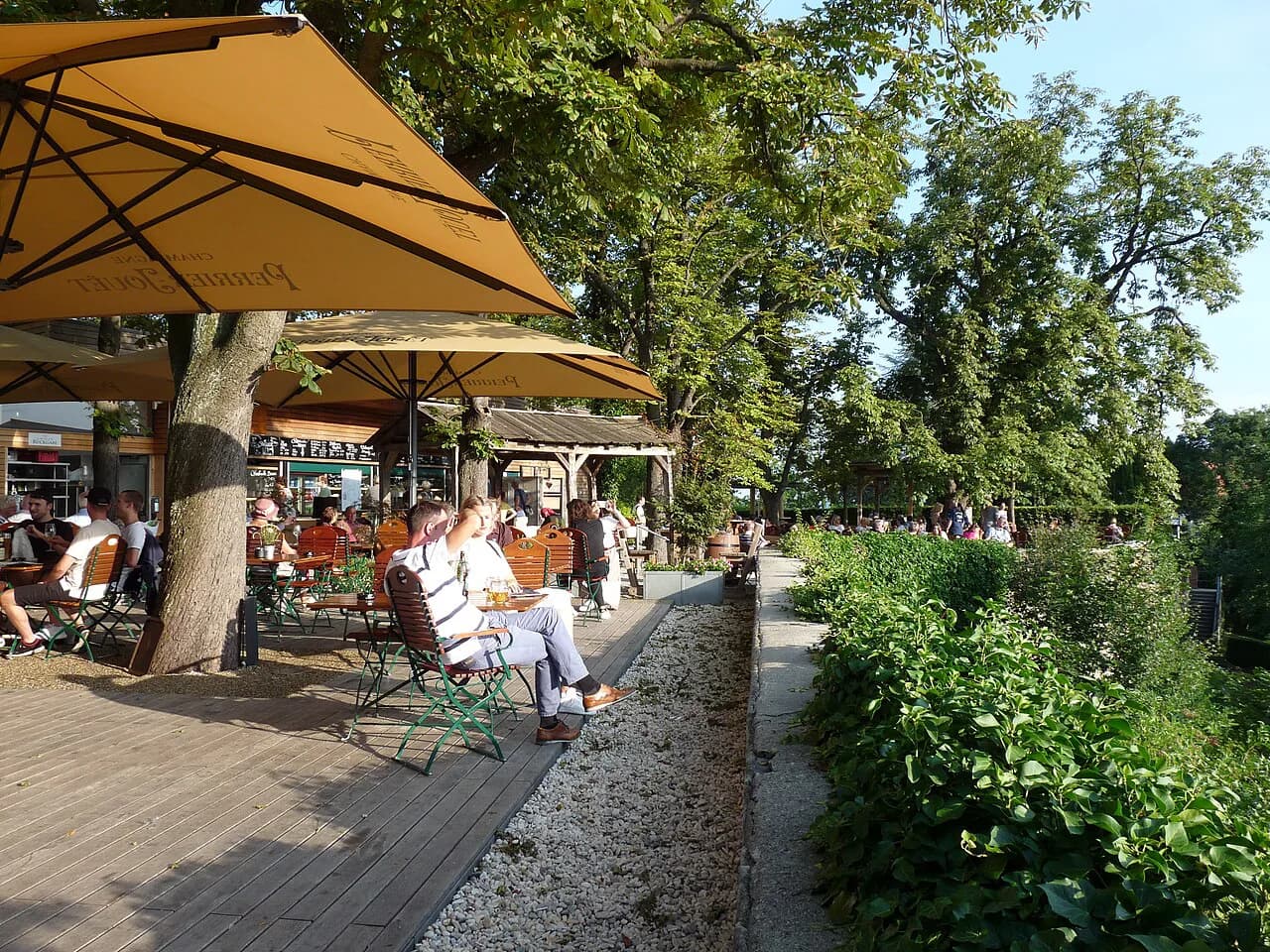
The Literaturpfad runs from the Minoritenkirche up to the Schlossberg, which gives the climb a theme rather than a plain ascent. Regional tourism suggests the walk up for the view over the old town and names the Kultur Beisl and Das Schlossberg for a meal or drink afterward, so you can time the descent around lunch.
Town walls and towers by the Stadtpark
Bruck was once ringed by a strong wall with 12 towers, and the remains of those defenses stand in the Stadtpark opposite the Kultur- und Kongresszentrum. It is a short detour off the main square, worth it if you like reading a town's military shape in its surviving stones.
Pair the walls with the Stadtpark itself, which gives you a green pause between the dense old center and the river. This is also a sensible place to end the walking loop if you arrived by train and are heading back to the station.
The E-Werk visitor center: a break from the medieval
The E-Werk was founded in 1904, and a century later a modern visitor center was created around its five old generators. It is the one industrial sight in Bruck that shifts the day away from Gothic stone and arcades, and it suits travelers who want a contrast rather than another facade.
Check the visitor center's current opening hours before you build the day around it; the generators are the reason to go, and the center is a museum-like stop rather than a quick look through a window.
How long the old center needs and the order to walk it
Plan on half a day for Bruck: the Hauptplatz, the Kornmesserhaus and the adjacent courtyards take about an hour and a half at an unhurried pace, the Rathaus arcades and the churches another hour, and the Schlossberg climb and view the rest. The distances are short, so the real cost is time spent looking, not walking.
Walk it in this order: Hauptplatz with the Eiserner Brunnen and Mariensäule, the Kornmesserhaus and the surrounding houses, the Rathaus arcades, a church or two, the town walls by the Stadtpark if time allows, and finally the Schlossberg for the panorama. If you only have an hour, cut the walls and the E-Werk and keep the square, the Kornmesserhaus and the hill.
Getting there and onward: Bruck as a rail junction
Bruck an der Mur sits on the Mur and functions as a junction town on rail routes through Styria, which makes it a practical stop between Graz and the mountain towns to the north and west rather than a destination in itself. Confirm current train times and connections with ÖBB before you set the day's schedule; this guide gives no departure times.
By car, the old center is compact enough that you park once and walk everything; the trade-off is that the town rewards a pedestrian, not a driver hopping between sights. Either way, Bruck works best as a half-day leg paired with a larger Styrian stop such as the Admont Abbey library or the Erzberg in Eisenerz.
Where the walk ends: coffee or a meal in the old town
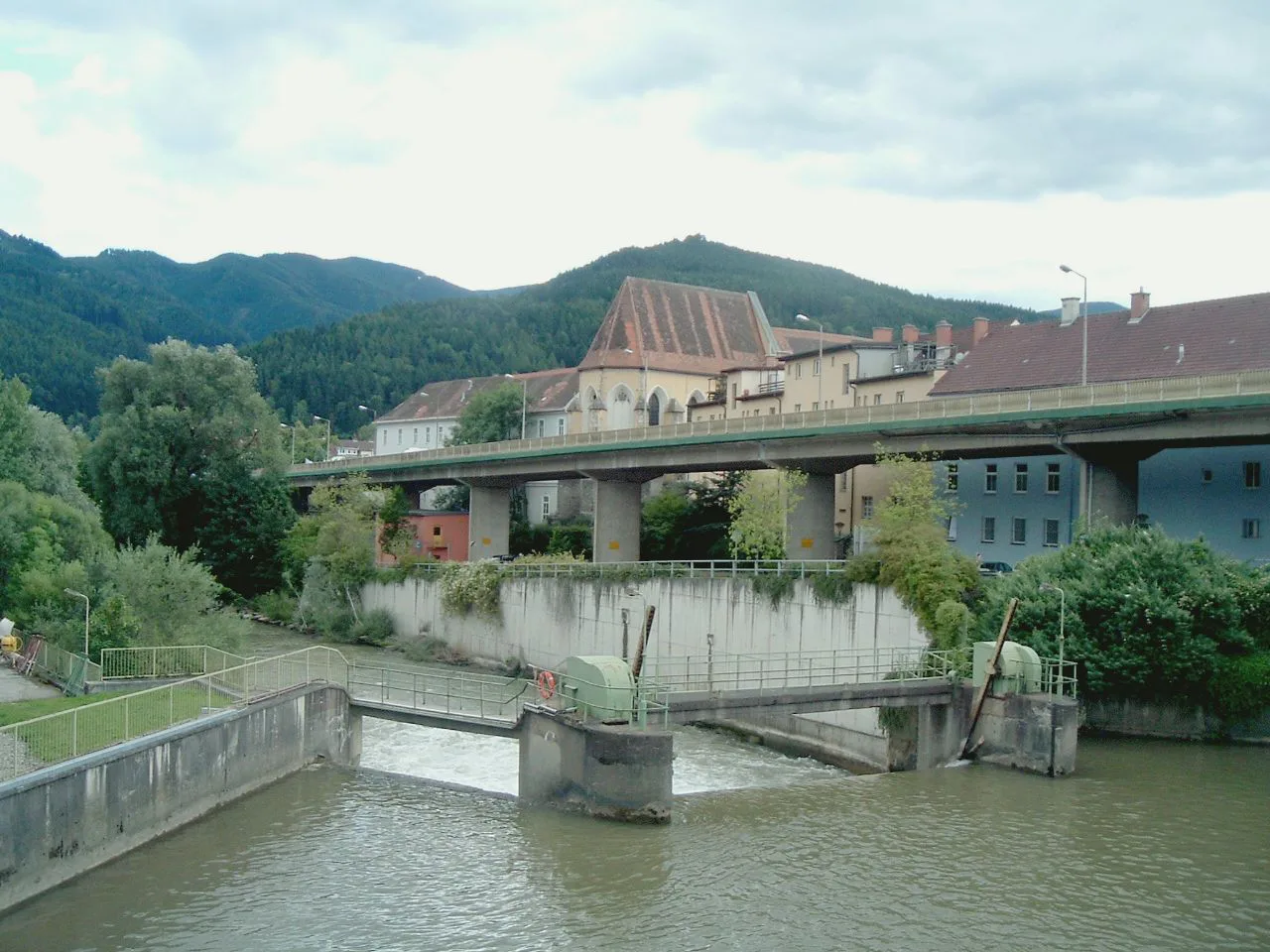
Regional tourism points to the Kultur Beisl and Das Schlossberg for food and drink, with the latter near the hill, and notes that cozy cafes around Bruck handle coffee and cake breaks. The Baderhaus, the restored 16th-century bathhouse, now houses a food business, which makes it a natural final stop on the same street circuit.
For an evening angle, steiermark.com lists a night watchman's tour of Bruck with Helga Papst, which requires advance booking by phone or email. It is a different way to see the same streets you walked by day, and the only guided format the regional source names for the old center.
What to save for another trip: Kapfenberg
Burg Oberkapfenberg, the landmark of neighboring Kapfenberg, offers exhibitions, guided tours and a falconry show, plus escape games inside the castle. It is a separate stop from Bruck's old town and needs its own time slot if you want the medieval experience rather than the Gothic one.
The Rettenwandhöhle, a dripstone cave in Kapfenberg, appeals to travelers who prefer stalactites and stalagmites to facades. Both belong on a Kapfenberg day, not squeezed into a Bruck walk, and both warrant a check of current visiting arrangements before you go.
Is Bruck worth the stop on your Styria route?
Yes, if you are already moving through Styria by rail or car and want a compact, walkable old town with genuine Gothic architecture and a viewpoint. Bruck is not a destination to build a vacation around, but the Kornmesserhaus, the iron fountain and the Schlossberg justify a half-day stop between Graz and the Alps.
Skip Bruck if your priority is castle interiors or cave tours; those belong to Kapfenberg's Burg Oberkapfenberg and the Rettenwandhöhle on a separate leg. Otherwise, arrive, walk from the Hauptplatz to the Schlossberg, and treat the rest of the region as the next chapter.
Explore more Graz guides
- Gesäuse National Park
- Hartberg
- Leoben: The Mur Town's Old Center, Schwammerlturm and Stift Göss
- Mariazell
- Murau: A Guide to the Old Town, Schloss Murau and the Brewery
- Piber Stud Farm
- Ramsau am Dachstein
- Riegersburg Castle
- Weiz: A Guide to the Old Town, the Taborkirche and the Weizberg Basilica
- Zotter Chocolate
- Austrian Open-Air Museum Stübing
- Bad Radkersburg
Frequently Asked Questions
What does "Bruck" mean in Bruck an der Mur?
The name goes back to the town's first recorded mention as "ad pruccam" in 860. The German word Brücke means bridge, and the settlement grew where routes crossed the Mur and the Mürz, so the name points to a bridge site rather than to a person. The town's own tourism pages use the early form as the starting point of its history.
Can you go inside the Kornmesserhaus or the arcaded courtyards?
Treat the Kornmesserhaus as a facade to study from the Hauptplatz; it is a landmark house, not a museum with a ticket desk. Several neighboring houses have arcaded courtyards, but the Apothekerhaus is described as residential today, so its courtyard is architecture seen from outside. The Rathaus arcades from the 16th century are open to the public and are the reliable interior stop in the old center.
Do you need a guided tour to see Bruck an der Mur?
No; the old center is compact and the main sights are close together, so a self-guided walk from the Hauptplatz to the Schlossberg covers most of it. A guided church tour is the way the town promotes access to the Stadtpfarrkirche's interior treasures, and a night watchman's tour with Helga Papst requires advance booking. Both are optional additions rather than requirements.
Sources
Notes for your next Austrian town break
Optional updates when we add or revise town guides.
You might also like
Continue reading
More guides you'll find useful