Hartberg, Austria: Old Town, Karner and What to See on Foot
Hartberg's old town fits a half day on foot: the Hauptplatz, the Romanesque Karner chapel, the parish church and small museums, all in eastern Styria.
On this page
Hartberg earns a stop of roughly half a day, not a week. Its old center is small and walkable, with the Hauptplatz, the late-Romanesque Hartberger Karner and the parish church all within a few minutes of each other, so the town works best as a well-planned pause on a Styrian route rather than a destination in itself.
This guide covers how the center is laid out, what the Karner actually is, where to eat on the square, which indoor stops to keep in reserve for rain, and how Hartberg fits between Graz and the mountain and abbey stops of Styria, Austria.
Where Hartberg sits in eastern Styria
Hartberg is the main town of eastern Styria, about 6,700 residents, and the surrounding area has been settled for roughly three thousand years. It sits on the eastern edge of the region, on the approach from Burgenland and the Hungarian border toward Graz, which is why it turns up on east-west drives rather than on the classic Alpine itineraries.
That position is the useful part. Hartberg is a natural first or last stop on a Styrian loop, close enough to the Pöllauer Tal nature park, the Joglland, the Almenland and the apple country around the Stubenbergsee that you can use the town as a base and still be back in the center for dinner.
Searches for Hartberg tend to mix travel with other queries; for a visitor, the old town, the Karner and the square are what justify the detour.
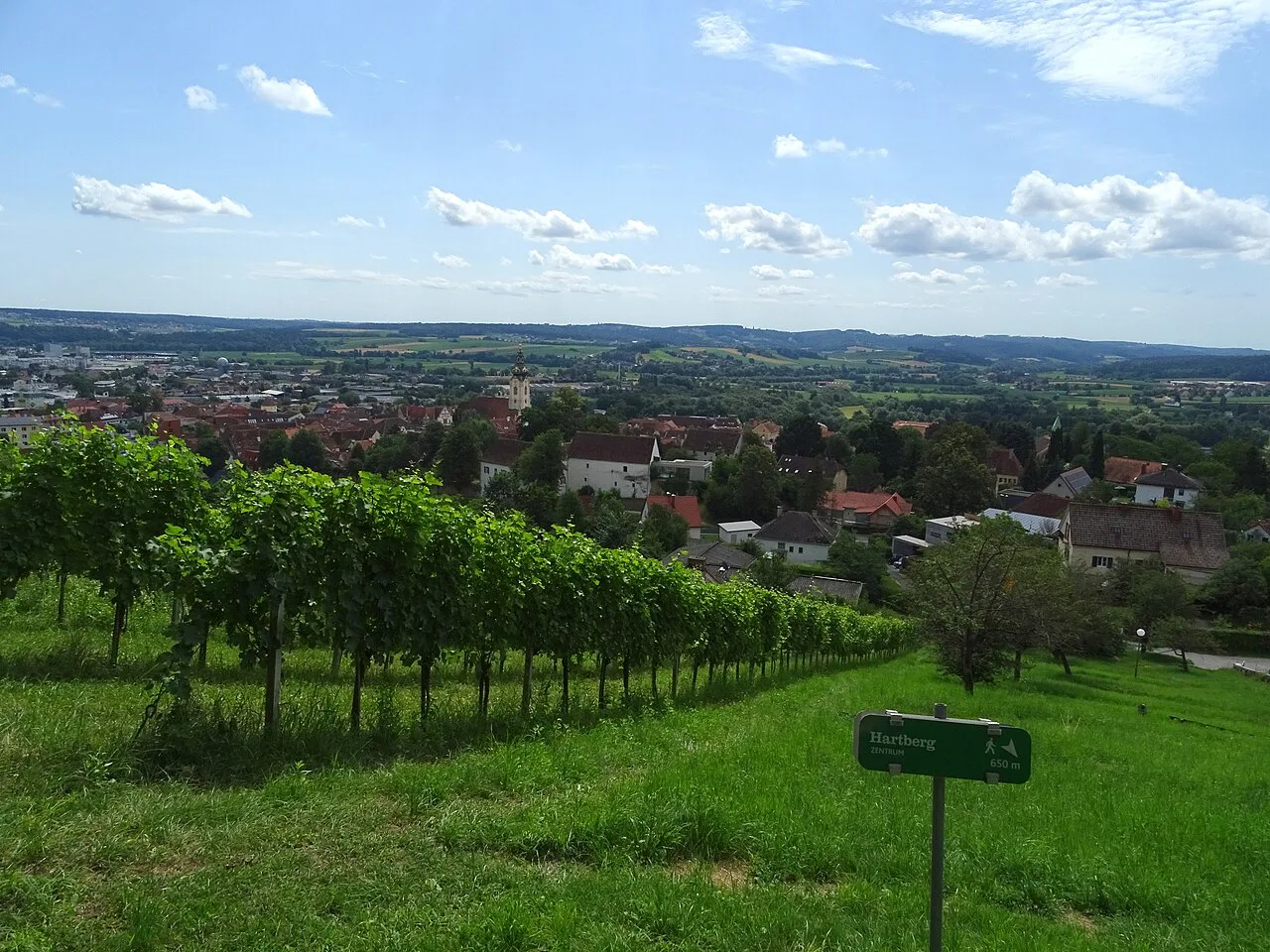
How the old town is laid out: Hauptplatz, lanes and old walls
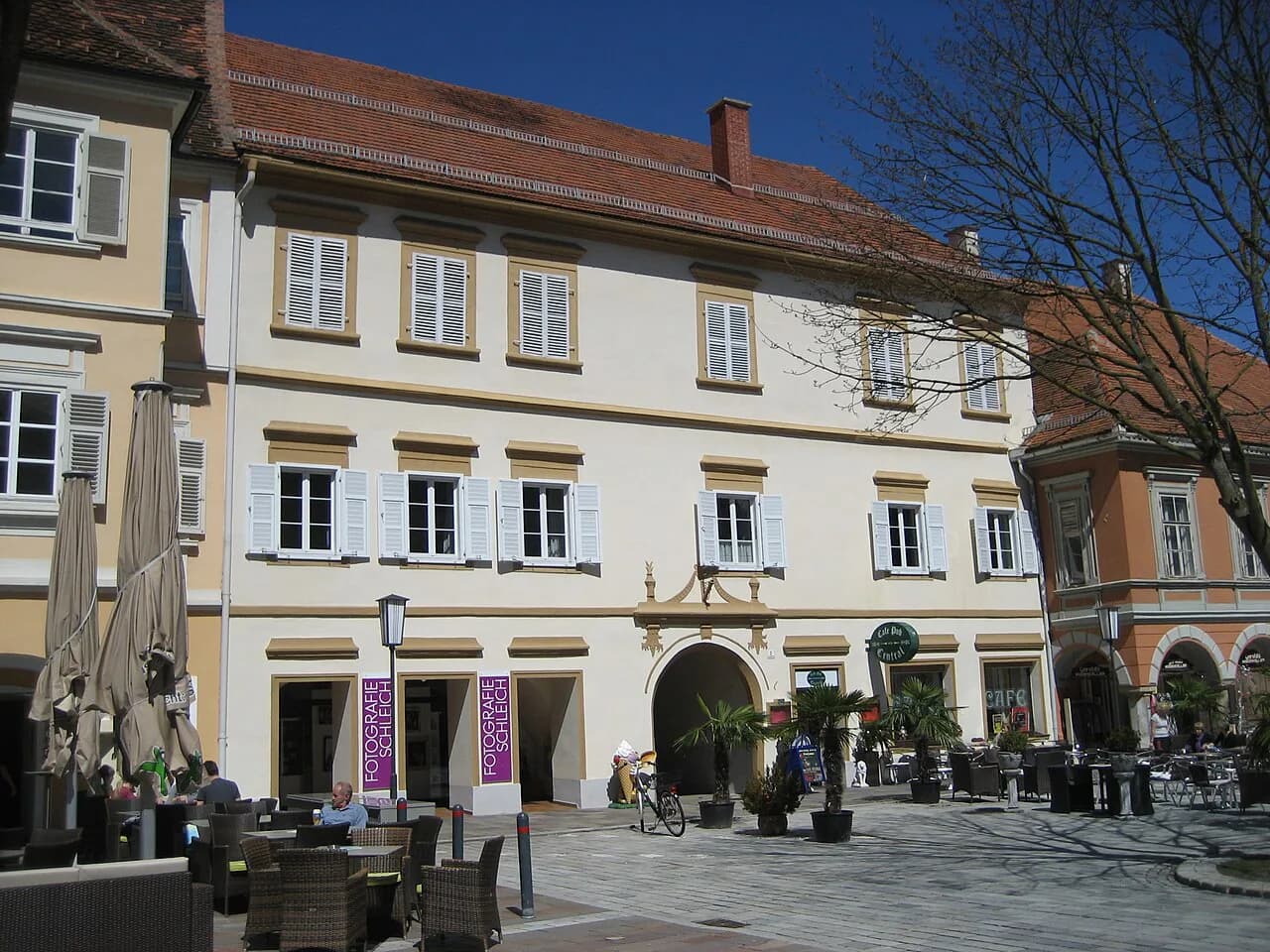
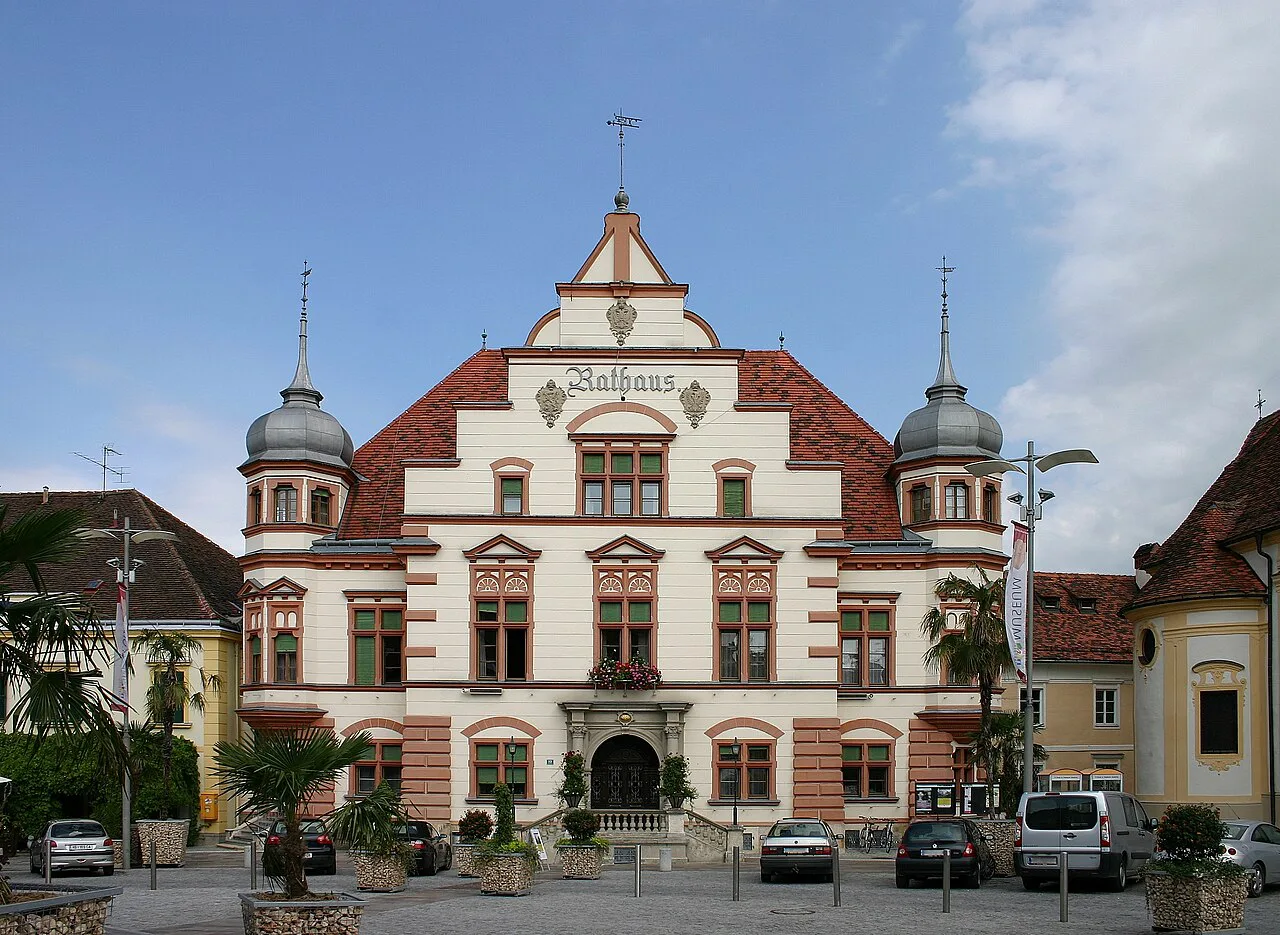
The center is compact and best taken on foot. History shows up in the narrow lanes, in fragments of the old defensive walls, and on the Hauptplatz, with cafes and shops around it.
Treat the Hauptplatz as your anchor and work outward. The lanes around it are short, so you do not need a strict order; you can loop past the wall remnants, back through the square and up to the church without covering much ground.
Because everything is close together, the visit is a matter of an easy stroll rather than a route march. That compactness is also the honest limit of the place: there is no need to plan a full day of sightseeing, and a slow morning or an afternoon with coffee built in suits Hartberg better than a checklist.
The Hartberger Karner: a charnel house with a painted chapel above
The Hartberger Karner is the reason to stop. It is the most significant late-Romanesque building in eastern Styria, a small chapel of rest standing beside the parish church, and it layers two functions in one stone structure: the lower level, from the 13th century, once served as a charnel house where the dead were laid out, while the upper floor was used as a baptismal chapel.
Inside, the Romanesque frescoes were partly redone during the 1889–94 restoration. The original paintings had been covered with lime and destroyed in the process, so what you see in the upper chapel is a mix of surviving fabric and later reconstruction, which is worth knowing before you judge the colors.
Look at the building from the outside first, then step in when it is open. The two-story shape explains the whole design: a lower room that once held the dead and a chapel above it.
The parish church beside the Karner
The parish church stands on the same ground as the Karner, so you see both in one stop. Plan the visit around the church rather than the other way round: if you arrive when the doors are open, go in; the exterior and the Karner still carry the stop at any time.
This is the part of Hartberg that rewards a slower pace. Read the Karner's two levels and the church front together and you get a short lesson in how a medieval town arranged its sacred and funerary buildings, one that takes minutes rather than hours.
Where to sit down: Sonne on the Hauptplatz and Zum Brauhaus
Two addresses anchor a break in the center. Sonne at Hauptplatz 9 changes character through the day, running as a cafe and burger spot and turning into a cocktail bar in the evening, with a small garden right on the square. Zum Brauhaus at Wienerstrasse 1 is the established option, a traditional inn serving Styrian and Viennese dishes with an emphasis on regional products, and it also has rooms.
Check each restaurant's own website the day you go before counting on a table, since posted hours vary.
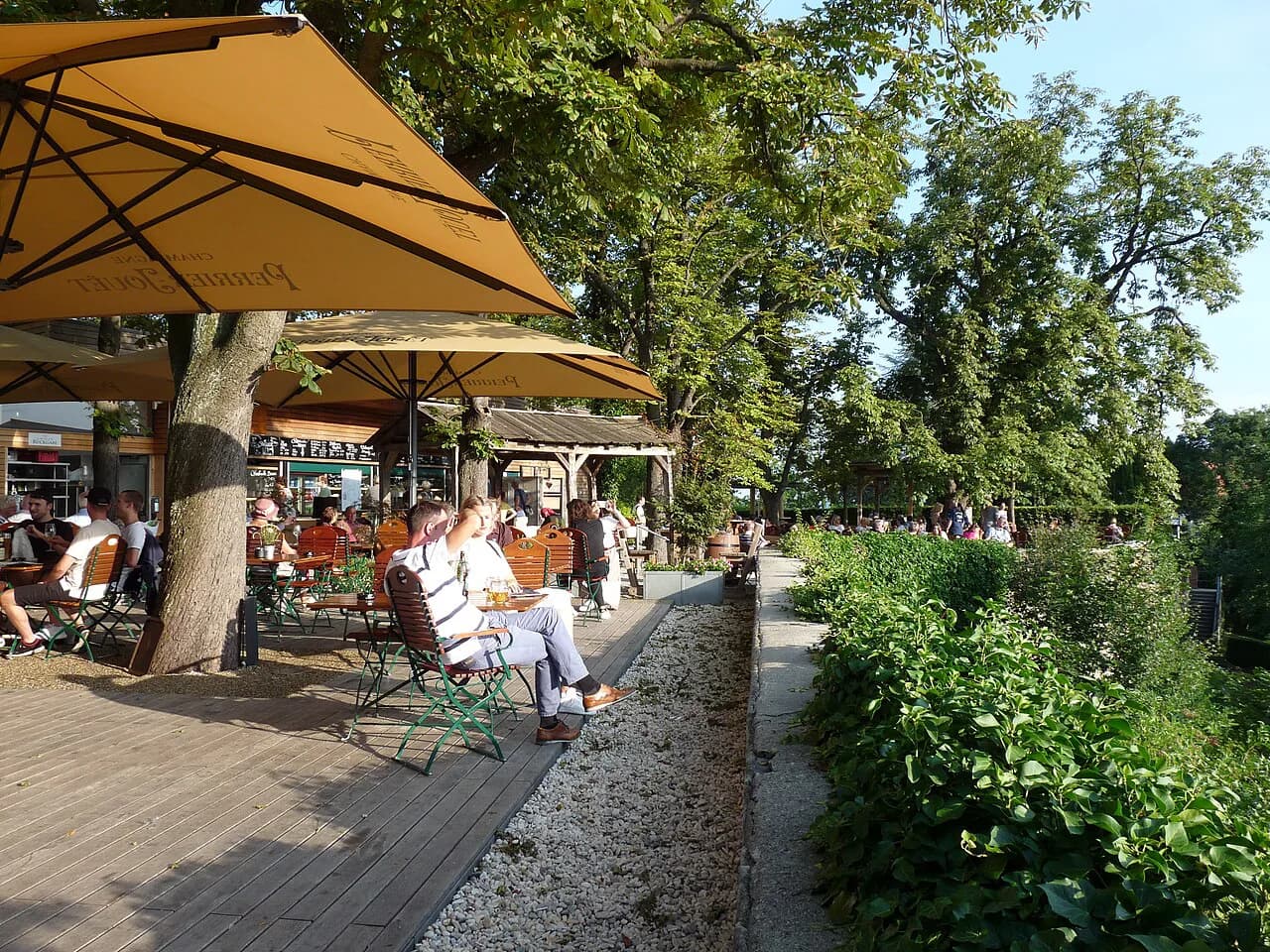
Beyond these two, eating outside is the pleasant part of a summer stop: sit in a garden, then walk the center again while it is quiet. A third option, Pusswald, is a mid-priced restaurant inside a hotel with outdoor seating and its own parking, useful if you are arriving by car.
Museums and indoor stops when the weather turns
If rain sets in, head for the Ökopark Hartberg on the edge of town. It holds the Experimentarium, a bionics gallery and a climate tower on the theme of climate change, plus the Maxoom cinema, whose large-format screen and neighboring 3D auditorium give you an indoor option.
That makes the Ökopark the sensible wet-weather half of a Hartberg day: do the old town first when it is dry, then move out to the complex if the sky opens. It is also the stop that works if you are traveling with people who want more than churches.
Using Hartberg as a base for the Pöllauer Tal, Joglland, Almenland and Stubenbergsee
Hartberg is a good starting point for drives through four nearby landscapes: the Pöllauer Tal nature park, the Joglland, the Almenland and the apple country around the Stubenbergsee. Each is a half-day or day out from town, which makes Hartberg a practical base for a few nights rather than a single overnight.
The surrounding valleys are car country. Plan the loops around daylight and allow for slow roads through the hills; if you are relying on trains and buses, treat the town center as the trip and the surrounding valleys as a separate, car-based outing.
Getting to Hartberg by train or car and fitting it into a Styria route
Hartberg is served by rail and road, so both train and car work for getting there. For timetables, use the ÖBB schedule and the Postbus listings for the day you travel.
On a longer Austria trip, Hartberg can slot in as a morning or an afternoon between Graz and the eastern border country. It pairs naturally with an abbey stop further north in Styria: Admont Abbey Library, a baroque monastic library hall, is a different scale of sight entirely and justifies a separate leg of the route.
The honest comparison is one of scale. Graz offers a full city day; the Wachau and the Alpine towns further west are their own trips. Hartberg is smaller than all of them, and that is the point: it fills a gap in the route without demanding one.
A short walking order through the center and how long to allow
Start on the Hauptplatz, walk the surrounding lanes past the old wall remnants, then climb to the parish church and the Karner. Finish back on the square for coffee or lunch, and if the weather is poor, drive out to the Ökopark for the afternoon.
Give the center two to three hours including a sit-down, and add the Ökopark on top of that if you go. The walking itself is short, which is why the half-day framing is the right one; stretch it to a full day only if you are using Hartberg as a base for the surrounding countryside.
Where Hartberg fits against Graz, the Wachau and Alpine stops
Hartberg is a supplement, not an anchor. On a route that already includes Graz, the Danube and the Wachau, or the fortresses and abbeys of the Alps, treat the town as a stop of a few hours that adds an eastern Styrian note.
It earns that place through the Karner, which is genuinely unusual, and through the square, which is a pleasant place to spend an hour. Go in expecting a small town with one excellent medieval building and a good table, and Hartberg delivers.
Should Hartberg be on your Styria route?
Yes, if your route already runs through eastern Styria and you want a walkable center with one outstanding Romanesque building. Build in half a day, park or arrive at the Hauptplatz end, and see the Karner and the church before you eat.
No, if you are choosing between Hartberg and a major stop like Graz or the Wachau on limited time; those deserve the day. Use the town as a base for the Pöllauer Tal and the Stubenbergsee instead, and it pays off over a few nights.
Explore more Graz guides
Frequently Asked Questions
Is Hartberg worth stopping for on a drive through Styria?
It is, for about half a day. The Hauptplatz, the lanes with their old wall remnants, the parish church and the late-Romanesque Hartberger Karner sit within a few minutes of each other, so a stop costs you little time and gives you one genuinely rare building. If your drive is tight and the alternatives are Graz or the Wachau, save Hartberg for a route that already passes through eastern Styria.
What is a Karner?
A Karner is a cemetery chapel with an associated burial function. At Hartberg the lower level, from the 13th century, was used as a charnel house where the dead were laid out, while the upper floor served as a baptismal chapel. The interior frescoes were partly redone in the 1889–94 restoration after the originals were covered with lime and damaged.
How do you get to Hartberg without a car?
Hartberg is served by rail, and the town center itself is walkable once you arrive. Check the ÖBB timetable for your date before you travel, since schedules vary by season and day of the week.
Sources
Notes for your next Austrian town break
Optional updates when we add or revise town guides.
You might also like
Continue reading
More guides you'll find useful