Austrian Abbeys: What to See Inside the Great Monasteries
Austrian abbeys reward a detour: baroque churches at Melk and St. Florian, the library at Admont, and Danube-side Stifte you can reach by train or boat.
On this page
Austrian abbeys are the reason to build a Danube or Upper Austrian route around monasteries rather than palaces: Melk, Klosterneuburg and Göttweig give you baroque churches, libraries and hilltop views over the river in a single corridor, while Wilhering, Lambach and Reichersberg cover the Upper Austrian stretch near Linz and the German border. This guide sorts the great houses by what actually draws a visitor, then shows how to link them by train, bus or boat alongside the Austrian castles on the same roads.
The German words matter when you plan. A Stift is the endowed monastic house itself, while Kloster is the general term for a monastery; in practice both appear in names, and the practical question is whether you can walk through on your own or join a guided group at a set time. Some houses run self-guided routes through the state rooms, others only admit visitors with a guide, and abbey churches close to sightseeing during services.
What an Austrian abbey visit involves
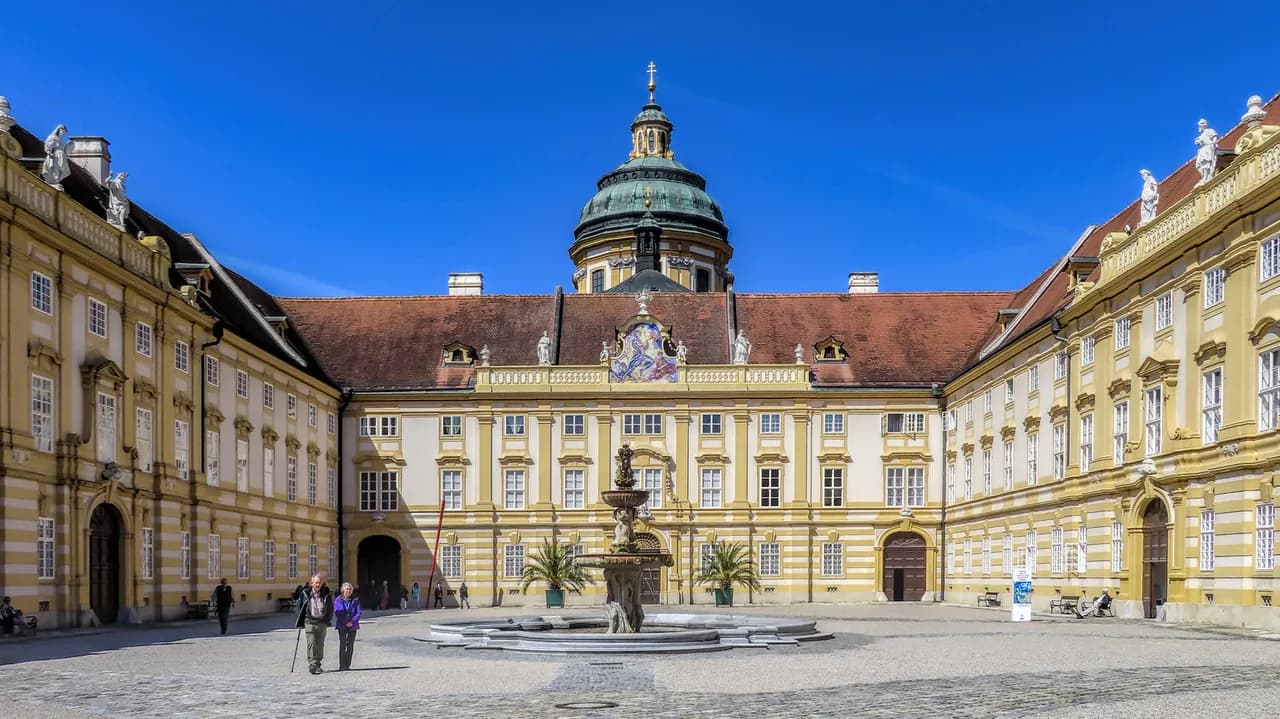
Expect three separate experiences inside one wall: the abbey church, the state rooms (library, marble hall, imperial apartments) and often a garden or terrace. The church is usually the free or cheapest part, the state rooms carry the ticket, and the terrace is what you remember. Check which parts a single ticket covers before you commit an afternoon, because a monastery with a famous library can still leave the church as a short stop.
Guided tours run at fixed times rather than continuously, and several houses expect you to join a group rather than wander. At Reichersberg Abbey, guided tours are a matter of course and visitors are welcome to attend the canons' prayers, even if the order of psalms is hard to follow; listening is enough. Build the tour slot into your train or boat timing instead of arriving and hoping.
Monasteries along the Danube have long hosted travelers: Benedictine rules oblige the community to welcome guests, and houses once put up riders and coach passengers overnight, sometimes with a theater performance in the evening. That hospitality tradition is why many abbeys now run guest houses, education centers and cultural programs alongside the sightseeing. For a day visitor it means more than a church: shops, cafes, exhibitions and gardens are part of the stop.
Melk Abbey (Stift Melk): baroque church, library and terrace above the Wachau
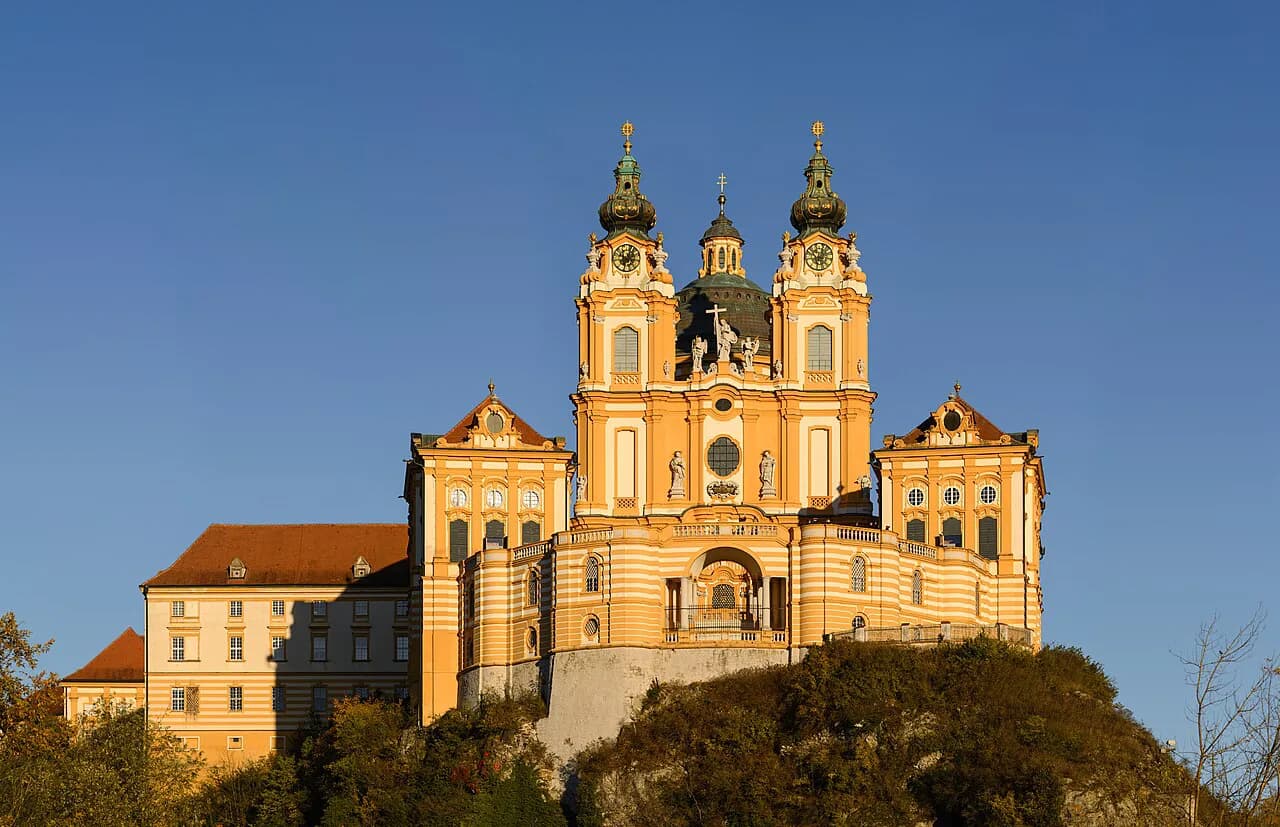
Melk Abbey stands on a rocky outcrop above the Danube and the town of Melk, at the western entrance to the Wachau, which makes it the natural first abbey on a river route. Because the abbey sits above the town, you walk up from the streets of Melk rather than step off a bus at the door. Read the interior, the library and the river views together rather than racing through looking for one highlight.
What is the difference between a Stift and a Kloster in Austria? A Stift is the endowed monastic house itself, with its estates and buildings, while Kloster is the general German word for a monastery. Both appear in the names of Austria's great abbeys, and for a visitor the useful distinction is whether the house admits you on a self-guided route or only with a guided group at a set time.
Do you need a guided tour to see an Austrian abbey? It varies by house. Some abbeys run self-guided routes through the state rooms and church, while others, such as Reichersberg, offer guided tours as a matter of course and welcome visitors at the canons' prayers.
Can you reach the Danube abbeys without a car? Yes, the Danube corridor is the easiest abbey chain to do by train, bus or boat, with Melk and Klosterneuburg on the river and Göttweig on the south bank. Boat services are seasonal, so trains along the valley are the reliable fallback outside the main season.
Melk is also the house most often bundled into organized Wachau tours from Vienna, so midday brings the largest groups. Going early or late in the day buys you space, and pairing Melk with the river rather than stacking another abbey into the same morning keeps the visit from blurring.
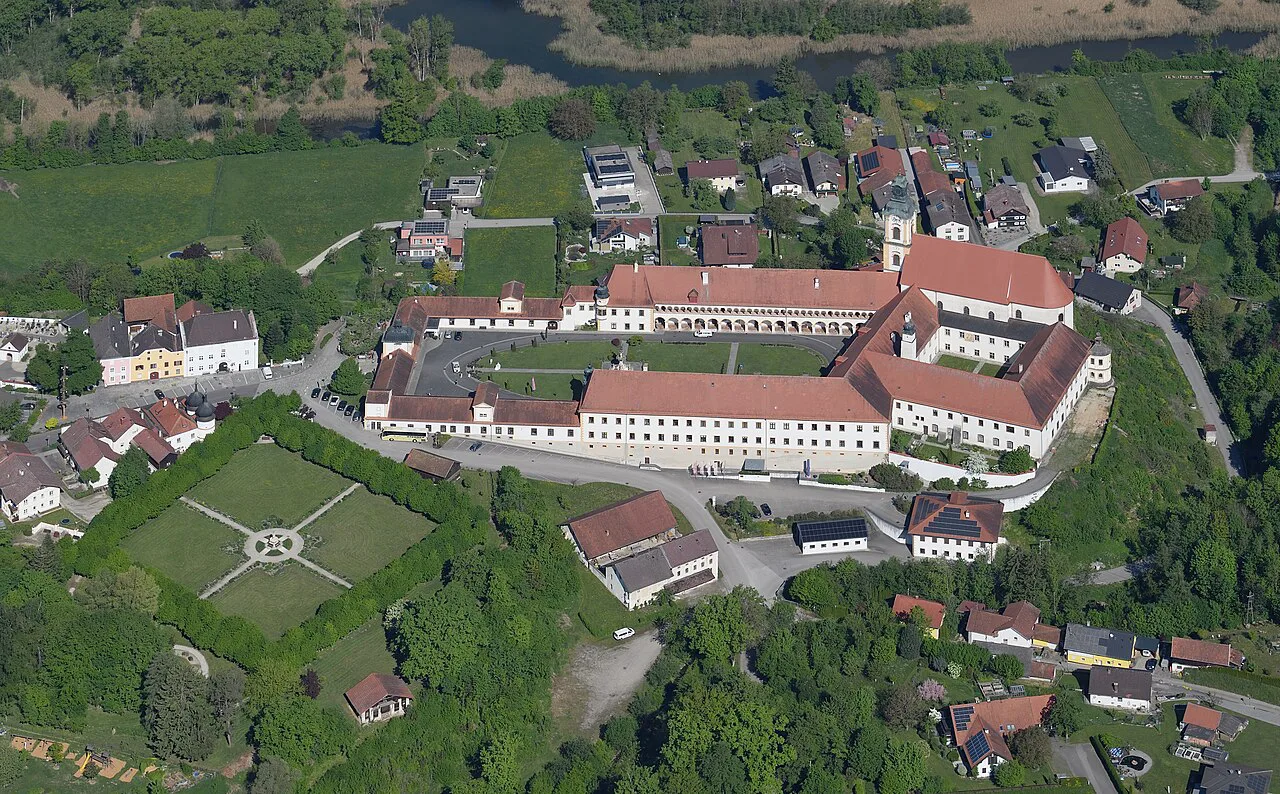
Klosterneuburg Abbey: hilltop setting and treasury north of Vienna
Klosterneuburg Abbey stands on a hill above the Danube in the town of Klosterneuburg, just north of Vienna, and works as a half-day stop on the way west rather than a Vienna city sight. The climb to the complex is part of the visit. Its draw is the setting and the treasury rather than a single famous room.
If you are already touring palaces and fortresses outside the capital, this abbey slots into the same loop; the guide to castles near Vienna covers Kreuzenstein Castle and Laxenburg Castle on comparable day routes. Treat Klosterneuburg as the monastic counterweight to those castle stops and leave the city center out of it.
Göttweig Abbey: the hilltop house on the south bank
Göttweig Abbey sits on the south bank of the Danube, which means a river boat or a train on the opposite side leaves you with a climb or a shuttle at the end. The reward is the elevated position over the valley and a baroque interior in the same tradition as Melk and St. Florian. Plan Göttweig as a separate stop from Melk rather than trying to see both from one mooring.
For the wider baroque story behind these interiors, the guide to Austrian baroque covers the architects and the visual language you will recognize across the Danube houses. Read it before you go and the libraries and staircases stop looking alike.
St. Florian Abbey: baroque interiors and a musical archive in Upper Austria
St. Florian Abbey in Upper Austria is the interior to see if you care about baroque craftsmanship more than river views. It sits inland from the Danube, so it fits a Linz-based day rather than a boat schedule. Budget the time for the state rooms, not just the church.
Monasteries along the Danube served as archives for musical pieces and handwritten scores, and copyists traveled from place to place to transcribe regional works. That history is why an abbey music collection deserves a look even when the library is the headline.
Kremsmünster Abbey and Lambach Abbey on the Road of Emperors and Kings
Kremsmünster Abbey is a Benedictine house in Upper Austria on the Road of Emperors and Kings, the historic route that follows the Danube through Bavaria and Upper Austria. It works best as a deliberate stop on a driving or train day between Linz and the German border.
Lambach Abbey is a Benedictine monastery in Lambach in the Wels-Land district of Upper Austria, and it has a small place in travel history: Marie Antoinette was fed and entertained there with a theater performance on her bridal journey, and the Mozart family stayed in monasteries on their travels. That makes Lambach a worthwhile short stop if you are following the old route rather than a destination on its own.
Wilhering Abbey: Cistercian rococo close to Linz
Wilhering Abbey is a Cistercian house near Linz whose rococo church is the reason to come: the community presents itself as close to ordinary life, through its school, its music archive and its art collections, alongside the church itself. It pairs naturally with a Linz stop and with St. Florian on the same day if you have a car.
Because Wilhering runs a school and cultural program rather than operating purely as a monument, the church is a working one. Look at the abbey's own program before setting a time, and be ready to work around a service.
Reichersberg Abbey and Engelszell near the German border
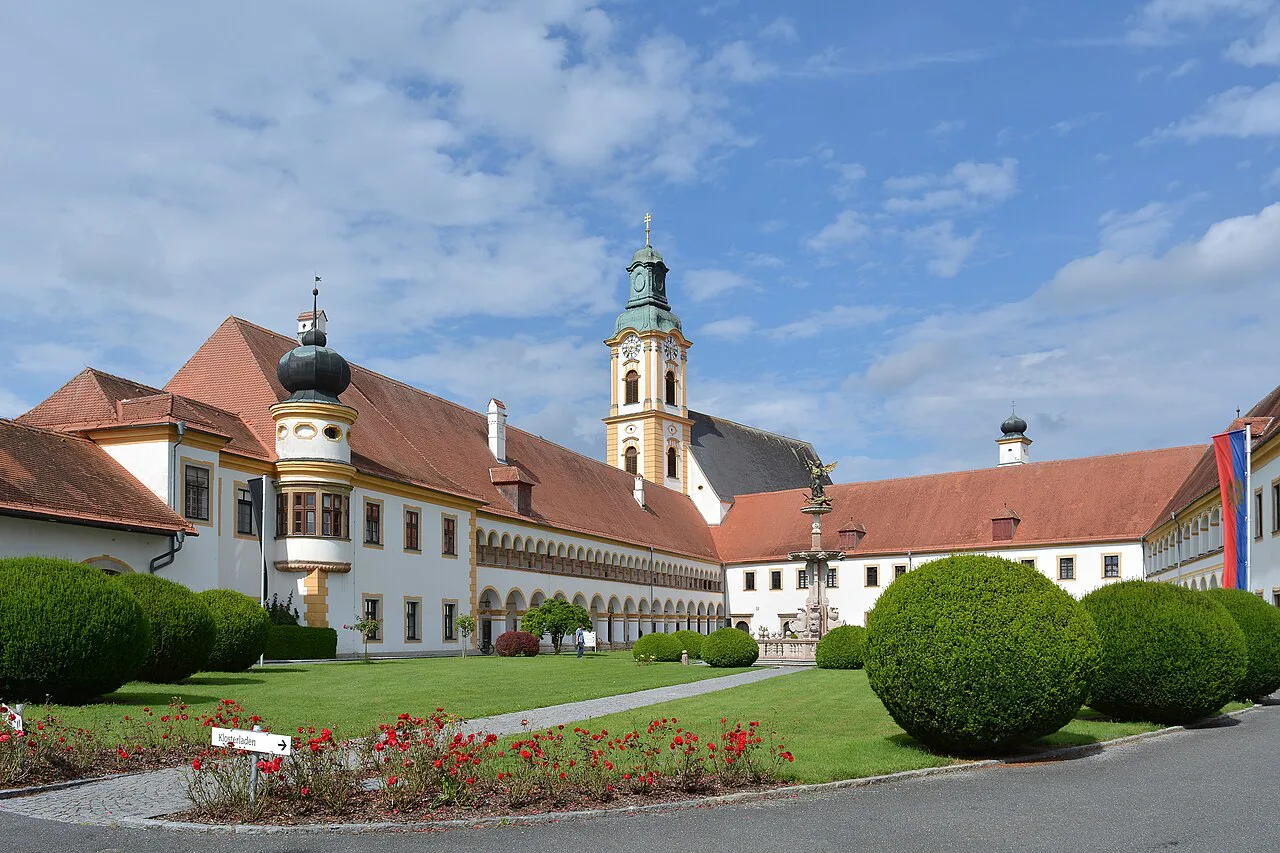
Reichersberg Abbey, an Augustinian canons' house close to the German border, has moved with the times: a strong website, cultural events, gallery shows, an education center and an unusually young provost, with canons who work outside the walls and return for morning and evening prayers. Guided tours are routine, and joining the prayers as an excursionist is welcomed. That makes it a livelier stop than the silent cloister image suggests.
Engelszell, very close to the German border, is Austria's only Trappist monastery, and its small community still lives a secluded life without outside pastoral duties. The brothers do step into public view to sell their beers and liqueurs through the monastery shop and an online store, which is the practical reason to stop. Only nine brothers live and work there, plus a few employees, so the visit is short and quiet.
Admont Abbey and Heiligenkreuz Abbey: when each fits a route
Heiligenkreuz Abbey sits in the Vienna Woods south of the capital and fits a Lower Austrian loop with Klosterneuburg or the castles near Vienna, while Admont Abbey lies in the Styrian Alps rather than on the Danube, so a mountain route suits it better. Choose between them based on whether your trip bends toward mountains or toward Vienna.
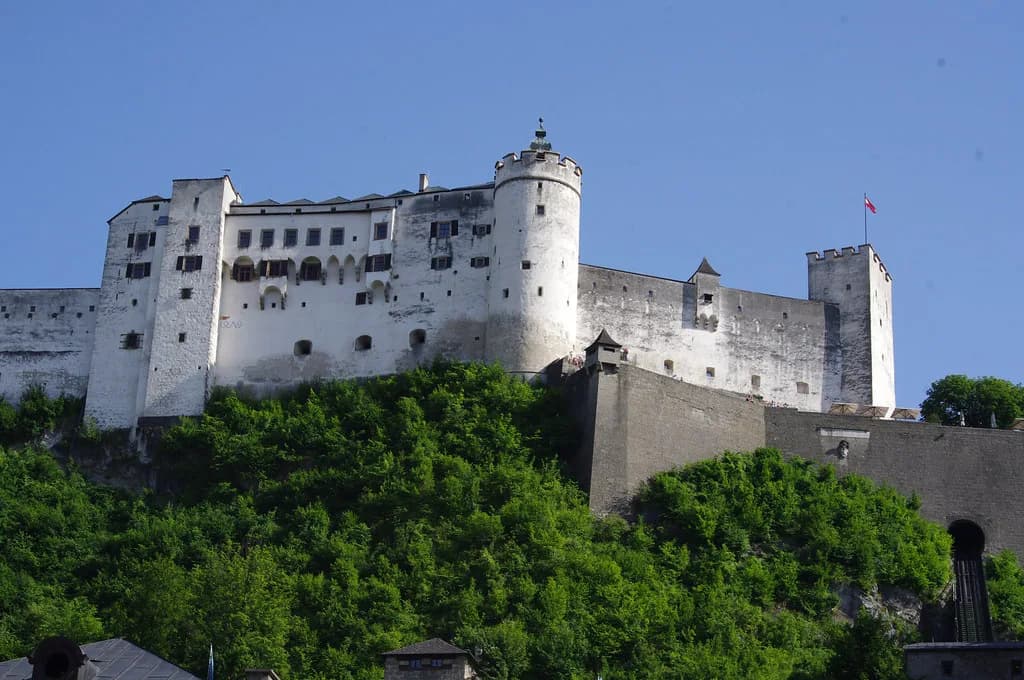
If you are coming from Salzburg and heading east, the castles near Salzburg guide covers Hohensalzburg Fortress and Hohenwerfen Fortress for the same kind of fortress-and-monastery day. The split is straightforward: fortresses on the Alpine side, abbeys along the Danube and its Upper Austrian tributaries.
Fitting abbeys into a Danube or Alpine route
The Danube corridor gives you the cleanest abbey chain by train, bus or boat: Melk and Klosterneuburg on the river with Göttweig on the south bank, then Wilhering, Lambach, Kremsmünster and Reichersberg as you move into Upper Austria. On a boat day you see one bank properly, so pick the abbey that matches your mooring rather than trying to cross twice. Trains along the valley are the fallback when the boats stop for the season.
In the Alps, the abbey stops compete with fortresses and cable cars, and the Tyrolean side is dominated by the latter. The castles near Innsbruck guide covers Tratzberg Castle and the Spanish Hall in Innsbruck if your route runs that way. Keep one abbey per day in the mountains; travel between valleys eats the time you meant to spend inside.
Trade-offs: tour times, closures and crowds
The three honest constraints are fixed tour times, services that close a church to sightseeing, and the walk up to hilltop houses such as Melk, Klosterneuburg and Göttweig. Build the tour slot first and the transport second, because a missed group entry can cost you the library you came for. Some houses also keep seasonal schedules, so confirm the day before you travel.
Crowds are the other variable. Melk absorbs the coach tours from Vienna at midday, so early or late is better, and the smaller houses such as Engelszell and Lambach rarely feel busy at all. If you only have one abbey day, choose between the full Melk experience and a quieter pair such as Wilhering and St. Florian.
Which abbey day should you build?
Choose Melk if you want one complete abbey visit with the river below you, Klosterneuburg if you are skirting Vienna, and Wilhering or St. Florian if you are basing in Linz. For a quiet, unusual stop near the German border, Reichersberg and Engelszell deliver a working monastery and Trappist products without the coach crowds.
Then check the abbey's own site for the current tour schedule and ticket price in euros before you commit a day, and set your train or boat times around the tour rather than the reverse. The same rule applies to castle days: the guided entry sets the clock.
Explore more Austria guides
Frequently Asked Questions
What is the difference between a Stift and a Kloster in Austria?
A Stift is the endowed monastic house itself, with its estates and buildings, while Kloster is the general German word for a monastery. Both appear in the names of Austria's great abbeys, and for a visitor the useful distinction is whether the house admits you on a self-guided route or only with a guided group at a set time.
Do you need a guided tour to see an Austrian abbey?
It varies by house. Some abbeys run self-guided routes through the state rooms and church, while others, such as Reichersberg, offer guided tours as a matter of course and welcome visitors at the canons' prayers. Check the specific abbey's own schedule before you travel, since fixed tour times are what most often disrupt a tightly planned day.
Can you reach the Danube abbeys without a car?
Yes, the Danube corridor is the easiest abbey chain to do by train, bus or boat, with Melk and Klosterneuburg on the river and Göttweig on the south bank. Boat services are seasonal, so trains along the valley are the reliable fallback outside the main season.
Which abbey is closest to Linz?
Wilhering Abbey, a Cistercian house with a rococo church, is the nearest of the great abbeys to Linz, and St. Florian is also within a Linz-based day. Check the current bus or train connections before you plan the pairing, since a boat schedule is unlikely to fit both in one day.
Sources
Notes for your next Austrian town break
Optional updates when we add or revise town guides.
You might also like
Continue reading
More guides you'll find useful