Weissensee, Carinthia: Austria's High Alpine Lake in the Gailtal Alps
Weissensee is a nature-park lake in southwest Carinthia with quiet bays and a protected shoreline. Here is how the lake fits a route through Austria.
On this page
Weissensee is a nature-park lake in the southwest of Carinthia, set at the foot of the Gailtal Valley Alps, and its appeal is unspoilt shores and secluded bays rather than a heavily built-up resort strip. This guide covers what the region actually offers — from the summer mountain railway to the marked mountain-bike network — and how the lake fits a route through Carinthia.
What kind of lake Weissensee is
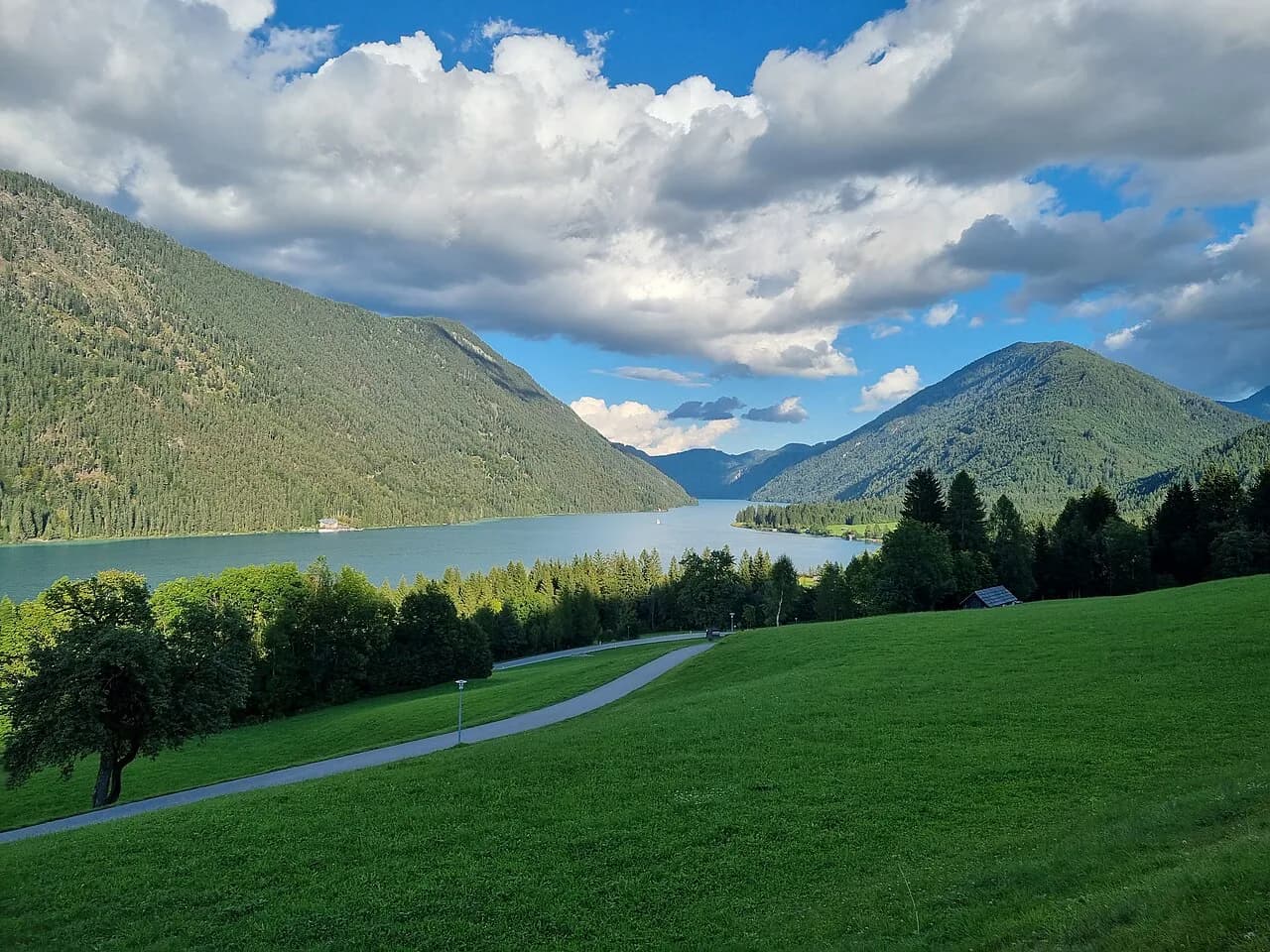
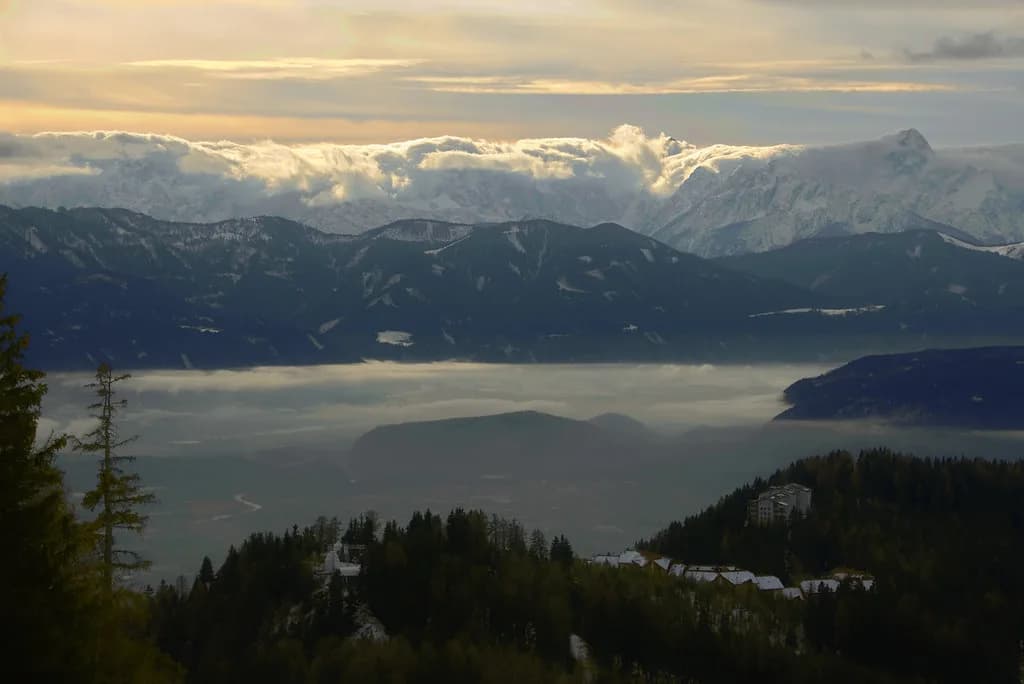
The Weissensee region describes itself as a nature park and a member of the Alpine Pearls cooperation. It has received the European Prize for Tourism and Environment, and the region frames its identity around clear water, intact flora and fauna, and gentle tourism. Expect a largely unspoilt shoreline with secluded bays rather than a dense strip of lakeside development.
The region markets its water as Carinthia's cleanest lake, which is the core of its pitch to nature-minded travelers. Plan around the lake itself — walking stretches of shore and swimming from bays — rather than a promenade lined with facilities.
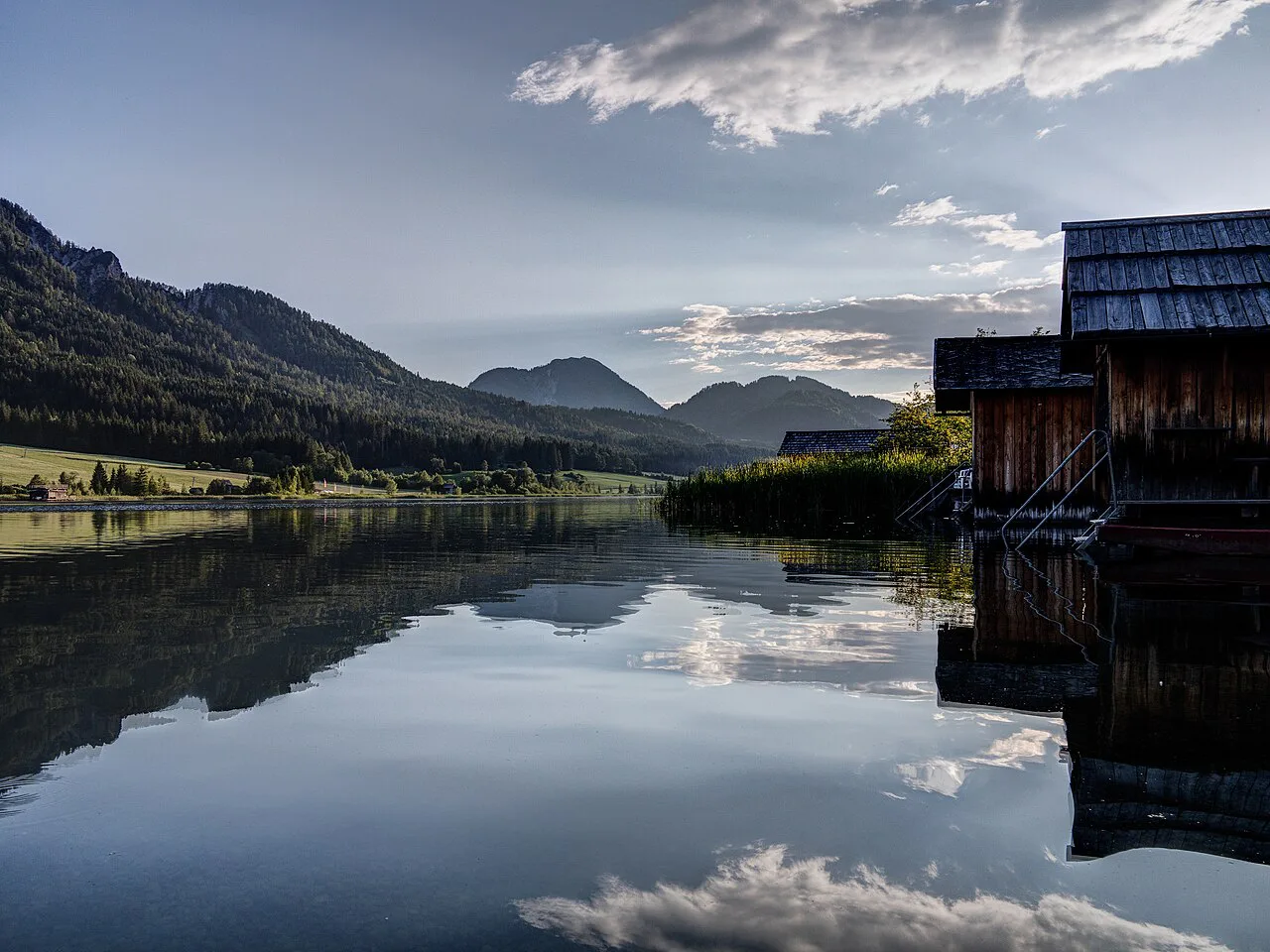
Where the lake sits and how it fits a Carinthian route
Weissensee lies in southwest Carinthia, in the Gailtal (Gail Valley) area and within reach of the wider Villach lake district. Villach is the practical hub for this corner of Austria, and the town and its surrounding lakes are covered in our Villach old town and lakes guide. Build the lakes into a loop rather than treating each one as a separate trip.
The lake sits in the Gailtal, the valley that gives the surrounding Gailtal Valley Alps their name, and the nearest larger town for supplies and services is Hermagor. Treat Hermagor as a base or a stopping point for the eastern Gailtal, with its compact center, and pair a day at Weissensee with a stop there on the way in or out.
Spittal an der Drau, farther west along the Drau, works as a second anchor for a Carinthian loop that takes in the Gailtal and the lakes. Do not try to connect Weissensee, the Drau and the Villach lakes in a single day; the geography rewards two or three nights in the region instead.
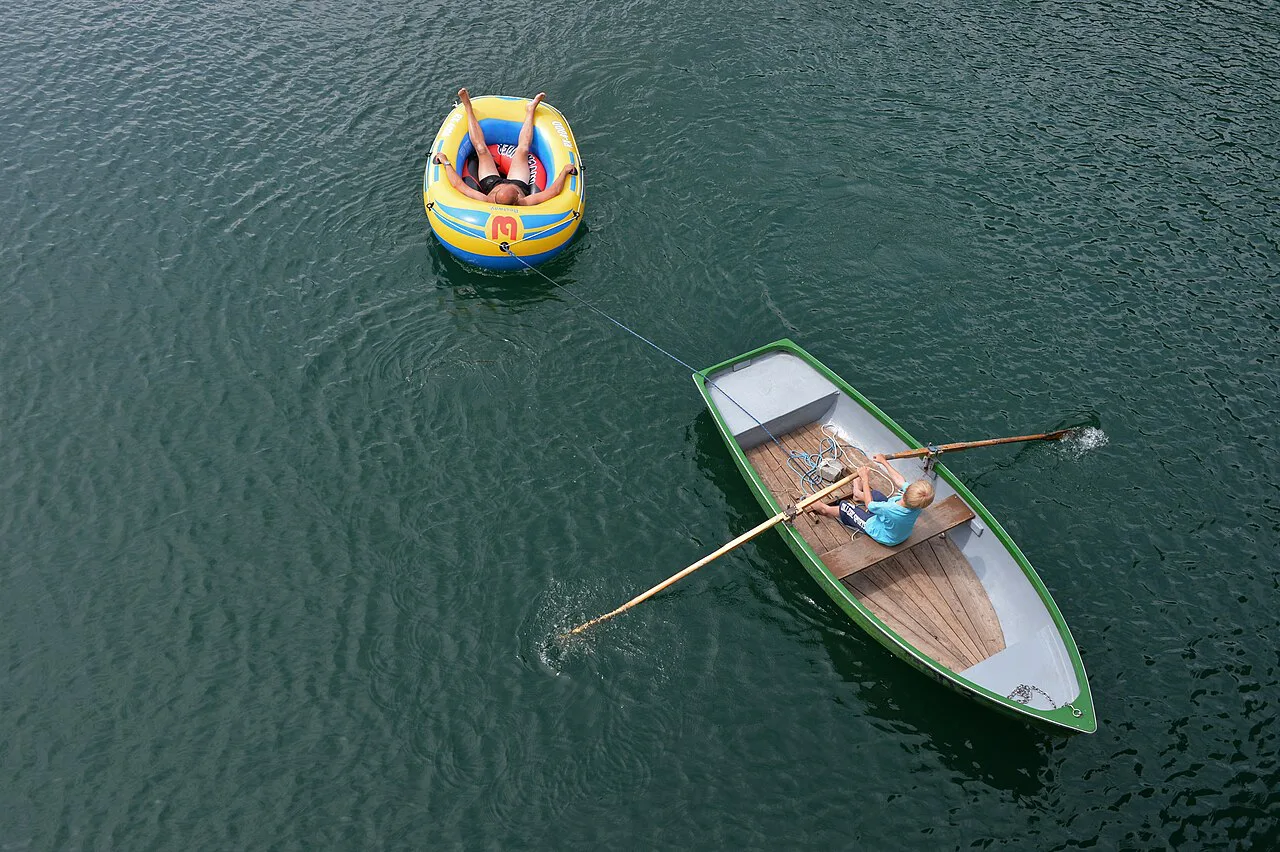
The shoreline: unspoilt shores and lonely bays
The Weissensee shore is characterized by largely unspoilt shores and secluded bays, which is exactly what draws travelers who want calm water and quiet walks. The practical consequence is that you plan your day around the lake itself, walking stretches of shoreline and swimming at bays, rather than around a dense strip of cafes and shops. Bring what you need for a half or full day, since facilities are spread out.
If you want the contrast of a more developed Carinthian lake, Ossiacher See, east of Villach, has a different rhythm and can be paired with the region. Ossiacher See, Carinthia is a useful counterpoint, and the two lakes together show how varied Carinthia's water can be within a short drive.
On the water and around the lake
Summer at Weissensee is built around the water: swimming and exploring the shoreline at your own pace. The region also organizes guided tours, Alpine pastures and huts, and a Slowtrail route that connects the landscape with local food producers. These are the region's own programs, so confirm meeting points and any costs with the local tourist office when you arrive.
The culinary angle here is Alpe-Adria cooking and Slow Food Travel, which links regional producers with restaurants and huts in the area. That means simple, seasonal dishes from Carinthia and its Italian and Slovenian neighbors rather than international resort menus. It is a good reason to plan a proper lunch rather than a rushed sandwich.
Summer mountain railway and hiking from the lakeshore villages
A summer mountain railway lifts visitors from the lake level into the surrounding slopes, giving access to family hiking without a long climb from the shore. The region promotes this as the way to combine lake time with mountain views, with alpine pastures and huts as natural stopping points. The railway runs seasonally rather than year-round; check the current operating months with the Weissensee tourist office before you plan around it.
Hiking from the lakeshore villages is mostly about altitude gain and open pasture, so sturdy shoes matter more than technical gear. Families can use the mountain railway for the uphill work and walk down, which is the most efficient way to see the lake from above.
Bike trails around Weissensee
The region lists 13 signposted mountain-bike trails with a total length of 160 km around the lake. That is a serious network for a lake of this size and confirms Weissensee as a mountain-biking destination in summer, not just a swimming stop. Bring your own bike or arrange rental locally, and confirm trail conditions with the tourist office before setting out, since alpine terrain changes fast.
If biking is a secondary interest, treat the trail network as an option for a half day rather than the reason for the trip. The lake's main attraction remains the water and the quiet shoreline.
Getting there and getting around
Weissensee sits in the southwest of Carinthia, and the region publishes its own arrival directions and route planning online. The practical approach is by road via the Gailtal, or by train to the nearest rail stations and then onward by bus or taxi. Because bus and rail connections change with the season, use the ÖBB timetable and local Postbus information for your travel dates rather than relying on any fixed schedule from a guidebook.
A car gives the most flexibility for reaching the quieter bays and combining Weissensee with Hermagor or the Drau valley. Without a car, plan around the main villages and the services that operate in summer.
How much time the lake needs
A half day covers a swim, a walk along the shoreline and a meal; a full day adds the mountain railway or a bike loop, and two nights lets you see the lake in different light and weather. Because the shoreline is unspoilt and spread out, combine Weissensee with the Gailtal, the Villach lakes or Spittal an der Drau rather than treating it as a standalone resort.
If you are coming from the Villach area, pair Weissensee with the Villach lakes, including Faaker See and its quiet southern shore, on a second day. Faaker See, Carinthia works well as an evening stop, with a compact village and views back to the Mittagskogel, and it keeps the driving short.
Weissensee in winter, briefly
In winter the region shifts to ice skating on the lake and cross-country skiing, according to its own seasonal marketing. Conditions vary year to year, and the lake's ice is not something to assume; follow local guidance on whether skating is open. Summer remains the main season for most travelers visiting Carinthia's lakes.
Weissensee the lake, Weißensee the Berlin district, and the TV series
Many searches for Weissensee are actually about the German TV series set in East Berlin between 1980 and 1990, which follows two families across the decades before the fall of the Wall. The series shares its name with the Berlin borough of Weißensee, a district of the German capital. Neither has anything to do with the Carinthian lake beyond the name.
If you are planning a trip to the lake, ignore the streaming listings and the Berlin district entirely; the Austrian lake is in Carinthia, near the Gailtal and the Italian and Slovenian borders. The German spelling with the eszett, Weißensee, is also the name of the Berlin district, which is why the confusion persists in search results.
Is Weissensee the right lake for your Carinthian route?
Weissensee suits travelers who want calm water, unspoilt shoreline and mountain biking or hiking over a busy lakeside promenade with bars and boat rentals on every corner. Choose it for a day or two, and combine it with Hermagor, Spittal an der Drau or the Villach lakes to build a proper Carinthian circuit.
Before you go, confirm the mountain railway's operating months, the guided tour schedule and the bike trail conditions with the Weissensee tourist office, since these change seasonally. For the wider region, start with the Villach guide and work outward from there.
Explore more Villach guides
Frequently Asked Questions
Is Weissensee in Carinthia the same as the Berlin district Weißensee?
No. The Carinthian Weissensee is a nature-park lake in southwest Austria, near the Gailtal and the Italian and Slovenian borders. Weißensee, spelled with an eszett, is a borough of Berlin, and the German TV series of the same name is set in East Berlin between 1980 and 1990. The shared name is the only connection.
Can you swim in Weissensee?
Yes. Swimming is one of the region's core summer activities, and the lake is marketed for its clear water. The shoreline is largely unspoilt, so plan to swim from natural bays rather than from a large public lido, and bring what you need for the day.
How do you reach Weissensee without a car?
The region publishes arrival directions online, and the practical route is by train to a Carinthian rail station and then onward by bus or taxi. Because bus and rail schedules change with the season, check the ÖBB timetable and local Postbus connections for your specific travel dates before you book.
Sources
Notes for your next Austrian town break
Optional updates when we add or revise town guides.
You might also like
Continue reading
More guides you'll find useful