Faaker See: A Lake Guide to Carinthia's Turquoise Water
Plan a visit to Faaker See in Carinthia: the shoreline villages, the lake island, Dobratsch viewpoints, and nearby sights a short drive from Villach.
On this page
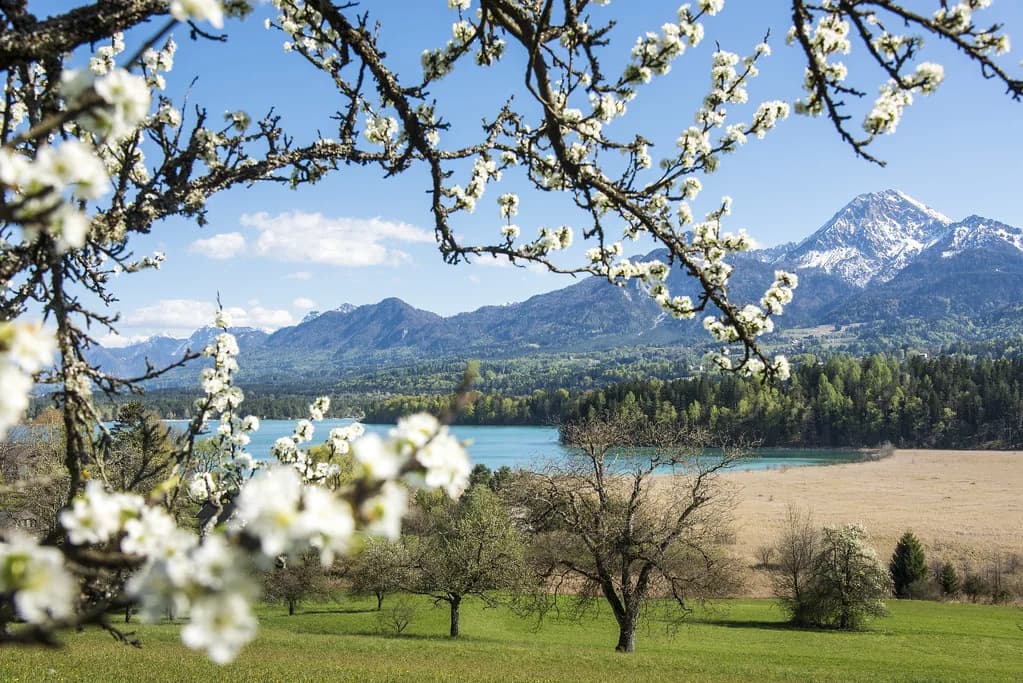
Faaker See is worth a half day to a full day, and its appeal is geographic more than monumental: a compact lake of unusual turquoise color in southern Carinthia, set just south of Villach and beneath the Mittagskogel. You come for the shoreline villages, the small island that serves as the lake's signature image, and the mountain road above it rather than for a checklist of museums. This guide covers how the lake is arranged, what the paid Villacher Alpenstraße adds, which nearby sights fit around the water, and how the lake fits into a route through Carinthia.
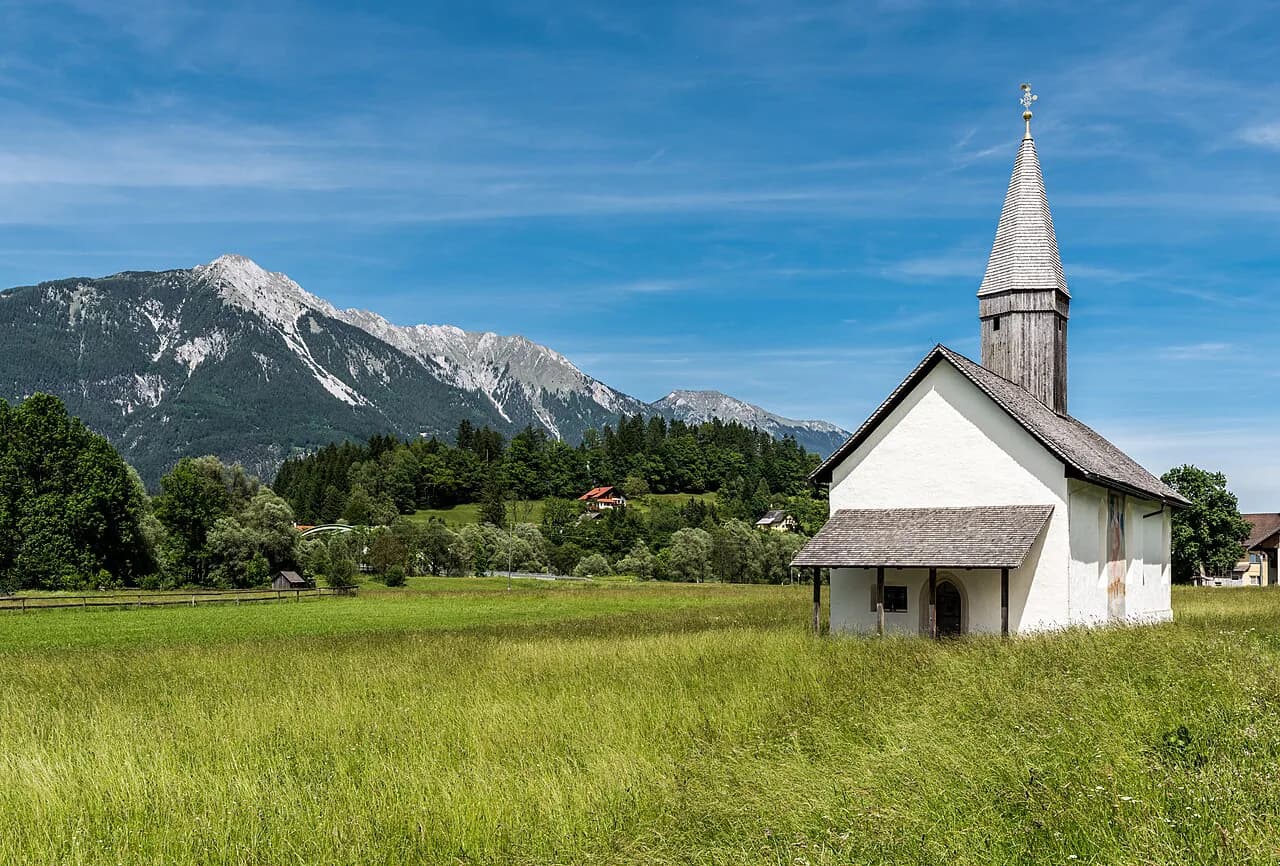
Faaker See: southern Carinthia under the Mittagskogel
The lake lies in the far south of Austria, in Carinthia, close to the borders with Italy and Slovenia. Villach, Carinthia's second-largest city, sits just to the north and works as the practical base: it is the transport hub, the supply stop and the point from which the Südautobahn and the local roads fan out. The Mittagskogel rises above the southern shore, and it is that wall of rock behind the water that gives the lake its postcard framing.
Faaker See is not a large lake, which is the key to planning it well. Its villages sit close together around the shore, so a car lets you link the water, a mountain road and one or two nearby attractions in a single loop without long transfers. Travelers relying on trains need to work from Villach and accept that the shoreline itself is spread out rather than walkable end to end.
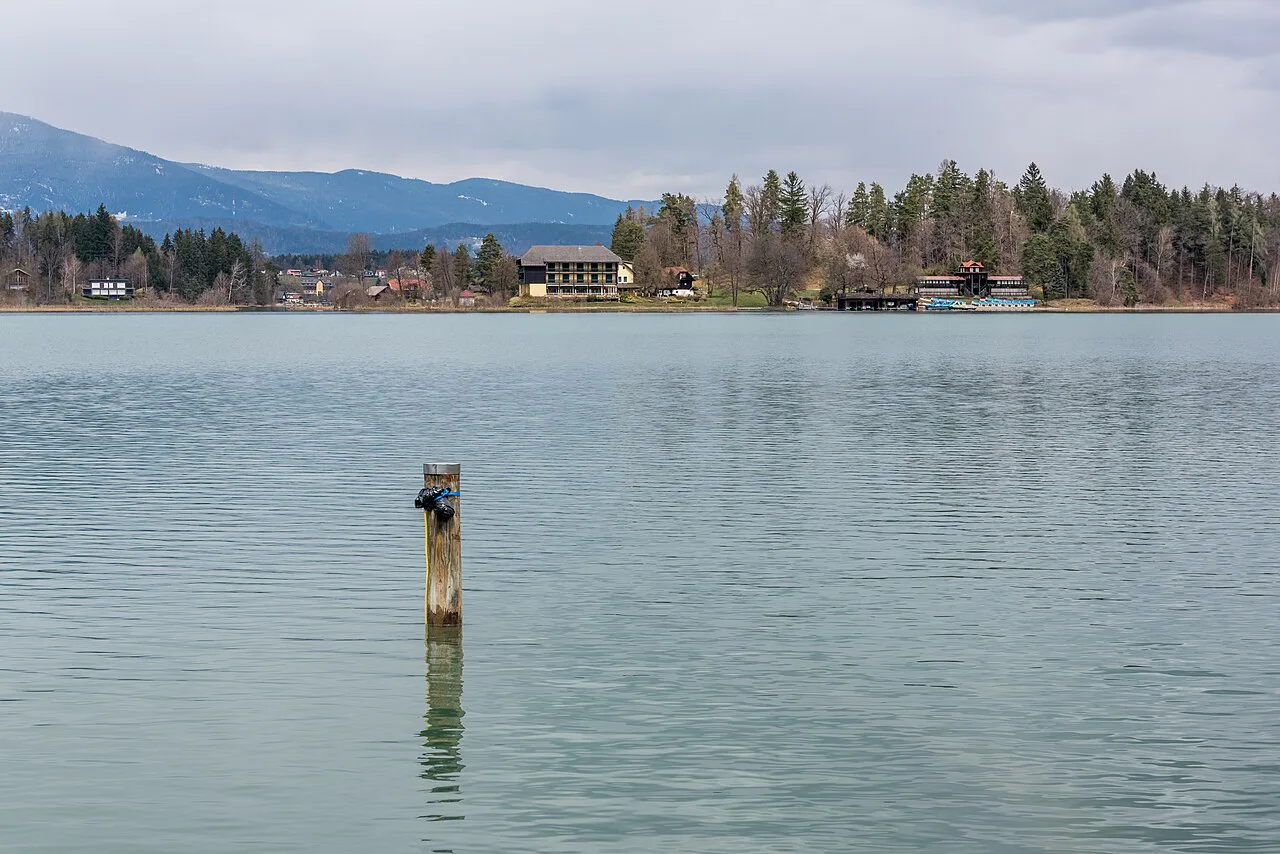
How the shoreline is arranged: Faak am See, Drobollach and Egg
The shore is a ring of small settlements rather than one town. Faak am See is the village most associated with the lake, Drobollach sits on the northern side toward Villach, and Egg lies on the southern shore. Because each is a separate place with its own access road, decide first which side you want to be on, then treat the rest of the ring as a drive rather than a stroll.
For orientation, picture the water as a bowl with the Mittagskogel to the south and Villach to the north. The northern shore is the quicker approach from the city and the autobahn, while the southern villages put you closer to the mountain backdrop and to the roads climbing toward the Dobratsch. Parking in the villages is the usual constraint in high season, so arrive earlier in the day if you plan to stop in more than one place.
The lake island is the image most travelers associate with Faaker See, a small wooded islet just off the shore. Treat it as a view and a photograph rather than an excursion: the guide's advice is to see it from the shoreline and build the rest of the day around the villages and the mountain road.
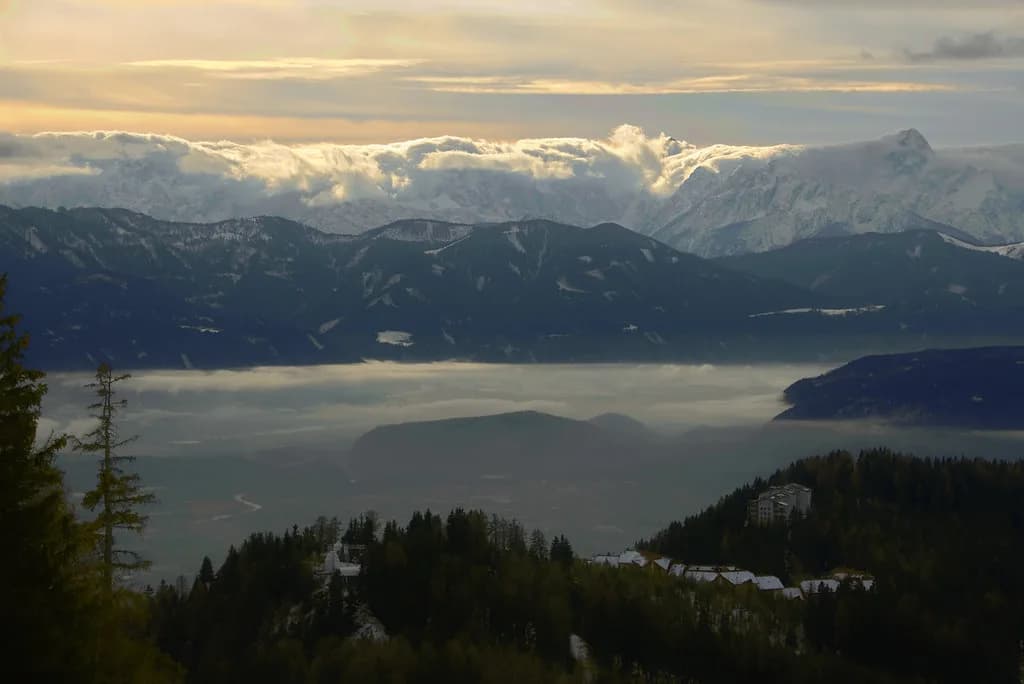
Viewpoints: the Villacher Alpenstraße up the Dobratsch
The Villacher Alpenstraße is the single best viewpoint investment at the lake. It climbs about 16.5 kilometers from near Villach up toward the Rosstratte area below the Dobratsch summit, and the reward is a panorama that takes in the Karawanken and the Julian Alps, with views into neighboring Italy and Slovenia on clear days. It is a toll road: a car pays 19.50 euros for a single trip, and passengers without a Kärnten Card pay 5 euros each.
The road is seasonal rather than year-round, and its hours are the detail most visitors get wrong. It is tolled from mid-April to mid-November, runs daily from 5:00 to 21:30, and closes to traffic overnight; motorcycles are banned between 20:00 and 7:00. In June, July and August the nightly closure runs from 22:00 to 4:00.
At the top, the Rosstratte plateau has an alpine garden with more than 800 plants and a play area, and a gentle walk of roughly an hour reaches the summit if you want the actual high point; the drive itself already delivers the view. Weekdays are calmer than weekends, when queues can form at the toll booth.
Nearby sights worth the short drive
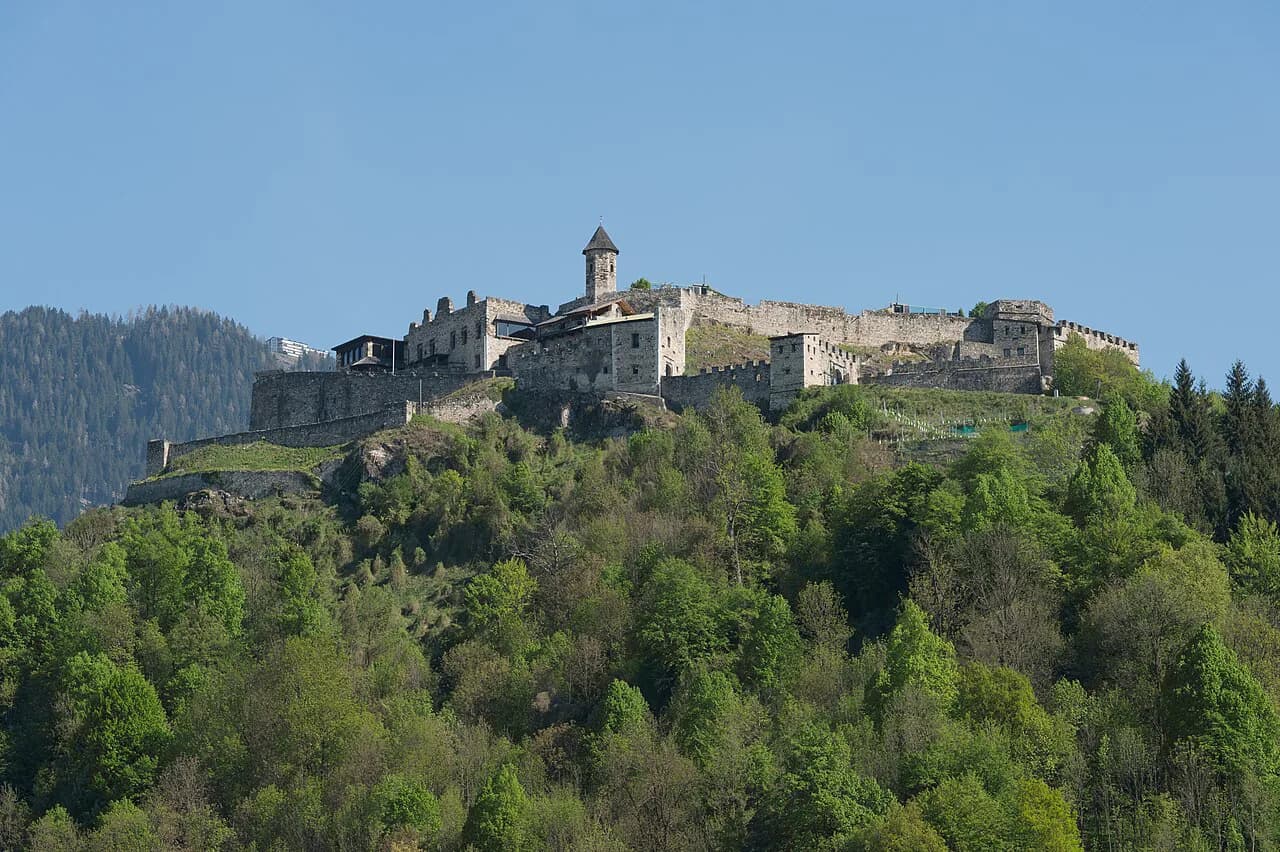
Burg Landskron, on the hillside near Villach above the Ossiacher See, holds two attractions in one stop: the Adlerarena bird-of-prey park and the Affenberg, Austria's largest free-range enclosure for Japanese macaques, where guided walks of about 45 minutes take you through the troop. The bird park can be visited independently of the flight shows, which are the reason most people come; show times shift through the season, so check the day's schedule at the gate rather than planning around a fixed hour.
Tierpark Rosegg, roughly a ten-minute drive from the lake toward the Rosental, spreads more than 300 animals across about 30 hectares, with lynx, ibex, wolves and bison among the species, plus a large playground and a small zoo section. Admission is 10 euros for adults and 6 euros for children aged 6 to 15, with a family ticket at 29 euros; the park opens from early April to the end of October, daily 9:00 to 18:00 with last entry at 17:00.
At Bad Bleiberg, on the slopes of the Dobratsch, the show mines Terra Mystica and Terra Montana take visitors underground by a 68-meter miners' slide and a narrow-gauge train, splitting into a mystic multimedia route on foot and a two-kilometer ride through mining history. Sturdy shoes and warm clothing are advised because the tunnels stay cold. Both are close enough to the lake to combine with a mountain-road afternoon rather than a separate day.
How Faaker See fits a Carinthia route
Give the lake itself half a day for the shoreline and the island view, then add the Villacher Alpenstraße as a second half day if the weather is clear, and hold a third block for one nearby attraction such as the Affenberg or the show mines. That rhythm keeps Faaker See as a base rather than a stop, which suits the way the villages are arranged.
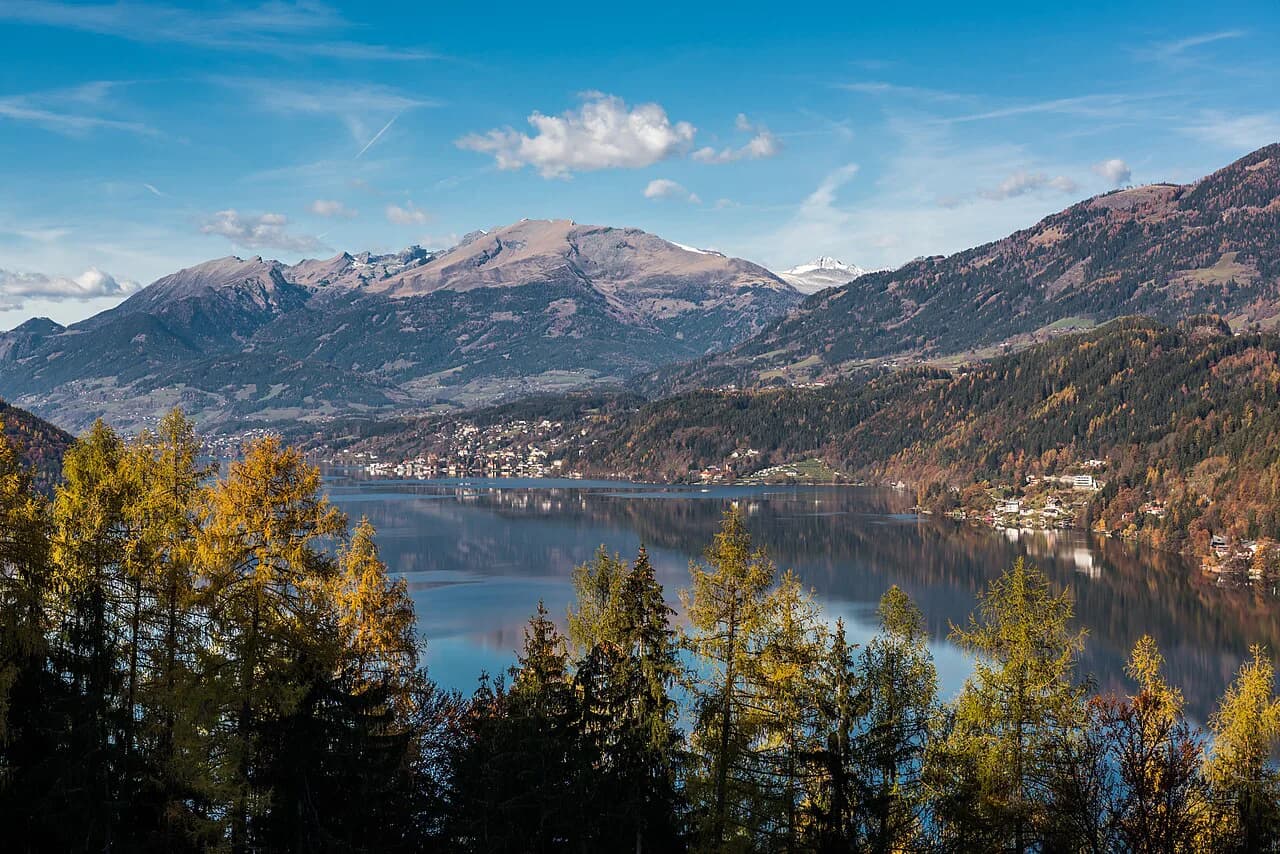
Carinthia's lakes line up conveniently along the Drau valley and the autobahn. The Ossiacher See sits on the other side of Villach and works as a natural companion for the same trip, while travelers heading west can continue toward Millstatt and the Millstätter See without a long detour.
Getting there and getting around
Villach is the rail gateway: long-distance trains on the southern main line stop there, and the lake is a short onward hop by road. There is no shoreline train, so the last stretch to Faak am See or Drobollach means a bus, taxi or rental car, and a car remains the most efficient way to link the villages with the mountain road and the nearby sights.
By road, the Südautobahn passes just north of the lake with exits serving Villach and the Faaker See area, which makes the lake an easy first or last stop on an Austrian route. Expect tolls on the autobahn itself, and note that the Villacher Alpenstraße charges separately. On busy summer weekends, plan around the toll booth queues and the midday concentration of cars in the shoreline villages.
Should Faaker See be a stop or a base?
Treat Faaker See as a base for two to three nights if you want the water, the mountain road and one or two nearby sights without rushing. If your itinerary is tighter, make it a half-day stop: see the shoreline and the island, drive the Villacher Alpenstraße on a clear day, and move on toward the Ossiacher See to the other side of Villach.
Explore more Villach guides
Frequently Asked Questions
Is Faaker See worth visiting?
Yes, if you value a compact alpine lake with a striking color and a mountain backdrop over a list of sights. The draw is the shoreline villages, the island view and the Dobratsch road above the water, not big museums or a historic center.
What town is on Faaker See?
There is no single town on the lake. The shore is a ring of villages, with Faak am See the best-known, Drobollach on the northern side toward Villach, and Egg on the southern shore near the Mittagskogel.
How do you get to Faaker See without a car?
Take the train to Villach, then continue by bus or taxi to the shore; the villages are spread out, so a car or organized transfer is the practical way to reach viewpoints and nearby attractions. Confirm current bus and train times with ÖBB and Postbus before you travel.
Sources
Notes for your next Austrian town break
Optional updates when we add or revise town guides.
You might also like
Continue reading
More guides you'll find useful