Neusiedl am See: A Town Guide to the North End of Lake Neusiedl
Neusiedl am See anchors the north shore of Lake Neusiedl with its main square, lakeside lido, harbor, tower ruin and flat cycle paths into the reeds.
On this page
Neusiedl am See works best as your base at the north end of Lake Neusiedl, not as a checklist of monuments. The center is small enough to cross on foot in a morning, the lido and harbor sit a short walk from the Hauptplatz, and the flat land around town makes cycling the easiest way to reach the reed belt and the villages of the Seewinkel. This guide covers the layout of the old town, the lakeside, the town's own museums and galleries, and how the town fits a rail or car route through Burgenland.
The town belongs to the UNESCO World Heritage region around the lake, yet it keeps a working, everyday feel that the smaller postcard villages do not. That mix is the reason to stay here: you get a real town with a tourist office on Untere Hauptstraße and a main square anchored by the Rathaus, and you are still close enough to the water to walk down after breakfast. The trade-off is that Neusiedl has fewer baroque set pieces than Eisenstadt or the palace towns inland, so treat it as a comfortable anchor rather than a destination in its own right.
Neusiedl am See at a glance
At its simplest, Neusiedl am See is a small town at the north end of the lake, with the Steppensee — the shallow steppe lake — opening out to the south and east. The town's tourism pages group its sights around the center, the shoreline and the flat land beyond, so the distance from a cafe in the center to the water is a short walk rather than a drive. The official region describes the area as a pannonian landscape of water, vineyards and villages that can be explored on foot, by bike or on the water by ferry or canoe.
For planning purposes, three pieces make up the town. First the historic core around the Hauptplatz and the parish church, second the lakeside strip with the Strandbad and the Hafenanlage, and third the flat countryside east and south that belongs to the national park. None of these requires a car, which is rare for a lake town in Austria. If you are building a route across the region, pair Neusiedl with the larger sights inland and use the town as your quiet north-shore end.
How the town is laid out
The center starts at the Hauptplatz, with the Rathaus at Hauptplatz 1 and the civic heart of town around it. Untere Hauptstraße holds the tourist office at number 7, the place to pick up maps and ask about the cycle routes before you set off. The town's own tourism pages list the Strandbad, the harbor, the Ruine Tabor, the Kalvarienberg and the Haus im Puls among its things to see, which gives you a starting order for a walk.
Think of the walk as separate short hops rather than a grand loop through streets. The center, the shoreline, the Kalvarienberg and the tower ruin are all close at hand, so you can link them in whatever order suits the day. Allow a relaxed half day for the center plus the lakeside, and longer if you plan to cycle. The compactness is the point: you will not spend your time in transit between sights.
The lakeside: Strandbad, harbor and the shallow lake
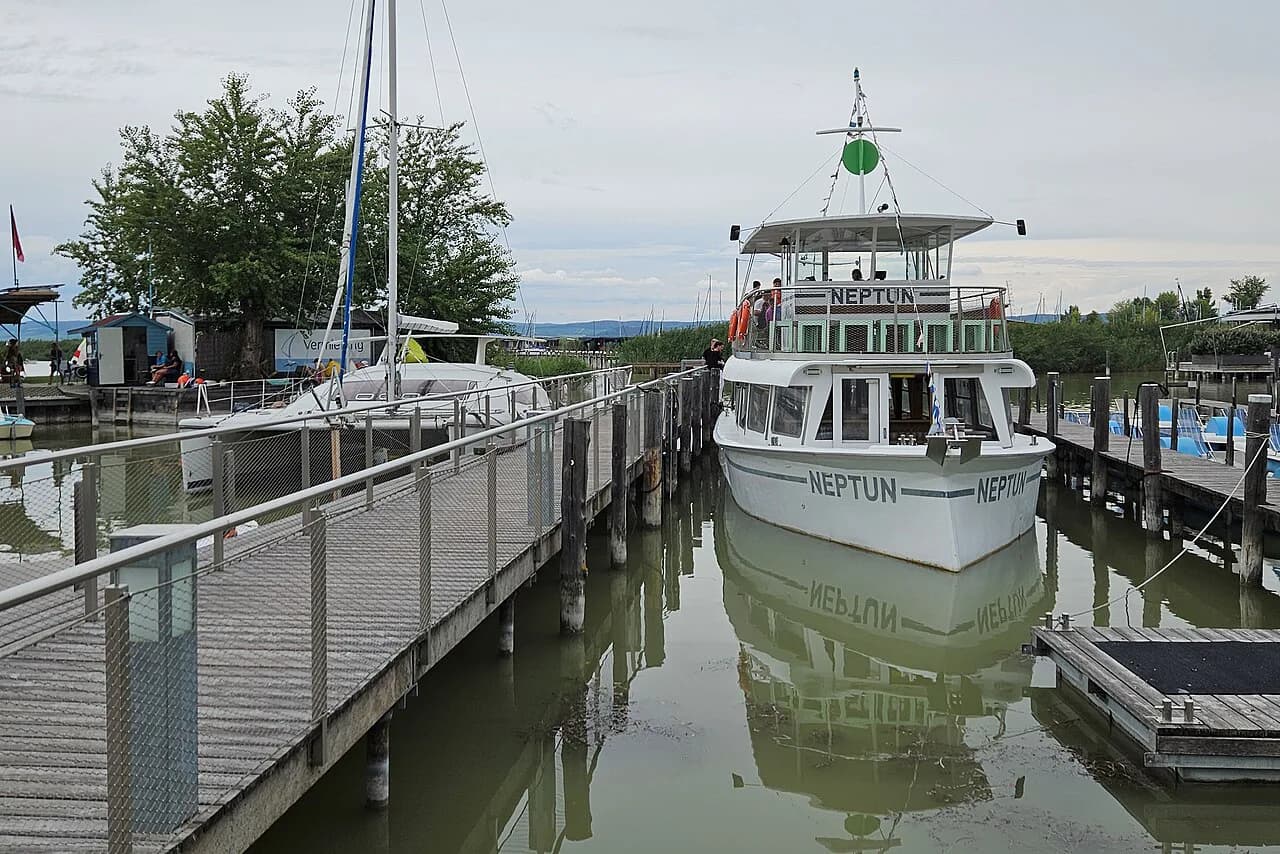
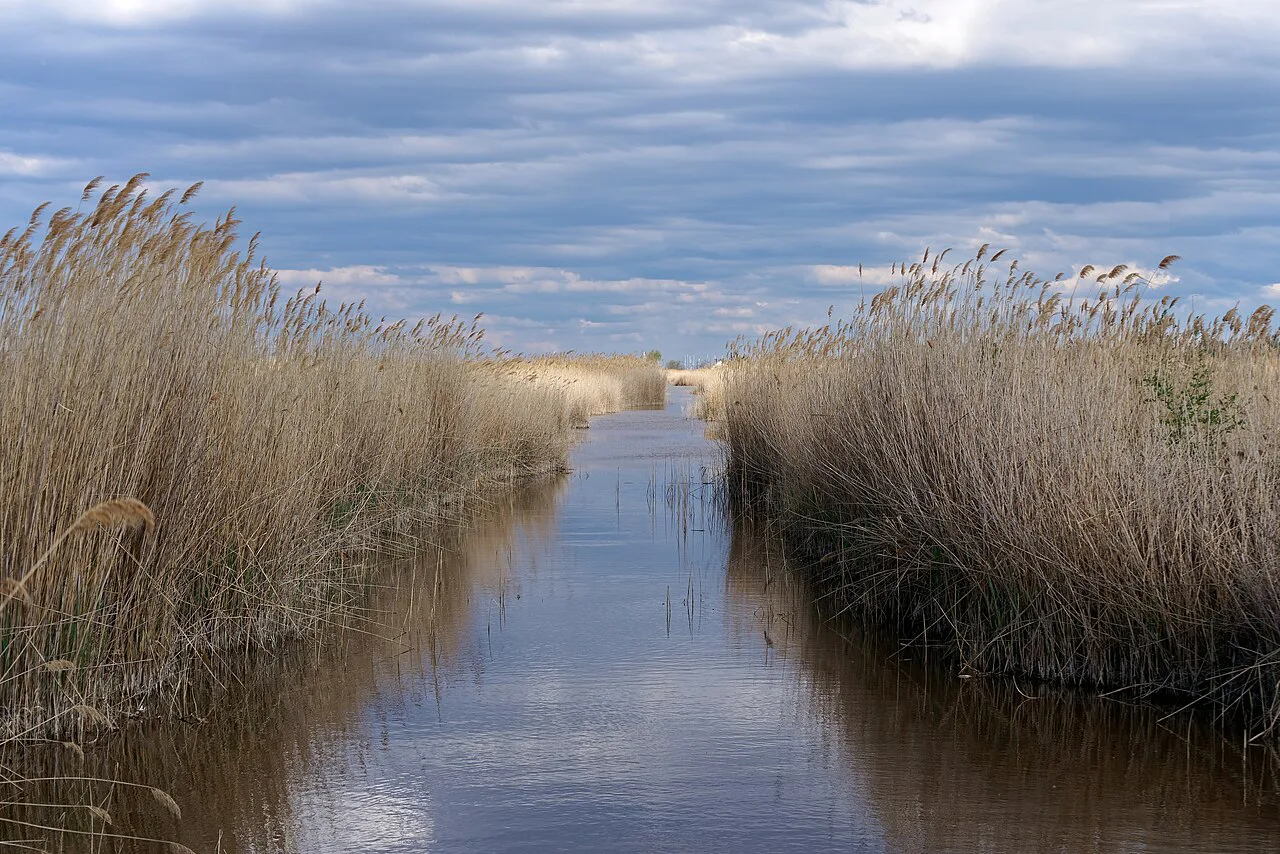
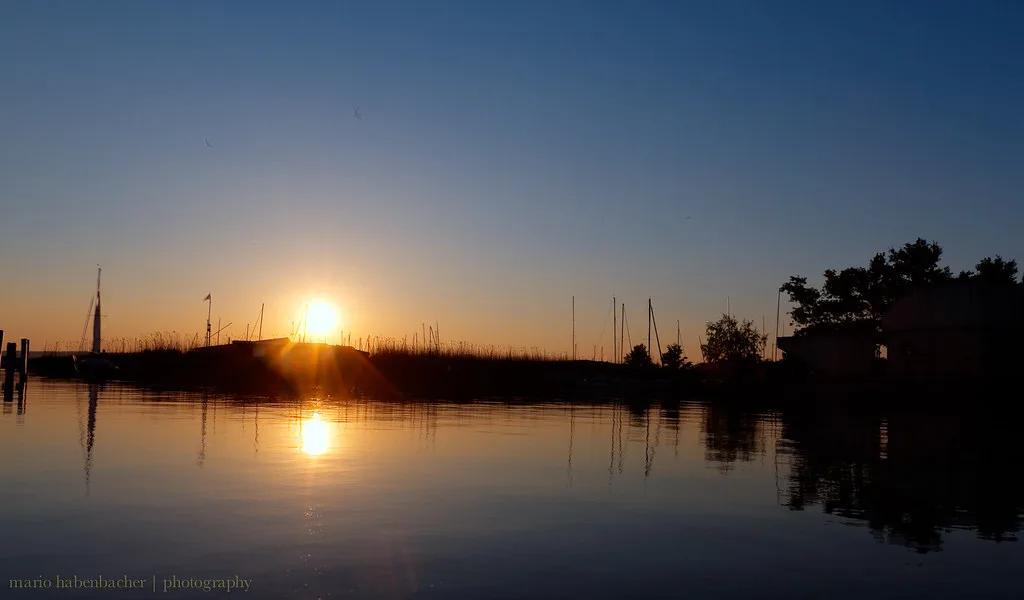
The Strandbad Neusiedl is the town's own swimming area on the lake, and the Hafenanlage next to it is where the boats sit. Because the lake is shallow and warm in summer, the water level and the reed line shift, so the character of the shoreline changes from year to year. The town lists a water temperature page alongside its Strandbad and watersport information on its tourism pages, which is the practical place to check before you commit to a swim.
The lake here is the Steppensee, the shallow steppe lake whose reeds and mudflats are part of what earned the region its World Heritage status. That matters for how you use the water: the open lake is good for sailing, surfing and stand-up paddling, while the reed channels are better seen on a guided canoe tour, which the region promotes as a way to watch the birdlife from the water. Swimming is a summer activity; outside the warm months the lido is a place to walk, not to bathe.
Crucially, the shoreline is not a single beach but a chain of bathing spots and harbors around the lake, each with its own character. Neusiedl's advantage is that its lido and harbor are walkable from the center, so you do not need to plan a parking spot or a shuttle. If you want a second swim later in the trip, the villages along the shore each have their own access, and the region's tourism site covers the bathing options and the lake's bathing spots.
The old town on foot
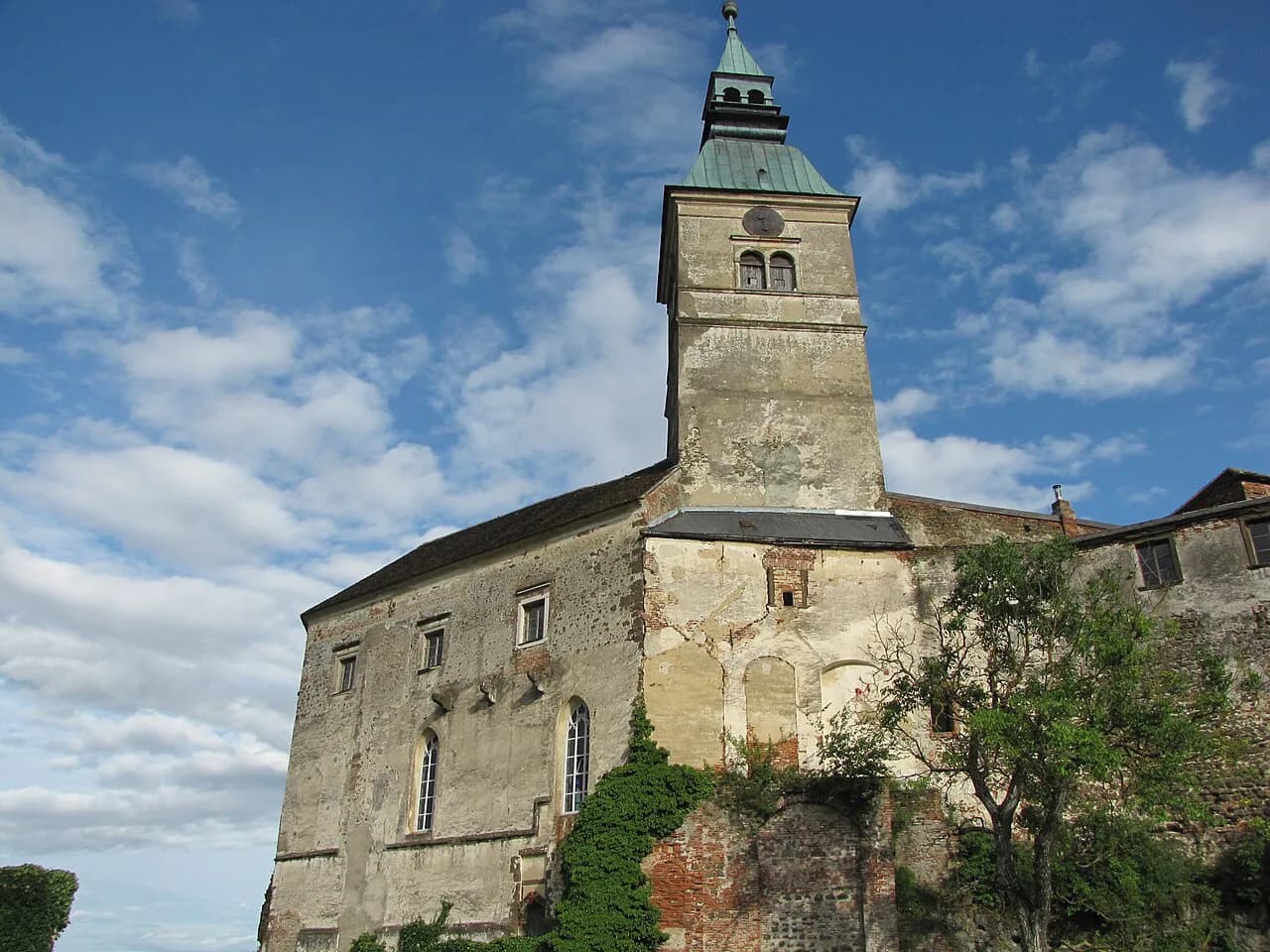
A practical order is the center first, then the Kalvarienberg, the small hill with a devotional path that gives you the one real climb in town. From there, continue to the Ruine Tabor, the ruined tower that is the town's most distinctive historic fragment and a good viewpoint over the roofs and the lake plain. This is short enough to combine with the lakeside walk in a single unhurried morning.
Do not expect a walled medieval core or a baroque palace. Neusiedl's old town is modest, and its interest lies in the combination of civic buildings, the church, the Kalvarienberg and the ruin, all within a few minutes of each other. That modesty is also why the town works well for travelers who want somewhere calm to sleep and eat while spending their days at the lake and in the villages. The town's tourism pages work from the same set of sights without dressing them up.
Museums and galleries
Neusiedl am See keeps a small cultural circuit rather than a major museum. The town's tourism pages name the Haus im Puls, the Weinwerk Burgenland and the moq ART NOW Galerie among its art and culture stops. Check each venue's own program before you build a day around it, since small galleries rotate shows and keep limited hours.
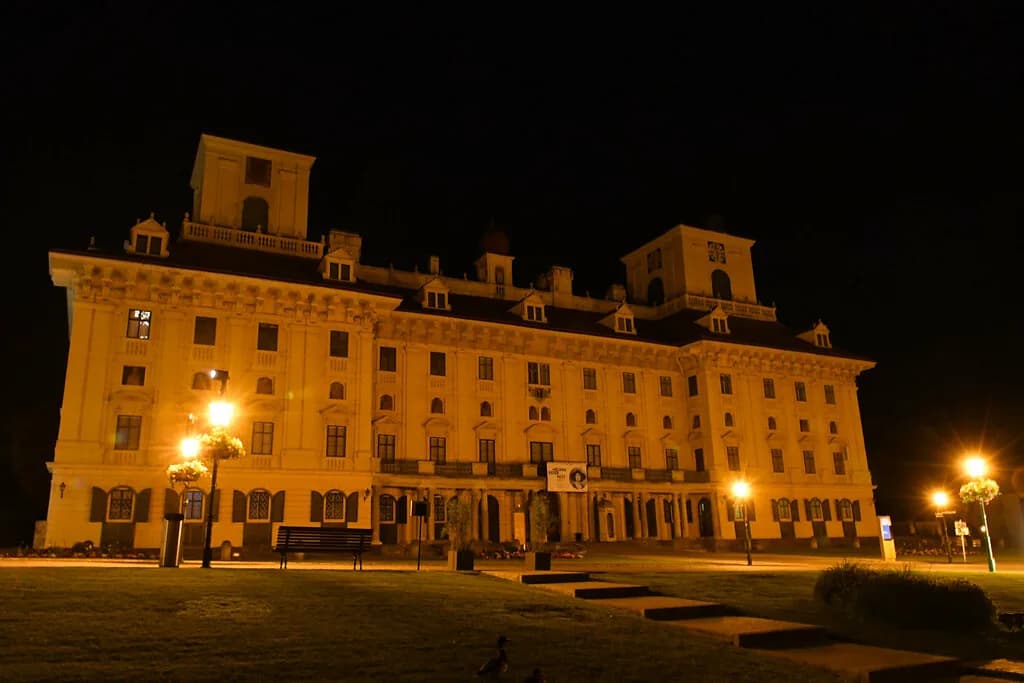
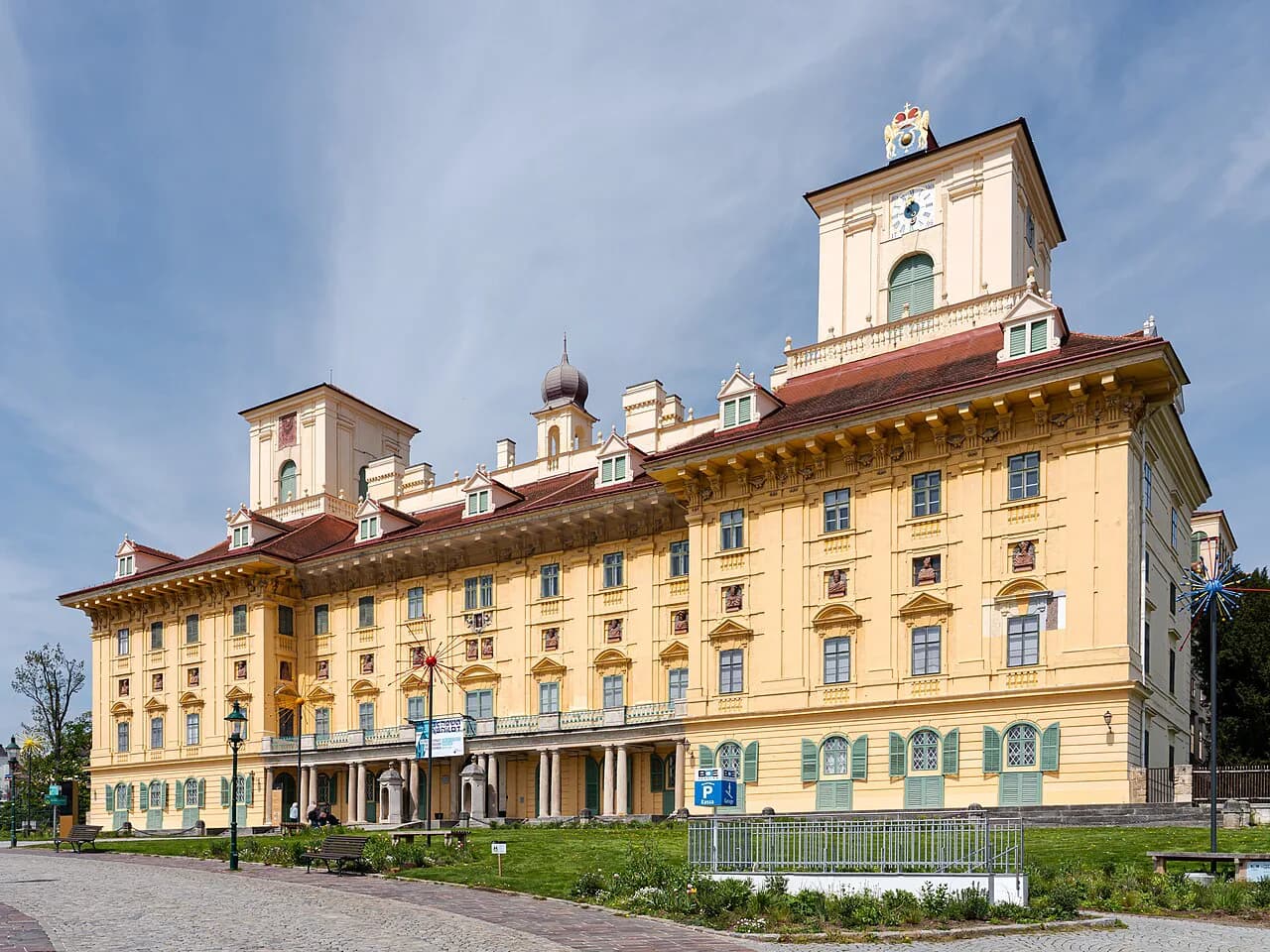
For a deeper museum day, look inland. The region's museums cover the Roman and Celtic past, the Esterházy era and rural life, and many sit in historic buildings that stay cool in summer. Schloss Esterházy in Eisenstadt, with its Haydnsaal and exhibitions on the Esterházy family, and Schloss Halbturn with its baroque architecture and park are the two obvious palace stops. Both are day trips from Neusiedl rather than neighbors, so plan them as separate outings. You can also read our guide to Eisenstadt.
World Heritage and the national park
The Neusiedler See–Seewinkel landscape is a UNESCO World Heritage region because of its shallow lake, reed belt and the wetlands that surround it. The reed belt is not decorative scenery; it filters the water, shelters vast numbers of birds and defines where you can and cannot go. That is why the national park works through marked paths and guided tours rather than open access to every bank. Our guide to Lake Neusiedl covers the lake more broadly.
The region's own marketing leans on this: it presents the area as a nature jewel best explored on foot, by bike or on the water, and it lists the national park and the World Heritage status as core draws. For a visitor, the practical consequence is that the Seewinkel villages east of the lake are the places to see the puszta-like plains and the birdlife, while Neusiedl is where you sleep and eat. Give the national park its own half day rather than squeezing it into a town walk.
Getting there and getting around
Neusiedl am See sits on the rail line along the north shore, which connects it with Vienna and the other Burgenland towns. Buses serve the lake villages, but the timetable is thin outside the season, so check the ÖBB and Postbus schedules for the exact day you travel rather than assuming a frequent service. Arriving by train and renting a bike in town is the simplest car-free plan, because the land around the lake is flat.
By car, Neusiedl is an easy stop on the road corridor east of Vienna, and the roads between the lake villages are short and quiet. Parking in the center is metered in places, and the town publishes a Kurzparkzone page, so read the signs before you leave the car. A car helps most for the inland sights — Eisenstadt, Frauenkirchen, the palaces — where rail connections are less direct.
On two wheels, the region promotes a Nationalpark Radweg, a loop through the Neusiedler See–Seewinkel national park and along the Einser Canal on the Hungarian side, linking nature sites across the border. The lake's flat profile makes distances feel shorter than the map suggests, but wind off the open water can turn an easy ride into a hard one. Plan the loop for the morning and keep the afternoon free for the lido.
Where Neusiedl am See fits a route
Treat Neusiedl as the north-shore anchor of a Burgenland loop. From here you can reach Rust, with its storks and old town, and Mörbisch on the southern shore, and the villages of the Seewinkel to the east, all within a short drive or a longer bike ride. Eisenstadt, the regional capital with the Esterházy palace and its Haydn connection, makes the natural inland counterweight.
If you are crossing Austria by rail, Neusiedl fits neatly between Vienna and the Burgenland towns, and it is close enough to Eisenstadt for a combined stop. Travelers driving from Vienna toward Hungary can use the town as a first or last night on the lake, with the added advantage that the lido is walkable after a long day on the road. The town is not a hub for the whole country, but it is a genuinely convenient base for this corner of it.
Practical trade-offs
Midsummer on the lake is hot and largely shadeless away from the reeds, so plan the town walk and the cycling for the morning and save the middle of the day for the water, a museum or a shaded courtyard. The regional tourism board suggests exactly this: churches and museums with thick walls stay cool, and shaded gardens slow the afternoon down. The Basilika Frauenkirchen, with its richly decorated ceiling, is a good inland stop on a hot day, and the region promotes it for precisely that reason.
The honest trade-off is that Neusiedl is a working town, not a showpiece. Its center is pleasant rather than spectacular, and its main pleasures are the lake access, the flat cycling and the short walk to the water. If you want baroque grandeur, give your time to Eisenstadt and the palaces and treat Neusiedl as the relaxed base; if you want the lake and the reed belt, the town gives you both without a car.
Should Neusiedl am See be your lake base?
Yes, if you want a walkable lake town with a lido, a harbor, a short old-town loop and flat cycle paths to the national park, and you are happy to take the train or a short drive for the palaces and basilicas inland. No, if you are chasing dense baroque architecture on every street — Eisenstadt and the palace towns deliver that better.
Build the trip around one morning in the center and on the Kalvarienberg, an afternoon at the Strandbad or on a canoe tour, and a separate day for the Seewinkel and the World Heritage landscape. That shape uses the town for what it does well and sends you inland only when the sights there justify the trip.
Explore more Eisenstadt guides
Frequently Asked Questions
Is Lake Neusiedl worth visiting?
Yes, for the combination of shallow water, reed belt, birdlife and flat cycling, and because the lake villages and the national park sit close together. Neusiedl am See gives you a walkable base with a lido and harbor, while the World Heritage landscape and the Seewinkel plains reward a separate half day. Travelers who want dense baroque architecture should spend more time in Eisenstadt and the palace towns.
Sources
Notes for your next Austrian town break
Optional updates when we add or revise town guides.
You might also like
Continue reading
More guides you'll find useful