Rust, Austria: Old Town, Storks and Lake Neusiedl Guide
Plan a visit to Rust, Austria, the free town on Lake Neusiedl: its UNESCO-listed old town, baroque burgher houses and how long to allow.
On this page
Rust is a small free town on the western shore of Lake Neusiedl (Neusiedler See) in Burgenland, near the Hungarian border, and it needs about half a day. The draw is a dense old town of baroque and Renaissance burgher houses, protected as part of the Fertö–Neusiedler See UNESCO World Heritage listing, plus the storks that nest on the chimneys. This guide walks through the layout, the buildings worth finding and how the town fits a route through Burgenland by train or car.
What Rust is and where it sits
Rust holds the status of a Freistadt, a free town, and spreads between the reed beds of the lake and the low hills behind it. The whole historic core covers around 9 hectares and shelters roughly 320 residents, which makes the center small enough to cross on foot in minutes. It is one of the westernmost points of the lake that most visitors see, and Hungary lies just south along the same shoreline.
The setting explains the town's character: lake, reeds and vineyards rather than Alpine valleys or baroque abbeys. Rust belongs to the northern Burgenland lake district that fills the gap between Vienna and the Hungarian plain, and it sits close to Neusiedl am See and the lake villages to the north.
How the old town is laid out
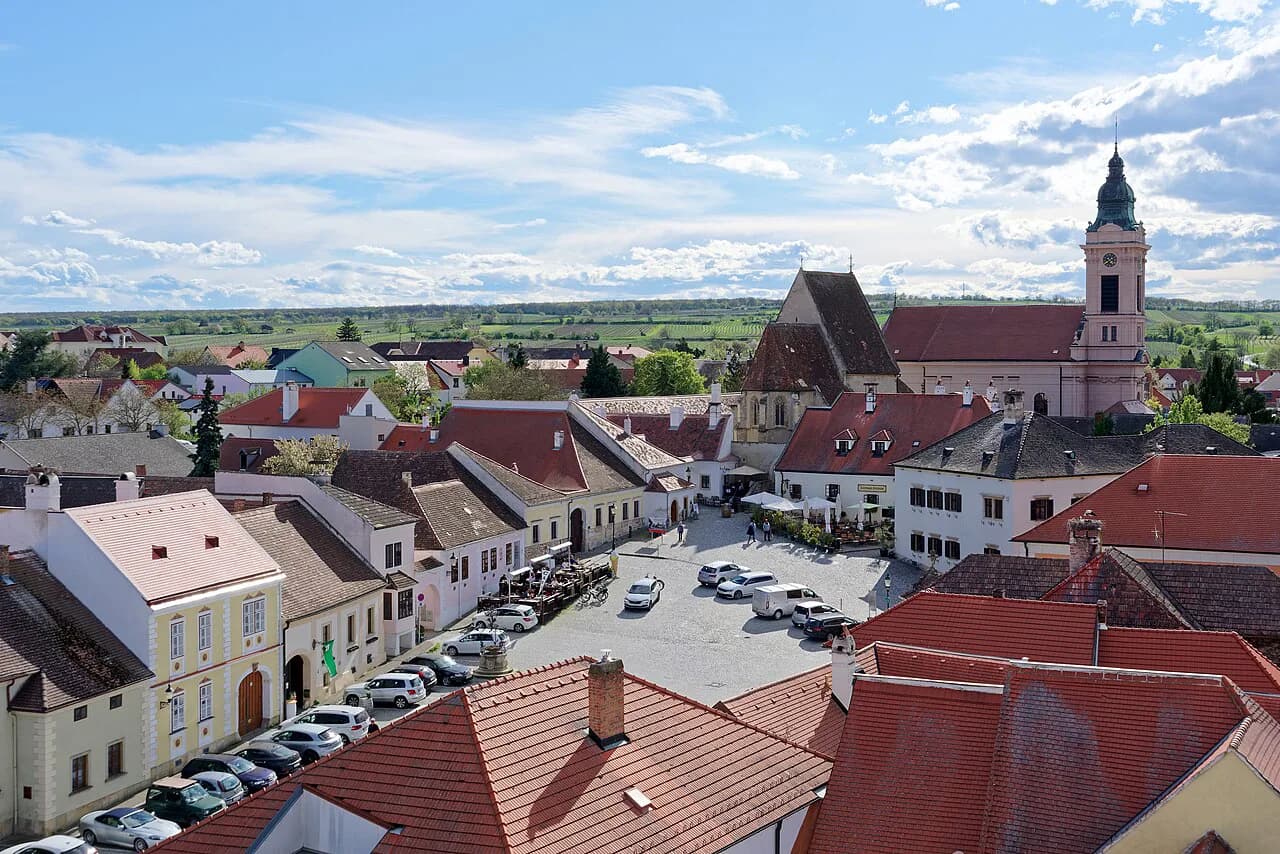
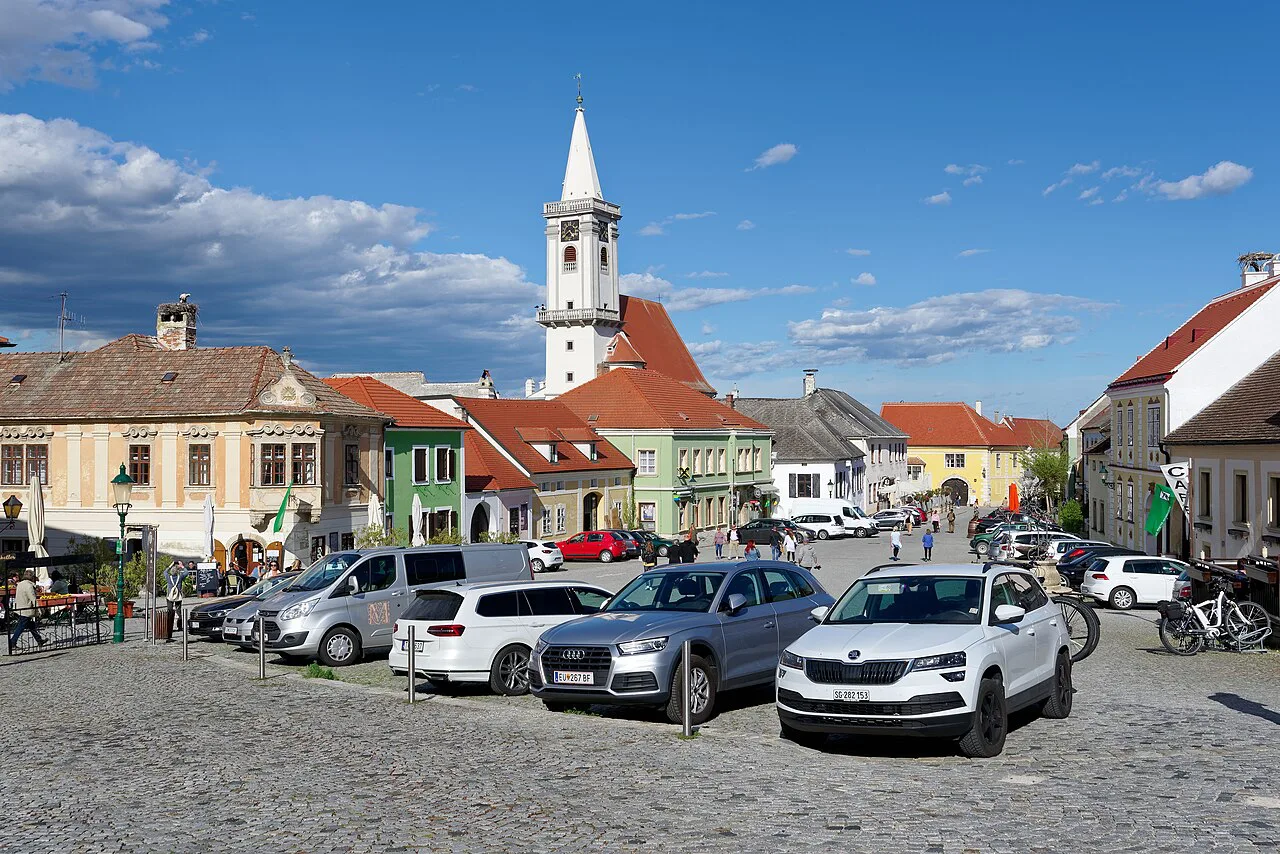
The Altstadt, the old town, is a compact knot of burgher houses built between the 16th and 19th centuries, with baroque or Renaissance facades, oriel windows, crests and stucco decoration. The protected area covers the whole historic center under heritage law, not only a single street. Walk it once in a loop and you see the pattern: narrow lanes opening onto small squares, elaborate houses on every side.
Conradplatz is the natural anchor, sitting at the heart of the center and holding the tourist office at number 2. Use it as the entry point, take a loop through the lanes, and return to it when you want directions or town information. The tourist office was showing as closed when checked in October 2026, so check its hours before counting on it.
Rust's UNESCO status and why the center survived
Rust's old town was inscribed on the UNESCO World Heritage list in 2001 together with the Fertö–Neusiedler See cultural landscape, a shared listing across the Austrian and Hungarian sides. The center survived intact for a simple reason: when the Council of Europe picked model towns for the 1975 European Architectural Heritage Year, Rust was chosen precisely because its houses were still lived in and worked from, not a museum quarter. The distinction recognized that functioning character as much as the facades.
That history matters on the ground. You are walking through a town where people still live above their cellars and shops, so the streets keep their everyday function rather than reading as a staged set. The 9-hectare core is home to about 320 residents.
Walking the Altstadt: plaques, squares and lanes
Blue-white plaques mark the protected buildings street by street, which turns a simple walk into a self-guided survey of the town's architecture. Follow the plaques rather than a fixed route; the lanes are short and every detour loops back toward Conradplatz. Allow roughly an hour for a careful circuit that stops at the plaques and facades.
The old center is under the protection of the Hague Convention for the safeguarding of cultural property, which is why the plaques and the dense fabric are treated as a single whole rather than individual monuments. It also explains why the streetscape feels so consistent: the streetscape itself is the monument.
The Fischerkirche and what else to see inside the center
The Fischerkirche, the fishermen's church, is the building most visitors seek out beyond the burgher houses, known for its tracery windows. It anchors the town's older ecclesiastical history and gives the walk a focal point separate from the domestic architecture.
Beyond the churches, the pleasure of Rust is the domestic architecture itself: portals, window frames, crests and oriel windows repeated in different variations from house to house. A second walk in the evening, when the tour groups thin, shows the facades in a different light.
Storks on the chimneys
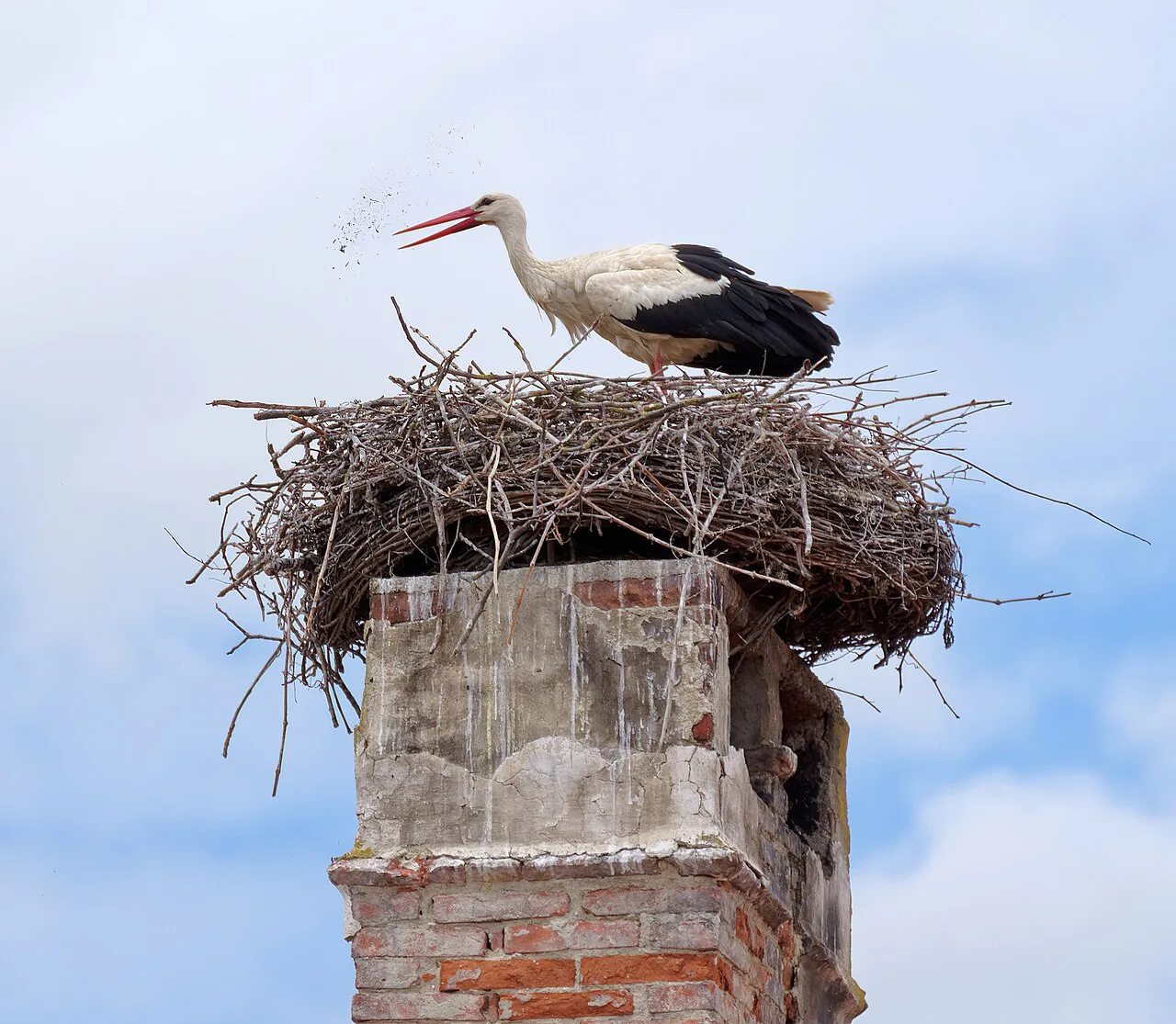
Rust is known for storks that nest on the town's chimneys, part of its identity as a lake-marsh settlement next to the reed beds of Neusiedler See. Nesting is seasonal and varies year to year, so look up in the warmer months rather than planning travel around a hard date.
A pair of binoculars earns its weight here: the nests are high above eye level, and the rooftops are part of the walk rather than a separate excursion.
How long Rust needs
A half day is the right booking for the center alone: one unhurried walk through the lanes, the Fischerkirche and a stop for coffee covers the core. Add an hour or two if you want to sit by the lake shore and watch the water. Travelers pairing Rust with another Burgenland stop can comfortably reach it in the morning and be elsewhere by afternoon.
The town rewards a slower pace than its size suggests. Two shorter visits, one at midday and one in the late afternoon, beat a single rushed pass through the plaques and lanes.
Getting there and onward
Rust sits on the western shore of Neusiedler See, and the nearest useful rail and bus hubs are around Neusiedl am See and Eisenstadt; check the current ÖBB and Postbus timetables for connections rather than relying on fixed times. By car, the town is reached from the lake road network and is a straightforward drive from Eisenstadt.
From Vienna, the practical approach is to take a train to the lake area and connect onward by bus, or to drive, since the lake villages are spread out. This guide treats Rust as a rail-and-bus friendly stop, but the last leg should be confirmed against current timetables.
Where Rust fits a Burgenland route
Rust pairs naturally with Eisenstadt, the Burgenland capital, and with the lake villages north along Neusiedler See. Build a loop from Vienna through Eisenstadt to Rust and back, using the lake road as the spine. It is also a logical final stop before crossing toward Hungary.
For a slower route, stack Rust with the villages around the lake: Neusiedl am See for the northern shore and Podersdorf am See for the wide lake front.
What it costs
There is no single ticket for Rust: the old town is public streets and the plaques are free to follow. Charges apply only at individual sights such as the Fischerkirche, if it is open for visits, and any events or guided tours the town runs. Where a price matters, confirm it with the tourist office or the sight itself.
Budget for a lakeside meal or coffee rather than entry fees. That makes Rust one of the cheaper stops in a Burgenland itinerary, which is part of its appeal as a half-day add-on.
Practical constraints
The tourist office at Conradplatz 2 is the reliable point for current opening details and information about which buildings are accessible. It was showing as closed when checked in October 2026, so confirm current hours. The regional tourism pages also list Rust's old town among the area's sights worth seeking out.
Church interiors and other buildings may keep set hours, so build a buffer into your day if a particular sight is important to you. The lake villages to the north are useful alternatives when a particular sight is shut.
Is Rust worth the half day?
Yes, if you want one compact, walkable old town rather than a string of attractions. Rust offers a 9-hectare historic core, baroque facades and the Fischerkirche in a single morning, with the lake right beside it.
Build it into a Burgenland loop anchored on Eisenstadt and the lake villages. That route gives you UNESCO streets one day and open water the next.
Explore more Eisenstadt guides
Frequently Asked Questions
Is Burgenland Austrian or Hungarian?
Burgenland is an Austrian federal state, but it sits on the frontier where the Austrian and Hungarian sides share landscapes and history. Rust itself is Austrian, with the Hungarian border just to the south and the shared Fertö–Neusiedler See cultural landscape crossing the line.
Where is Rust in relation to Lake Neusiedl?
Rust sits on the western shore of Lake Neusiedl, in the northern part of Burgenland, close to the Hungarian border. It is best reached by car or by bus from the lake rail hubs such as Neusiedl am See or Eisenstadt; check current timetables for the last leg.
Do you need a car to see Rust?
No. The old town is compact enough to walk in full, and the lake district is served by ÖBB trains and Postbus routes, so the town can be done without a car if you check the current timetables. A car makes combining Rust with more remote lake and village stops easier.
Sources
Notes for your next Austrian town break
Optional updates when we add or revise town guides.
You might also like
Continue reading
More guides you'll find useful