Kufstein, Austria: Fortress, Old Town and the Inn River
Kufstein packs a clifftop fortress, a compact old town, the noon Heroes' Organ and the cobbled Römerhofgasse into one stop between Innsbruck and Salzburg.
On this page
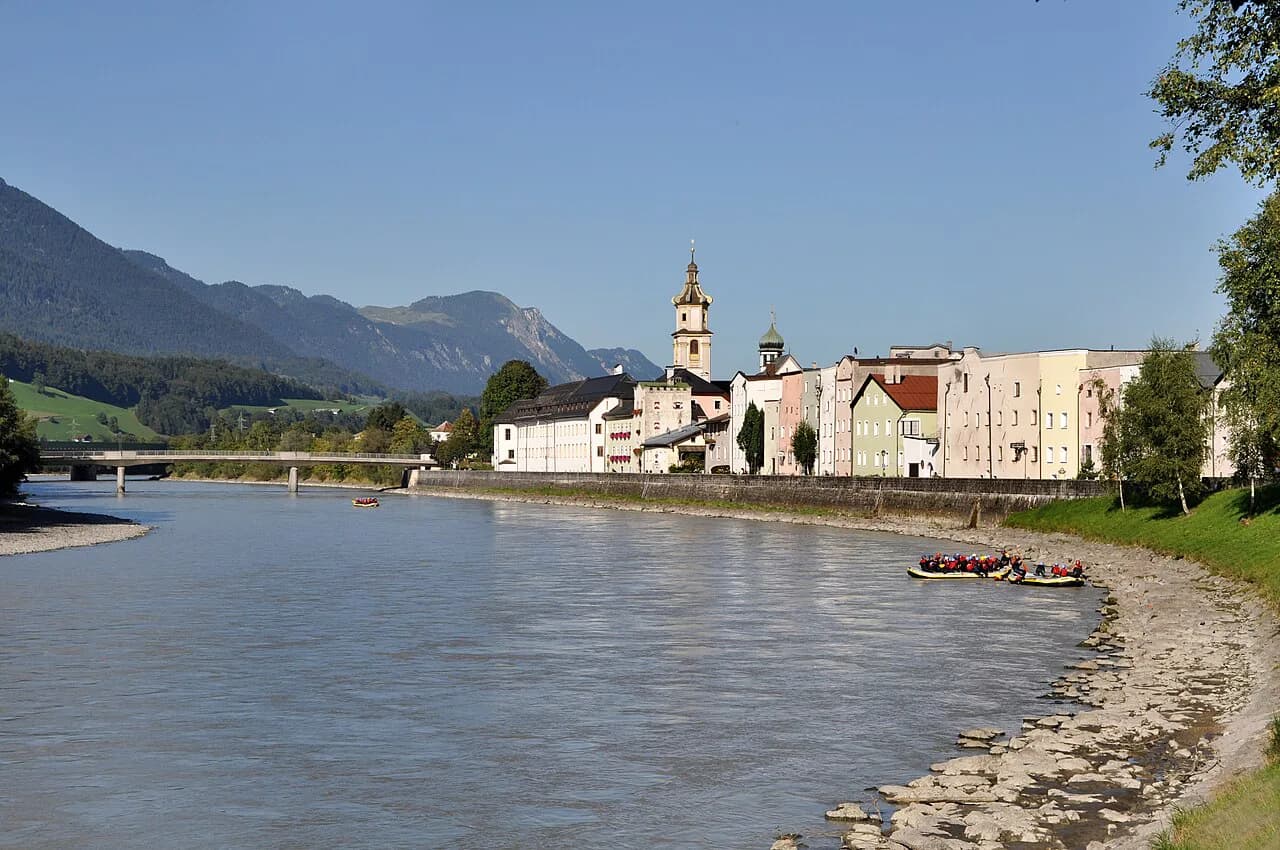
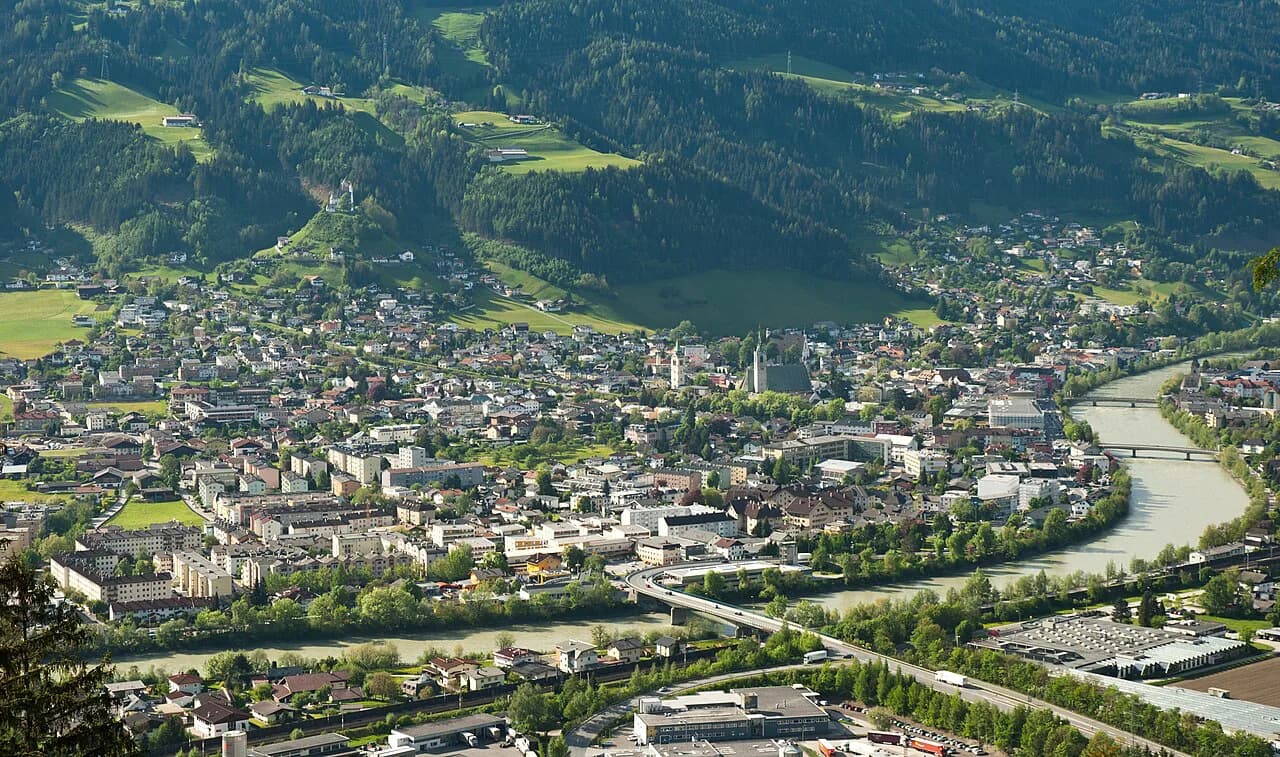
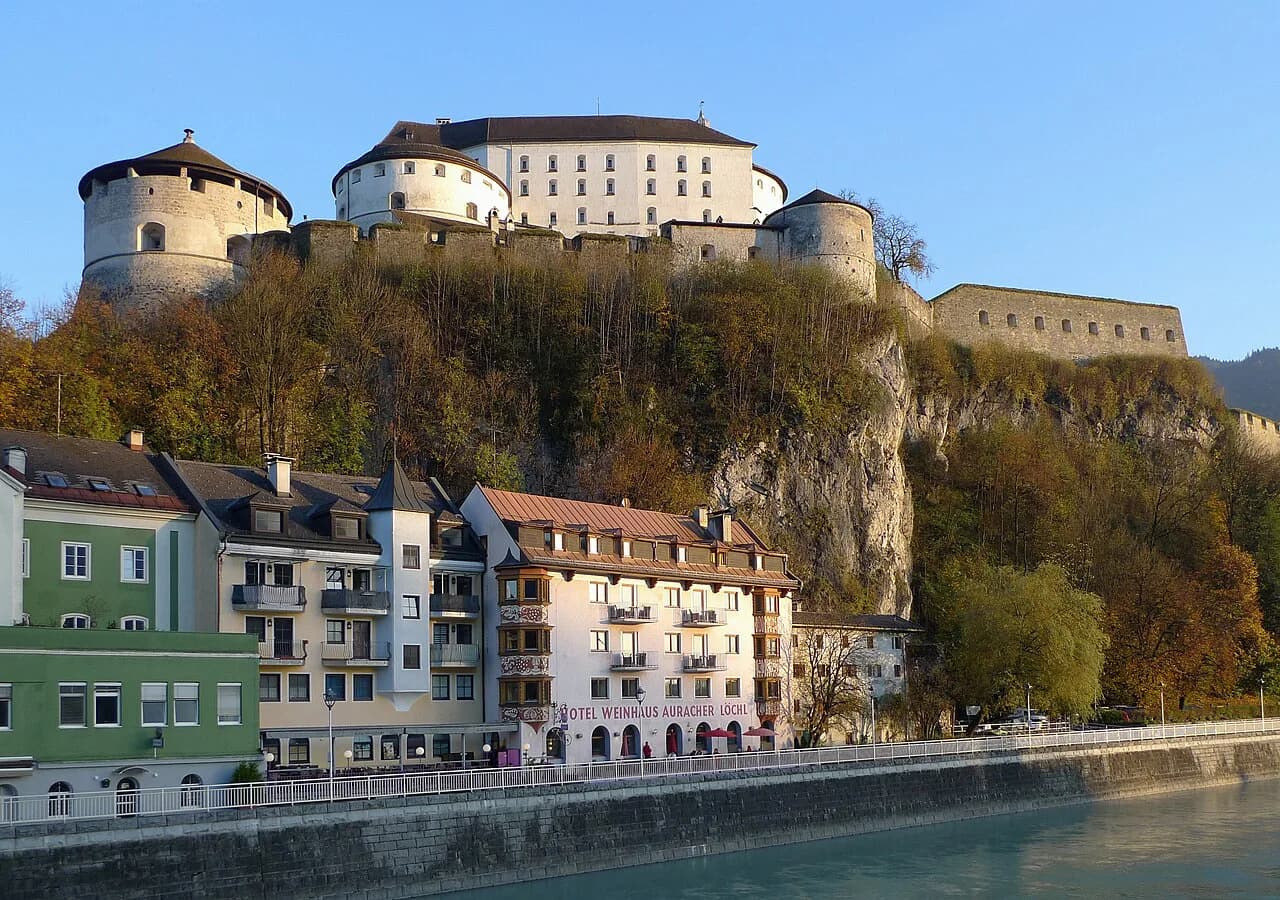
Kufstein is a small Tiroler town in two layers: the old town sits at river level on the Inn, and the fortress stands on the rock directly above it. That vertical layout shapes the visit, because everything in the center is walkable while the climb to the fortress is the one real effort of the day. This guide covers the squares and alleyways, the fortress and its noon organ, the inns worth a table, and the valleys and lakes outside the center.
It also covers how the town fits a route: Kufstein is Tirol's second-largest town and sits on the Inn valley corridor between Innsbruck, Salzburg and Munich, so it works as a half-day pause or a full day with the fortress. The town is compact enough that you can step off a train, walk the center and be back on a platform without a car.
Kufstein in one paragraph: what sits where
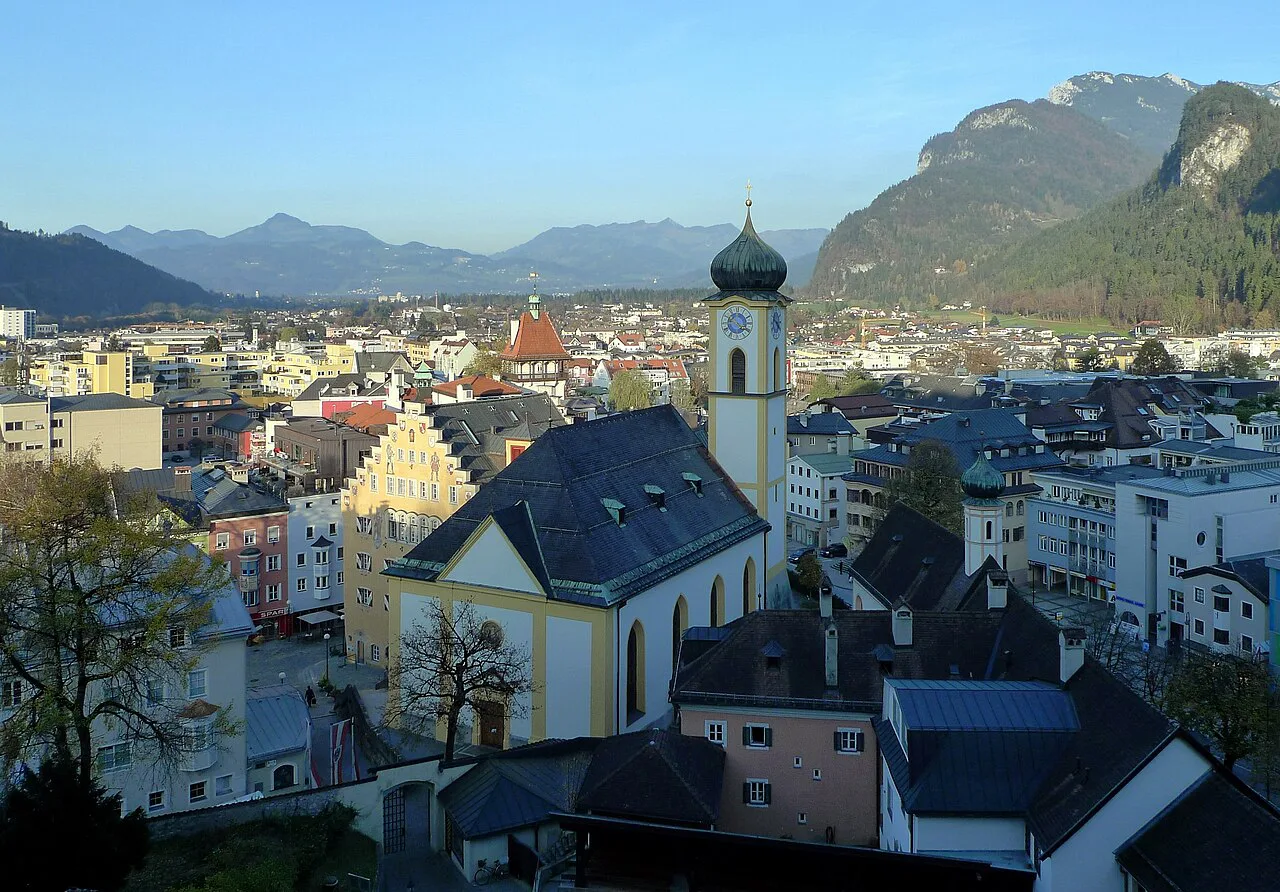
Almost everything you came to see lies within a few minutes of the Inn. The Oberer Stadtplatz (Upper Town Square) and the narrower Unterer Stadtplatz (Lower Town Square) form the spine of the old center, with the Kultur Quartier Kufstein rebuilt on the upper square and the winding Römerhofgasse just off it. Above all of this, the fortress looks down on the river and the Kaisergebirge beyond. If you are comparing walkable Tiroler towns, our Innsbruck guide applies the same compact, on-foot approach to a larger center.
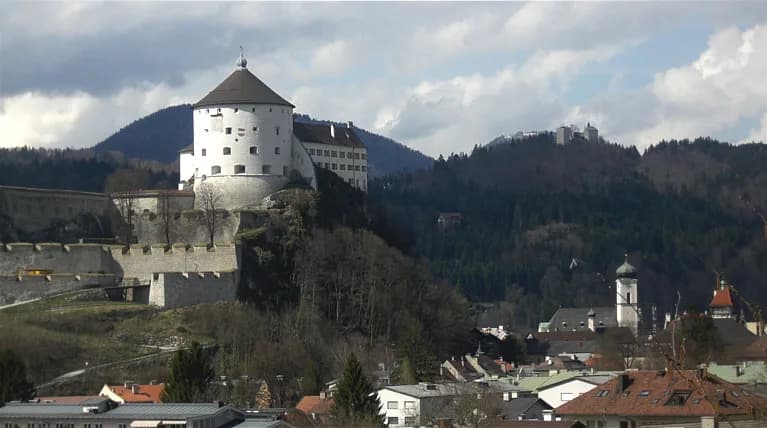
The town has been fought over repeatedly by Habsburgs, Bavarians and Tirolers, and the fortress was first mentioned in a document in 1205. That history is why the center feels dense and layered rather than grand: it grew around a military position, not a royal palace. Plan the day around two movements, the old town on foot and the fortress above it, and everything else slots in around them.
The old town on foot: Oberer and Unterer Stadtplatz
Start on the Oberer Stadtplatz and work downhill toward the river. The Kultur Quartier Kufstein occupies the site of the former Laadhaus, a building that once housed a soap factory and a publishing house, and now mixes a hotel, a bar and shops; the municipal theater is planned for the complex, with a modern auditorium able to seat 175 guests. It is a useful first stop because it shows how the town handles its old fabric: renovated, but still recognizable.
From the upper square, the Unterer Stadtplatz and the pedestrian lanes around it fill the rest of an hour's wandering. Facades are painted, bay windows are colorful, and the scale stays small enough that you never need a map for long. Allow the old town roughly an hour at an unhurried pace, more if you stop for coffee on one of the squares.
Römerhofgasse: the painted alley and where to pause
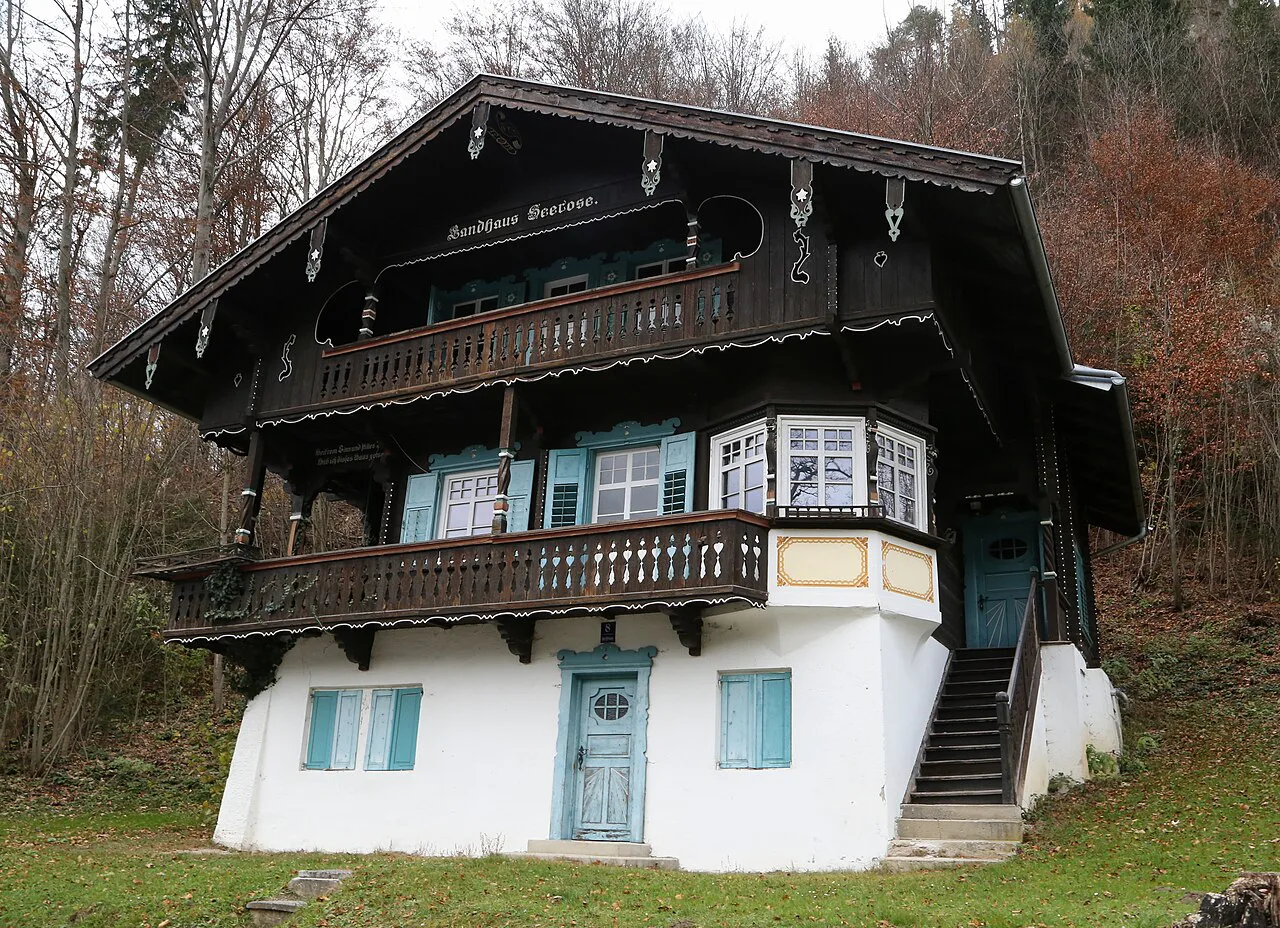
Römerhofgasse is the alley most visitors remember. Cobbled and narrow, it is lined with painted facades, ornate bay windows and wrought-iron signs advertising the inns, and it sits a short walk from the Kultur Quartier. It is short, so treat it as a passage rather than a sight in itself, best combined with lunch or a drink.
Two old houses anchor the alley. The Auracher Löchl is a traditional inn more than 600 years old with dark-wood parlors, and the Batzenhäusl Schicketanz is Kufstein's oldest wine house, built more than 530 years ago and celebrated in a poem painted on its wall. Karl Ganzer, who wrote the Kufsteinlied, was a regular at the Auracher Löchl, and a memorial to him stands in town.
Festung Kufstein: the climb, the view and the museums
The climb up to the fortress is the defining move of a Kufstein day, and the reward is the view over the Inn valley and the Kaisergebirge. Inside the walls you find museums, historical casemates and the fortress courtyard, so budget time for both the exterior and the interior rather than treating the walk up as the whole visit. The fortress has towered over the town for centuries and remains its landmark; read the dedicated guide to Kufstein Fortress before you go.
Finds from the Tischofer Höhle in the Kaisertal, including worked bone tools, are displayed in the Heimatmuseum on the fortress, which ties the hilltop collection to the landscape around town. Ticket prices and opening hours change by season and are published by the fortress operator, so confirm them before you climb. Build in a proper break at the top: the courtyard and terraces are where the view pays off.
The Heldenorgel: the organ that sounds at noon
The Heldenorgel is the world's largest open-air organ, and it is played every day at 12 o'clock midday. That fixed time is the best scheduling anchor in Kufstein: arrange the morning so you are either on the fortress or in the old town within earshot when it starts. Its sound carries well beyond the walls, so you do not need a ticket to hear it.
If the organ is the reason you came, plan the fortress climb for late morning and stay through noon, then eat afterward in the old town. If your train leaves around midday, position yourself in the center instead and skip the climb. Either choice is a trade-off between hearing the organ up close and keeping the rest of the day simple.
Eating in Kufstein: Kasspatzln and coffee on the square
Kufstein's classic plate is Kasspatzln, the Tiroler cheese noodles, served at the Auracher Löchl with crispy roasted onions in dark-wood parlors that suit a cold morning off the train. The inn is the obvious pick for a sit-down lunch in the center, and its rooms are part of the experience rather than just a backdrop. Reserve your appetite rather than your table: the alley is short and the surrounding squares offer alternatives.
For something lighter, the bar Vitus und Urban in the Kultur Quartier serves breakfast, and its buffet is also open to non-hotel guests. That makes the upper square a reasonable first stop if you arrive early. Coffee and cake on one of the squares fills the gap between the old town and the fortress climb.
Beyond the center: the Kaisertal and the Tischofer Höhle on foot
The Kaisertal is the valley behind town, car-free and reached on foot by the Kaiseraufstieg steps from the parking area at its entrance. It is the closest thing Kufstein has to a proper half-day out, with farmhouses, alpine huts and the peaks of the Wilde Kaiser above. Treat it as a walk rather than a sight, and give it its own block of time.
The Tischofer Höhle sits above town in the Kaisertal, a freely accessible cave with a portal about 20 meters wide, roughly 45 minutes on foot from the historic lanes. Worked bone pieces found there are said to be over 37,000 years old, and tools have been dated to roughly 27,000 to 28,000 years ago; it is listed in the Tirol cave register as 1312/001. In 2025 archaeologists from the University of Innsbruck reported flint tools estimated at around 100,000 years old, a find said to push the region's early settlement much further back.
Reaching the cave takes real walking, and there is no entrance fee, so the cost is time and effort rather than money. The path is signposted and can be combined with the first stretch of the Kaisertal before you turn back. If you have only a few hours in town, choose either the fortress or the cave, not both.
If you are heading east afterward, the glass town of Rattenberg makes a natural companion stop on the same rail corridor and takes far less time than the Kaisertal. If you prefer to head southeast instead, Bad Ischl Attractions outlines how to plan a similar town day around opening hours.
The lakes: Hechtsee and Thiersee
Hechtsee lies a few minutes from Kufstein and is one of the region's swimming lakes, with clear water, lawns, a shallow entry and a circular path through the woods. There is a lakeside restaurant for a meal after the water. It is the easier of the two lakes to add to a short stay, though it is outside the center and not a walk from the old town.
Thiersee, set between wooded slopes, suits swimming, stand-up paddling and pedal boating, with cafes and restaurants along the shore. Both lakes depend on warm weather and summer operations, so they work as an afternoon extension rather than the reason for the trip. If you are traveling without a car, check the Postbus connections for the lake you pick before committing to it.
Arriving and moving on: Kufstein as a rail stop
Kufstein sits on the Inn valley rail line between Innsbruck and Salzburg, which makes it one of the simplest stops on a Tirol itinerary. The station is on the town side of the river, and the old town is a short walk from it, so you do not need a car or a bus for the center. Check current ÖBB departures and platform details on the day rather than relying on an old printout.
By road, the town is on the Inntal corridor from Munich and Salzburg, but the center rewards arriving by train because parking sits outside the old lanes. If you drive, leave the car and walk in. From Kufstein you can continue to Rattenberg, Kitzbühel or Schwaz, all on the same regional axis.
How long Kufstein needs, and the trade-offs
A half day covers the old town, the Römerhofgasse and the noon organ from below, while a full day adds the fortress interior and lunch in a wood-paneled inn. Give the fortress and the organ a generous morning if they are your priority, since the 12 o'clock performance sets the rhythm of everything else. The old town alone fits comfortably into an hour.
The honest trade-offs are the climb, the fixed noon timing and the distance to the lakes. The fortress sits above town, so anyone with limited mobility should weigh the ascent against the view, and the Kaisertal cave adds another 45 minutes each way on foot. Midday concentrates people on the squares and around the organ, so an early arrival buys quieter lanes.
Should Kufstein be a stop or a full day?
Kufstein works best as a deliberate stop rather than a passing glance: arrive before noon, walk the old town, hear the Heldenorgel, then choose between the fortress interior and the Kaisertal. If you have a full day, do both, with Kasspatzln in between and a lake in the late afternoon.
If your itinerary runs through Tirol, pair Kufstein with the fortress as its anchor and build the rest of the day around the rail line toward Innsbruck, Salzburg or Rattenberg.
Explore more Kufstein guides
Frequently Asked Questions
What is Kufstein famous for?
Kufstein is known for the fortress on the rock above the old town, the world's largest open-air organ played daily at 12 o'clock midday, and the painted Römerhofgasse. The Kufsteinlied, a song by Karl Ganzer, made the town familiar across Tirol.
Do you need a car to see Kufstein?
No. The old town, the fortress climb and the Römerhofgasse are all walkable from the rail station, and Kufstein sits on the Inn valley line between Innsbruck and Salzburg. The lakes and the Kaisertal trailhead are outside the center, so check current Postbus connections or plan a longer walk.
Sources
Notes for your next Austrian town break
Optional updates when we add or revise town guides.
You might also like
Continue reading
More guides you'll find useful