Achensee, Tyrol: Lake Towns, Boats and the Steam Cog Railway
Achensee is Tyrol's largest lake, framed by the Rofan range and the Karwendel. Here is how the shore villages, lake boats and Jenbach cog railway fit together.
On this page
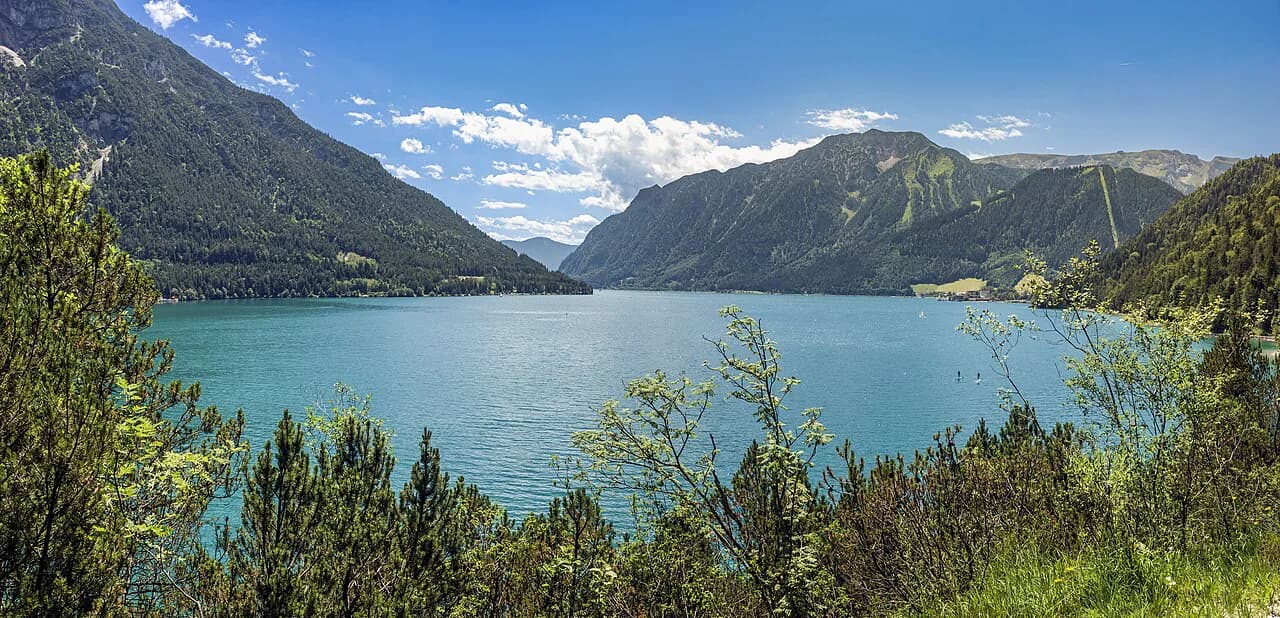
Achensee is the largest lake in Tyrol, a turquoise sheet of water held between the Rofan range and the Karwendel, and it works best as a half day or a full day built around one shore village rather than a lap of the whole shore. The three main bases behave differently: Pertisau and Maurach sit on the water, Wiesing sits down in the Inntal, and Steinberg tucks into the Rofan. This guide covers the layout, how the Jenbach cog railway and the lake boats connect, where the water and mountains read best, and how much time to give it.
Where Achensee sits in Tyrol
The lake lies north of the Inntal, the broad valley that carries the main rail line between Innsbruck and Kufstein, and the water sits noticeably higher than the valley floor. The region around it combines the lake itself with the Karwendel Nature Park on one side and the Rofan mountains on the other, which is why the shoreline feels enclosed rather than open. That elevation is the single most useful fact for planning: you do not simply step off a train onto a beach.
Wiesing, the village down in the Inntal, lies roughly 360 meters lower than the lakeside villages of Maurach, Achenkirch and Pertisau, so the climb to the water is a real one by car, bus or the cog railway. Factor that in if you are arriving by train from Innsbruck or Kufstein and hoping to reach the shore quickly.
The villages on the shore
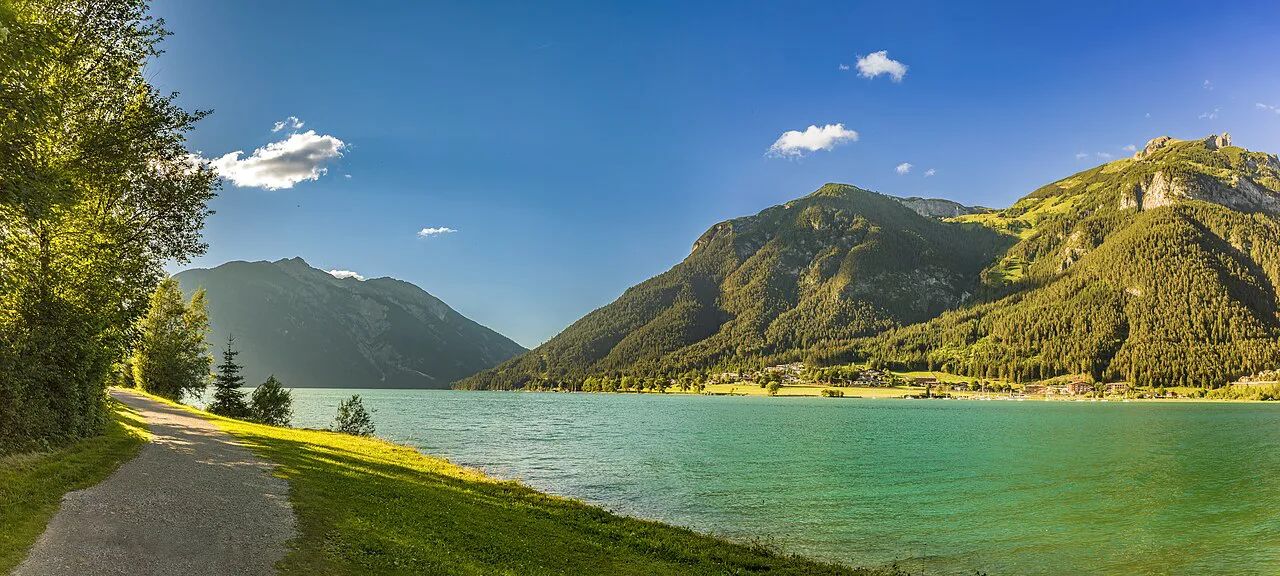
Maurach sits on the lake shore with a view toward the water and is named by the region alongside Pertisau and Achenkirch as one of the lakeside villages. Pertisau is the other main shore base, with the Karwendel rising nearby, while Achenkirch anchors the northern end, so the three together form a rough chain along the water rather than a cluster.
Steinberg, the remaining village, sits in the Rofan range rather than squarely on the lake edge, so it suits a mountain-side stop rather than a waterfront one. If your goal is the water and the shore villages, choose Maurach or Pertisau; if you want the valley approach, Wiesing is the village down in the Inntal, roughly 360 meters below the lakeside villages.
Getting there: Jenbach and the steam cog railway
Jenbach is the rail gateway. It sits on the main Inntal line, so trains from Innsbruck and from Kufstein stop there, and from the station the steam cog railway climbs to the lake. Travelers who have taken it describe a steam train from Jenbach up to the water, with the lake ship and food outlets waiting at the top.
The region promotes the railway as the oldest fully active steam cog railway in Tyrol. Treat the ascent as part of the day rather than a transfer, because a cog railway is slow by design and the climb from the valley is the point.
Check the operator's own timetable and fares before you commit to a date, since a heritage railway runs a limited service and the climb is the one leg of the trip you cannot improvise.
Boats on the water
Boats run on the lake, and the villages, the Rofan slopes and the Karwendel side all read differently from the water than from the road. A traveler who took the cog railway up mentions a lake ship waiting at the top, so the boat and the train can be combined in a single day.
Look up sailing times and fares with the boat operator before you go, because a lake crossing only works if it lines up with your arrival at the shore and your return down the valley.
Viewpoints and the turquoise color
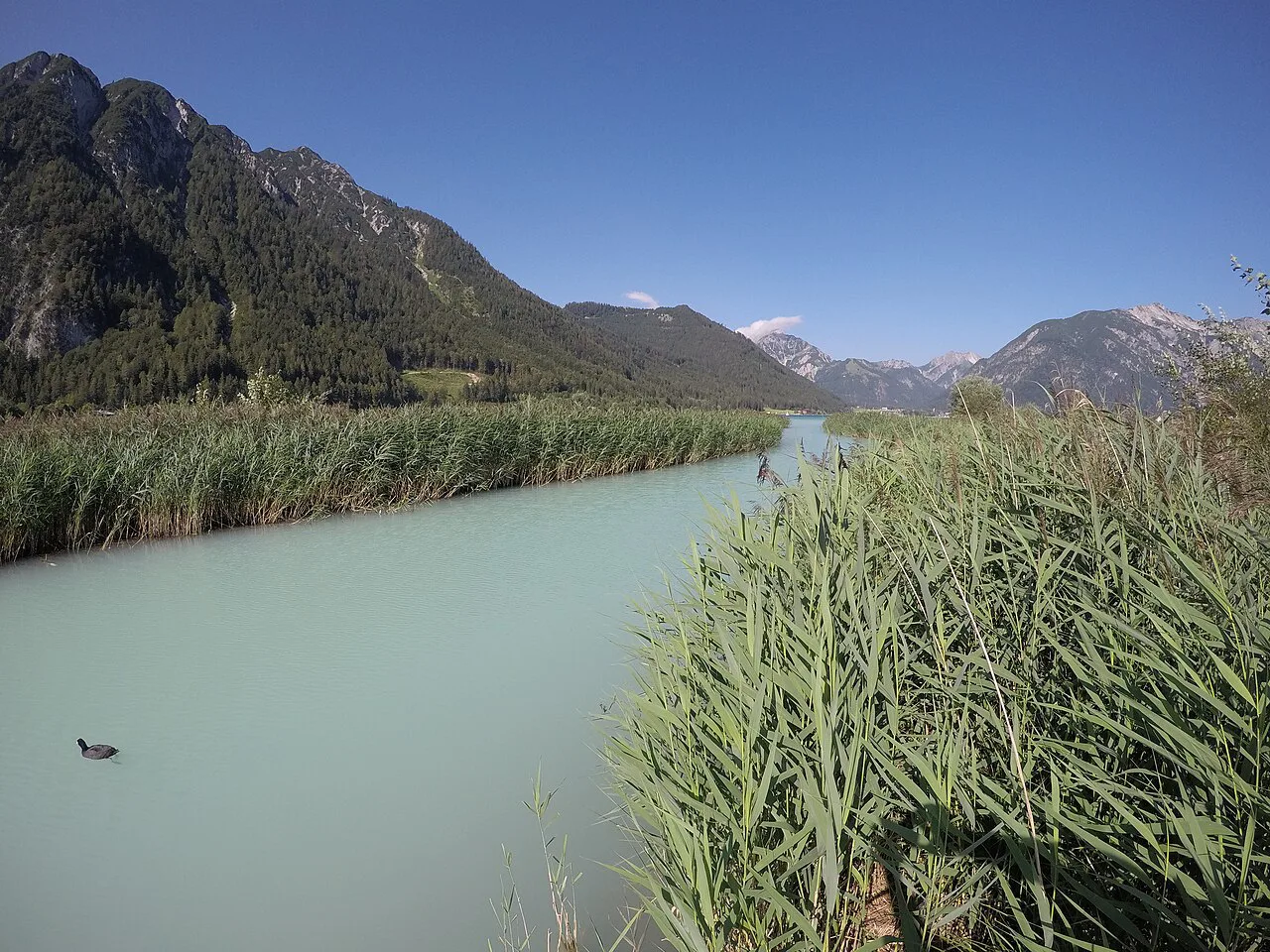
The color of Achensee is the thing people come for, and it reads best in direct sun against the dark forested slopes, which is why the water shifts from flat gray to vivid turquoise as the light changes. The lake sits in a bowl between the Rofan and Karwendel sides, so an elevated point on either flank shows the full length of the water at once.
The lake sits in an enclosed mountain bowl, so an elevated point on either the Rofan or the Karwendel side gives you a wide view of the water. If you only have an hour for a viewpoint, pick the side nearest your village rather than crossing the lake for it.
Swimming and time on the water
The Achensee region presents itself as a family-friendly lake destination, and its shore villages are small; plan your water time around one village rather than trying to cover the whole shore.
How long Achensee needs
Give the lake a full day if you want the cog railway, a boat crossing and time on the shore, and a half day if you are content with one village and the water in front of it. The villages are spread around the lake at differing heights, so trying to cover Maurach, Pertisau and Achenkirch in a few hours is a mistake.
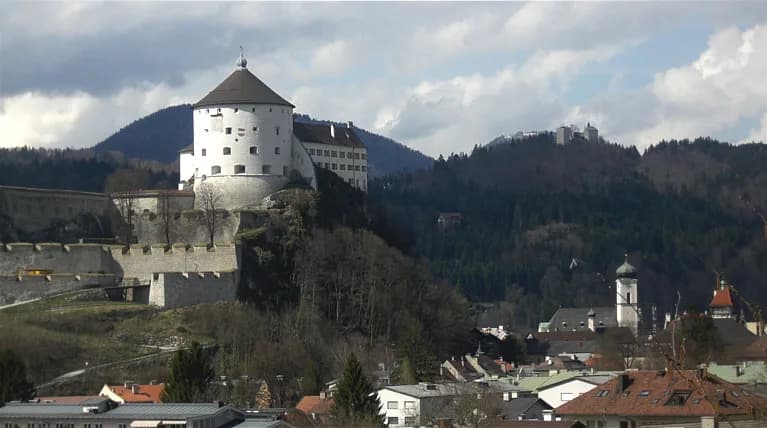
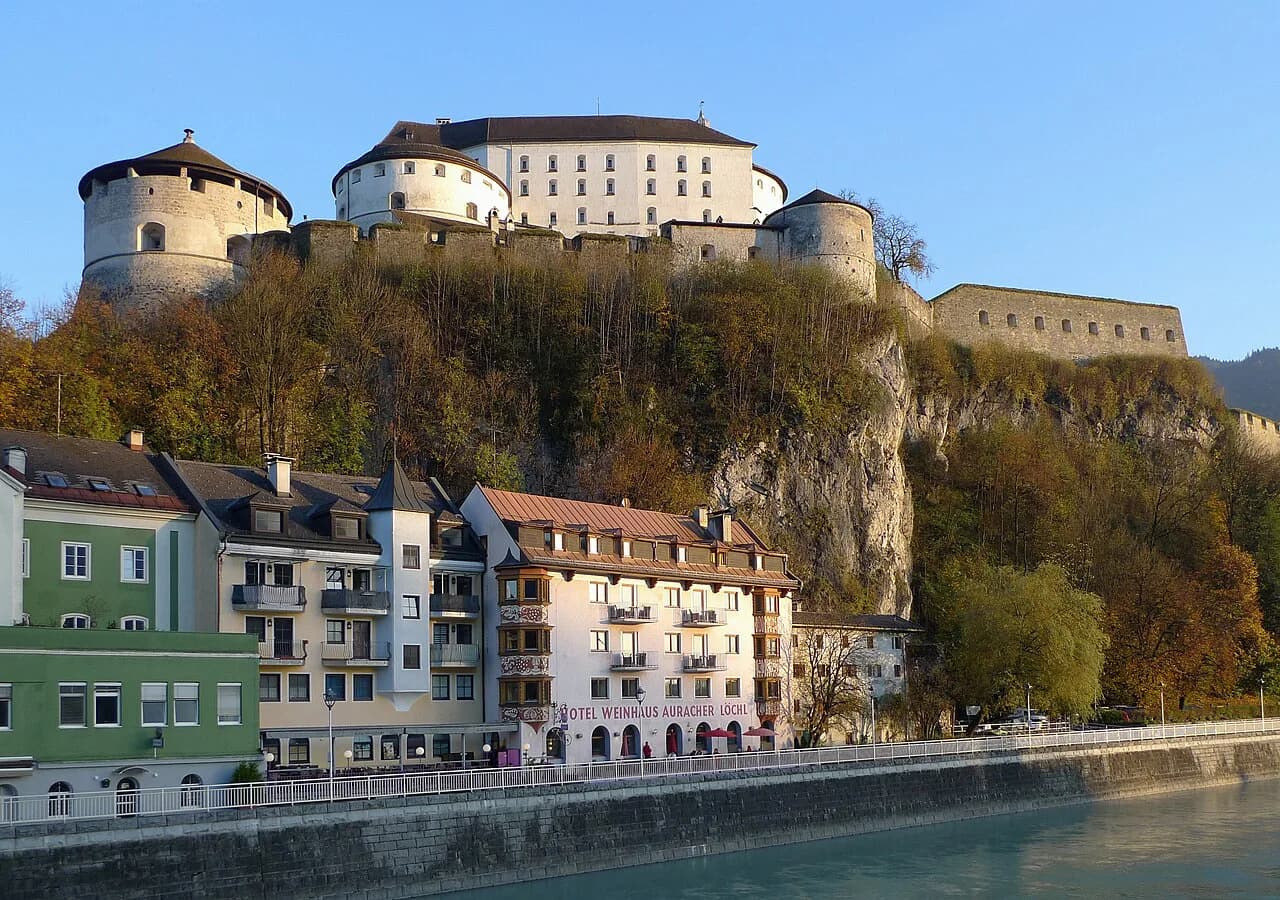
For a Tyrol route, Achensee slots naturally between the Inntal towns. Kufstein is the obvious base on the valley rail line, with the fortress above the old town as its own half day, and Jenbach is a short train ride west of it toward the lake.
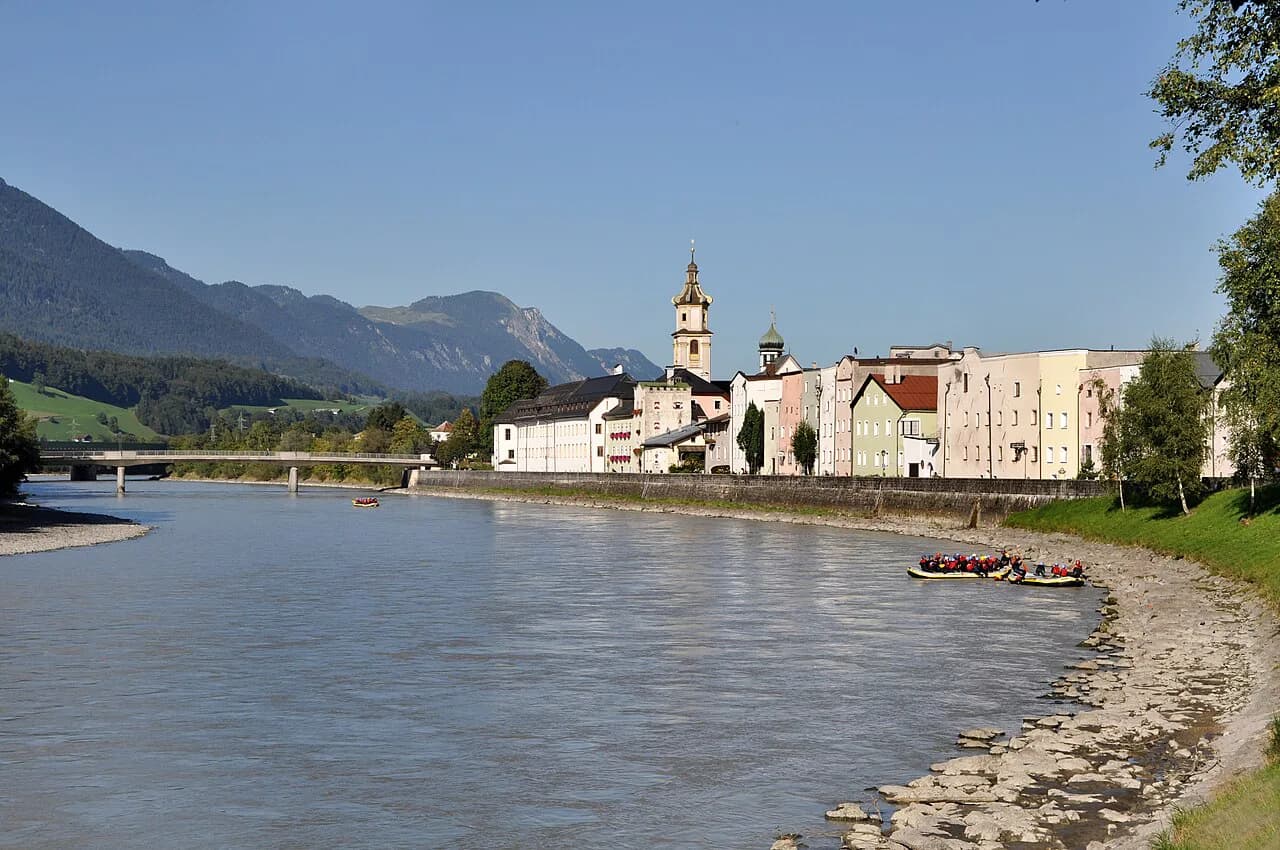
If you are building a loop from the valley, Rattenberg sits west along the Inntal and works as a short stop before or after the lake rather than a separate day.
Beyond the water: stone oil and the railway's age
The Achensee region is the home of Tyrolean stone oil, the regional product it is best known for, and it is the thing to look for in the villages if you want something of the place to take away. It is not the reason to come, but it is the region's own signature.
The other thing the region is known for is the cog railway itself, which the area presents as the oldest fully active steam cog railway in Tyrol. Between the railway, the boats and the water, the lake has enough for a day without adding anything else to it.
Decide which shore you are aiming for
Choose Maurach if you are coming up from the Inntal and want the shortest climb to the water, Pertisau if you want the Karwendel behind you and the boat at hand, and Achenkirch if you are driving the length of the lake. Then fix the cog railway and the boat first, because those two set the shape of the day and the shore walk fills in around them. If you want a second stop on the same trip, Kufstein Fortress above the old town makes an easy contrast to a day on the water.
Explore more Kufstein guides
Frequently Asked Questions
Is Achensee the biggest lake in Austria?
Achensee is the largest lake in Tyrol. It is not the largest in Austria, so plan it as a Tyrol lake rather than a national record.
How do I get to Achensee without a car?
Take the train to Jenbach on the Inntal line and continue toward the lake on the steam cog railway, which climbs from the valley toward the shore. Confirm the railway's timetable and fares with the operator before you travel.
Can I combine the cog railway and a lake boat in one day?
The railway brings you up toward the water, and boats run on the lake from the shore villages, so the two can be combined. Check sailing times with the boat operator so your crossing lines up with your arrival and your return down the valley.
Sources
Notes for your next Austrian town break
Optional updates when we add or revise town guides.
You might also like
Continue reading
More guides you'll find useful