Schwaz, Austria: Silver Mine, Old Town and Castle Guide
Schwaz is a small Tirol town between Innsbruck and Kufstein, built on 15th- and 16th-century silver. See the old town, the show mine and Schloss Freundsberg.
On this page
Schwaz is a compact Tirol town on the Inntal corridor between Innsbruck and Kufstein, and the fastest way to understand it is through silver. In the 15th and 16th centuries the mines here made it one of the wealthiest places in the Habsburg realm, and the old center still shows that money in its facades, its great parish church and the Fugger name attached to one of its houses. This guide covers the walkable center, the sights that sit outside it, the show mine, and how the town slots into a route through Tirol.
Where Schwaz is and why silver made it
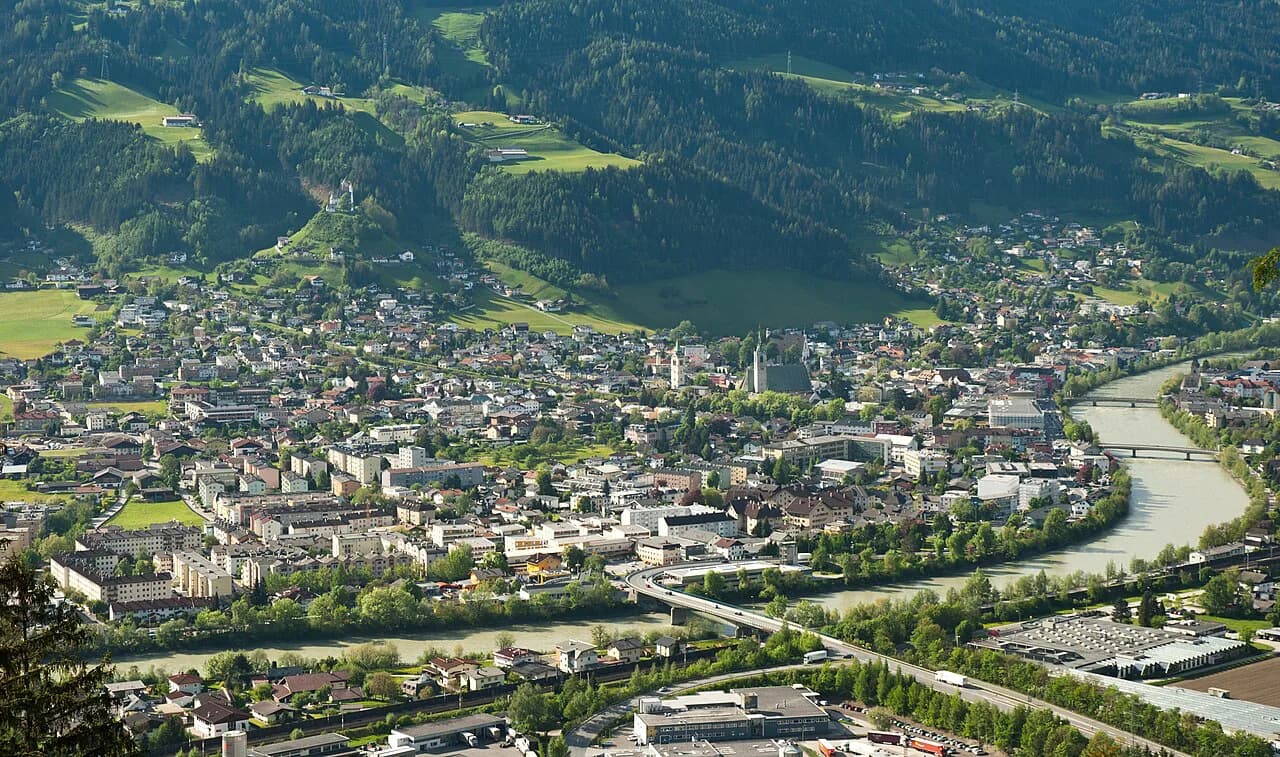
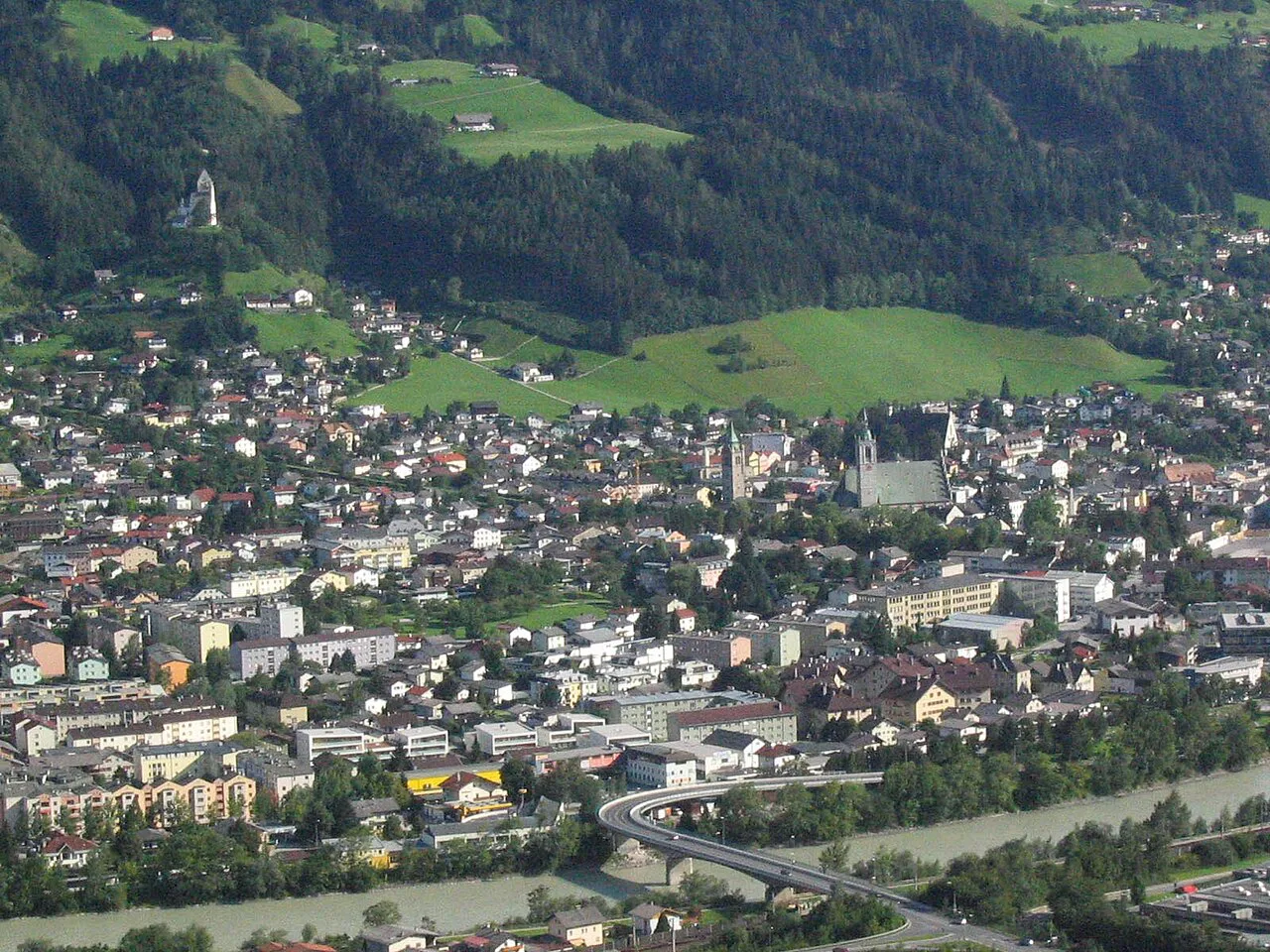
Schwaz occupies the floor of the Inntal between Innsbruck and Kufstein, with the Karwendel range rising to the north and the Zillertal Alps to the south and east. That position keeps it firmly on the main east-west axis through Tirol while leaving it close to the Zillertal and the Achensee, so a stop here is easy to fold into a longer drive or rail journey. The town's importance came from below ground: by the boom years of the silver and copper mining in the 16th century it ranked among Europe's foremost mining centers, and the wealth it generated built the churches and townhouses you walk past today.
For routing purposes, Schwaz pairs naturally with Kufstein to the northeast, where Festung Kufstein anchors a similar half-day of fortress and old town. If you are moving along the Inntal, treat the two as separate stops rather than one trip, since each rewards time on foot.
How the old town is laid out
Franz-Josef-Straße is the pedestrian spine of the center, and walking it is the simplest way to read the town. The street runs through the old core as a shopping and cafe zone, lined with the deep bay windows, or Erker, that prosperous mining families added to their houses in imitation of Innsbruck's historic center. The Stadtplatz, the main square, works as a natural starting point, and the smaller Pfundplatz and the surrounding lanes loop off the spine. Everything in the core sits within a few minutes of everything else, with two exceptions: Schloss Freundsberg rises above the town and the Silberbergwerk lies outside the center.
The Stadtpfarrkirche and its churchyard
The Stadtpfarrkirche, the town parish church, stands on Franz-Josef-Straße and is the clearest statement of what the silver paid for. Directly adjoining the church lies the Stadtpark, a green space that served as the town cemetery before it was converted. The arcades, a small mortuary chapel and a freestanding bell tower survive from the churchyard, and the tower in particular gives you a quick orientation point over the rooftops.
Some parts of the church and the surrounding buildings, including the roof structure and the tower, are reached through guided visits rather than by wandering in unaccompanied. Ask at the town information office what is running during your stay instead of assuming a fixed schedule, and build the church into your walk early so the rest of the center fits around it.
Fuggerhaus and the Franziskanerkloster
A little north of the parish church stands the Fuggerhaus, named for the Augsburg merchant family that did business in Schwaz during the mining boom. The building carries the family's association rather than functioning as a museum, so treat it as an exterior stop on your walk. Just east of it, the Franziskanerkloster, the Franciscan monastery, is the quieter highlight: its cloister is painted with elaborate decoration and is easy to miss if you only follow the main street.
South of the monastery, the small Mathoigarten is a public garden used as a green pause in the middle of town, and the adjoining Mathoihaus houses the town archive. This cluster makes a good low-commitment half hour between the church and the walk back to the Stadtplatz.
Schloss Freundsberg and the Museum Burg Freundsberg
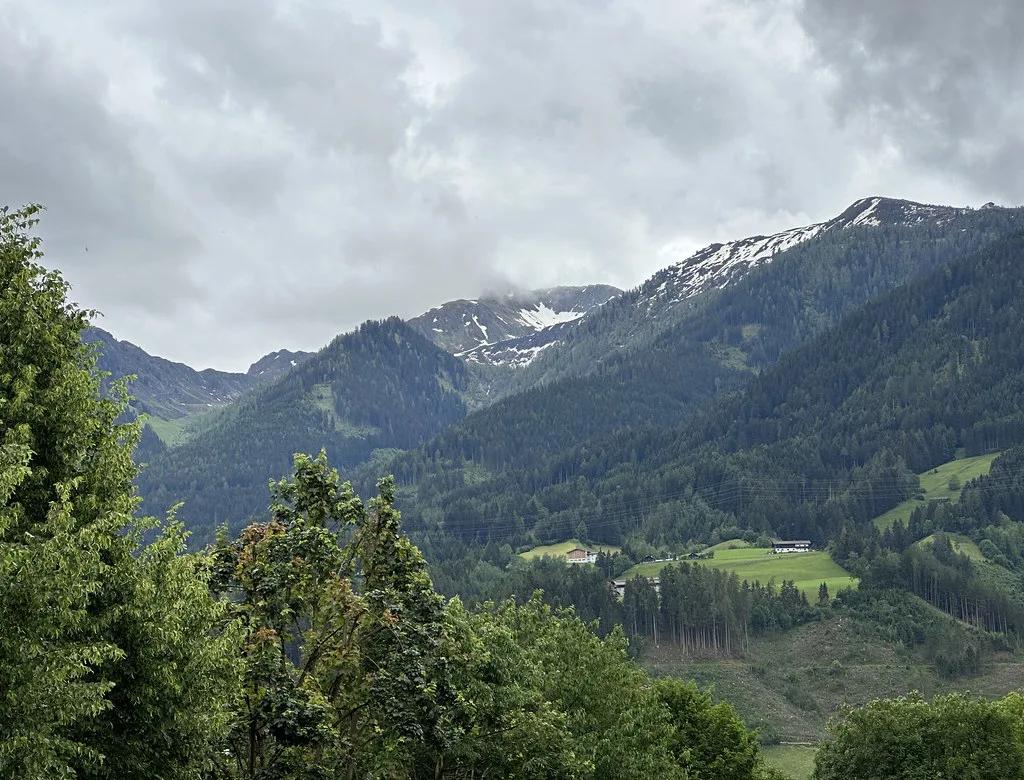
Schloss Freundsberg sits on the hill above Schwaz and is the one sight in town that demands a climb, so plan it as its own leg rather than tacking it onto the end of the street walk. The castle houses the Museum Burg Freundsberg, which covers the town and its mining history. Because the castle lies outside the compact core, the practical order is center first, then either the castle or the mine, not both squeezed into a single tight hour.
Silberbergwerk Schwaz: the ride into the mountain
The Silberbergwerk Schwaz, the show mine, is the reason many travelers stop here, and it works like this: a mine train carries you 800 meters into the mountain, where you walk through tunnels and shafts of what was the largest silver mine of the medieval period. The underground temperature holds at a constant 12°C, so a warm layer matters even on a hot July afternoon. The mine entrance is on Alte Landstraße, outside the center, which is why it deserves its own slot in the day.
Plan the mine around its own published prices and tour times, and confirm the day's departure times by phone or at the entrance before you travel, since a mine visit cannot be improvised the way a walk through the old town can.
Small museums: Museum der Völker and Rabalderhaus
Beyond the castle museum, Schwaz has two smaller collections worth knowing about. The Museum der Völker is an ethnological museum, and the Rabalderhaus is a town-house museum in the center; both appear among the town's cultural sights. They are the right choice when weather pushes you indoors or when you have already given the mine and the castle their time.
How long Schwaz needs, and in what order
The old center is a two-hour walk at an unhurried pace: Franz-Josef-Straße, the Stadtplatz, the Pfundplatz, the parish church and its arcaded churchyard, the Fuggerhaus, the painted cloister and the Mathoigarten all sit within a few blocks. Add the castle above town as a separate leg and the show mine as another, since both lie outside the core. A half day covers the center plus one of the two outliers, and a full day covers all three without rushing.
The order that works best is center on foot first, while the streets are quiet, then whichever of castle or mine suits your energy. If you are driving onward the same day, take the mine in the morning when you are fresh for the underground walk and leave the castle for a return visit.
Getting there and onward through Tirol
Schwaz sits on the Inntal corridor, which makes it a straightforward stop on a rail or road route between Innsbruck and Kufstein. Check current ÖBB and Postbus timetables for actual connections rather than working from memory, and note that the mine and castle legs may need a local bus or a car even when the center is reached easily. The town is also a sensible base for the surrounding countryside, with the Zillertal and the Achensee within reach for a second day.
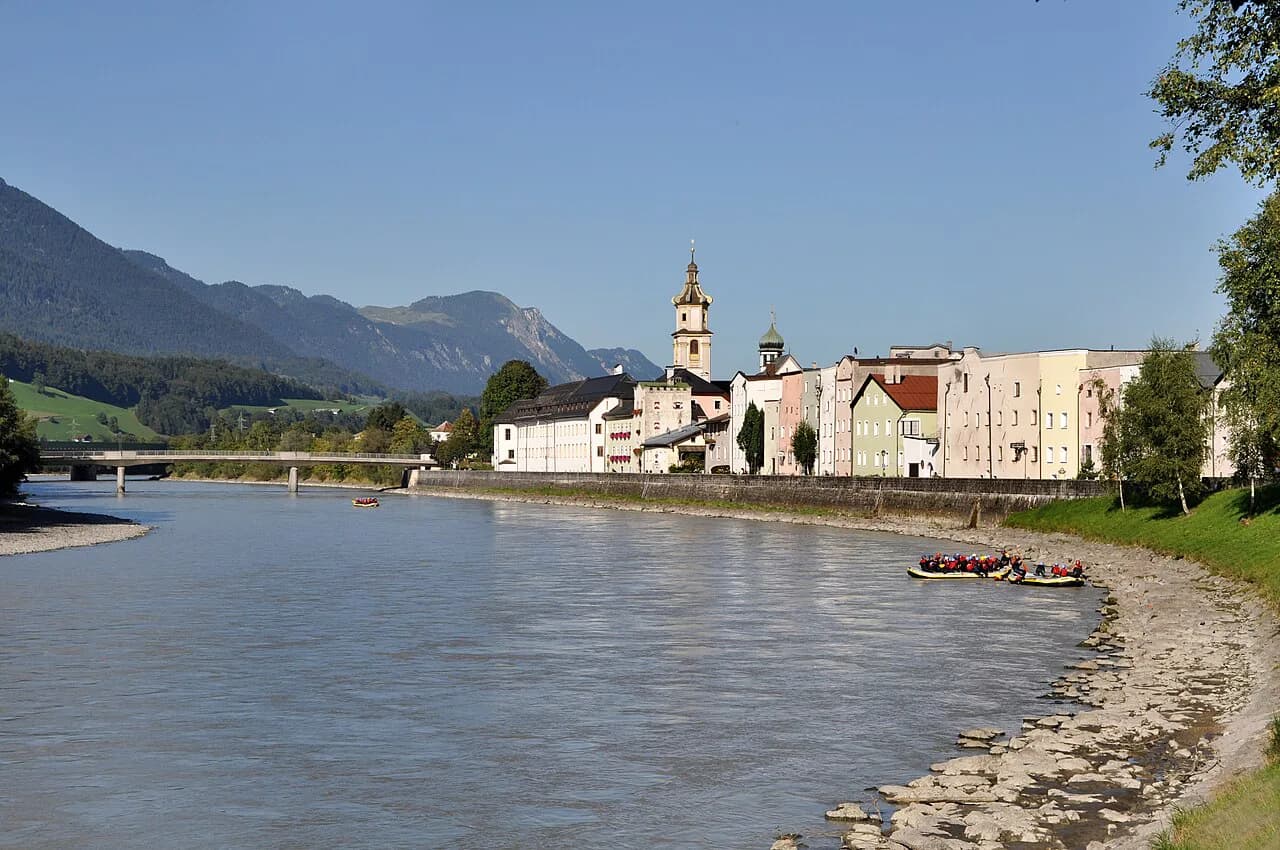
For a broader frame on the region, the Kufstein guide covers the fortress town to the northeast and the wider Inntal pattern of old towns and fortresses. Travelers heading further east often pair Schwaz with Rattenberg, a tiny historic town on the same corridor, and with Kitzbühel in summer for the mountain side of Tirol.
Mine, castle or both: building your Schwaz day
If you have one day, give the morning to the Silberbergwerk and its 800-meter ride into the mountain, then walk the old center in the afternoon when the light is softer and the streets are calmer. If you have only an afternoon, skip the mine and do the center plus the climb to Schloss Freundsberg, which together give you the town's two essential stories: the silver wealth on the street and the castle that watched over it. Confirm the mine's prices and departure times directly before you commit to that plan.
Frequently Asked Questions
Where is Schwaz located?
Schwaz lies in the Inntal in Tirol, between Innsbruck and Kufstein, with the Karwendel range to the north and the Zillertal Alps to the south and east. That position puts it on the main east-west route through the region and within reach of the Zillertal and the Achensee.
How long does a visit to Schwaz take?
The walkable old center takes about two hours at a relaxed pace. Schloss Freundsberg and the Silberbergwerk both lie outside the core, so a half day covers the center plus one of them, and a full day lets you do all three without hurrying.
Sources
Notes for your next Austrian town break
Optional updates when we add or revise town guides.
You might also like
Continue reading
More guides you'll find useful