
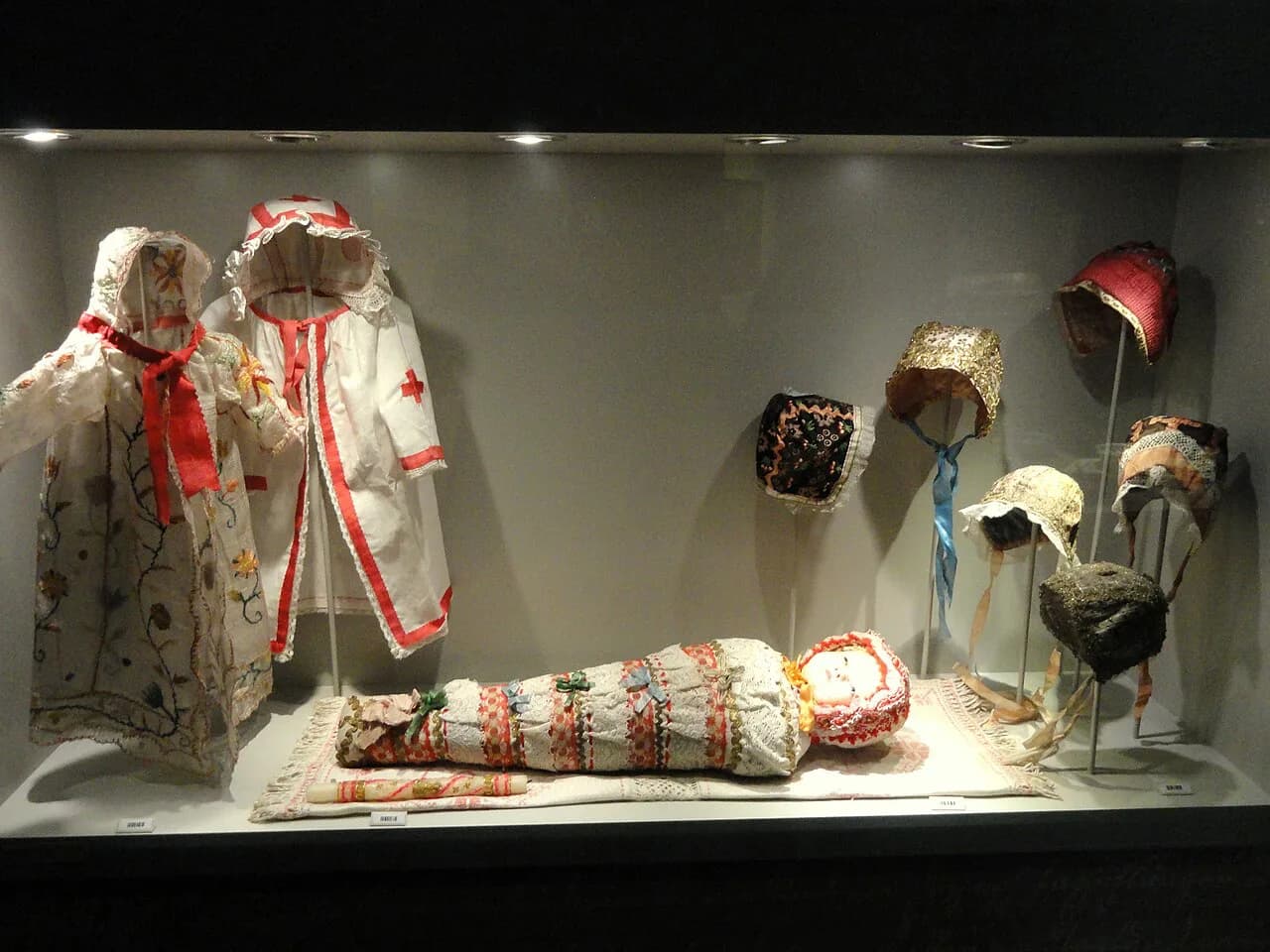
Tyrolean Folk Art Museum (Tiroler Volkskunstmuseum), Innsbruck

The Tyrolean Folk Art Museum (Tiroler Volkskunstmuseum) is worth about 90 minutes to two hours, and the reason to go is the interiors: whole farmhouse parlors and chambers moved into the building, with painted furniture, tiled stoves and carved paneling still in place. It sits in Innsbruck's Altstadt at Universitätsstraße 2, across from the Hofburg and directly beside the Hofkirche, so it slots into a walk through the old center rather than a separate trip. This guide covers what is inside, how to reach it on foot, which ticket covers which building, and what to see nearby.
What the Volkskunstmuseum actually is
This is a heritage museum of everyday life, not a gallery of fine art. Its core is a sequence of reconstructed rooms from farmhouses and town houses across Tirol, assembled so you walk from one period interior into another and see how people furnished, heated and decorated their homes. If you have already seen the palaces and churches, this is where the rural and small-town side of the region becomes concrete.
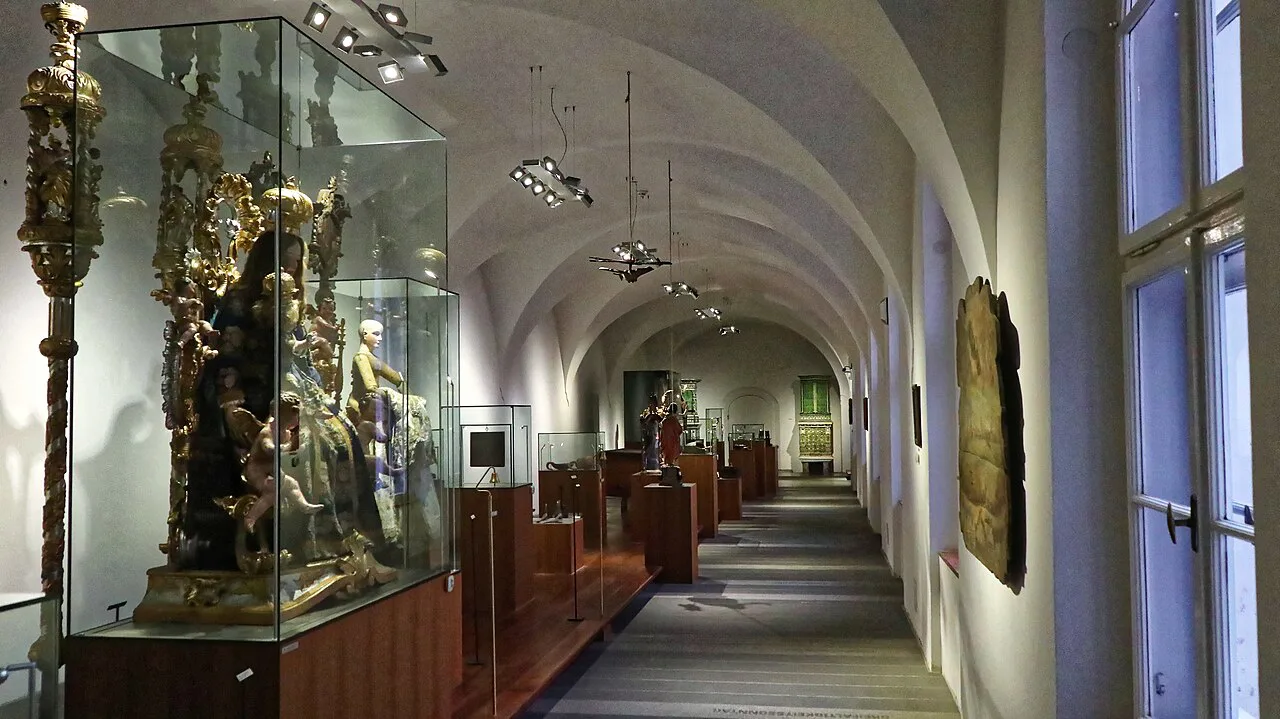
The building itself is part of the experience: the museum sits in a former convent complex next to the Hofkirche, and the layout keeps the historic rooms in low, thick-walled spaces rather than a modern white-cube hall. That means dimmer light in places and some stairs and thresholds between sections. Allow for slow looking rather than a quick pass, because the pleasure is in details like the marbling on a cupboard door or the carving on a bed frame.

Where it sits in the Altstadt
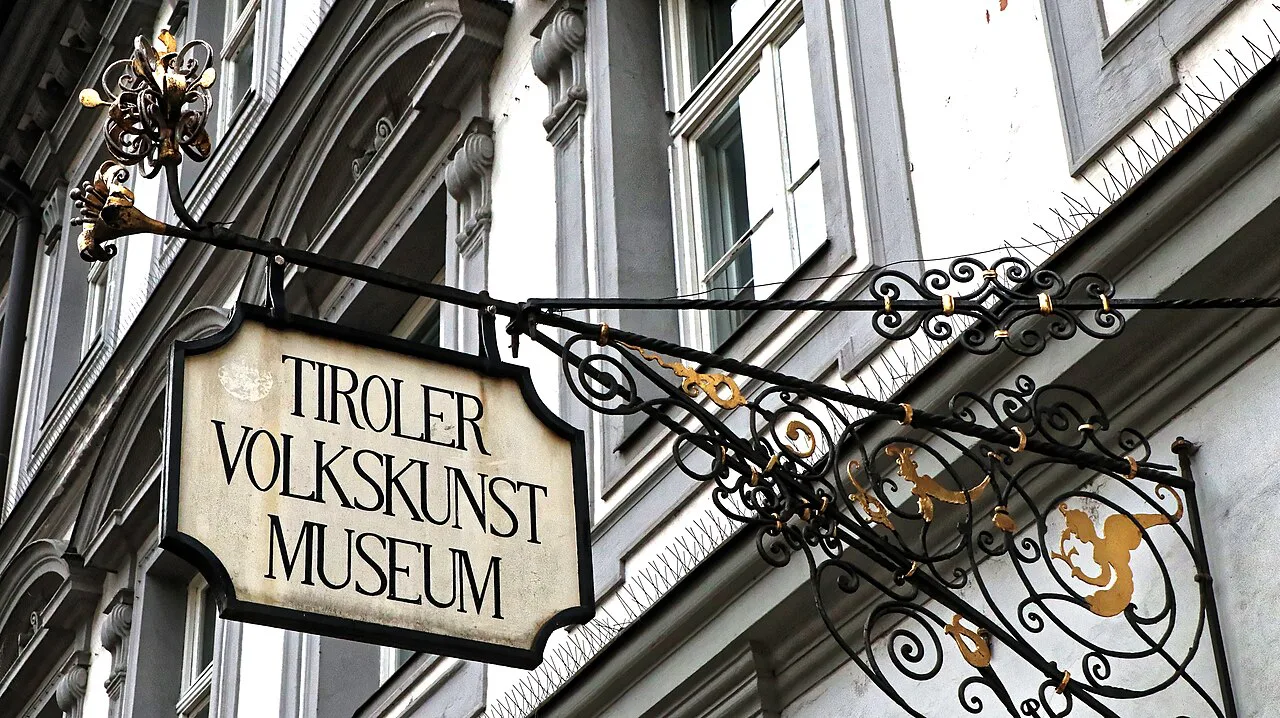
The address is Universitätsstraße 2, on the edge of the old town where the street opens toward the Hofburg and the Hofkirche. Coming from the Golden Roof Innsbruck and the Herzog-Friedrich-Straße pedestrian spine, you continue west past the Cathedral of St. Jakob and reach the museum in a few minutes on foot. The entrance area is shared with the Hofkirche forecourt, so the two buildings read as one cluster.
The city's visitor listing gives Universitätsstraße 2 as the address and a daily 09:00 to 17:00 window, and it prints a phone contact for confirming details before you go. The same cluster puts you opposite the Hofburg, whose state rooms are a separate visit with its own ticket, and a short walk from the Hofkirche with the Maximilian monument.

Getting there from the main station and on foot
From Innsbruck's main station, the old town is a straight walk down Museumstraße and then right into the pedestrian zone, roughly 15 to 20 minutes at an easy pace. Trams and city buses run the same corridor if you would rather ride, and the Altstadt stops put you within a few minutes of the museum door. Because the museum sits inside the pedestrian core, a car is a liability rather than a help; park on the edge and walk in.
Once in the Altstadt, everything on this page is walkable in one loop: the museum, the Hofkirche next door, the Hofburg across the street, and the Golden Roof a few minutes east. Set the museum as your anchor and build the morning or afternoon around it. The Innsbruck Attractions: 17 Visitor Guides page maps the rest of the cluster if you want to sequence several sights on the same day.
What to see inside: the farmhouse parlors
The rebuilt parlors are the heart of the visit. Look for the Stube, the heated living room that organized farmhouse life, with its corner bench, table, crucifix niche and tiled stove; the paneling and painted furniture in these rooms show regional styles that vary from valley to valley. The objects were made for use and decorated with care, which is the right frame for a folklore collection.
Read the room labels as you go rather than saving them for the end; they tell you which valley and which century each interior comes from, and that context is what separates this museum from a furniture showroom. Photography conditions and any restrictions on touching or seating in the rooms are posted at the entrance.
Craft, costume and religious folk art
Beyond the parlors, the collection covers costume and textile work, household ceramics and glass, and religious folk art including carved figures and votive objects. This is where the museum connects to the painted shrines and pilgrimage churches you see across the countryside: the same carving traditions, at domestic scale. The costume pieces help you read the difference between everyday dress and festive Tracht.
The museum belongs to the Tiroler Landesmuseen group, alongside the Hofkirche, the Zeughaus and the Tirol Panorama, whose giant circular painting depicts the 1809 Bergisel battle on 1,000 square meters, the largest painted artwork in Tirol. If your interests lean toward history and painting rather than furniture, the Tirol Panorama at Bergisel is the stronger single stop.
For palace-scale interiors to set against the farmhouse rooms, Ambras Castle Innsbruck on the hill above the city holds the Habsburg collections in a Renaissance setting. Doing both in one trip makes the contrast vivid: painted peasant chests in the morning, armories and portrait galleries in the afternoon.
The Ferdinandeum library's temporary home on the first floor
The Ferdinandeum's research library currently occupies the first floor of the Volkskunstmuseum while its own building is under renovation, and it is free to enter during library hours without an appointment. Those hours are narrower than the museum's and follow a separate weekly pattern, with Tuesday to Thursday mornings and a longer Friday window. Only part of the holdings is reachable during the move, and you can request items in advance by contacting the library.
If you are researching family history or Tyrolean local history, check the library page's opening days and holiday closures before you travel, because they do not match the museum's daily schedule. For most visitors the library is a footnote; for genealogists and historians it is the reason to plan a weekday morning.
Opening hours and tickets
The museum is listed with regular hours of Monday through Sunday 09:00 to 17:00, with last entry at 16:30. The published single ticket is € 9, with a reduced rate of € 7, and a combination ticket at € 14 full and € 11 reduced, with entry free under 19. Those rates and hours come from the Tiroler Landesmuseen house pages and are worth confirming there before you buy.
Be careful about which building your ticket unlocks. The Hofkirche next door has its own hours, opening Monday to Saturday 09:00 to 17:00 and Sunday and holidays from 12:30 to 17:00, and it is a separate house in the same group. If you want both, the higher-priced combination ticket is the sensible buy; if you only want the folk-art rooms, the single ticket at € 9 full and € 7 reduced is enough and cheaper.
Across the street, the Hofburg Innsbruck runs its own visitor operation and state-room access under the Burghauptmannschaft, with arrangements and pricing separate from the museum. Do not assume one ticket covers the other. Check each house's own visitor information the week you go, especially around public holidays, when the Hofkirche's Sunday and holiday timings shift the whole cluster.
How much time to allow and when it is quietest
Budget 90 minutes for a focused visit and two hours if you read labels and linger in the parlors. The museum rewards slow looking, and a rushed 40-minute pass mostly gets you corridors and the shop. Pair it with the Hofkirche for a half-day block, or add the Hofburg state rooms if you want a full day in this corner of the Altstadt.
Midday brings the largest share of old-town foot traffic, since the museum sits on the main walking route between the station and the Golden Roof. The first hour after opening and the last hour before last entry are the calmest windows, and weekday mornings in the shoulder seasons are quieter than summer weekends. If you are combining several Landesmuseen houses, start here early and move to the busier Hofkirche afterward.
Nearby: Hofkirche, Hofburg and the Altstadt squares
The Hofkirche is the obvious pairing, both for its Maximilian monument and because it shares the forecourt; step in after the folk-art rooms to see court-scale religious art against the domestic pieces you just viewed. The Hofburg across the street adds the imperial side, with state rooms and the Giant Hall used for receptions and concerts. Together the three buildings form the densest museum block in the city, and all of it is on flat, pedestrian ground.
East of the museum, the Golden Roof and the surrounding lanes hold the cafes and shops, and the river promenade is a short walk north for a break between museums. If you want a half-day outdoors after the indoor morning, the Nordkette Cable Car Innsbruck leaves from the Hungerburgbahn station north of the old town and climbs to alpine terrain in minutes. That pairing, folk art in the morning and mountain air in the afternoon, uses the city's compact geography well.
Is the folk-art museum worth an hour of your Innsbruck day?
Yes, if you want to understand how Tyrolean households actually lived rather than only how the court and church built. The rebuilt parlors are the reason to come, and 90 minutes buys a satisfying look at them without eating your whole day. Skip it if your priority is imperial display and painting, in which case the Hofburg and Ambras serve you better.
Buy the combination ticket only if you also plan to see the Hofkirche, and confirm current hours and rates on the Tiroler Landesmuseen pages before you set out, since the library on the first floor keeps its own separate schedule. Build the visit into a walking loop through the Altstadt and you will have seen the city's domestic, courtly and religious sides in a single morning.
Explore more Innsbruck guides
- Alpenzoo Innsbruck
- Annasäule Innsbruck
- Bergisel Ski Jump (Bergisel Schanze)
- Dom St. Jakob in Innsbruck
- Ferdinandeum in Innsbruck
- Glockenmuseum Innsbruck
- Hofgarten Innsbruck
- Maria-Theresien-Straße
- Swarovski Crystal Worlds (Kristallwelten), Wattens
- Tirol Panorama mit Kaiserjägermuseum
- Innsbruck City Tower (Stadtturm)
Frequently Asked Questions
Do I need a separate ticket for the Hofkirche next door?
The Hofkirche is a separate house in the Tiroler Landesmuseen group with its own opening hours, including a later Sunday start, and its own single ticket. A combination ticket covers both for a higher price than the single ticket, so decide before you pay at the counter which buildings you actually want to see; the official price list is on the Tiroler Landesmuseen site.
Can I visit the Ferdinandeum library while I am at the museum?
The library is currently on the museum's first floor and is free to enter during its own limited opening days, which differ from the museum's daily hours. Check those days and any holiday closures before traveling, and note that only part of the collection is accessible during the renovation.