
Ambras Castle (Schloss Ambras) in Innsbruck: What to See and How to Visit
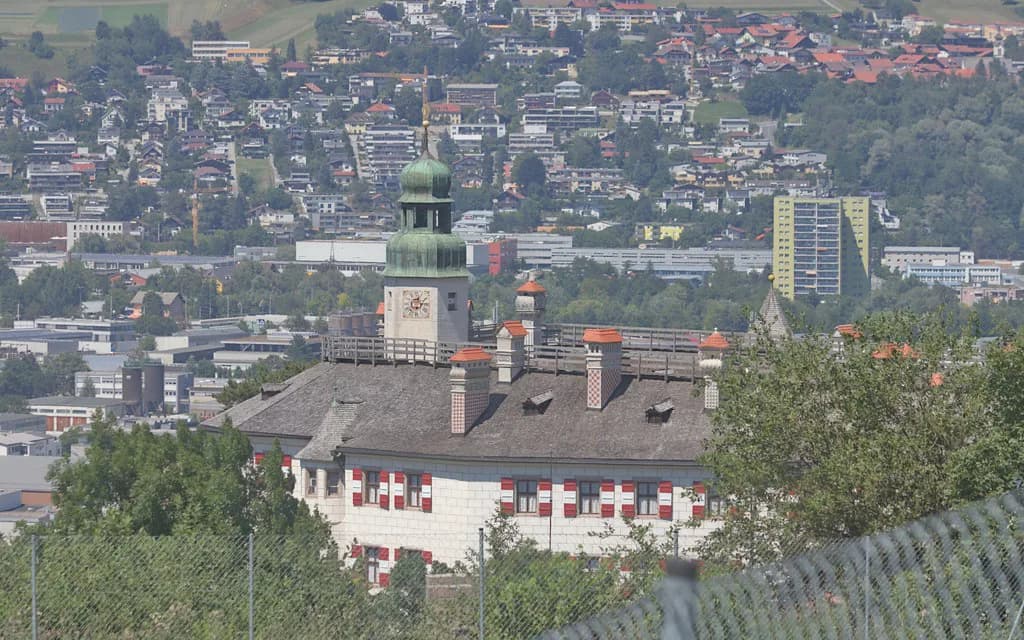
Ambras Castle is Innsbruck's museum in a Renaissance palace, not a fortress: a hilltop complex of two connected buildings and a landscaped park holding the collection assembled by Archduke Ferdinand II. Buy your ticket online before you go; the online price is lower than at the gate. This guide covers where the castle sits, how to reach it from central Innsbruck, what each building holds and how the park fits into a visit.
The one planning trap is November, when the castle closes for the month, so a late-autumn trip needs a different plan. Everything else about a visit is straightforward, and the castle's elevated position means you can see it from much of the city before you arrive.
What Ambras Castle is and where it sits
Schloss Ambras (Ambras Castle) stands elevated on a rock at the edge of Innsbruck, inside a large Schlosspark, and it ranks among Austria's most significant sights. The address is Schlossstraße 20, 6020 Innsbruck, on the city's southern side, which puts it outside the compact old town and gives it room for gardens, lawns and long views.
The complex splits into the Hochschloss, the upper palace where the main collections hang, and the Unterschloss, the lower building with its own historic rooms. Ferdinand II of Tirol and his wife Philippine Welser shaped the place, and the castle presents their story alongside the art. Treat the two buildings as one ticketed visit rather than separate sights.
For orientation within Innsbruck's wider sightseeing map, the Innsbruck Attractions: 17 Visitor Guides covers the old town, the river and the mountains above the city.
How to get there from central Innsbruck
From the center, the castle is a short ride or a steady uphill walk toward the southern edge of the city, where the grounds open off Schlossstraße. Because the approach climbs, arriving by public transport saves your legs for the interiors and the park.
Innsbruck's tram and bus network serves the southern edge of the city, and public transport is the easiest way up the hill; the castle's own visit pages point you to arrival information. Check the current connection and walking route before setting out, since the final stretch is uphill.
If you come by car, the castle has its own parking area by the park, but the old town is easier on foot, so many visitors leave the car near their accommodation. A taxi from the center is short and practical for anyone with limited mobility.

Opening hours, tickets and the November closure
The castle is open daily from 10:00 to 17:00 and stays closed through November, which makes it a reliable morning or early-afternoon stop for most of the year. A standard ticket costs 16 euros at the gate, while the online price is 12 euros, so booking ahead saves money as well as time at the entrance.
Your ticket covers the collections in the Hochschloss and the Unterschloss, so there is no separate charge to move between the buildings. Arrive close to opening if you want the Spanish Hall and armories with fewer people in the rooms; tour groups tend to build up toward midday.
The castle confirms the same daily 10:00 to 17:00 window and the November closure on its site, and that page is the place to confirm seasonal exceptions before a trip. Do not build an itinerary around a November date.
Hochschloss: the Spanish Hall, armories and portraits
Start with the Hochschloss, the upper palace, where the Spanish Hall (Spanischer Saal) gives the visit its grandest interior. The hall was built for festivities, and its painted ceiling and portraits of rulers make it the single room to see if your time is tight.
The armories (Rüstkammern) hold Ferdinand II's collection of armor and weapons, arranged as a display of princely power rather than a simple store of equipment. Allow real time here if armor interests you, since the rooms reward slow looking and the labels carry the historical detail.
The portrait gallery rounds out the upper floor with images tied to Ferdinand's court and family, and the St. Nicholas Chapel sits among the castle's sights. A one-hour visit should go straight to the Spanish Hall, then the armories, then out to the park.
Unterschloss and the Bath of Philippine Welser
The Unterschloss, the lower building, holds smaller rooms with more personal stories, above all the Bath of Philippine Welser. It is an unusual survival: a private bathing chamber with decoration that speaks to how a Renaissance noblewoman lived, and it takes only minutes to see but stays with you.
The same building includes the Bacchusgrotte, a decorated grotto that shows the playful side of the castle's design. If you have an hour in total, choose the Hochschloss over the Unterschloss; with two hours or more, both buildings fit comfortably.
Ferdinand and Philippine's marriage is the thread running through these rooms, and the castle tells it as a love story across the displays. The pairing of the two buildings is what makes Ambras more than a gallery of objects.
The Schlosspark, gardens and peacocks
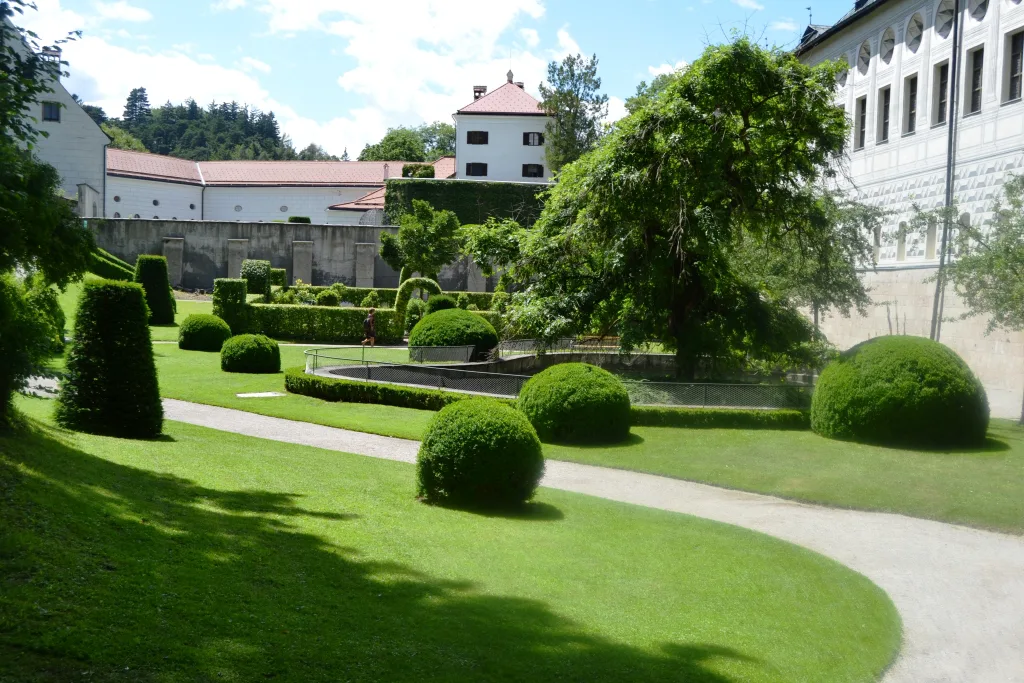
The Schlosspark is a reason to come in its own right, with lawns, trees and views back over the city. Peacocks roam the grounds, so keep an eye on the paths and give them space.
The Paradise and Apothecary Garden (Paradies- & Arzneimittelgarten) presents plants with medicinal and botanical uses in a formal setting. The Keuchengarten adds a second garden area, and together they make a loop worth 30 to 45 minutes at an unhurried pace.
On a warm day, the grounds are where you will want to linger after the interiors, and they suit a picnic or a slow walk before heading back down to the city. The elevated position means the light and the views shift through the afternoon.
How much time to allow, and what to see first
Give Ambras two to three hours for the buildings and gardens combined. In one hour, go to the Spanish Hall, the armories and the Bath of Philippine Welser, then step outside for a short turn through the park.
With a half day, add the portrait gallery and both gardens. The castle is a half-day outing on its own rather than a quick photo stop, so place it in your day with that in mind.
Guided tours and on-site facilities
The castle runs guided tours and a program of events alongside self-guided visits, and its site lists the tour formats and times. Check the tour schedule for the days you plan to visit, since set times are the one part of a visit that does not flex.
A café and bistro operate at the castle, which makes a mid-visit break easy between the interiors and the park. Plan lunch either before the museums or after the gardens, rather than in the middle of the Hochschloss.
How Ambras fits an Innsbruck route
Pair Ambras with the old town on the same day: the castle in the morning, then the city center after lunch. The Golden Roof (Goldenes Dachl) in Innsbruck is the natural centerpiece of that afternoon, and it is a short city walk from the main squares.
The Hofburg Innsbruck, the imperial palace in the old town, offers a different kind of princely interior with its Giant Hall, and it works well as the second royal stop of the trip. Between the two you get the Habsburg court in town and Ferdinand's collection on the hill.
If you still have energy after the castle, the Nordkette Cable Car Innsbruck climbs from the city to the mountains in minutes and gives you the alpine counterpoint to a morning of Renaissance rooms.
Book the online ticket and go early
Ambras rewards a simple plan: buy the 12-euro online ticket, arrive near the 10:00 opening, see the Spanish Hall and armories first, then give the gardens and the Bath of Philippine Welser the time they deserve. Avoid November entirely, and keep the castle as the anchor of a day that ends in the old town.
To slot the rest of the city around it, use Innsbruck Attractions as your map of squares, churches and mountain rides, and plan the castle as the first stop before the crowds build.
Explore more Innsbruck guides
Frequently Asked Questions
Is Ambras Castle free to visit?
No. Admission is charged, with a standard price at the gate and a lower price for tickets bought online; the official castle site lists both. Booking ahead is the cheapest route.
What is the history of Ambras Castle?
The castle is tied to Archduke Ferdinand II and his wife Philippine Welser, who shaped the complex and its collections in the sixteenth century. The Hochschloss displays his armories and the Spanish Hall, while the Unterschloss preserves rooms including the Bath of Philippine Welser.
How does the Hofburg compare with Ambras?
The Hofburg Innsbruck is a palace rather than a castle, but it gives you the Habsburg court interior to compare with Ambras. Between the two you get the imperial palace in the old town and Ferdinand's collection on the hill above the city.