
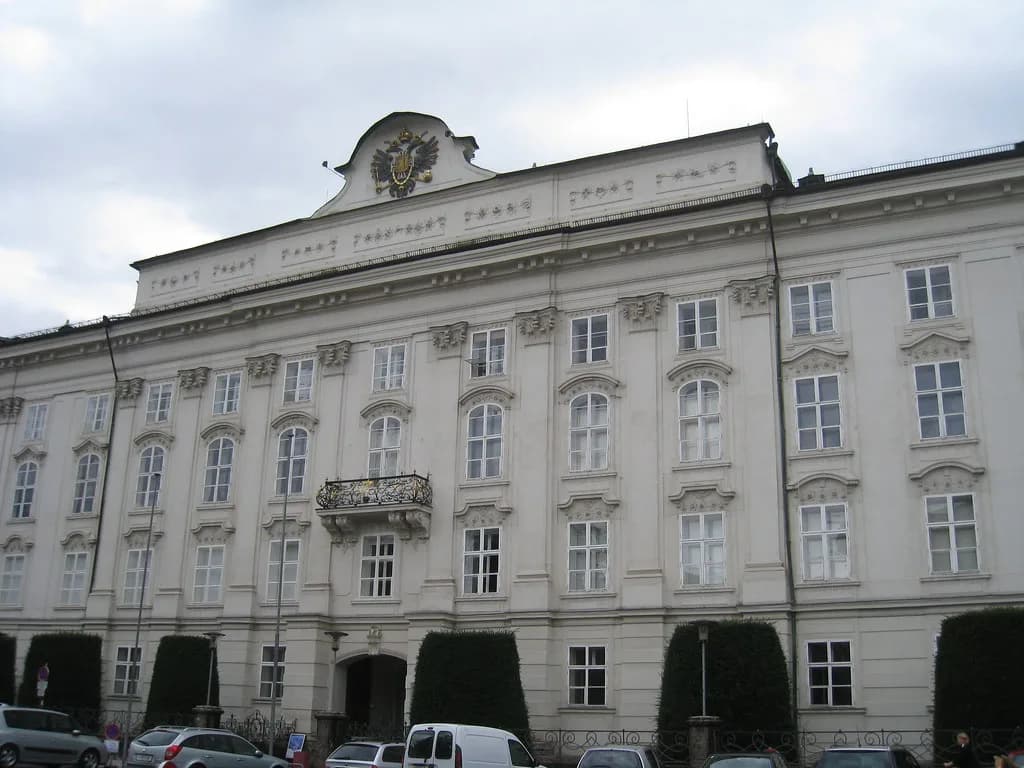
Hofburg Innsbruck: A Visitor's Guide to the Imperial Palace
The Hofburg Innsbruck is the Habsburg imperial palace at the edge of Innsbruck's old town, and the part most visitors come for is the run of state rooms, above all the Giant Hall. Its cobblestone Castle Courtyard sits at the center of the palace wings. This guide covers what the palace is, how to reach it, which rooms to look for by name, what else stands in the same complex, and how to plan around event rentals that can take rooms out of circulation.
What the Hofburg is and who used it
The Hofburg was the Innsbruck residence of the Habsburgs, and it sits at the head of a larger ensemble of court buildings rather than standing alone. The palace was remodeled into a Renaissance residence in the sixteenth century, and its facades took on their present Baroque decoration during a remodeling between 1765 and 1770, when sculpted pilasters, framed fields and gables with the Austrian shield were added. In August 1765 a public lunch banquet was held in the Giant Hall for the wedding of Maria Theresa's son Leopold of Tuscany to the Spanish infanta Mary Ludovica, after the adjoining audience room proved too small.
The state rooms carry imperial family portraits hung between the windows, which is what gives the Giant Hall its particular character. The Guard Hall next door holds colossal oil paintings from 1773 to 1777 depicting victories over the Ottomans, and in 1909 Emperor Franz Joseph I used the Guard Hall, Giant Hall and Audience Hall together for a banquet marking the centenary of the Tyrolean Uprising under Andreas Hofer. Knowing these room names helps you match what you see to the room descriptions.
Where the palace sits and how to reach it
The palace stands in the center of Innsbruck, on the edge of the old town and a short walk from the Golden Roof (Goldenes Dachl) in Innsbruck and the pedestrian lanes around it. The management office for the building is at Rennweg 1, 6020 Innsbruck, which is the reference point if you need to write or call ahead about access. Innsbruck's compact center means most visitors reach the Hofburg on foot from the old town lanes.
Arriving on foot, you can combine the palace with the Hofkirche and the Hofgarten. Walk past the courtyard first: the four portals give you a sense of how the palace closes off the street and opens into the complex behind.
The state rooms worth your time, starting with the Giant Hall
Start with the Giant Hall, Innsbruck's most formal festive room, measuring 31.5 by 13 meters with an 11-meter ceiling and described in the building's own records as the most sumptuous state room in the Alpine region. Its scale is what makes it memorable: stands and platforms were once erected inside for public banquets, and in 1909 a horseshoe-shaped banquet table filled the room. Look for the imperial portraits set between the windows rather than hung on a single wall.
From there, the Guard Hall, formerly an antechamber used for ceremonies, holds the Ottoman victory paintings and shows the palace's military-imperial side in one compact room. The Altmutter Hall, on the first floor, and the Gothic and Baroque cellars round out the sequence of event spaces, so budget time for the full circuit rather than turning back after the Giant Hall.
The Castle Courtyard as a free exterior stop
The Castle Courtyard, paved in cobblestones and enclosed by the palace wings, is the largest open space in the complex. It measures 1,260 square meters with a capacity of 600 for a seated dinner or 800 for a cocktail party, which tells you how large it feels once you are inside. Four portals lead in, and the mix of building periods on the east, south, north and west sides shows how the complex grew in stages. Because the courtyard is also used for open-air events, it can be occupied on a given day.
Treat the courtyard as a brief stop on the way to the Hofkirche and the Hofgarten, and check ahead if your visit coincides with a listed event.
What else stands in the same Habsburg complex
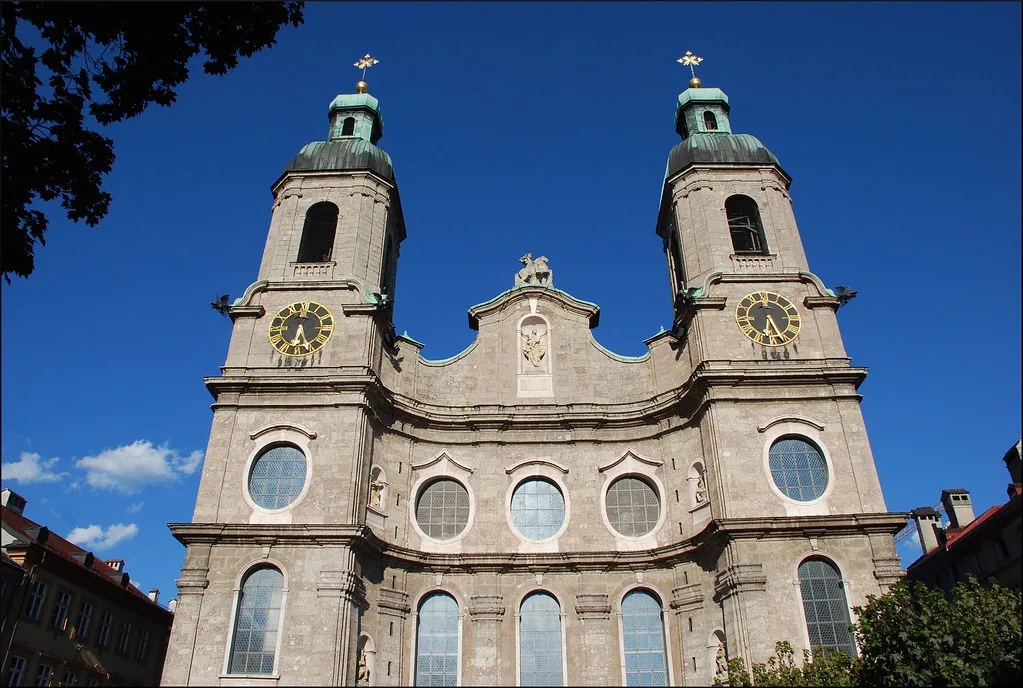
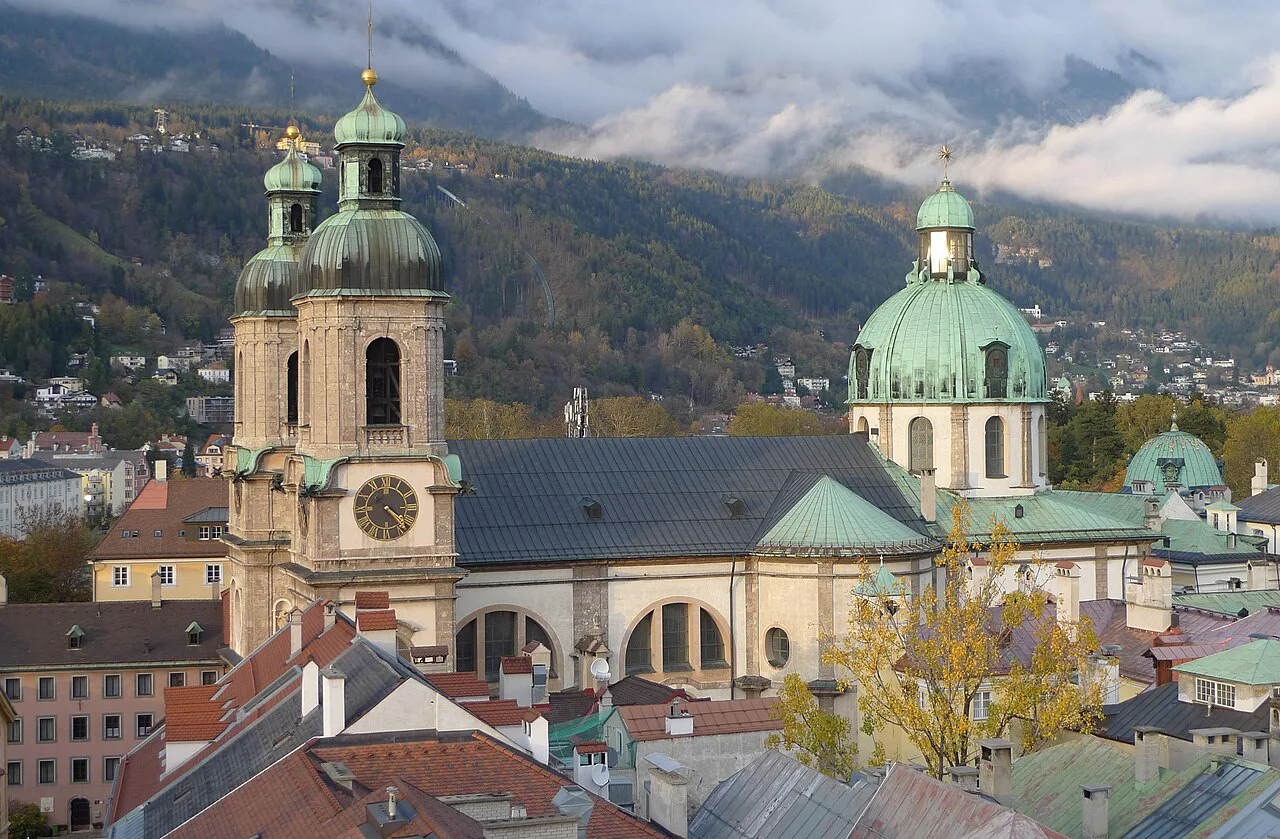
The Hofburg anchors a group of buildings the Habsburg court left behind, and you can see several of them without leaving the block. The Hofkirche holds Emperor Maximilian's cenotaph and its bronze figures, the Silver Chapel sits within the court complex, and the Tyrolean Folk Art Museum occupies part of the adjoining buildings. Innsbruck Cathedral and the Hofgarten are both a short walk away, so a single morning covers the palace and two or three of these neighbors.
If you want a city church with a Baroque interior rather than a court chapel, Dom St. Jakob in Innsbruck is nearby and makes an easy addition to the same walk. Each of these buildings keeps its own ticket desk and its own hours, so plan them as separate stops rather than one combined admission.

How long the Hofburg needs inside and around it
Allow about an hour for the palace interior if you read the room descriptions and linger in the Giant Hall, and plan two to three hours for the Hofburg plus the Hofkirche and the Hofgarten. The courtyard alone takes ten to fifteen minutes, so it fits into a walk between the old town and the river even on a tight schedule. Visitors with a half day can add Ambras Castle (Schloss Ambras) in Innsbruck, which sits outside the center and needs its own transport and time budget.
If you are in Innsbruck for the mountain side of the trip as well, the Nordkette range rises directly above the city, which pairs naturally with a morning at the palace. Keep the two on separate halves of the day so neither gets rushed.
Tickets, hours and event rentals
The Hofburg is managed by the Burghauptmannschaft Österreich, which rents the state rooms and the courtyard for events and publishes the room capacities and rental fees on its site; those fees are for private hire, not admission. Rental rates are quoted per day excluding VAT and additional charges, with the Giant Hall listed at 5,527 euros for cultural events that tie in with the museum (only mid-May through the end of June and mid-September through the end of October), 11,065 euros for other events in May, June, September and October, and 13,836 euros in the remaining months. Admission prices and opening hours for the palace are separate and are best confirmed on the official palace site before you buy.
Because rooms and the courtyard can be rented, a state room or the courtyard may occasionally be closed to visitors for a private event, and that possibility is worth checking in advance. If a room is off limits, the rest of the complex still fills the time: the Hofkirche, the Silver Chapel and the Hofgarten are independent of the palace's schedule.
Nearby options if the Hofburg is closed for an event
If the palace is tied up, walk five minutes to the Golden Roof (Goldenes Dachl) in Innsbruck, the late-Gothic oriel that has become the city's signature facade. It is a short visit rather than a half day, which makes it a good substitute when a state room is unavailable.
For a longer alternative, take the tram or a short bus ride to Ambras Castle (Schloss Ambras) in Innsbruck, the Renaissance palace above the city with its own collections and grounds. The Alpenzoo Innsbruck is another option on the same side of town if you are traveling with children.
Is the Hofburg worth a stop on your Innsbruck day?
Yes, if you want one clearly defined Habsburg interior in the center of Innsbruck rather than a scattering of small sights. The Giant Hall is the reason to go inside, and the courtyard gives you a look at the palace even on a short stop. Build the visit around a morning or early afternoon, pair it with the Hofkirche next door, and confirm the day's opening and any event closures on the official site before you set out.
Explore more Innsbruck guides
Frequently Asked Questions
Are the Hofburg's state rooms open to visitors?
The Hofburg's halls are managed by the Burghauptmannschaft Österreich, which rents the Giant Hall, Guard Hall, Altmutter Hall, cellars and Castle Courtyard for events. The agency publishes room capacities and rental fees rather than museum admission, so check the official palace site for current visiting arrangements, admission and any event closures before you go.
What language is spoken in Innsbruck?
German is the everyday language in Innsbruck, spoken in a Tyrolean dialect. Museum panels and ticket desks usually have English as well, and the Burghauptmannschaft publishes its event information in English alongside German and Italian.