
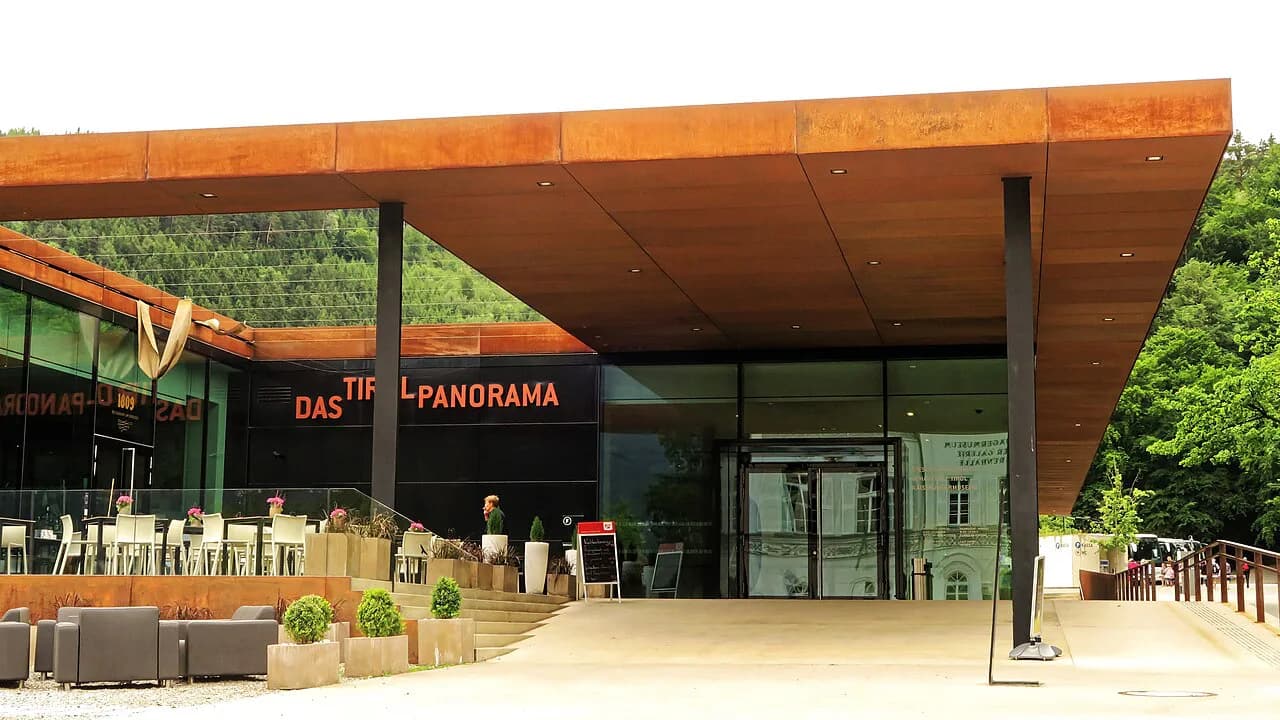
Tirol Panorama mit Kaiserjägermuseum: Visiting Innsbruck's Giant Panorama

The Tirol Panorama mit Kaiserjägermuseum is worth two to three hours if you want to understand the day that shaped modern Tyrol: it surrounds you with a giant circular painting of the third Battle of Bergisel of 13 August 1809, then asks hard questions about the legend built on top of it. The building sits on the Bergisel hill south of Innsbruck's old town, next to the ski jump, and bundles three separate things under one roof. This guide covers what is inside, how the space is laid out, how to get up the hill, and what hours and tickets apply.
Plan the visit around the panorama itself, because everything else is shorter. The two exhibitions that follow it are included in the same ticket, so there is no reason to choose between them, but the military collection rewards a different kind of attention than the painting does. The sections below take each part in the order you will meet it.
What the Tirol Panorama actually is
The centerpiece is the Riesenrundgemälde, the largest painted artwork in Tyrol, a circular canvas covering roughly 1,000 square meters. It depicts the third Battle of Bergisel of 13 August 1809, when Tyrolean fighters drove back a Bavarian army under French command, and visitors pass through stations that introduce the history and the people involved before stepping onto the viewing platform.
The painter was Michael Zeno Diemer, working under the supervision of the history painter Franz von Defregger, and the canvas was finished in just three months. That speed is worth keeping in mind as you look: the scene is arranged to make the Tyrolean cause feel inevitable. Knowing it was produced as a spectacle rather than a neutral record changes how you read the faces.
The museum does not simply celebrate the scene. Its permanent exhibition Schauplatz Tirol uses the panorama as a stage set and then examines the Mythos Tirol itself, including the landscape, the people, the drive for freedom and the strong pull of the mountains. Expect the visit to feel more like an argument about memory than a hall of heroes, which is the main reason to choose it over a straightforward history display.

Where it sits on the Bergisel
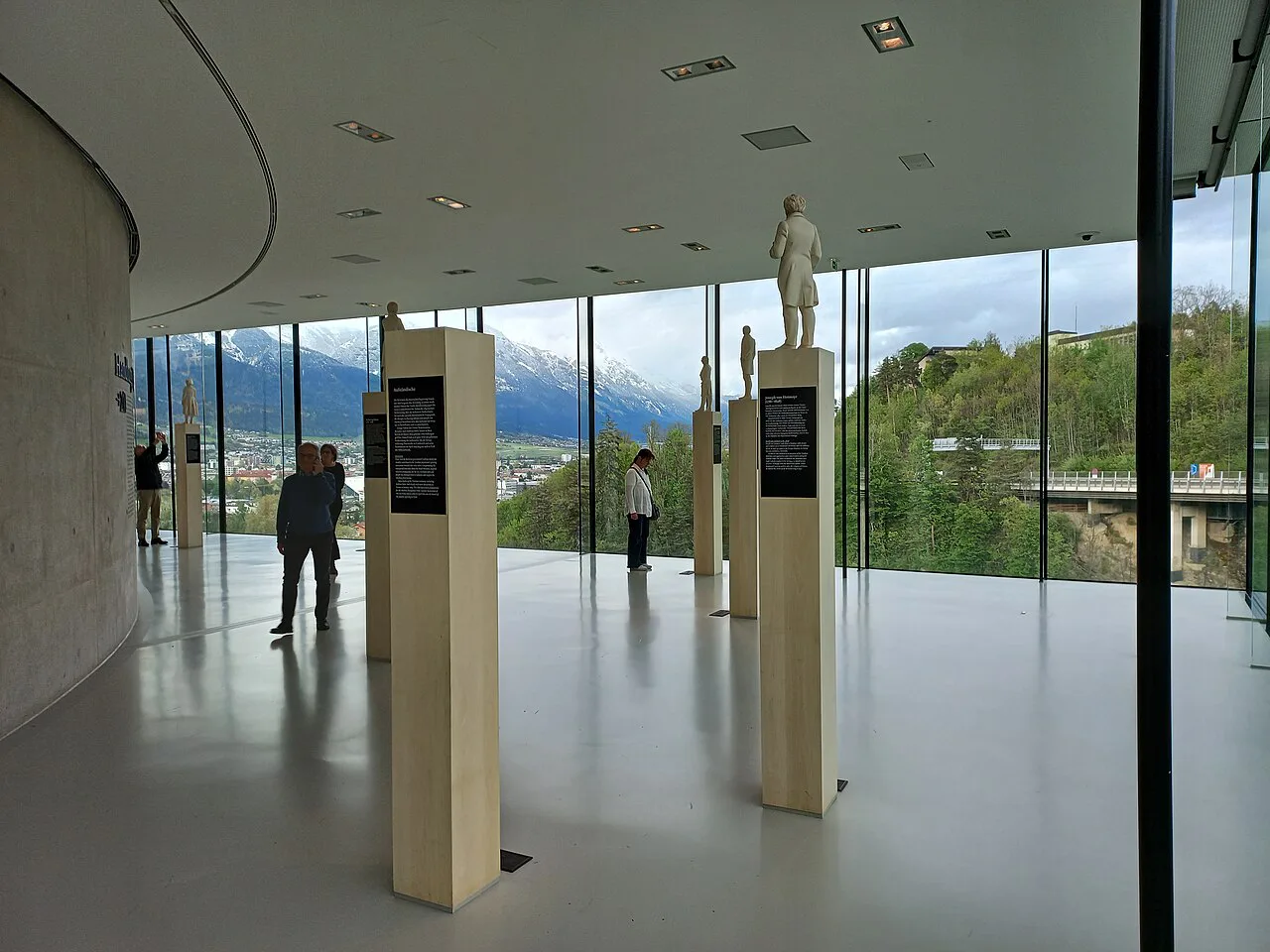
The museum stands on the Bergisel, a 746-meter hill in the south of Innsbruck, within walking distance of the ski jump. More than 200 years ago this hilltop was the scene of the battle the painting depicts, in which Tyrolean fighters drove back a Bavarian army under French command. From the viewing terrace and surrounding paths you look north over the provincial capital with the Nordkette rising behind it, so the setting does half the work before you go inside. Treat the hilltop position as part of the visit rather than a commute.
For orientation, the old town with the Golden Roof and the Hofburg lies down in the valley to the north. If you are building a half-day, the museum pairs naturally with the Bergisel Ski Jump next door and with an old-town walk afterward rather than before, since the hill is the high point of the circuit.

How to get up the Bergisel
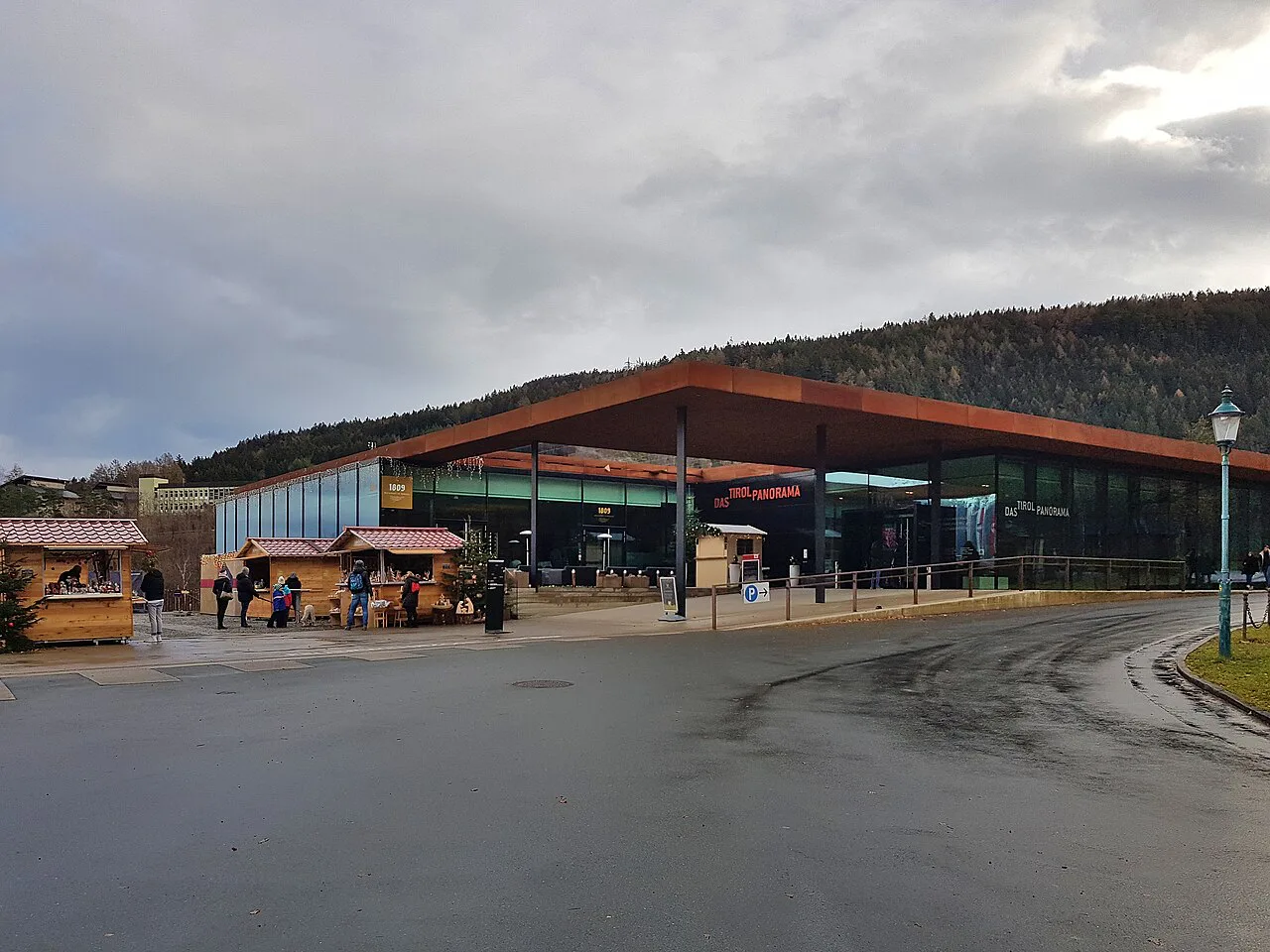
Innsbruck's tram and bus network reaches the Bergisel, and the climb on foot from the city center is a steady uphill walk rather than a short stroll. Check current connections and departure times with Innsbrucker Verkehrsbetriebe or the ÖBB Scotty app before you set out, since routes are adjusted seasonally. Allow extra time in either direction if you are coming from the Hauptbahnhof with luggage.
If you arrive by car, the tram is often the easier decision for reaching the hill. Anyone combining the museum with the Nordkette on the same day should ride the Hungerburgbahn up first and save the Bergisel for the afternoon, because the two hills sit on opposite sides of the valley.
Inside: the panorama, Schauplatz Tirol and the Kaiserjägermuseum
The visit runs in three parts. First come the introductory stations, then the circular painting with its recreated terrain in the foreground, then the Schauplatz Tirol exhibition, which spreads through the same building and uses objects to talk about religion, nature and politics in Tyrol. The combination is deliberate: the painting supplies the emotion, the exhibition supplies the correction.
The Kaiserjägermuseum is connected underground to the panorama, so you cross over without going outside. As the regimental museum of the Tyrolean Kaiserjäger, it traces Tyrol's military history from the 18th to the 20th century. The tone is documentary, which makes it an informative companion to the painting upstairs.
Note that the Hofkirche and the other Tiroler Landesmuseen sites in the city are separate buildings with their own tickets and hours. The Hofkirche, with the tomb of Kaiser Maximilian I. and its famous bronze figures, is the natural companion in the old town if you want more of the same collection on another day.
Opening hours and tickets
The museum opens Wednesday to Monday from 9:00 to 17:00, with the last entry at 16:30, and it is closed on Tuesdays. Adult tickets are 14 euros and the reduced rate is 11 euros, a combination ticket with the other Landesmuseen houses is 9 euros against 7 euros for the single ticket, and entry is free under 19. These figures come from the operator's published price list, which also confirms the hours.
Because the Tuesday closure is unusual for a city museum, build your Innsbruck plan around it rather than discovering it at the door. If Bergisel is your priority, put it on a Wednesday or later in the week and give the old town or Ambras Castle the Tuesday slot instead.
How long to allow
Two hours covers the panorama, the exhibition and the military collection at a reasonable pace. Add half an hour if you read German and want to work through the introductory stations properly, and add another half hour for the terrace views and a coffee before you head back down. A rushed forty-five minutes gets you the painting and nothing else, which defeats the purpose of the ticket.
There is a museum restaurant on the hill, so a meal does not require leaving the site. Confirm what is open when you arrive rather than planning around it.
The Panorama Loop and the views
A 2.2-kilometer trail called the Panorama Loop starts at the museum and circles the Bergisel, linking the history of the hill with open views over the city and the surrounding mountains. It is a walk, not a hike, and it takes well under an hour at an easy pace. Do it after the museum, when the battle scene is fresh and you can pick out the terrain the painting describes.
The Nordkette fills the northern skyline from up here, and on a clear day the contrast between the painted Alpine backdrop inside and the real one outside is the most memorable moment of the visit. Bring a layer, because the hilltop is exposed and windier than the old town even in summer.
Nearby: the ski jump and the rest of the half-day
The Bergisel Ski Jump stands beside the museum and is the obvious second stop, with its viewing terrace and architecture by Zaha Hadid. Together the two attractions fill a comfortable half-day on the hill, and both reward clear weather more than rain.
Back in the valley, Ambras Castle is the other Innsbruck sight that justifies a separate half-day, with its Habsburg collections and the Spanish Hall. If you only have one free block, choose between Bergisel and Ambras rather than trying to squeeze both into an afternoon.
In the old town, the Golden Roof and the Hofburg's Giant Hall round out the imperial story, and the Annasäule on Maria-Theresien-Straße marks the start of the pedestrian axis most visitors walk first. Any of them slots into the evening after Bergisel.
What to skip if you are short on time
With an hour, go straight to the circular painting and the viewing platform, then leave. The Schauplatz Tirol exhibition and the Kaiserjägermuseum are both worth their time, but the painting is the reason this museum exists and the one thing you cannot see elsewhere in Innsbruck. Skipping the military collection is a reasonable trade on a tight schedule; skipping the panorama is not.
Is the Bergisel panorama worth the climb?
Yes, if you give it two hours and arrive knowing what 13 August 1809 means. The combination of a 1,000-square-meter painting, a self-critical exhibition and an underground military museum is unlike anything else in the city, and the hilltop setting above the Nordkette skyline finishes the job. Go Wednesday to Monday, budget the ticket price, and pair it with the ski jump rather than cramming it into a city walk.