
Swarovski Crystal Worlds (Kristallwelten), Wattens: A Visitor's Guide
Swarovski Crystal Worlds (Swarovski Kristallwelten) is a crystal art museum in Wattens, east of Innsbruck, opened in 1995 for the company's centenary. It has two halves that ask different things of you: a sequence of dark, mirrored art chambers indoors and a garden built around crystal installations under open sky. Give it a half day unless you intend to linger in the garden.
This guide covers where the site sits, how to reach it from an Innsbruck base, what each part of the ticket buys, and how to pace a route through the chambers so you are not walking out into daylight too early. It is a brand experience, not a palace or an abbey, and setting that expectation before you arrive makes the visit easier to enjoy on its own terms.
Where Swarovski Crystal Worlds is
The site stands at Swarovkistrasse 30 in Wattens, in the Inn Valley east of Innsbruck. Wattens is a working town, not a postcard village, so treat the museum as the reason for the run east rather than expecting an old town around it.
From Innsbruck the trip is short enough to fold into a town day rather than a separate excursion. If you are weighing it against the sights in the city center, the Golden Roof (Goldenes Dachl) in Innsbruck and Ambras Castle (Schloss Ambras) in Innsbruck both sit inside Innsbruck and need no extra transport leg, while Wattens costs you the eastward run.

How to get there from Innsbruck
An Innsbruck shuttle is the simplest option for travelers without a car, and the official Kristallwelten site is the place to confirm whether it is running and at what times on your dates. The train-and-bus alternative uses the Inn Valley line toward Wattens plus a local connection; check ÖBB for trains and Postbus for the bus leg before you commit to a departure.
Driving gives you the most control over timing, since you can leave Innsbruck when the chambers open rather than when a shuttle departs. The trade-off is parking and the return leg at the end of the day, which matters if you are combining Wattens with anything else in the valley. Whichever way you go, build in slack for the last connection back.
Arriving at the Giant
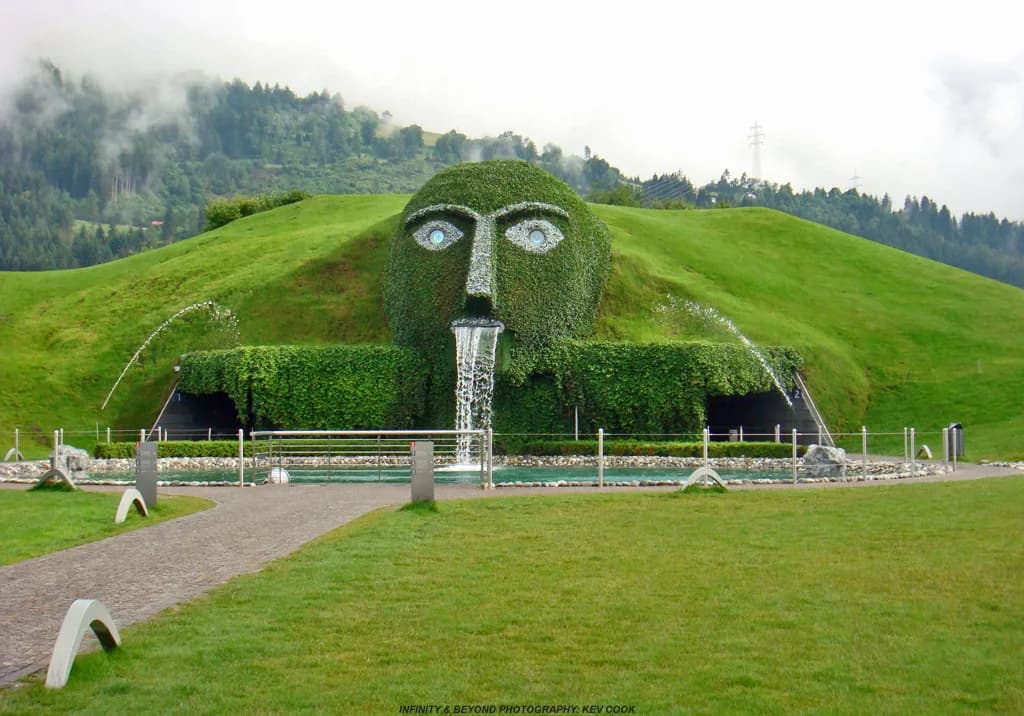
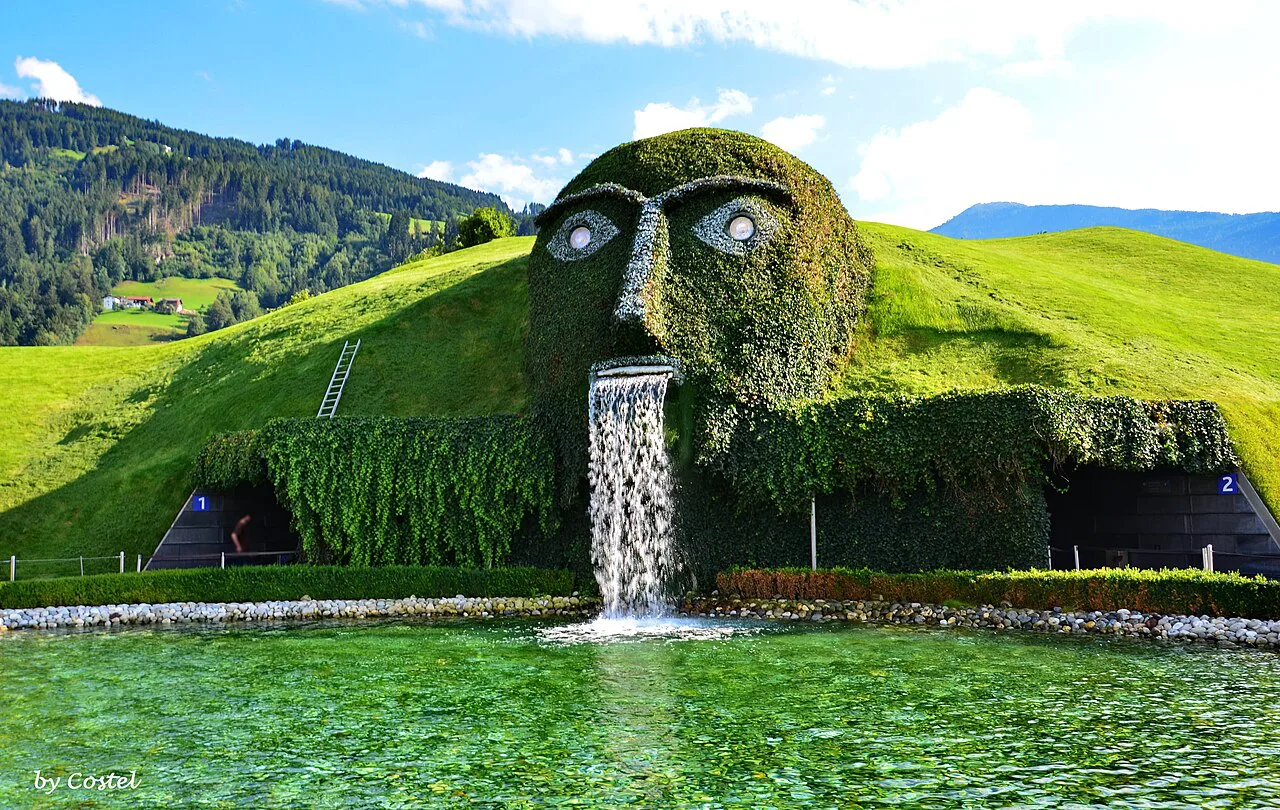
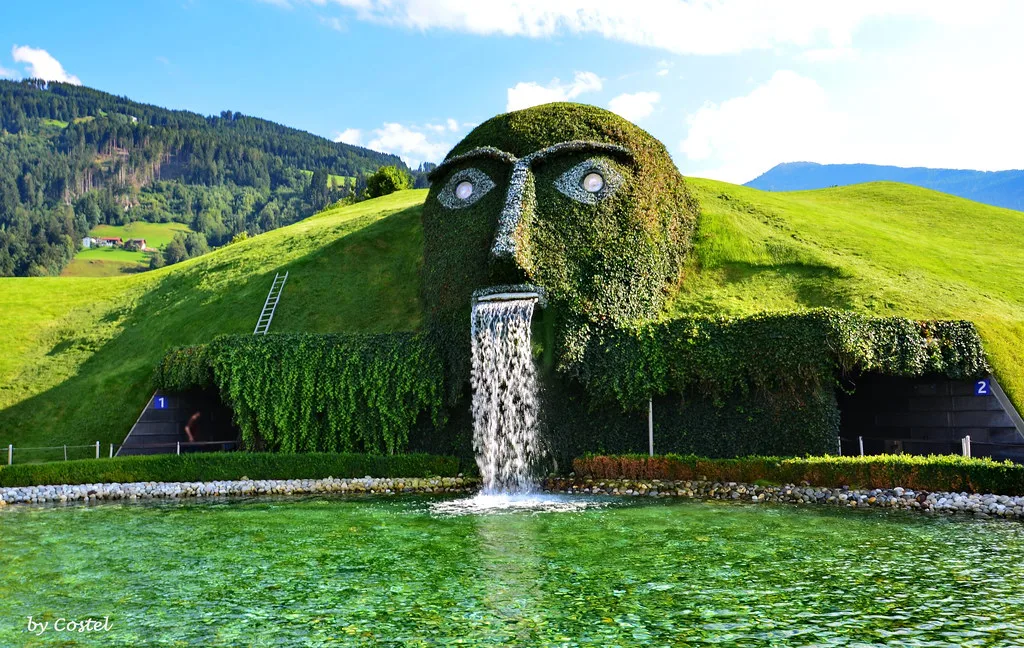
The entrance is the head of a spouting alpine giant, created by the Austrian artist André Heller, and it doubles as the transition into the site. Behind it, the building holds the Chambers of Wonder, the Crystal Dome and the newer additions, all included in the same visit.
Your ticket covers the indoor chambers and the garden as one continuous experience, so there is no decision to make about which half to buy. Arrive early in the day if you want the dark rooms before tour groups build up, then take the garden in the brighter hours when the installations catch the light.
The Chambers of Wonder
Sixteen Chambers of Wonder hold interpretations of crystal by artists, designers and architects, with names such as Blue Hall, La Primadonna Assoluta and Timeless. Each room is a self-contained environment, which means the visit is a sequence of short, intense stops rather than one long gallery walk.
The Crystal Dome, with its dome of 595 mirrors, is the central hall and the one most visitors remember. The Art of Performance chamber covers Swarovski's long relationship with Hollywood performers and creatives, which gives the brand story a narrative spine between the abstract light rooms.
Two chambers by Rafael Lozano-Hemmer arrived at the end of November 2024: Pulse Voronoi, now the largest chamber at the site, and Kristallstimmen, a room roofed with 3,000 floating crystal speakers. Plan your route so these come late in the indoor sequence, when the earlier rooms have already recalibrated your eyes to low light.
Umbra, Chandelier of Grief and Into Lattice Sun
Among the artist rooms, Umbra by James Turrell and the Chandelier of Grief by Yayoi Kusama are the two that reward patience most, because both are mirror installations where a few extra minutes change what you see. Into Lattice Sun by Lee Bul sets a utopian landscape against that darkness, and Carousel by Jaime Hayon uses 15 million crystals as its material.
Pacing matters more than order here. Move slowly through the mirrored rooms, let your eyes settle, and resist the urge to photograph every surface; the crowd behind you will keep moving, and you can always circle back once it thins. Keep the garden for last so the transition from darkness to daylight works as the finale rather than a jolt in the middle.
The garden half of the visit
In the garden, the Crystal Cloud of 800,000 hand-mounted crystals drifts above the black Mirror Pool, and it is the single image most people carry home. The grounds can be enjoyed year-round, but they take on a different dimension in summer, when the crystal artworks catch reflected sunlight and the outdoor space becomes a real part of the day.
A playtower and playground sit alongside the garden, which adds time if you are traveling with children who need to burn off energy after the quiet chambers. Outside the warm months the garden becomes a brisk walk between installations rather than a place to sit, so weigh the season against how much of the day you want outdoors.
Food on site
Daniels Kristallwelten by DoN is the restaurant on site, with the Crystal Bar for a quicker stop and a food truck at weekends. That combination means you do not need to build a separate meal stop into the Wattens run, though weekend food-truck service is a reason to keep your plans flexible if you are counting on it.
If you would rather eat in Innsbruck, the city center has the wider choice, and a museum cafe lunch is the compromise that keeps the day moving. Either way, book or arrive at the restaurant at an off-peak hour, since the midday window is when the chambers empty out and the tables fill.
How long to allow
A half day covers the chambers, the Crystal Dome and a loop of the garden without rushing, and most of that time goes to the indoor rooms because each one asks you to stop and look. Add time for the restaurant, the playground and any queue at the entrance.
If Wattens is one stop on an Inn Valley day, pair it with something that does not compete for attention. Innsbruck itself offers a full spread of indoor sights, from the Imperial Palace Innsbruck (Hofburg) to St. James' Cathedral (Dom St. Jakob) in Innsbruck, and the Innsbruck Attractions: 17 Visitor Guides page is the place to build the rest of the day around what you have already seen.
Tickets, hours and what changes by season
Ticket prices in EUR and seasonal opening hours are published on the official Kristallwelten site, so check them there for your dates. Buy online before you travel if you want a set entry time, and treat the garden as the part of the day that shifts most with the season.
The site is a brand attraction rather than a historic monument, and that has a practical consequence: the exhibitions change. The 2024 additions are one example, and current displays, closures for installation work and any timed-entry rules are all things the official site carries. Looking at it the week you travel is worth more than any figure printed in a guide.
Nearby in the Inn Valley
Wattens sits on the Inn Valley axis, so it slots into a route between Innsbruck and the Zillertal, or a loop that takes in Hall in Tirol on the way back. If you are staying in the city, the Innsbruck Attractions page lists the sights that fill the other days, including the Annasäule Innsbruck on Maria-Theresien-Strasse, the Ferdinandeum and the Hofkirche Innsbruck.
For a second outdoor option near the city, the Nordkette Cable Car Innsbruck climbs straight out of the valley and needs no car, which makes it an easy alternative if the weather turns and you want height without a long drive. The Bell Museum Innsbruck (Glockenmuseum) is the indoor pick for a wet afternoon, and the Bergisel Ski Jump gives you a landmark stop on the same side of town.
If you have a car and a full day, the Alpenzoo Innsbruck and the Hofgarten Innsbruck sit close enough together to combine before or after the Wattens run. Keep Wattens as the anchor of the day and let the Innsbruck stops fill the edges, rather than trying to do both halves at full attention.
Should Crystal Worlds be your Wattens day?
Book Swarovski Crystal Worlds if you want a designed, indoor-friendly attraction within easy reach of Innsbruck and you are willing to give it a half day. Skip it if you are chasing old towns, abbeys and alpine landscapes, because the site is a brand experience and the chambers, not the town of Wattens, are the draw.
Decide the transport first, then the timing: a shuttle or train-and-bus run shapes your arrival, and the garden works best at the end of the visit in daylight. Confirm current prices in EUR, opening hours and any shuttle schedule on the official site before you set out.
Explore more Innsbruck guides
Frequently Asked Questions
How long should I plan for Swarovski Crystal Worlds?
Allow a half day for the chambers, the Crystal Dome and a garden loop, plus extra if you eat on site or travel with children who want the playground. The indoor rooms take the most time because each one is a separate environment.
Is Swarovski Crystal Worlds the same as a Swarovski shop?
No. It is a crystal art museum in Wattens with artist-designed chambers, a mirror dome and a garden of crystal installations, opened in 1995 for the company's centenary. Retail is part of the visit, but the exhibitions are the reason to go.
Do I need to book tickets in advance?
Advance booking is worth it if you want a set entry time, particularly on summer weekends. Current prices in EUR and opening hours are published on the official Kristallwelten site, so check them there for your dates.
Can I visit Swarovski Crystal Worlds without a car?
Yes. An Innsbruck shuttle and a train-and-bus combination via the Inn Valley line both reach Wattens; confirm departure times with the official site, ÖBB and Postbus before you travel.