St. Paul Abbey (Stift St. Paul) in the Lavanttal: What to See
St. Paul Abbey in the Lavanttal is a Benedictine monastery with a Romanesque abbey church and a seasonal museum open Wednesday to Sunday. Here's what to see.
On this page
St. Paul Abbey rewards a half-day, not a quick photo stop: it is a working Benedictine monastery founded in 1091, raised on a rocky cone above the lower Lavanttal valley, with a Romanesque church and a museum whose collections carry the nickname "Schatzhaus Kärntens" — Carinthia's treasury. Plan around two separate pieces, the abbey church and the seasonal museum, because they keep different rhythms. This guide covers what stands where in the complex, when the museum opens, how the audio guide and tours work, and how the stop fits a route through Carinthia from Klagenfurt.
What St. Paul Abbey is
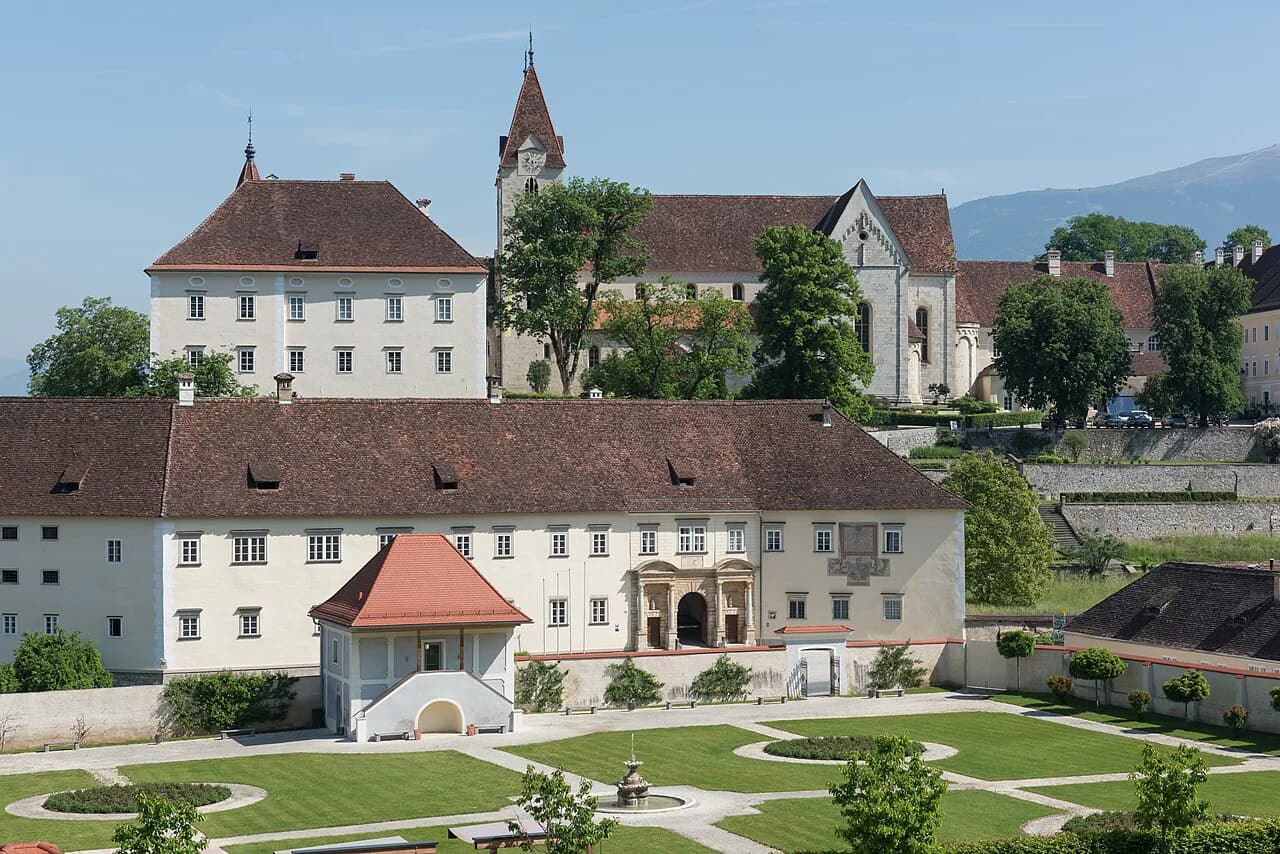
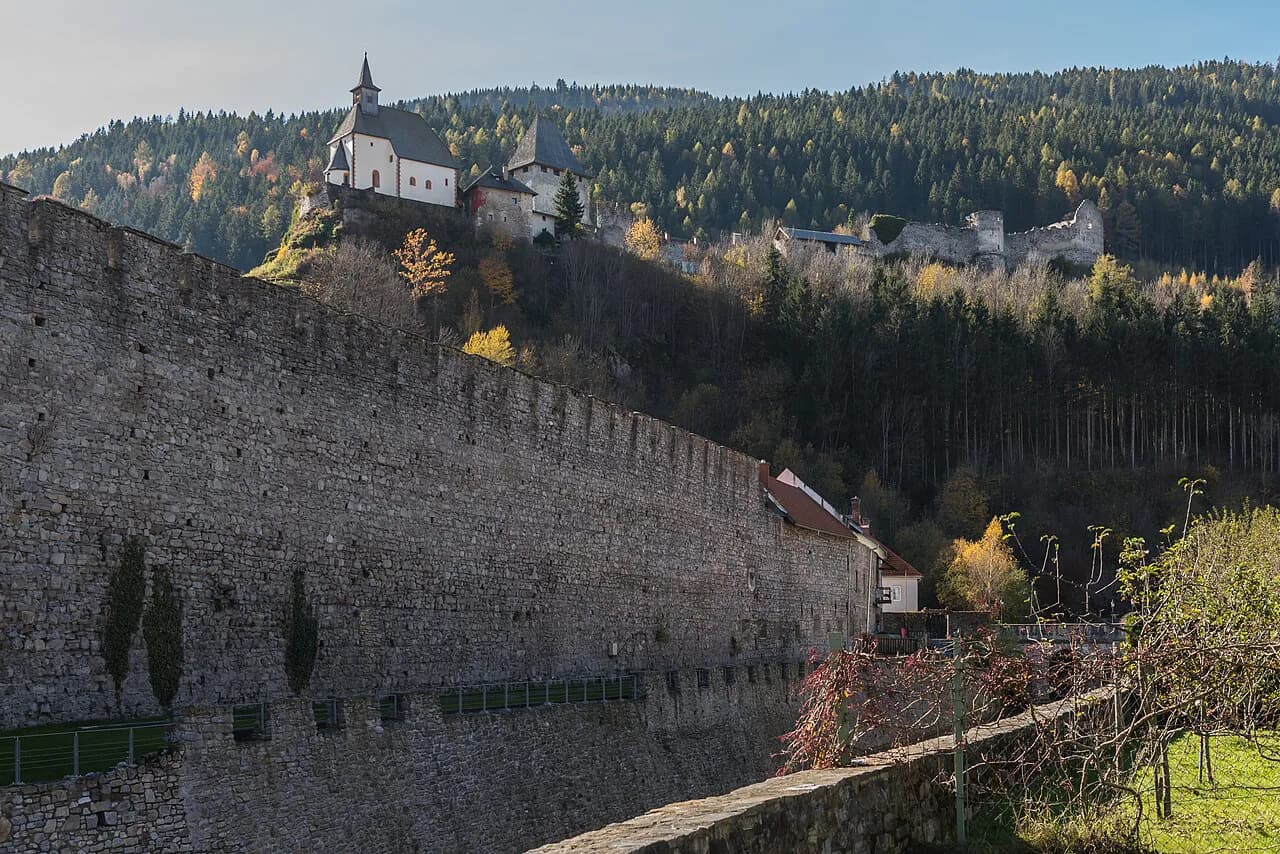
The monastery belongs to the Benedictine order and looks back to a founding in 1091, and its parish history is bound up with that same foundation story. The buildings sit elevated on a rock cone in the fertile lower Lavanttal, with the church lifted above the surrounding convent. Come expecting a monastery still in use rather than a museum piece, with Mass and parish life running alongside the visitor route.
The name confuses American readers, so be clear about which place this is: St. Paul im Lavanttal in Carinthia, Austria, not the monasteries and cathedrals of the same name in the US or the UK. If you are routing through Carinthia, treat it as the southern counterweight to the lake towns and the region's better-known fortresses.
Where it sits and how to approach it
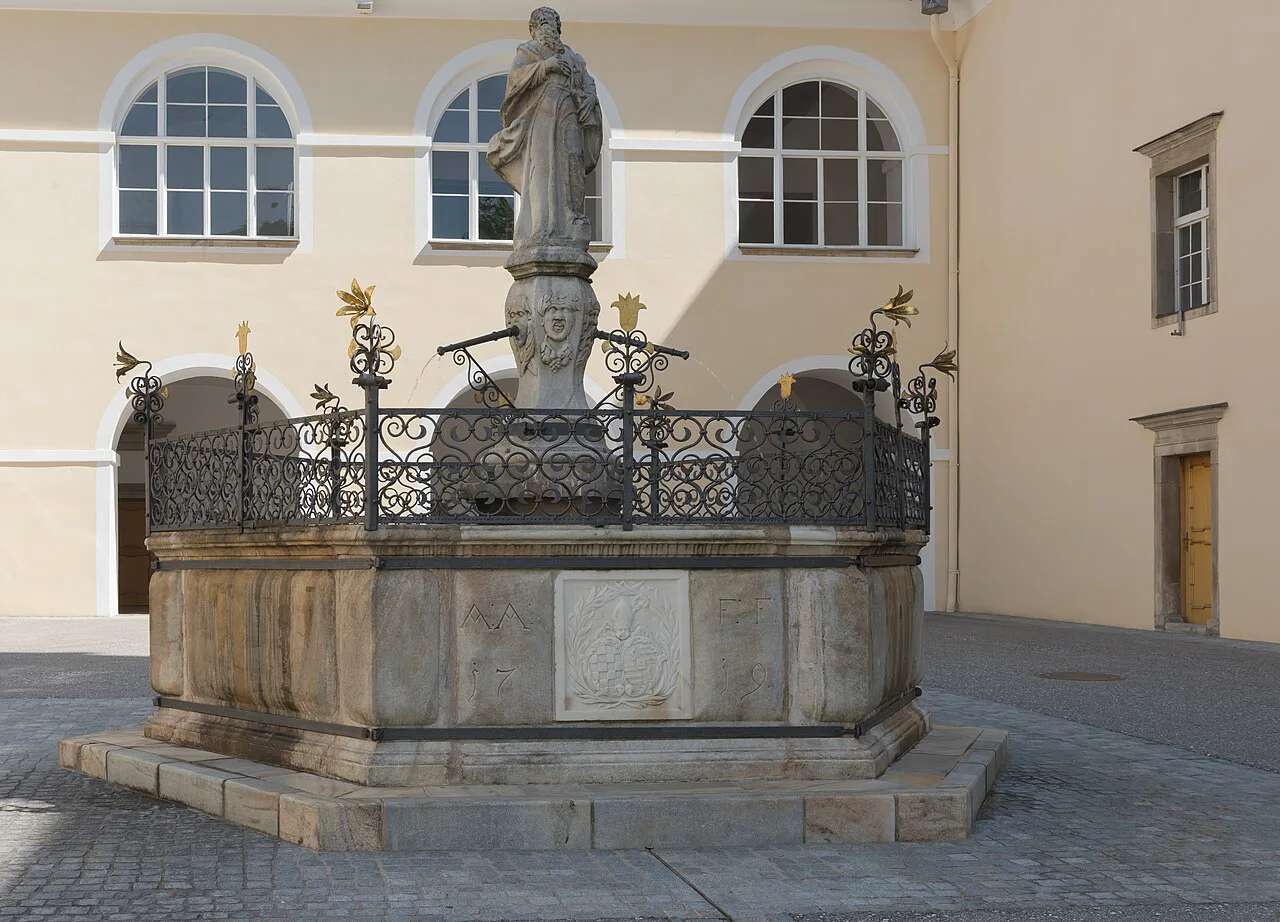
St. Paul im Lavanttal lies in the lower Lavanttal, southeast of the Klagenfurt basin, and the most direct approach is by car on the valley roads rather than by rail. The valley runs south toward the Slovenian border, so the abbey slots naturally into a route that also takes in the older ecclesiastical sites to the north. Allow driving time rather than a fixed schedule, and check connections the day before you travel.
For a Carinthia itinerary, the sensible pairing is a lake base at the Wörthersee with a southern loop down to St. Paul, since the lakeshore towns give you somewhere to land at the end of the day. The drive south into the Lavanttal makes a long day out, which is why the abbey works better as a committed half-day than as a spur-of-the-moment detour. Bus service into the Lavanttal exists, but the timetable, not the map, decides whether it fits your day.
The monastery complex: church, garden and outlying chapels
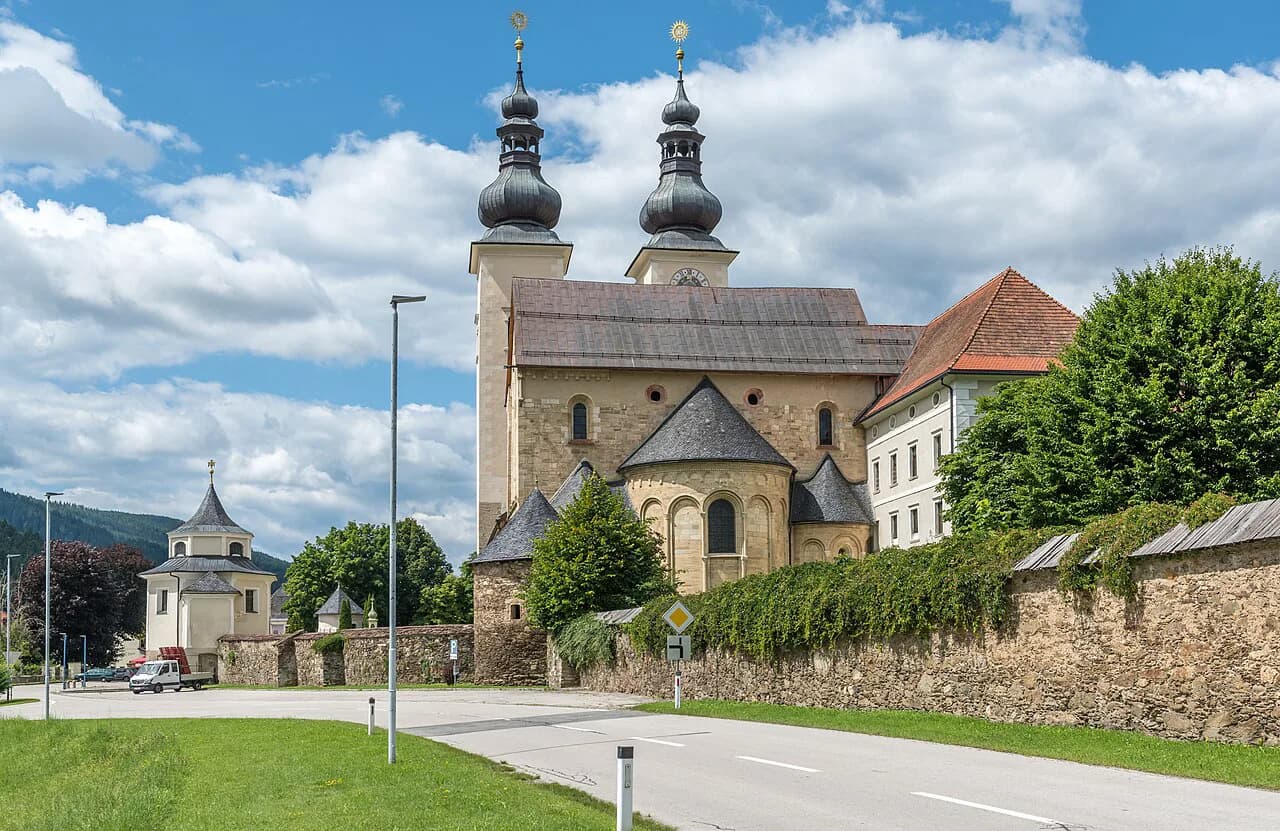
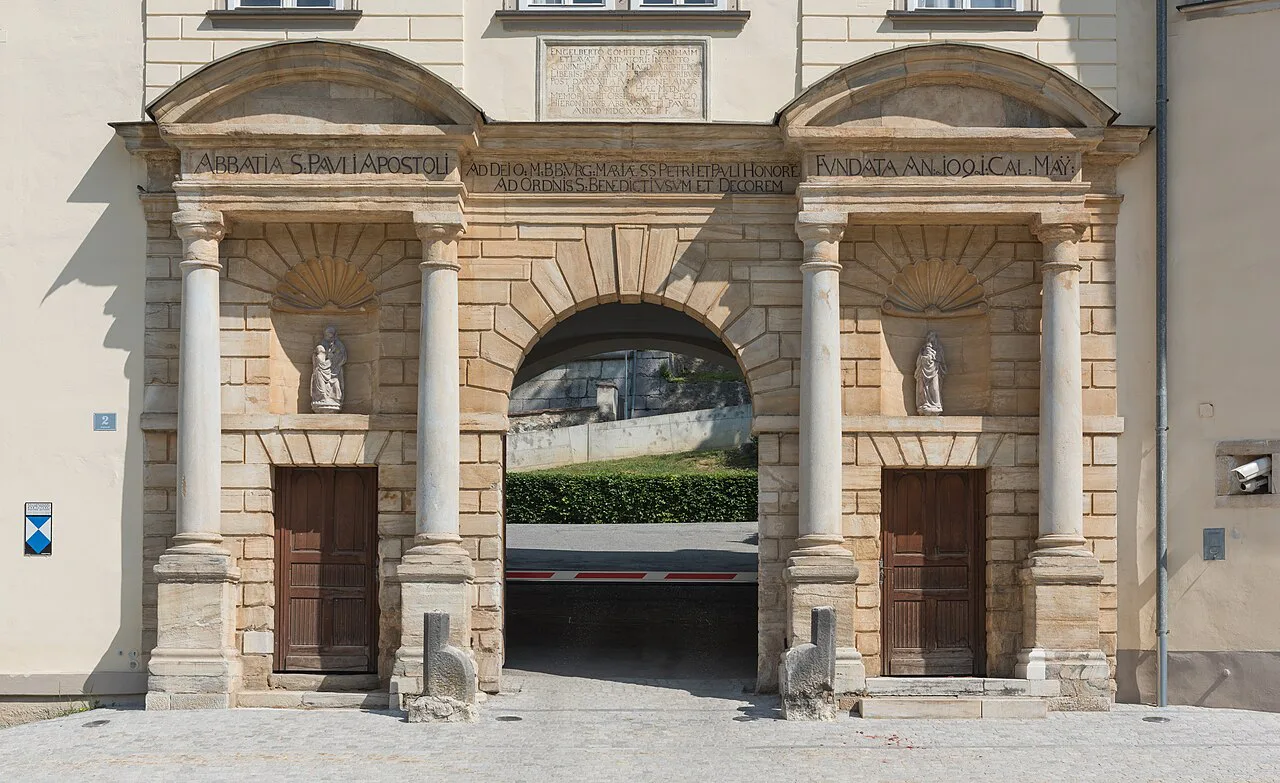
The core of the visit is the Stiftskirche, the abbey and parish church, which rises surrounded by the monastic buildings. The parish also lists a Baroque garden and smaller foundation churches — the Filialkirche St. Erhard, documented from 1405 and built almost entirely of mortared rubble stone, and the pilgrimage church on the Josefsberg — though these are separate sites rather than stops on one loop. If you want the quieter, less-visited side of the abbey, these outlying churches are where to find it.
Treat the complex as a place to walk rather than a single ticketed interior. The church and the grounds give you the setting and the architecture, while the museum holds the objects; the garden and chapels fill the gaps between the two. A slow circuit of church and grounds can absorb an hour before you ever reach the collection.
The abbey church: a Romanesque basilica, not a Baroque showpiece
The Stiftskirche is a Romanesque pillar basilica with a twin-tower west front visible from a distance, and a predecessor building was begun in 1064. That makes it a different experience from the Baroque abbeys of the Danube and the Waldviertel: heavy walls, piers instead of vaulting drama, and a façade that announces the monastery long before you reach the gate. Read it as architecture first and decoration second.
Sunday Mass in the Stiftskirche is listed at 9:30 a.m. in the parish schedule, which overlaps the museum's 10 a.m. opening and means the church itself may be in use when you arrive. A weekday morning gives you the building without that collision. The parish also lists weekday morning Masses in the Erhardikirche, so a church visit and a museum visit can be split across different days.
The museum and the Schatzhaus Kärntens exhibition
The abbey museum is the reason many travelers make the detour. Its 2025 "Schatzhaus Kärntens – Universum Wissen" exhibition brought together manuscripts from the fifth century, reliquaries in precious metal, and paintings by Dürer, Rubens and Rembrandt, set alongside contemporary works by Staudacher and Lüpertz. The show also took on war, epidemic and social upheaval as themes, tying the historic pieces to the present. Treat the 2025 lineup as that season's program rather than a fixed collection.
For a monastery museum, the range is unusually wide: medieval manuscripts, goldsmith work, Old Master painting and post-war art in one sequence. That breadth is also the trade-off, because a collection of this kind rewards an hour and a half rather than a twenty-minute pass-through. If your group splits between church people and museum people, the audio guide lets the museum half move at its own pace.
Season and visiting hours
The museum opens seasonally. In 2025 the Schatzhaus Kärntens exhibition ran from May 1 to October 26, Wednesday to Sunday and on public holidays, from 10 a.m. to 5 p.m., which puts Monday visits out and closes the collection outside that window. That rhythm is the main planning constraint for the abbey: outside the season you can still see the church and grounds, but the treasures are shut away. Confirm the current dates with the abbey office before you build a day around it.
Admission is not set out in the abbey's visitor information, so confirm the ticket cost at the desk or by phone rather than relying on a figure from an older trip report, and ask about any guided-tour fee at the same time. What you can plan confidently is the shape of the day: arrive shortly after opening, take the museum first, then the church and grounds.
How to tour it: audio guide, Wi-Fi and booked tours
The museum is set up for independent visitors. You download German- and English-language audio guides to your own smartphone, and Wi-Fi is available across the site, so a charged phone replaces a borrowed handset. Guided tours are not on a fixed public schedule; they are arranged on request, by phone at 04357 2019 or by email to ausstellung@stift-stpaul.at. Book ahead if you want a guided walk-through rather than the self-paced version.
In practice that means two visit styles. With the audio guide you control the pace and can loop back to the manuscripts or the reliquaries, which suits a first visit. A booked tour trades flexibility for context and a set time, which works better for a group with one shared interest.
Practical trade-offs before you commit
Three things shape a visit: the museum is seasonal, Monday is out during the season, and tours must be requested rather than joined. The 9:30 a.m. Sunday Mass adds a fourth, since it runs into the 10 a.m. opening and can leave the church occupied just as the museum unlocks.
Weather matters less here than at Carinthia's outdoor sights, since the collection and church are indoors, but the drive through the Lavanttal is the slow part of the day. If you are weighing the abbey against a lake afternoon, remember that St. Paul gives you art and architecture while the lakes give you landscape. Splitting the two across separate days is more satisfying than cramming both into one.
Getting there and moving on
The Lavanttal is car country; the abbey sits above the valley floor, and the outlying churches on the Josefsberg and at St. Erhard are separate sites you would need transport to reach. Buses serve the valley, but you need the operator's timetable to know whether a stop near the abbey lines up with your arrival. Build the day around your own transport and keep the schedule flexible.
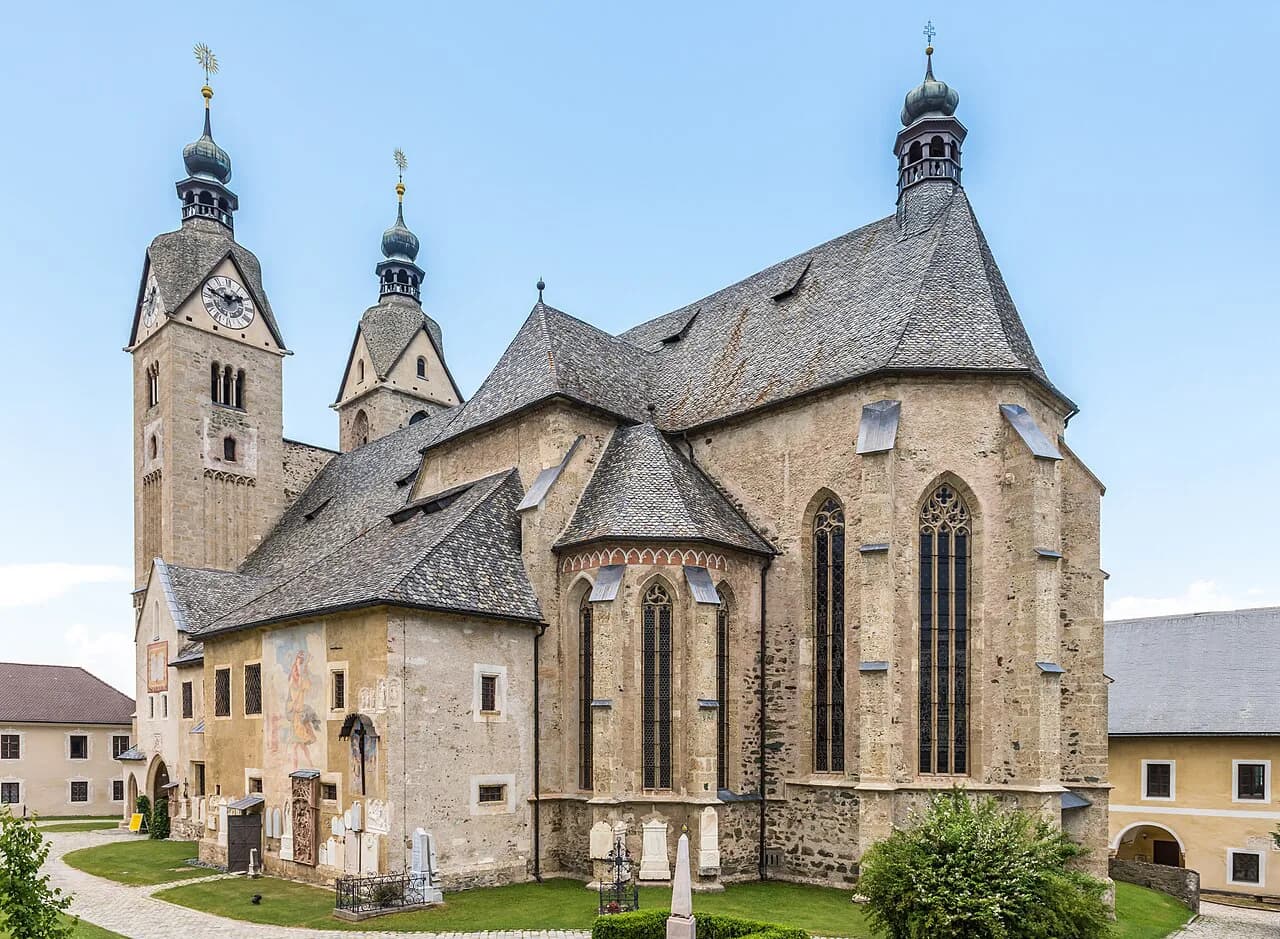
Going on, the strongest Carinthia pairings run north and west. Klagenfurt Attractions gives you a city base on the Wörthersee with the lake towns within reach, and Velden am Wörthersee is a straightforward lakeside stop on the way back. For a different register of church architecture, Gurk Cathedral lies to the north and makes a natural counterpoint to the Romanesque abbey.
Is St. Paul Abbey worth the Lavanttal drive?
Yes, if you go for the museum and accept its calendar. The combination of fifth-century manuscripts, reliquaries and Old Master paintings under one monastery roof is not something the lake towns offer, and the Romanesque church gives the visit an architectural spine. Go inside the season, midweek if you can, and aim to arrive near opening.
Skip the museum if your trip is a short lakeside stay or a winter visit, when the collection is closed and the abbey reduces to its church and grounds. Otherwise slot St. Paul into a southern loop from the Wörthersee and pair it with Gurk for a day of Carinthian church architecture.
Explore more Klagenfurt guides
Frequently Asked Questions
Do I need to book a guided tour at St. Paul Abbey?
Guided tours are arranged on request rather than run on a fixed public schedule, so booking ahead is the reliable route. The abbey took 2025 exhibition tour requests by phone at 04357 2019 or by email at ausstellung@stift-stpaul.at. If you prefer to move at your own pace, the German- and English-language audio guides download to your own smartphone and Wi-Fi is available on site.
Can I visit St. Paul Abbey outside the museum season?
The museum runs on a seasonal calendar; in 2025 the exhibition opened May 1 and closed October 26, with Wednesday-to-Sunday and holiday hours of 10 a.m. to 5 p.m. Outside that window the museum is closed, while the church and the grounds remain the focus of a visit. Confirm the current season with the abbey before planning a visit around the museum.
How much time should I allow at St. Paul Abbey?
The abbey is best given a half-day. The museum's manuscript, reliquary and painting displays are worth roughly an hour and a half, and the Romanesque abbey church plus the Baroque garden and outlying chapels fill another hour or so. Add driving time through the Lavanttal, which is the slow part of the trip.
Sources
Notes for your next Austrian town break
Optional updates when we add or revise town guides.
You might also like
Continue reading
More guides you'll find useful