Maria Saal: The Cathedral, Duke's Throne and Zollfeld Plain
Maria Saal packs a fortified Gothic pilgrimage church, the stone Duke's Throne and Roman Virunum remains into the Zollfeld plain just north of Klagenfurt.
On this page
Maria Saal is worth a half-day, not a whole one: a market town on the Zollfeld plain a few minutes by road from Klagenfurt, holding a fortified Gothic pilgrimage church, the stone seat where Carinthian dukes took their oath, and remains of the Roman provincial capital Virunum. Plan it as a cluster of four separate sights you can take in on foot and by short hops, skipping whatever does not interest you. This guide lays out each piece, explains why a defensive church ended up here, and shows how the town slots into a Carinthia route.
The setting explains the sights. Under the Roman province of Noricum, the capital Virunum stood on this ground, and the stone dukes' throne on which rulers sat to take the oath after their coronation still stands here. That combination of Roman administrative center and later ducal ceremony is what gives a small town an outsized collection of monuments.
Where Maria Saal sits on the Zollfeld plain
Maria Saal is a market town in the district of Klagenfurt-Land in Carinthia, set in the east of the historic Zollfeld plain. Treat the plain as the frame for the visit: flat farmland between Klagenfurt and the older ceremonial landscape around St. Veit, with the town as your walking base.
The scale is small enough that the cathedral, the throne and the village center belong to one short stroll, while the Roman amphitheater and the open-air museum sit slightly apart. That layout is why an hour or two covers the core and a half-day covers everything without rushing. Read the town as a compact historic quarter rather than a sight-by-sight circuit.
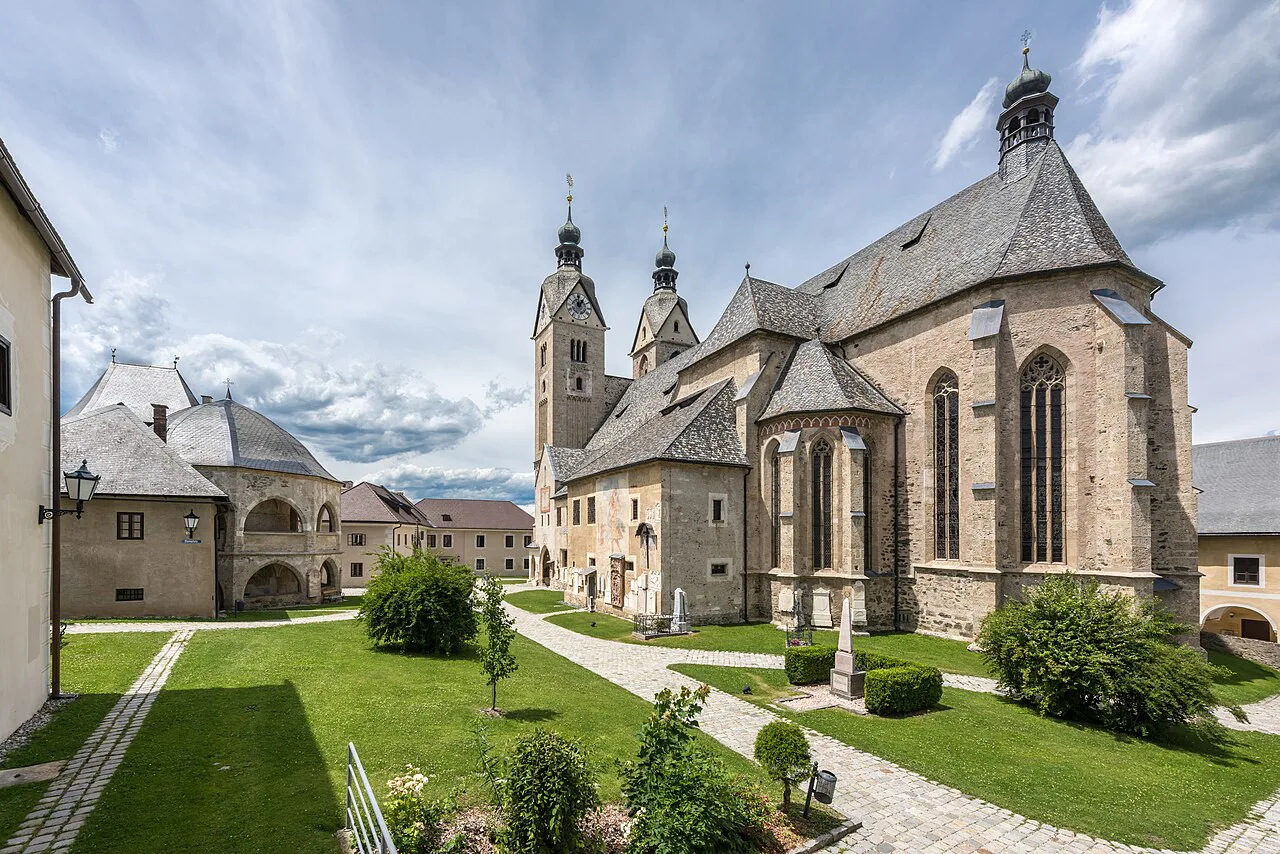
Maria Saal Cathedral: the fortified pilgrimage church
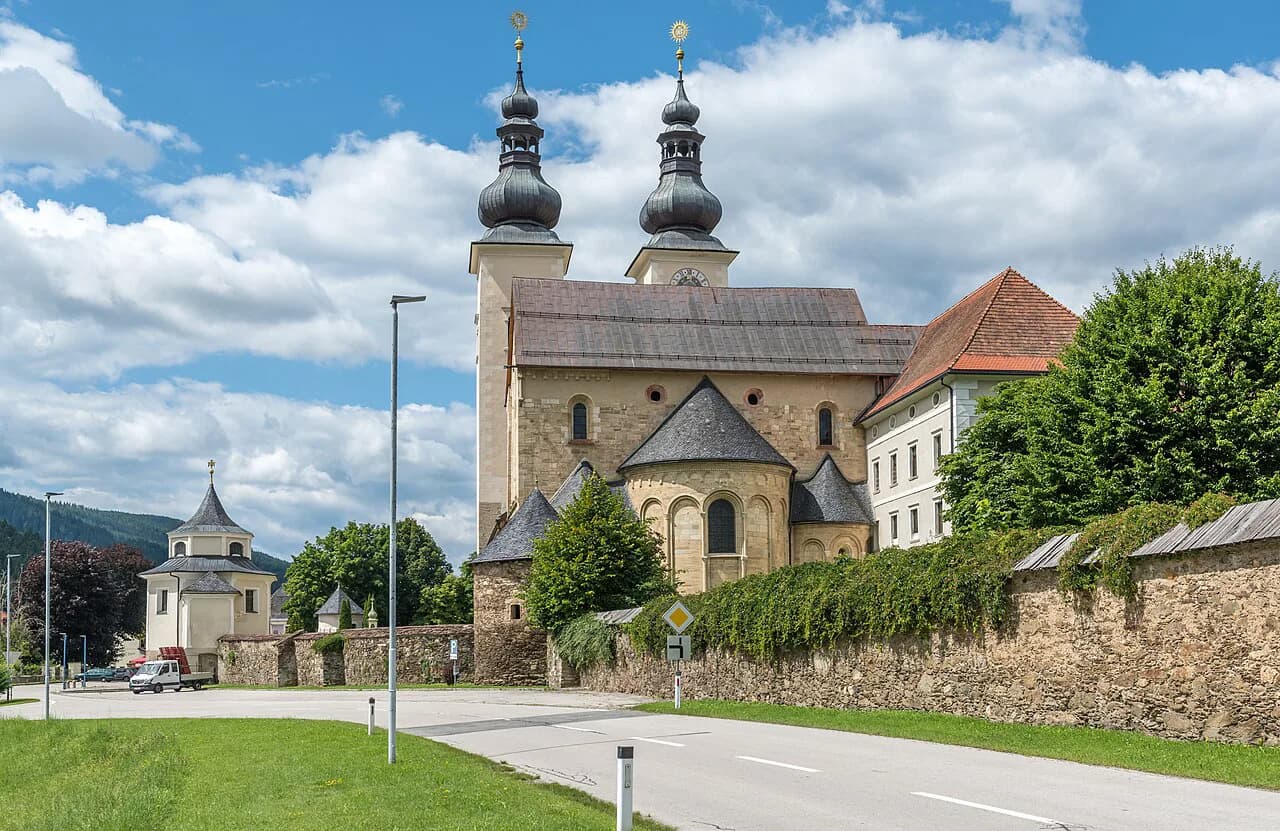
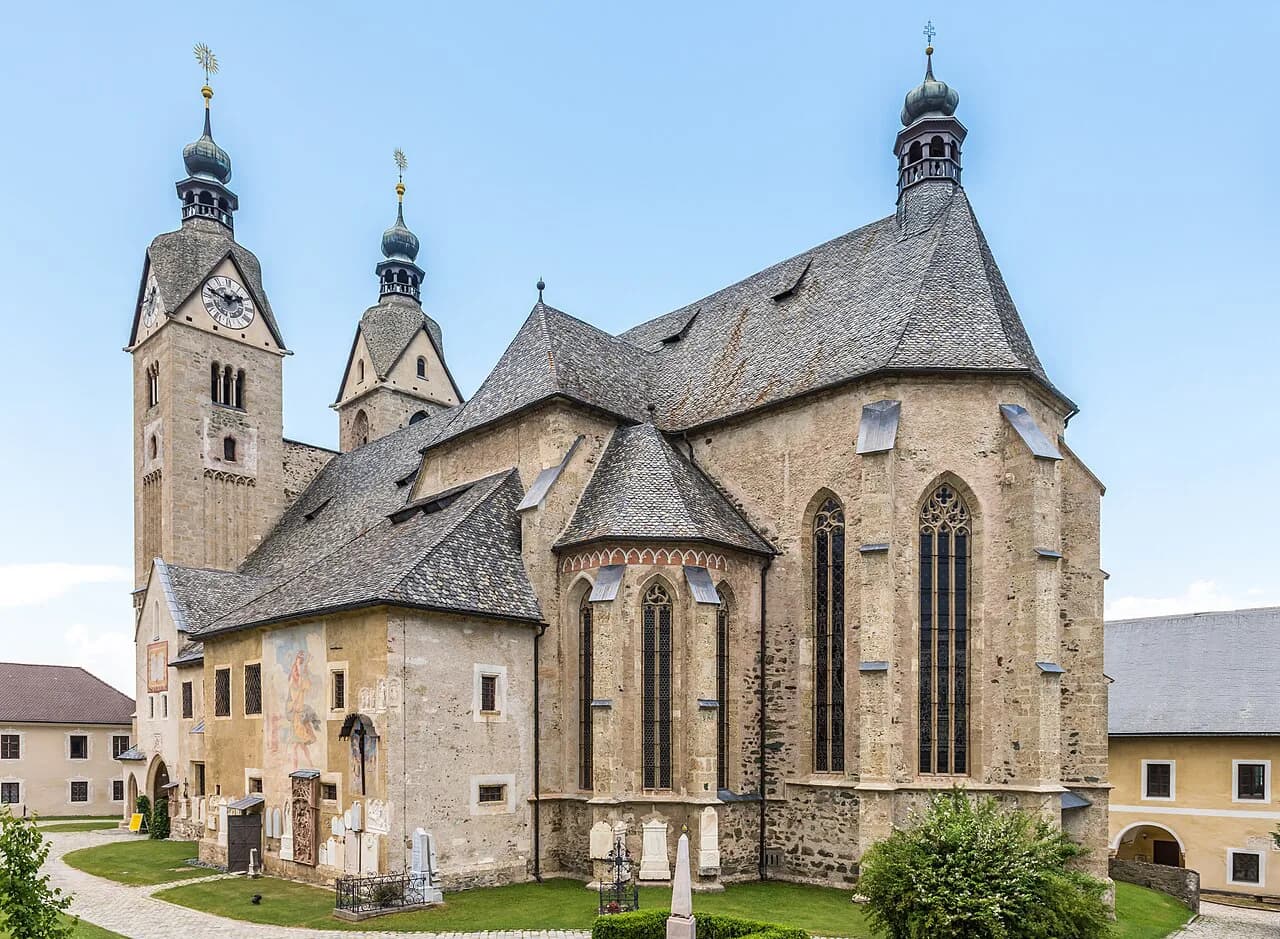
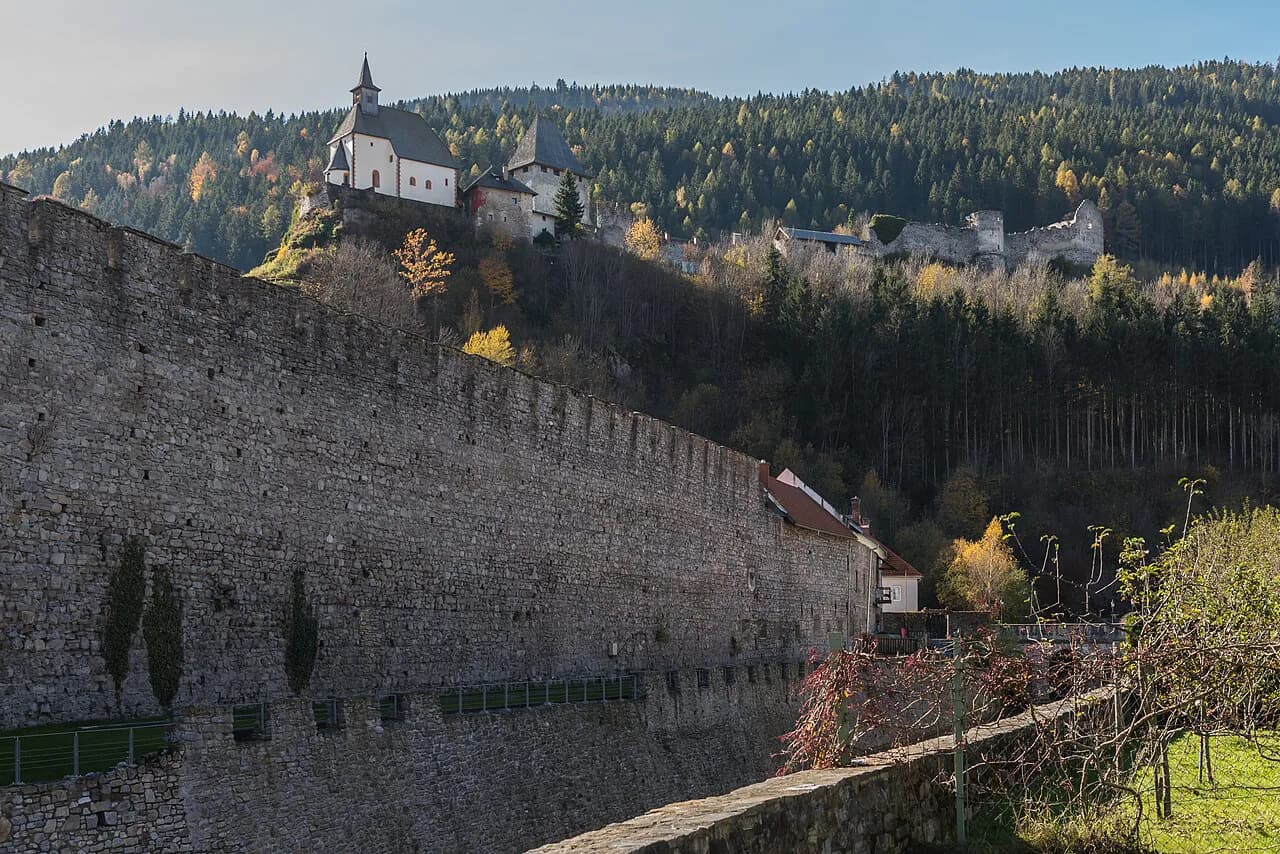
The provostship and pilgrimage church of the Assumption of the Virgin Mary, known as Maria Saal Cathedral, is described as probably the most important Gothic sacred building in Carinthia. It is a place of power and spiritual center, and the reason most travelers get off the road here. Give the church the largest share of your time and let the other sights fill in around it.
The church's importance is best understood alongside the ground beneath it: a Gothic pilgrimage church on a plain that had been the Roman provincial capital and later a ducal ceremonial site. Approach it as the spiritual anchor of the Zollfeld rather than as a plain village church. That framing turns a quick look into a worthwhile stop.
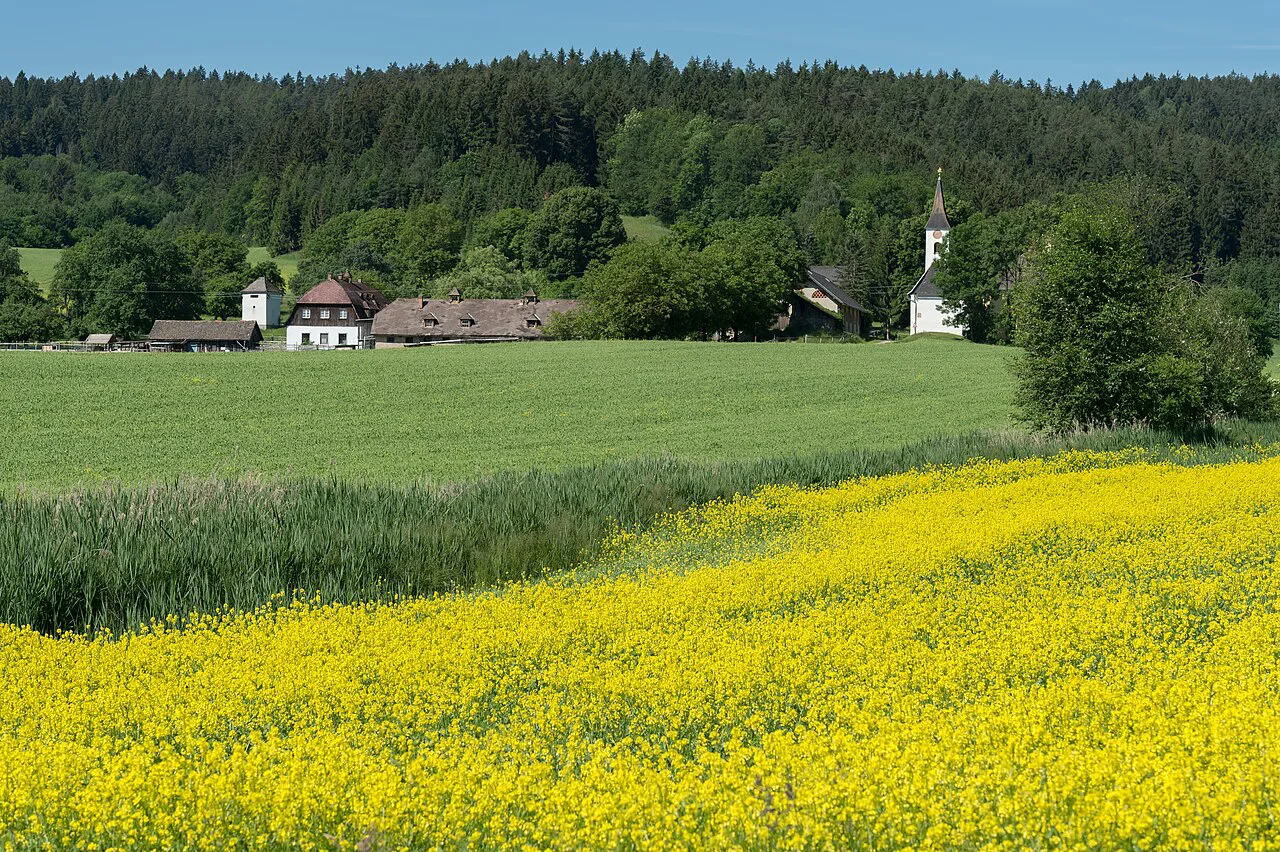
Two pilgrimage trails pass through
Maria Saal is an important stage on the Hemma Pilgrimage Trail and the Maria Pilgrimage Trail, which makes it a useful routing hook if you are moving through Carinthia on foot or by short drives. Walkers following either trail reach the church as part of a longer chain of Carinthian religious sites. If you are driving, the trails tell you which nearby places pair naturally with Maria Saal on the same day.
Use that trail logic when you build your own route. The church rewards travelers already heading toward Klagenfurt and the Wörthersee, because it sits between the provincial capital and the lake country. It fits less neatly into a day built around the lake alone.
The Herzogstuhl, or Duke's Throne
The Herzogstuhl, glossed as the Duke's Throne, is a stone seat on which the dukes sat to take the oath after their coronation, and it still stands in Maria Saal. It is the single most distinctive object in town, a piece of stone furniture carrying the memory of Carinthian ceremony. See it as the counterpart to the church: one site for the faith, one for the ruler.
It takes only minutes to look at, so pair it with the cathedral rather than making it a trip of its own. Travelers with a passing interest in medieval politics will find it the most thought-provoking stop; those here for architecture can give it a glance on the way to the church.
Roman Virunum and the amphitheater
During the time of the Roman province of Noricum, its capital Virunum stood here, which is the deep layer beneath everything else in Maria Saal. What you can visit today is the Virunum amphitheater, listed among the town's places of interest. Do not expect a reconstructed Roman city; treat the amphitheater as a fragment that hints at the scale of what once surrounded it.
Because the Roman remains are the least self-explanatory sight in town, prioritize them if Roman history is your reason for coming. Otherwise the amphitheater is an easy add-on after the church and throne.
The Maria Saal open-air museum
The Maria Saal open-air museum displays various forms of houses and farms, the most rural of the four sights. It is about rural building traditions rather than spectacle, so go when you want context on how the Carinthian countryside was built. Budget more time here than for the throne if farm architecture interests you.
The museum is also the sight most dependent on a published season, and the town's own visitor pages are the place to confirm when it is open and what entry costs before you drive out. Pair it with the amphitheater, which lies in the same general area, and leave the church for last.
The Tonhof culture center
The Tonhof culture center is listed among Maria Saal's places of interest, so add it if you like small cultural venues rather than monuments. It is not the reason to come, but it broadens the town's range alongside the medieval and Roman sights. Check the Gemeinde Maria Saal or the Carinthian tourism pages for what is on before you go.
Skip it if your half-day is already full with the cathedral, throne, amphitheater and open-air museum. It works best as a filler for travelers who arrive early or stay overnight nearby.
Getting there from Klagenfurt
Maria Saal lies just a few minutes' drive from Klagenfurt, the Carinthian provincial capital, which makes it the natural base for this trip. Train and bus options exist in the region, but confirm current timetables with ÖBB and Postbus before you commit to a schedule. The honest trade-off is that the car is the simplest way to link the four sights without waiting.
If you come by public transport, plan the day around the church and throne in the village center and accept that the outlying sights may not fit. Travelers staying in Klagenfurt, Austria can treat Maria Saal as a short excursion rather than a destination in its own right.
How Maria Saal fits a Carinthia route
The town works best as a half-day between Klagenfurt and the Wörthersee, the nearby lake country. Travelers driving the region can see the cathedral and throne in the morning and reach the lakes by afternoon. Build the day in that order so the church gets your freshest attention.
If your route runs toward the lakes, Velden am Wörthersee makes a logical next stop after Maria Saal for an afternoon on the water. Keep Maria Saal as the cultural half of the day and the lake as the relaxed half.
The village center in an hour or two
The village center delivers the cathedral, the Herzogstuhl and the immediate surroundings in a compact walk, which is what makes the one-to-two-hour version realistic. Start at the church, step out to the throne, then decide whether the amphitheater or open-air museum merits the extra time. The town's contact point is the Gemeinde Maria Saal at Am Platzl 7, useful for confirming local details.
Travelers who want more Klagenfurt context before or after the trip can browse the city's other sights through the Klagenfurt attractions hub. That keeps Maria Saal as one piece of a wider Carinthian itinerary rather than an isolated stop.
Is Maria Saal worth the half-day?
Yes, if you want one compact place where Roman administration, ducal ceremony and Gothic church building sit within a short walk. Give it a half-day, lead with the cathedral and the Herzogstuhl, and add the amphitheater and open-air museum only if those subjects pull you. Travelers with a tight lake-focused itinerary can reasonably keep it to a couple of hours.
Confirm opening times and any entry fees through the Gemeinde Maria Saal or the Carinthian tourism pages, and check train and bus schedules with ÖBB and Postbus before you set out.
Explore more Klagenfurt guides
Frequently Asked Questions
How long do you need at Maria Saal?
Plan a half-day if you want the cathedral, the Herzogstuhl and both the amphitheater and the open-air museum. An hour or two covers the church, the throne and the village center comfortably.
Is Maria Saal Cathedral actually a cathedral?
The church is formally the provostship and pilgrimage church of the Assumption of the Virgin Mary. It is commonly called Maria Saal Cathedral and is described as probably the most important Gothic sacred building in Carinthia.
Can you visit Maria Saal without a car?
The town sits a few minutes by road from Klagenfurt, and the four sights are spread across the village and its edge. Check current ÖBB and Postbus timetables before relying on public transport for the outlying stops.
Sources
Notes for your next Austrian town break
Optional updates when we add or revise town guides.
You might also like
Continue reading
More guides you'll find useful