Vienna Woods (Wienerwald): Towns, Abbeys and Sights Beyond Vienna
Plan a Vienna Woods trip around Baden, Mödling, Heiligenkreuz Abbey and Mayerling, with how to reach them by train, bus or car and what each stop offers.
On this page
The Vienna Woods, or Wienerwald, is a low, forested range that starts at Vienna's western and southern districts and rolls on into Lower Austria, so you can be under tall beeches within a half-hour of the city. The range is best treated as a string of small towns and monuments rather than a single park: Baden bei Wien in the south, Mödling and the Helenental valley to the west, Heiligenkreuz Abbey and Mayerling in the forest heart, and the Kahlenberg and Leopoldsberg hills overlooking the Danube. This guide covers what each stop actually offers, how they combine into a route by rail, bus or car, and where the trade-offs lie.
What the Vienna Woods are and where they begin
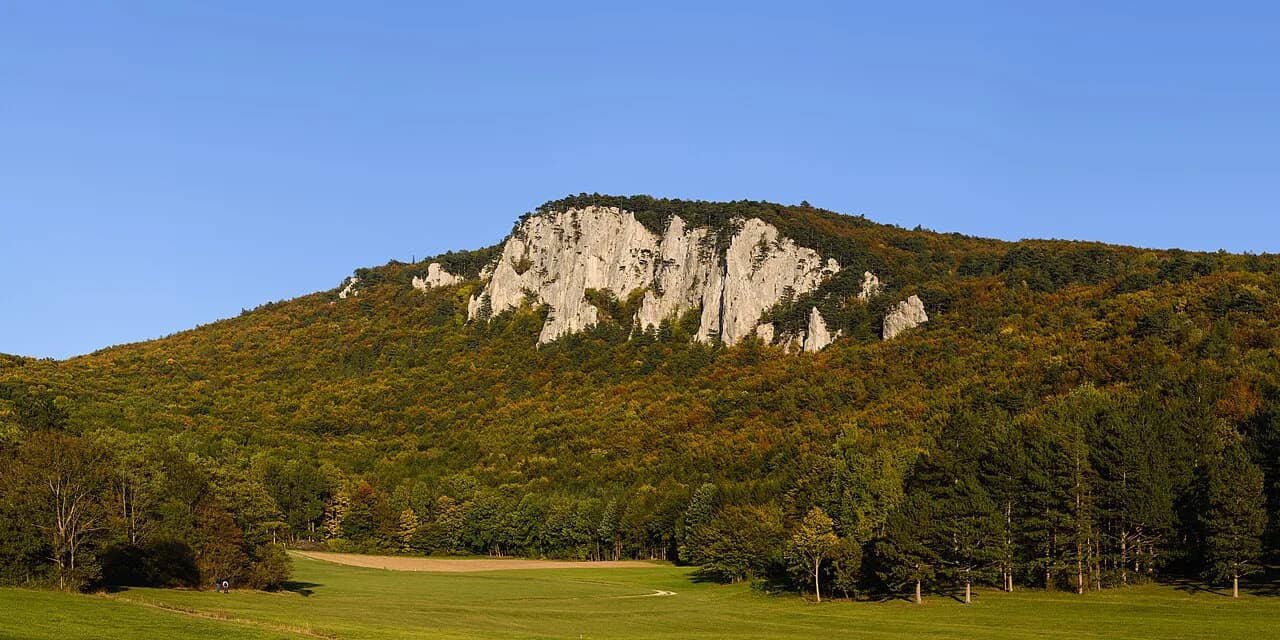
Vienna sits on the western rim of the Vienna Basin, on the gentle slopes of the Wienerwald, a spur of the Alpine foreland that functions as the city's green lung. The hills rise directly out of the western districts, which is why Viennese treat the woods as their nearest recreation ground rather than a destination requiring a trip. The green lung is part of a legally protected green belt, and the biosphere reserve covers roughly 9,900 hectares within Vienna itself, spread across seven districts including Hietzing, Penzing, Ottakring, Hernals, Währing, Döbling and Liesing.
Beyond the city boundary the range continues through Lower Austria, and the wider region stretches from Klosterneuburg in the north through the Wiental valley to the spa and wine country on Vienna's southern edge. The southern part is where the historic towns cluster: Baden, Mödling, Heiligenkreuz and Mayerling all sit within a compact band that a car or a combination of train and bus handles comfortably in a day. Think of the woods as a backdrop and the towns as the sights.
Why the Wienerwald is a UNESCO biosphere reserve
In 2005 UNESCO designated the Wienerwald a biosphere reserve, recognizing a cultural and natural landscape where protection of habitats is paired with responsible economic use of the region. That status explains what you see on the ground: meadows, pastures, farmland and vineyards woven between forest, alongside 16 nature protection areas and four nature parks. The range supports around 2,000 plant species and some 150 breeding bird species, and it is where the northern goshawk was reintroduced, with the first wild breeding in Austria in five decades recorded in 2011.
For a visitor, the designation means the landscape is working countryside, not wilderness: villages have kept a rural character and vineyards still run to the edge of the woods. Guided walks and themed programs run through the reserve and are a sensible way to learn what you are looking at, but the towns below are the reason most travelers leave the city. Signage and marked paths exist throughout, though this guide sticks to the built sights rather than routing you through the forest.
Baden bei Wien: the spa town at the southern edge
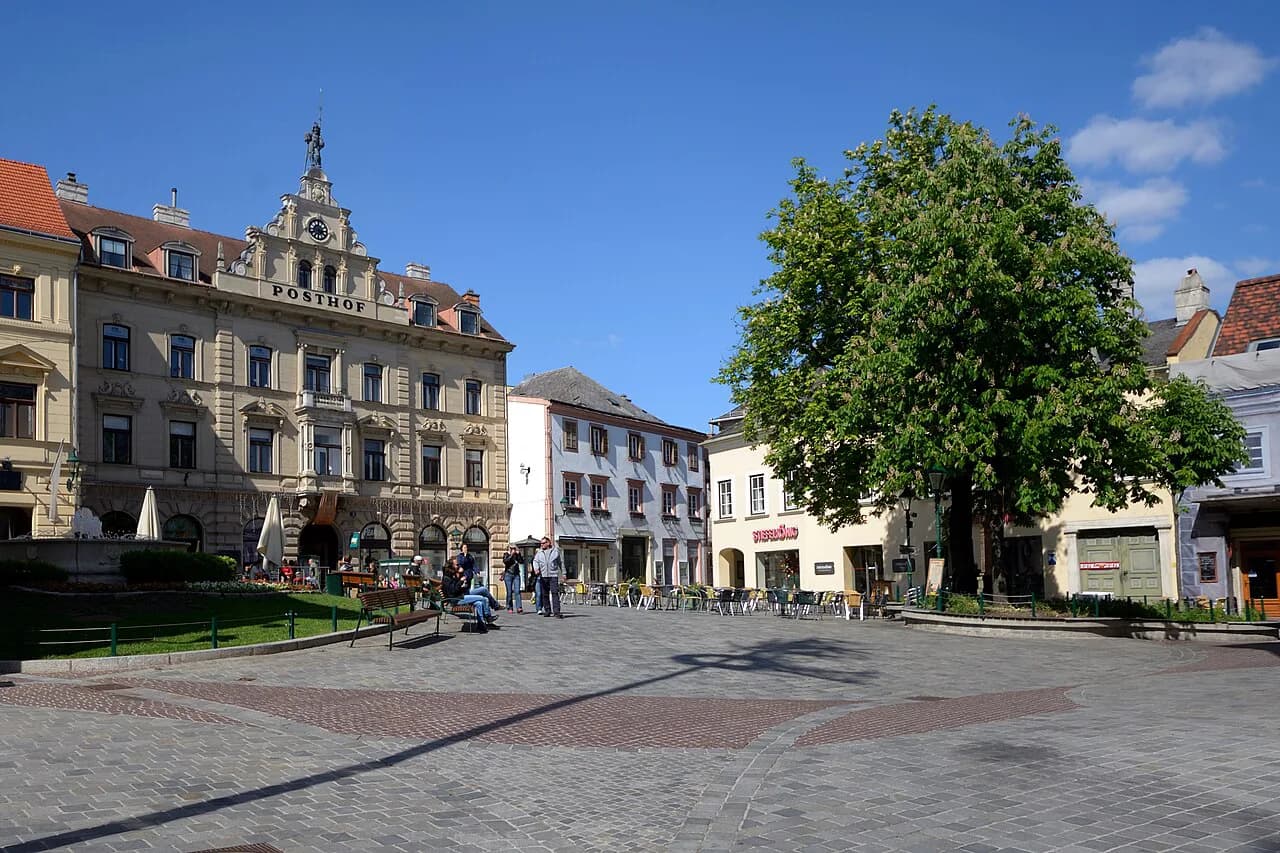
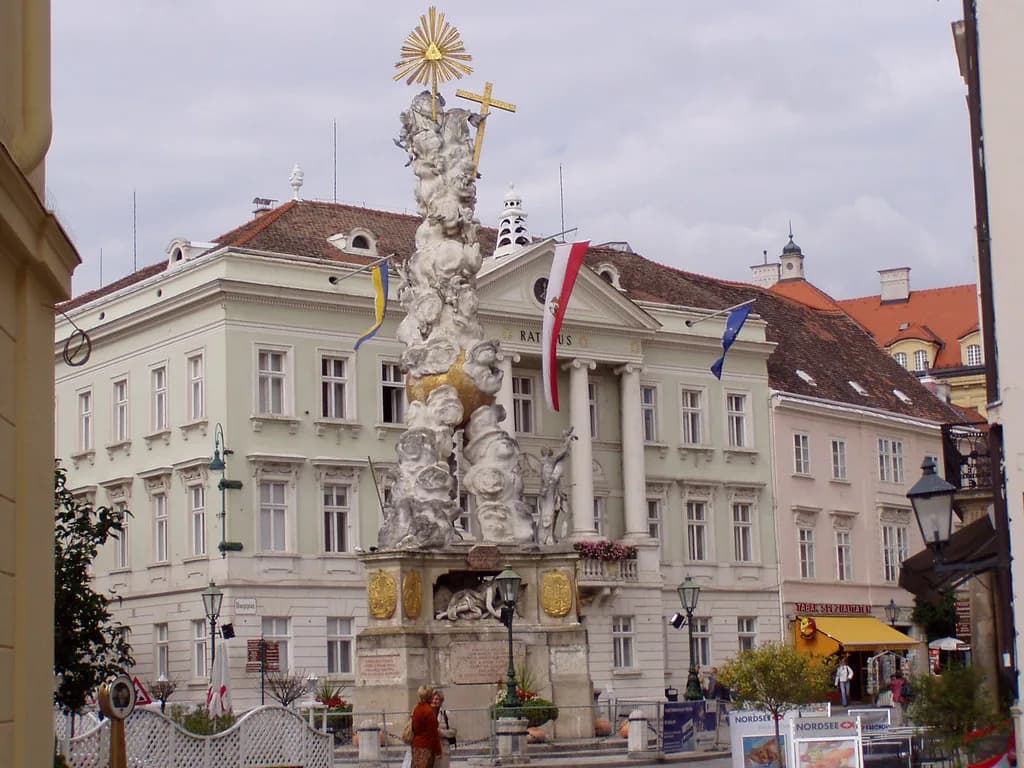
Baden bei Wien is the southern anchor of the Vienna Woods, a tranquil resort town long known for its wellness and convention facilities and its compact historic core. The Habsburgs summered in the region, and traces of that imperial patronage survive in the townscape and the surrounding villas. It makes the most natural full-afternoon stop because it is a town to walk, not a single sight to tick off.
Baden also works as a base for the surrounding countryside: the Helenental valley and the vineyard-covered slopes of the Thermenregion begin near it, and the wine villages of Gumpoldskirchen, Pfaffstätten and Sooß lie close by. Come for the architecture and the promenade, not for spa treatments, which sit outside the scope of this guide. A licensed guide can fold Baden into a half-day excursion that also takes in Heiligenkreuz and Mayerling, though transport and admission are quoted separately.
Mödling, Liechtenstein Castle and the forest edge
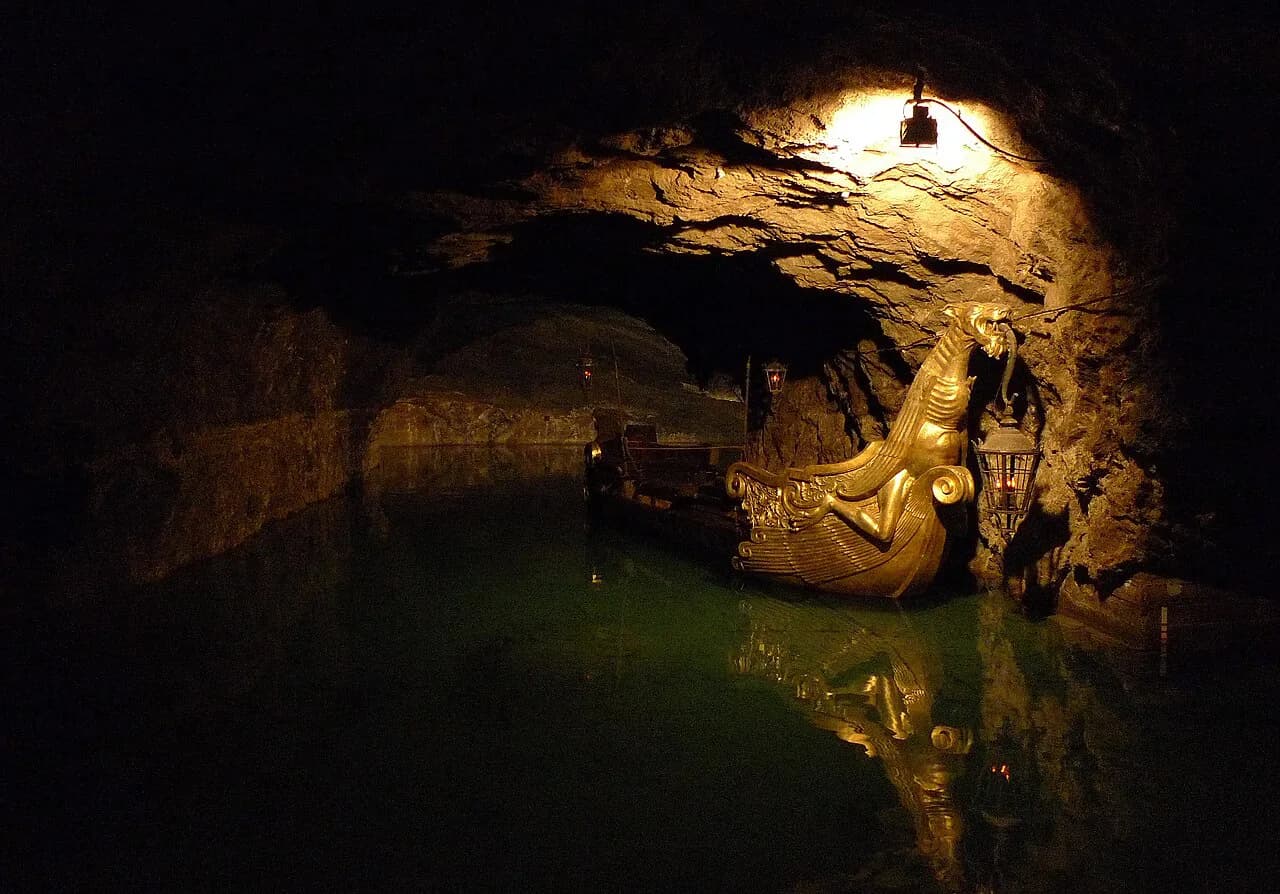
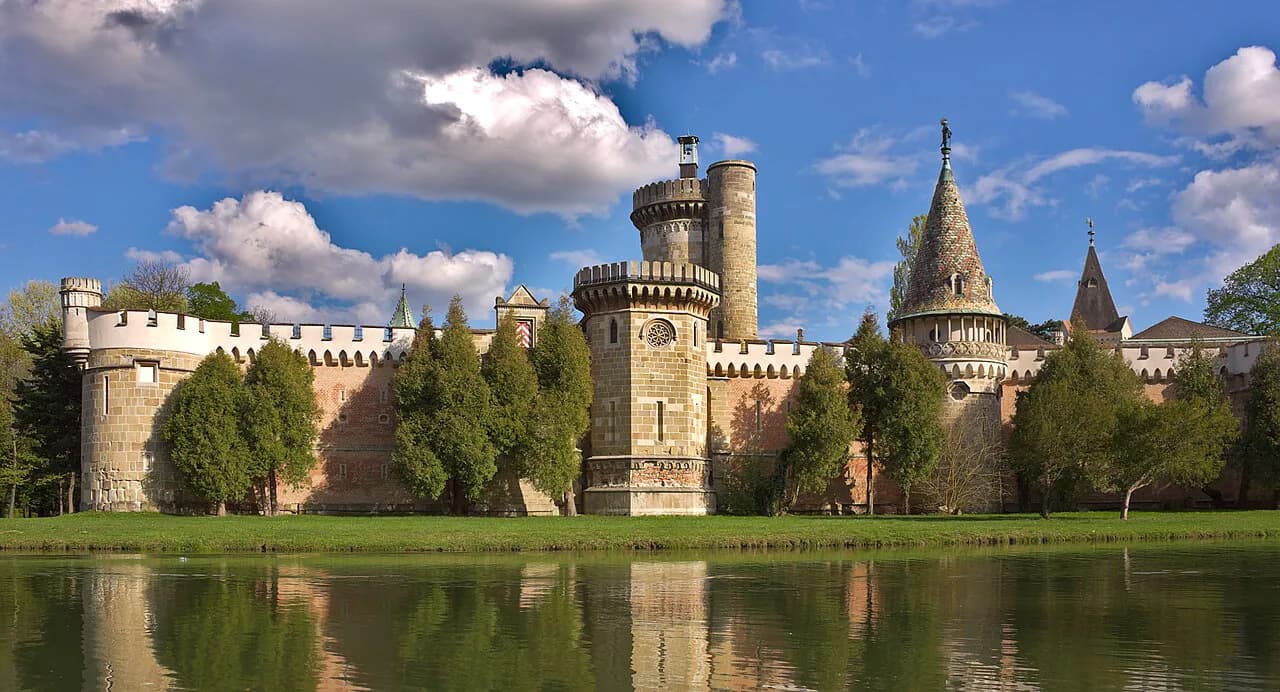
Mödling sits directly against the forest west of Vienna and is the gateway to the romantic Helenental valley, where the woods close in around the road and the river. The town pairs a walkable old center with easy access to the surrounding hills. It is also the point from which Liechtenstein Castle and the Seegrotte Hinterbrühl, a flooded former gypsum mine visited by boat, are traditionally reached.
Plan Mödling as a half-day rather than a full one: the appeal is the combination of town, castle and valley in close range. The Seegrotte is a rain-proof option, while the castle rewards clear weather for the climb and the view. Check current opening seasons and tour times directly with each site before committing, since smaller attractions here run limited schedules.
Heiligenkreuz Abbey: the Cistercian monastery
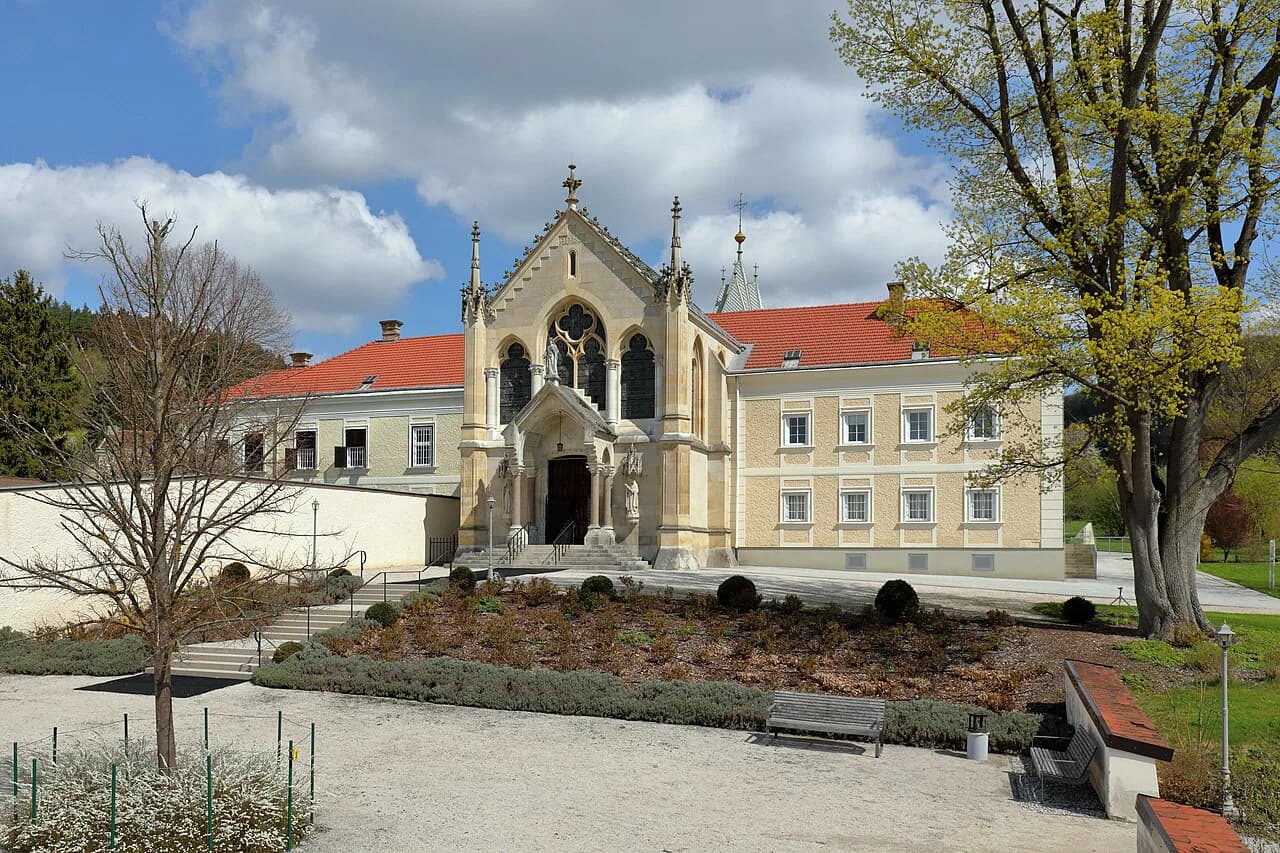
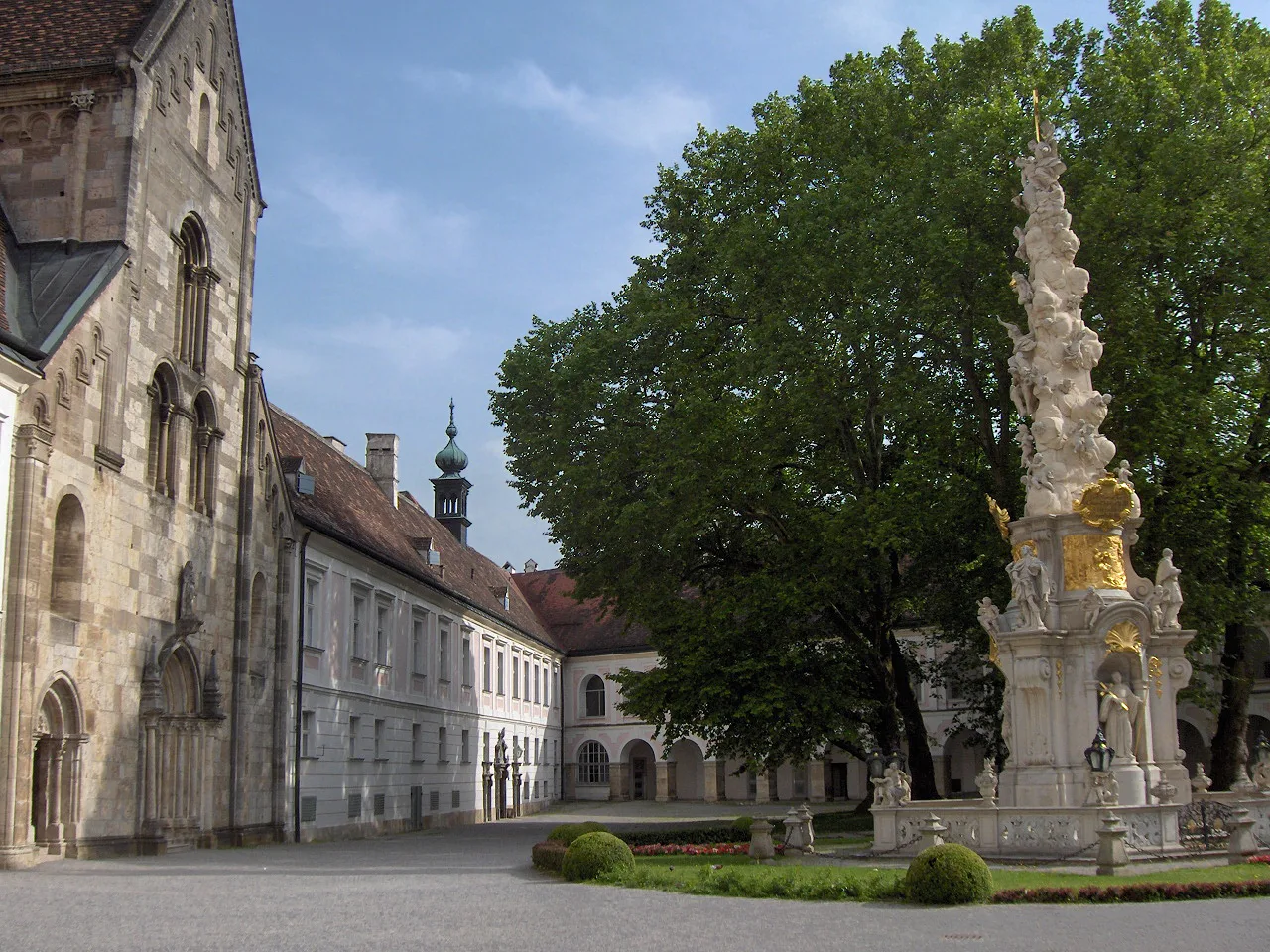
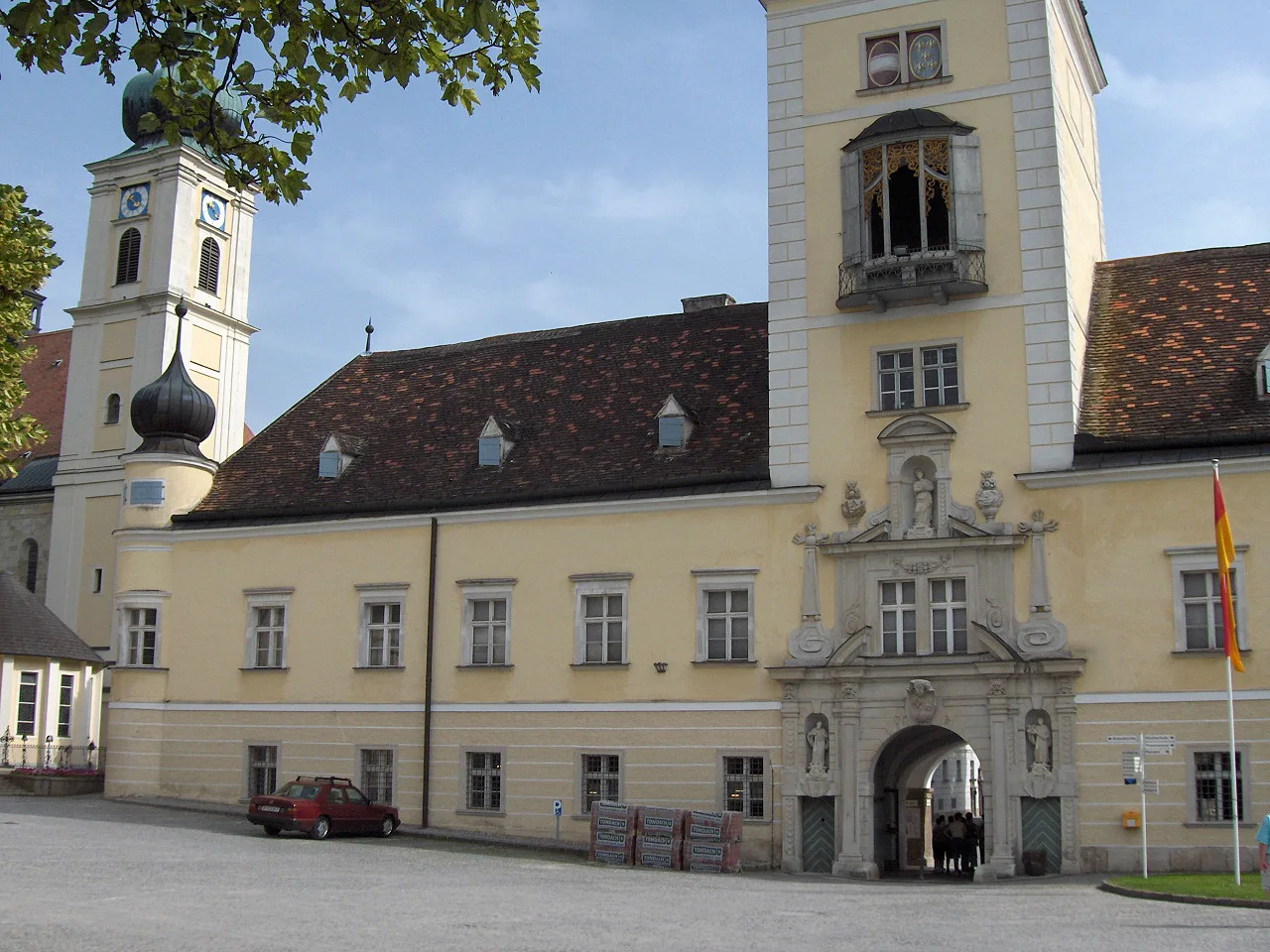
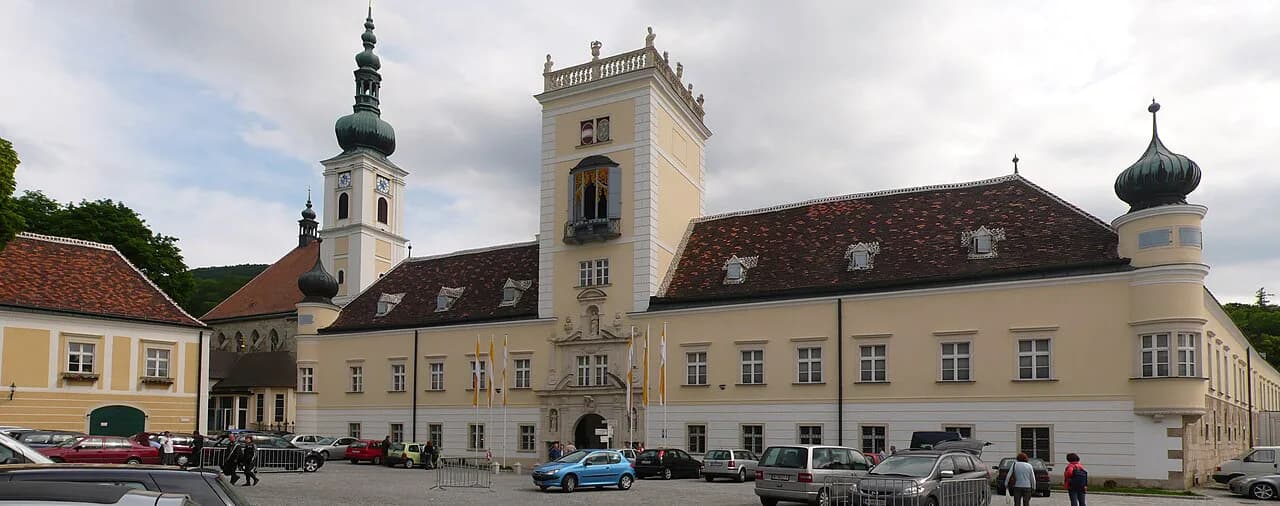
Heiligenkreuz Abbey is a working Cistercian monastery in the woods southwest of Mödling and one of the oldest and most important monasteries in Austria. A visit centers on the church and cloister, which show the spare Romanesque and Gothic bones typical of the order before later baroque enrichment. It is an active religious house, so the experience is quieter and more contained than at a palace.
Access to the monastic spaces depends on the monastery's own visiting arrangements rather than free wandering, so build the abbey around a fixed slot and let the rest of the day bend to it. That constraint is the main reason to plan the southern Wienerwald route around Heiligenkreuz rather than the reverse. Confirm the day's tour times with the monastery before you set out.
The abbey sits in the same forest corridor as Mayerling, roughly a short drive apart. Combining the two makes sense for anyone interested in how Habsburg Austria moved between piety and dynasty. Allow more time for the abbey than for the lodge.
Mayerling: the hunting lodge and its Habsburg story
Mayerling is the former imperial hunting lodge in the woods south of Heiligenkreuz, and it is inseparable from a single event: the deaths of Crown Prince Rudolf and Baroness Mary Vetsera in the tragic double suicide that made the lodge notorious. Visitors come for the narrative and the woodland setting rather than for grand architecture.
The lodge's ties to Heiligenkreuz Abbey and to the imperial court make it a natural companion stop, and it sits within the same network of forest roads and paths. Read up on Rudolf's position under Emperor Franz Joseph before arriving, because the displays assume some familiarity with the dynasty's succession crisis. The rooms themselves are modest; the story carries the visit.
Kahlenberg and Leopoldsberg: the hills above the Danube
The Kahlenberg and Leopoldsberg are the Viennese hills in the Wienerwald, the closest and best-known viewpoints over the city and the Danube. On the Kahlenberg stands the Stefaniewarte, a lookout tower built in 1887 and named after Crown Princess Stefanie. From the heights you look over the city and the woods, and on clear days out to the Schneeberg and Rax massifs at the edge of the Alps.
These hills are easily reached on Vienna's public transport, which makes them the simplest way to sample the woods without leaving the city's orbit. They are also the northern point of the regional arc that runs down through Klosterneuburg and the Wiental toward the southern towns. Visit them on a clear day, since the entire point is the view.
Getting around the Vienna Woods by train, bus or car
The woods are crossed by a dense network of marked paths and the towns are served by suburban rail and regional buses, so you can reach Baden and Mödling from Vienna without a car. For the forest sights, though, a vehicle gives you the most freedom: Heiligenkreuz and Mayerling sit on minor roads where connections are sparse and infrequent. Match the mode to the stop cluster rather than committing to one for the whole region.
A licensed guide with a car or minibus solves the forest-road problem and is a reasonable option if you want Heiligenkreuz, Mayerling and Baden in a single day. The guides' association in Vienna runs excursions into the surroundings and quotes bus and admission separately, so ask for the total before booking. Rail and bus schedules change with the season, so confirm departure times in the Austrian federal railways timetable.
Combining the southern Wienerwald into one route
The cleanest route by car starts in Baden, runs west through the Helenental valley, climbs to Heiligenkreuz Abbey and finishes at Mayerling, with Mödling as a feeder from the Vienna side. By public transport, base the day on Baden and use local buses for the forest pair; by car, reverse it and end in Baden for an evening walk. Either way, budget a full day and expect to spend the majority of it at the abbey and in Baden. If the imperial stop is only one piece of a longer trip, our Austria guide to the villages in Austria: Lake, Wine-Country and Alpine Towns Worth the Trip sets this corner against the country's other small-town stops.
For a lighter version, pair Mödling with the Seegrotte and skip the far forest, or take the Kahlenberg on a clear afternoon and leave the southern towns for a second outing. The Seegrotte Hinterbrühl holds up in wet weather, while the Kahlenberg needs clear skies to pay off. A route that chases both on the same day usually wastes time in the car.
Practical trade-offs: season, tour times and crowds
The main friction here is timing. Guided tours that open monastic and historic interiors run at fixed slots rather than on demand, so an unplanned arrival at Heiligenkreuz or Mayerling can mean waiting or missing out. Build the day around the abbey's tour time and treat every other stop as flexible, and you avoid most of the frustration. Confirming hours and tour times directly with each site is worth ten minutes of planning.
Crowds concentrate on the Kahlenberg and on Baden's central squares on weekend afternoons, while the forest interior stays quiet. Weekdays are noticeably calmer for the abbey and the lodge, and early morning suits the southern towns. Some smaller sites operate seasonally, so check with the venue rather than relying on an old listing.
Eating and drinking in the Vienna Woods region
Food here runs on straightforward regional cooking and the wine of the Thermenregion, whose villages of Gumpoldskirchen and Sooß sit on the southern slopes. The farm-holiday network lists country inns and farm-based producers in the area where you can eat close to where the food is grown. Baden's cafés and gasthäuser suit an unhurried lunch between sights.
The farm-stay listings also name specific properties, such as Landhof Ott in Wolfsgraben and Gästehaus Gnant in Maria Anzbach, which pair a base in the countryside with local produce. Booking direct works well here because many are family-run and respond to inquiries personally. Still, plan lunch rather than snack: rural kitchens keep limited afternoon hours, and a late arrival can leave you with nothing hot.
Which Vienna Woods stops to book ahead
Lock in one fixed anchor for the day, the Heiligenkreuz Abbey tour or a Baden-led half-day, and let the rest of the route flex around it. Add Mayerling on the same drive because the two sit close and share a story, and keep the Kahlenberg for a clear evening back in the city.
If you are relying on rail and bus, choose Baden as your center and leave the deep-forest pair for a car or a guided excursion; if you have a car, run Baden to Mayerling through the Helenental and finish with dinner in town. The next step is to confirm the abbey's tour time, then book transport around it.
Explore more Baden bei Wien guides
Frequently Asked Questions
How far is the Vienna Woods from Vienna?
The woods touch Vienna's western and southern districts directly, and the Kahlenberg is reachable on city public transport. The southern towns are farther out: Baden and Mödling sit in Lower Austria just beyond the city, and Heiligenkreuz and Mayerling lie deeper in the forest, best done by car or a guided excursion.
Sources
Notes for your next Austrian town break
Optional updates when we add or revise town guides.
You might also like
Continue reading
More guides you'll find useful