Heiligenkreuz Abbey: Visiting the Cistercian Monastery in the Vienna Woods
Heiligenkreuz Abbey in the Vienna Woods: the Romanesque nave, Gothic cloister, audio-guide hours, chant and the drive or train trip from Vienna.
On this page
Heiligenkreuz Abbey (Stift Heiligenkreuz) is the oldest continuously occupied Cistercian monastery in the world, set in the Vienna Woods roughly 15 kilometers west of Vienna. Plan on a couple of hours for the church, cloister, chapter room and courtyard, and go on a weekday morning if you want the fullest timetable. This guide walks the buildings in the order they were built, then covers entry hours, the monks' chant and the trip out from the city.
The abbey is a working monastery, not a museum: monks live here, pray the Liturgy of the Hours in Latin and run a theological college on site. That shapes a visit, because the church and the guest routes share space with daily worship and the admission window is shorter on Sundays.
What Heiligenkreuz Abbey is and why it draws visitors
St. Leopold III of the House of Babenberg founded the abbey in 1133, after his son Otto returned from Paris enthusiastic about the Cistercian order and asked his father to build a similar house in Lower Austria. Leopold went on to found Klosterneuburg as well, which is why the two abbeys northwest and west of Vienna are often mentioned together. The community is the second-oldest Cistercian monastery in the world by foundation and the oldest still inhabited without a break.
Visitors come for two different things. One is the architecture, which packs Romanesque, early Gothic and Baroque work into a compact complex you can cross in minutes. The other is the sung chant, which has carried the abbey's name well beyond Austria and remains part of its daily rhythm rather than a performance for tourists.
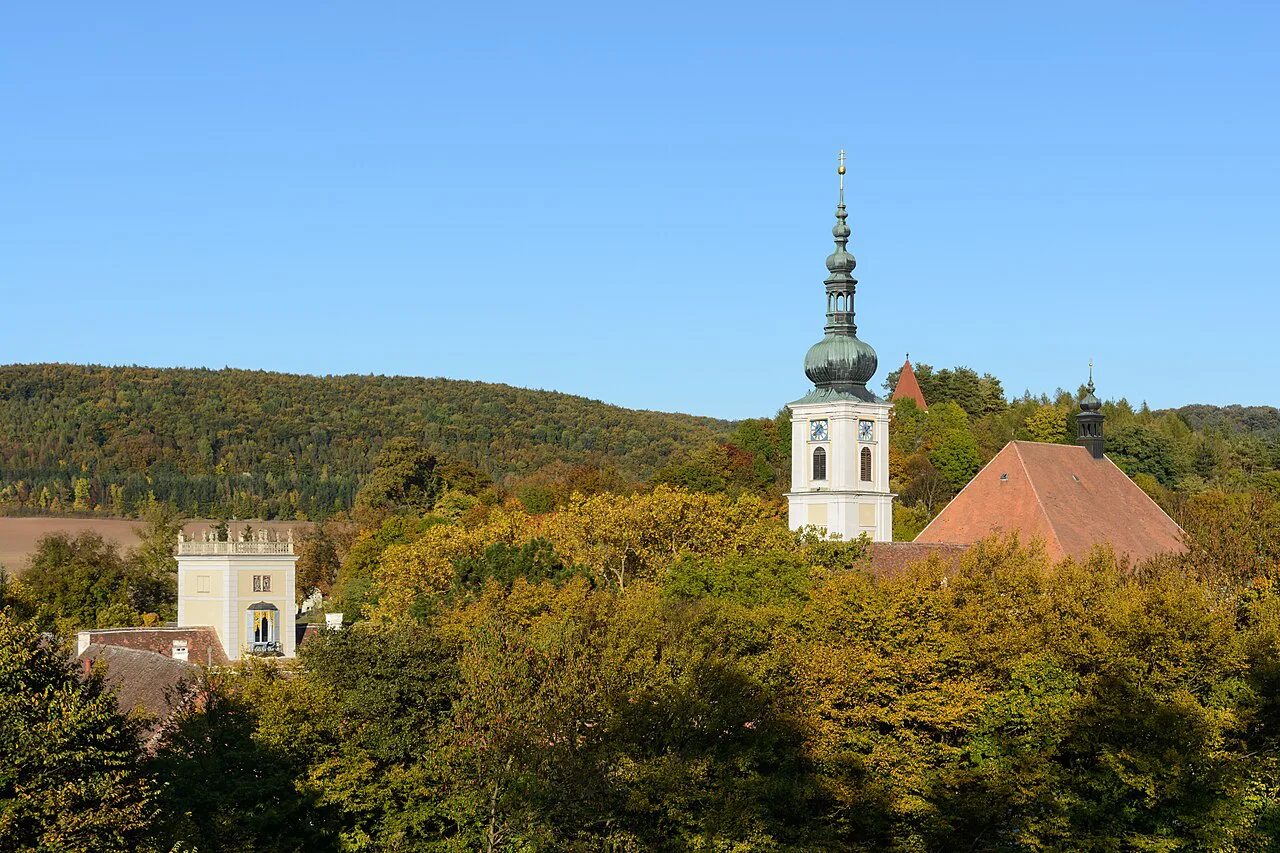
Where it sits: Heiligenkreuz im Wienerwald, west of Vienna
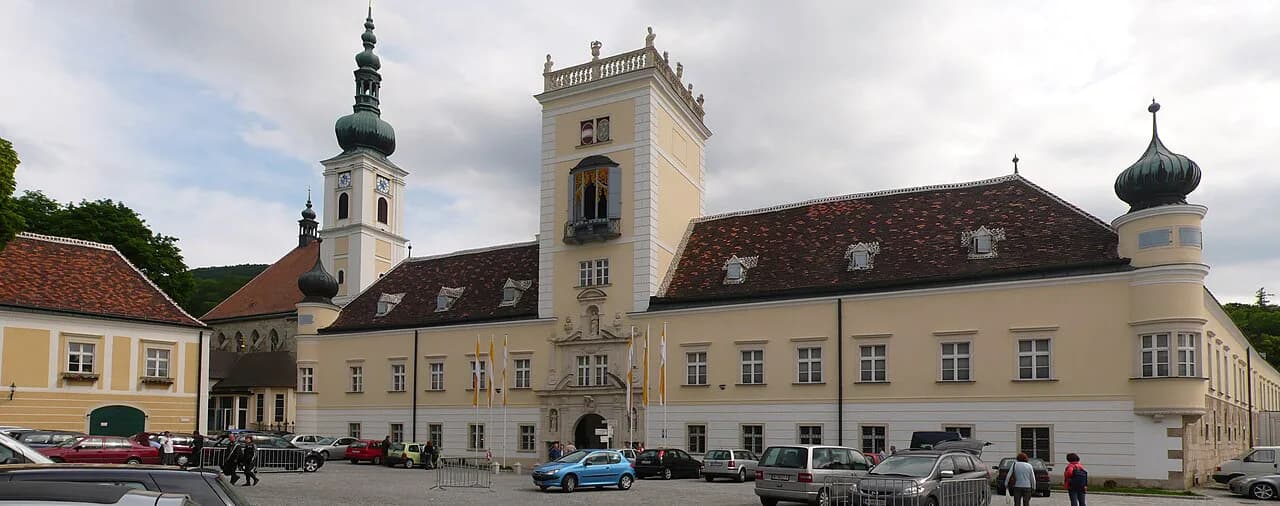
The monastery stands in the village of Heiligenkreuz im Wienerwald, in the heart of the Wienerwald and directly on the A2 motorway, which makes it an easy stop on a drive west or south of Vienna rather than a separate expedition. The address is Markgraf-Leopold-Platz 1, and the gate telephone number is listed for questions before you set out. Parking and the abbey entrance sit at the edge of the small village center, so you are on foot within a minute or two of arriving.
Treat it as one stop on a Vienna Woods day rather than the whole outing. The same corridor holds the monasteries, castles and small towns covered in the Vienna Woods Guide, and pairing the abbey with a second stop keeps the drive worthwhile if you are coming from the city.
The abbey church: Romanesque nave, 13th-century crossing, Gothic hall choir
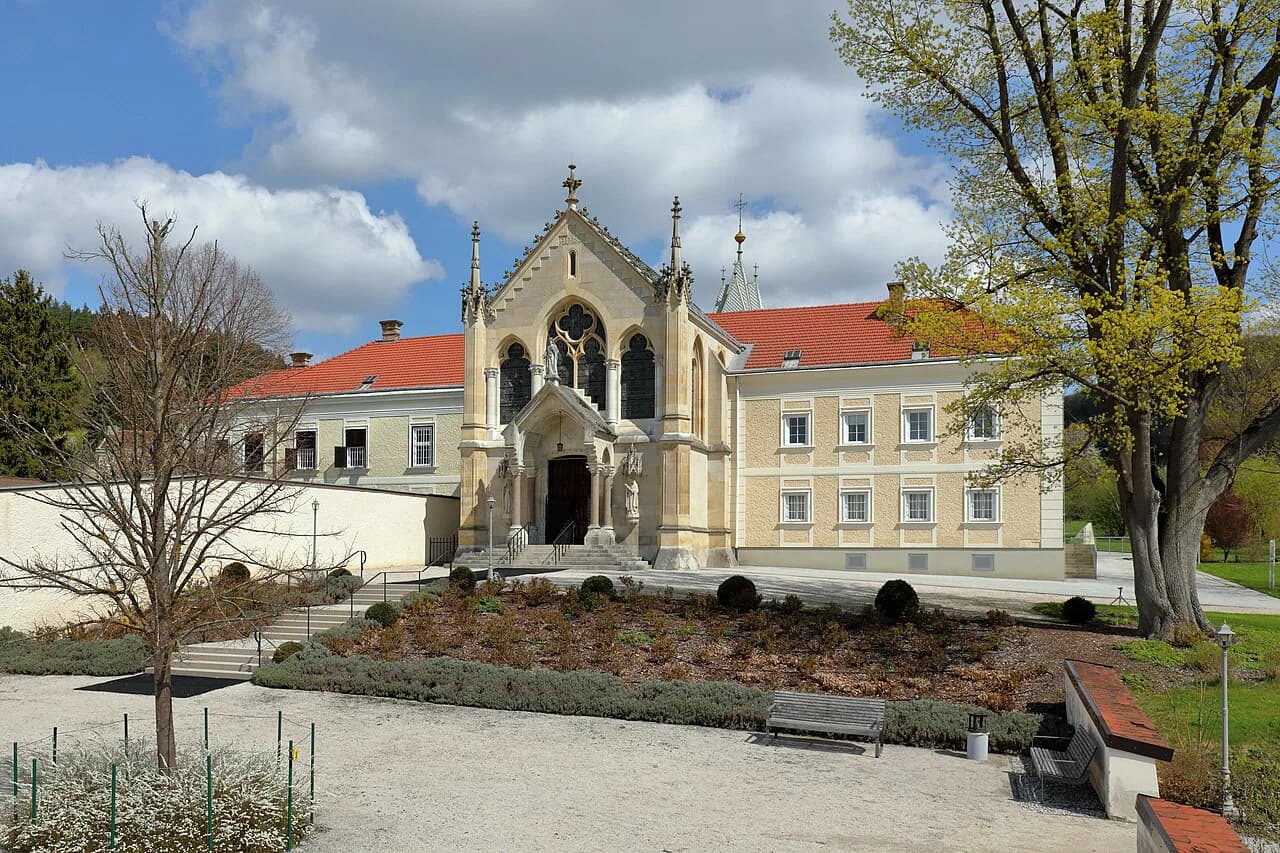
Read the church from west to east and the chronology makes sense. The Romanesque nave, consecrated in 1187, survives with its vaulted construction and Romanesque facade, and the crossing from the 13th century carries the earliest ribbed vault in Austria, with massive intersecting ribs. Stand at the crossing and look up before moving on; it is the oldest thing overhead.
The hall choir, consecrated in 1295, is the masterpiece of Austrian Gothic in the building, a tall, bright space that contrasts sharply with the dimmer Romanesque nave behind you. Look for the neo-Gothic high altar of 1887 and the Baroque altar painting by J. M. Rottmayr from 1696, two centuries of taste stacked in one view. The choir stalls of 1707 by Giovanni Giuliani fill the eastern end.
Those seeking prayer and silence are directed to the Holy Cross Chapel (Kreuzkirche) rather than the main nave. If a service or the monks' choir prayer is under way, step aside and come back to the church later, and check the choir prayer times on the abbey site when you plan the day.
The cloister, chapter house and Babenberg tombs
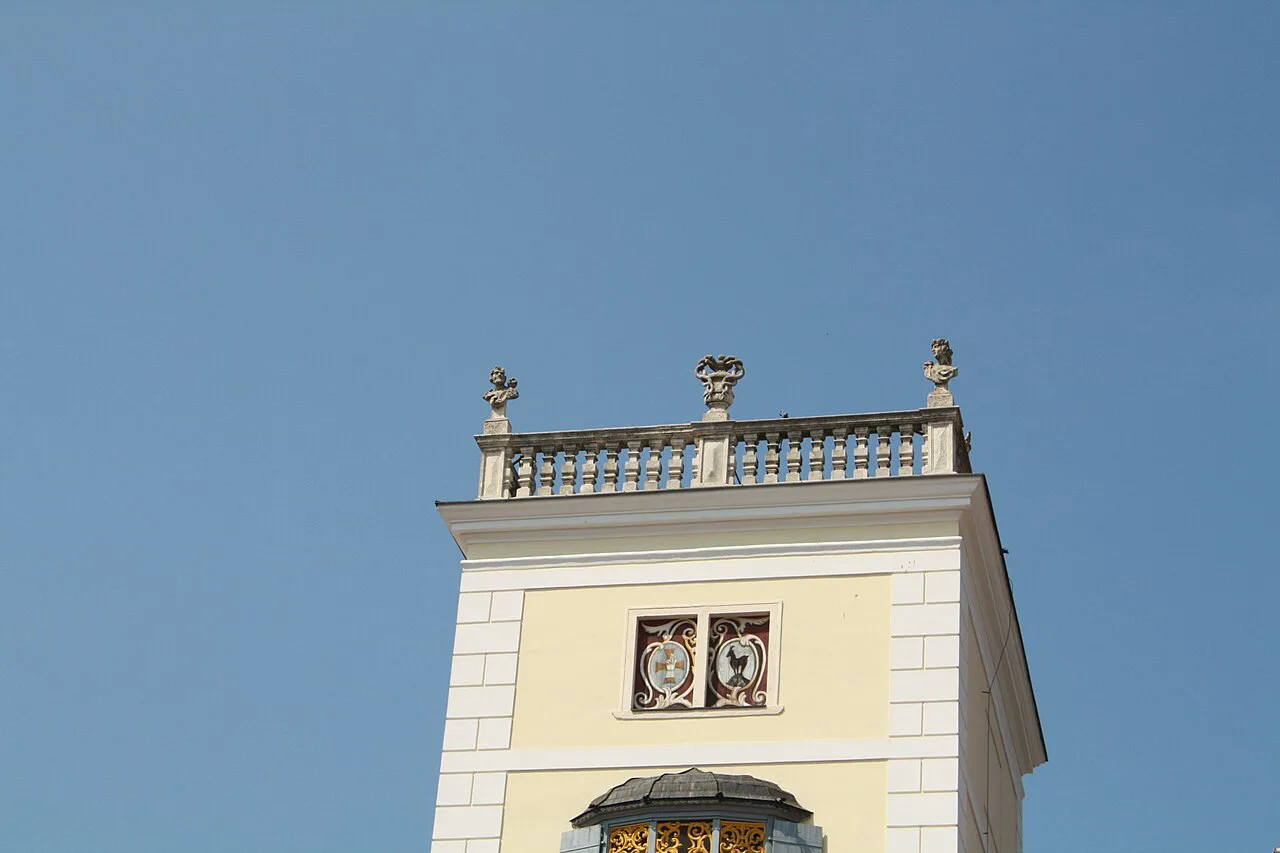
The cloister was built between 1220 and 1240 and re-Gothicized in the 19th century, and its fountain house is a nonagonal room with glass paintings of members of the Babenberg family from 1290 and a lead fountain from the 16th century. This is the most atmospheric stretch of the visit and the place to slow down. The early-Baroque courtyard outside holds the Trinity column of 1736 to 1739 and a St. Joseph fountain by Giuliani from 1739.
In the late-Romanesque chapter room lie the tombs of four ruling Babenberg dukes: Leopold IV, Leopold V, Friedrich I and Friedrich II. Leopold V is the duke who took King Richard Lionheart captive on his way home from the crusade, which gives the room a concrete historical hook for English-speaking visitors. The chapter room and the early-Gothic dormitory are the parts of the monastic interior that reward a few minutes of reading rather than a quick pass.
The monastery was rebuilt in the Baroque phase that began in 1641 and finished in 1662, then repaired after damage in 1683. Seeing that date sequence explains why the complex reads as medieval core wrapped in later work rather than a single style.
Visiting on your own: audio-guide hours and last entry
Self-guided admission comes with an audio guide in nine languages: German, English, French, Spanish, Italian, Hungarian, Russian, Polish and Czech. The app is free to download, so bring headphones and a charged phone. Monday through Saturday the abbey admits visitors from 9:00 to 11:30 a.m., with last entry at 10:30 a.m., and again from 1:30 to 5:15 p.m., with last entry at 4:30 p.m. On Sundays and public holidays the window is afternoon only, 1:30 to 5:15 p.m., last entry 4:30 p.m.
The abbey's visiting page links to the current entrance fees rather than listing them inline, so check the amount there before you go. The last-entry times matter more than the closing times: arriving at 4:45 p.m. on a Sunday gets you nothing, and an 11:00 a.m. arrival on a weekday leaves only half an hour before last entry.
Group visits and tours led by your own guide
Groups arriving with their own guide are admitted on a separate timetable, 9:00 a.m. to 11:45 a.m. and 1:30 to 5:15 p.m. That is worth knowing if you travel with a group leader who plans to explain the buildings themselves, because the entry slots differ slightly from the individual audio-guide window.
For a first visit without a group, the audio guide covers the church, cloister and chapter room in order and is the simpler choice. If you want a guided tour, arrange it with the abbey directly before you build a day around it.
The monks' Gregorian chant
The community prays the Liturgy of the Hours in Latin, and Gregorian chant is part of that daily prayer rather than a concert. The abbey frames the church as a place of prayer and worship first, so visitors should expect worship to take priority over sightseeing at those moments. Check the Mass and choir prayer times on the abbey site for the day you plan to come and build the visit around one of them.
The chant is also how the abbey became widely known abroad, through recordings and a strong online presence that drew attention far beyond Lower Austria. Hearing it in the church itself is a different experience from listening at home, and it is the reason many travelers time their arrival to a service.
Getting there by car and by public transport
By car, Heiligenkreuz lies about 15 kilometers west of Vienna, directly on the A2, and the abbey gives its own directions for drivers and for public transport on the visiting page. The village is small enough that you park once and walk to the gate. Coming by train or bus usually means a connection from Vienna or Baden and a short walk or local bus at the end; check current ÖBB and Postbus timetables for the day you travel rather than assuming a frequency.
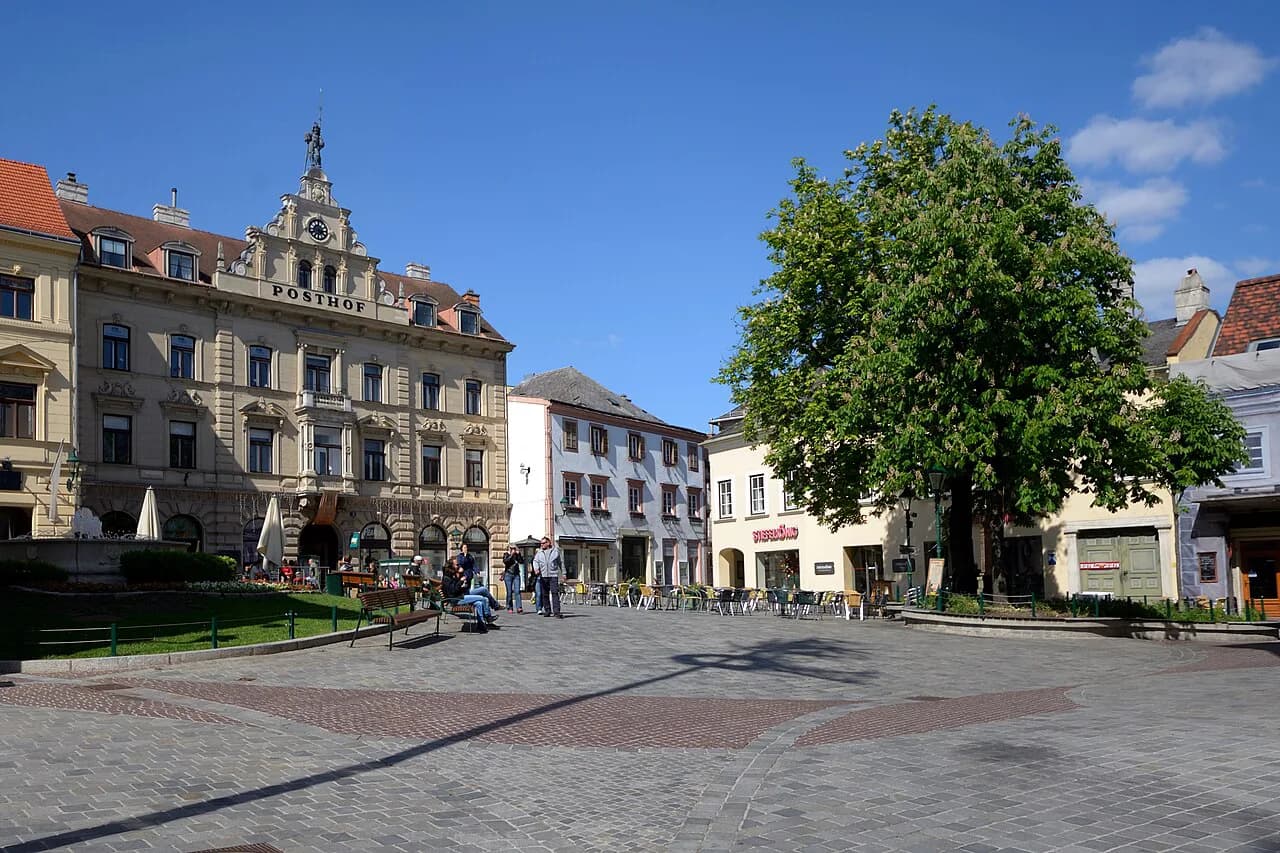
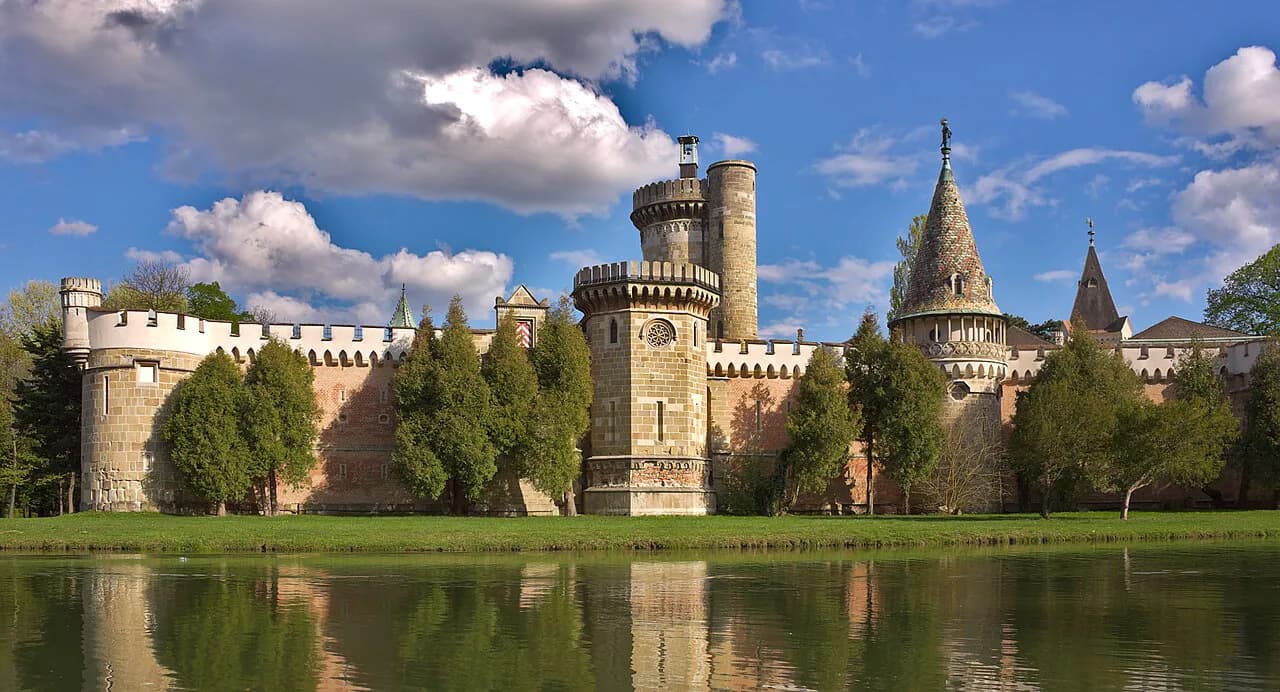
Baden bei Wien is the natural base for this corner of the Vienna Woods, with rail connections and a compact old center to return to after the abbey. It also puts Liechtenstein Castle and Maria Enzersdorf within a short drive of the same day's route.
How long to allow and how it fits a Vienna Woods route
Walk the church, the cloister, the chapter room and the courtyard at an unhurried pace, and allow extra time if you stop for chant, a service or the audio guide's commentary. Weekday mornings close at 11:30 a.m., so an early start matters if you want the full window.
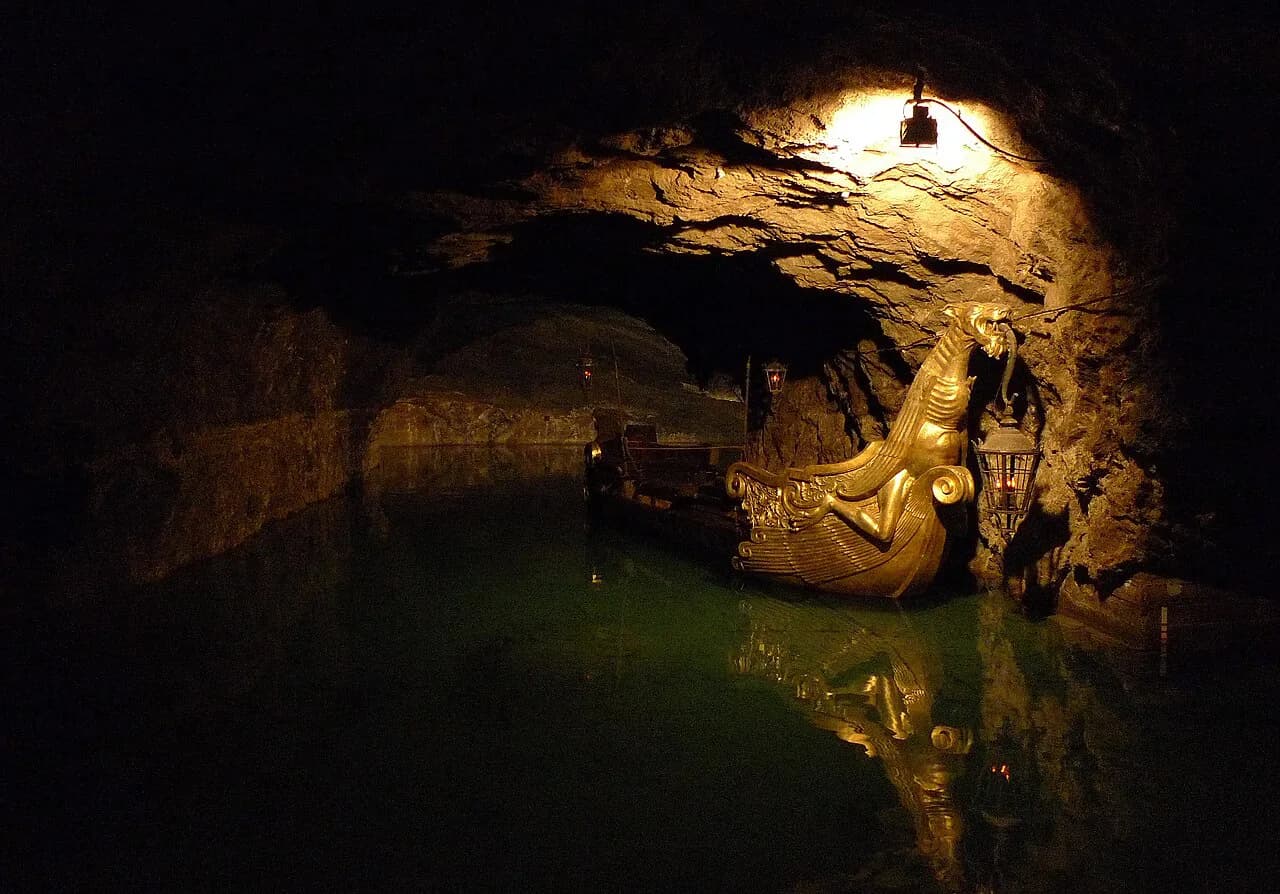
As a route stop, the abbey sits well on a loop that also takes in Seegrotte Hinterbrühl, the flooded gypsum mine nearby, or the palaces and park at Laxenburg further east. Both are short drives and neither demands a full day, so the abbey can anchor a half-day loop out of Vienna or Baden.
Practical constraints: the Sunday afternoon problem
The single biggest planning trap is the asymmetric week. Sundays and public holidays open only from 1:30 p.m., so a Sunday morning arrival finds the gate shut; weekday visitors instead face a midday gap between 11:30 a.m. and 1:30 p.m. Plan your travel leg around those windows, not the other way around.
If your day includes Mödling or the edge of the woods, put the abbey first on a weekday and the town second, since the abbey is the one with a hard last-entry time. Mödling's old center and its Beethoven connections fill an afternoon without a deadline.
Build the abbey into an A2 day, not a detour
Heiligenkreuz Abbey earns its place on a Vienna Woods itinerary because it delivers Romanesque, Gothic and Baroque work in one compact, living monastery, with chant still sung by the community. Give it two hours, arrive on a weekday morning or any afternoon, and pair it with one nearby stop to make the drive out from Vienna worthwhile.
Check the fee page and the choir prayer times the week you travel, then set your departure so you clear the gate before last entry. The abbey rewards that small piece of planning more than most stops in the region.
Explore more Baden bei Wien guides
Frequently Asked Questions
Do Cistercian monks still live at Heiligenkreuz Abbey?
Yes. Heiligenkreuz is a working Cistercian monastery and the oldest continuously occupied Cistercian house in the world, founded in 1133 and inhabited without a break since. The monks pray the Liturgy of the Hours in Latin, and a theological college operates on site.
What is the difference between a monastery and an abbey?
An abbey is a monastery led by an abbot or abbess, while monastery is the broader term for any community of monks or nuns. Heiligenkreuz is both: a Cistercian monastery governed as an abbey, which is why its formal name is Stift Heiligenkreuz.
Can I hear the monks' Gregorian chant as a visitor?
Chant belongs to the community's daily prayer, so the way to hear it is to attend a service or one of the Liturgy of the Hours rather than to book a performance. The abbey publishes its Mass and choir prayer times, and you should match your arrival to one of them.
Sources
Notes for your next Austrian town break
Optional updates when we add or revise town guides.
You might also like
Continue reading
More guides you'll find useful