
Hallstatt Market Square (Marktplatz): A Visitor's Guide
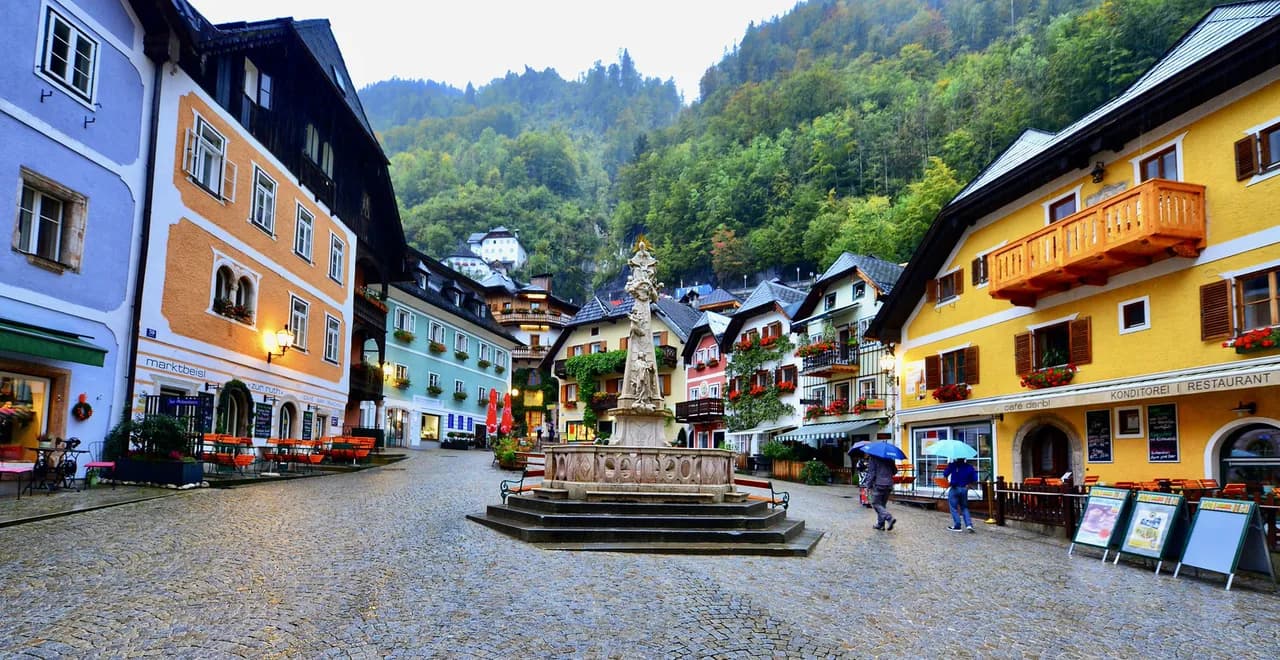
Hallstatt Market Square, or Marktplatz, is the historic center of the World Heritage village: a compact, free, always-open square at 511 meters elevation, with the Holy Trinity Column at its middle and cafes, restaurants and souvenir stores around it. It is not a ticketed sight and it needs no more than a stroll on its own, but it works as the natural pivot of a visit because the lanes above and the lakefront below both lead from it. This guide covers what stands on the square, how it is laid out, how to arrive from Salzburg, Linz, Vienna/Graz or Villach, what parking costs in euros, and how to sequence the square with the rest of Hallstatt.
Treat the square as a place with a real history rather than a photo backdrop. Its layout dates to the 14th century, and the column at its center was donated by a Hallstatt salt-manufacturing couple in the middle of the 18th century as a plague column, a type of monument given in thanks that a plague outbreak had ended.
What stands on the square
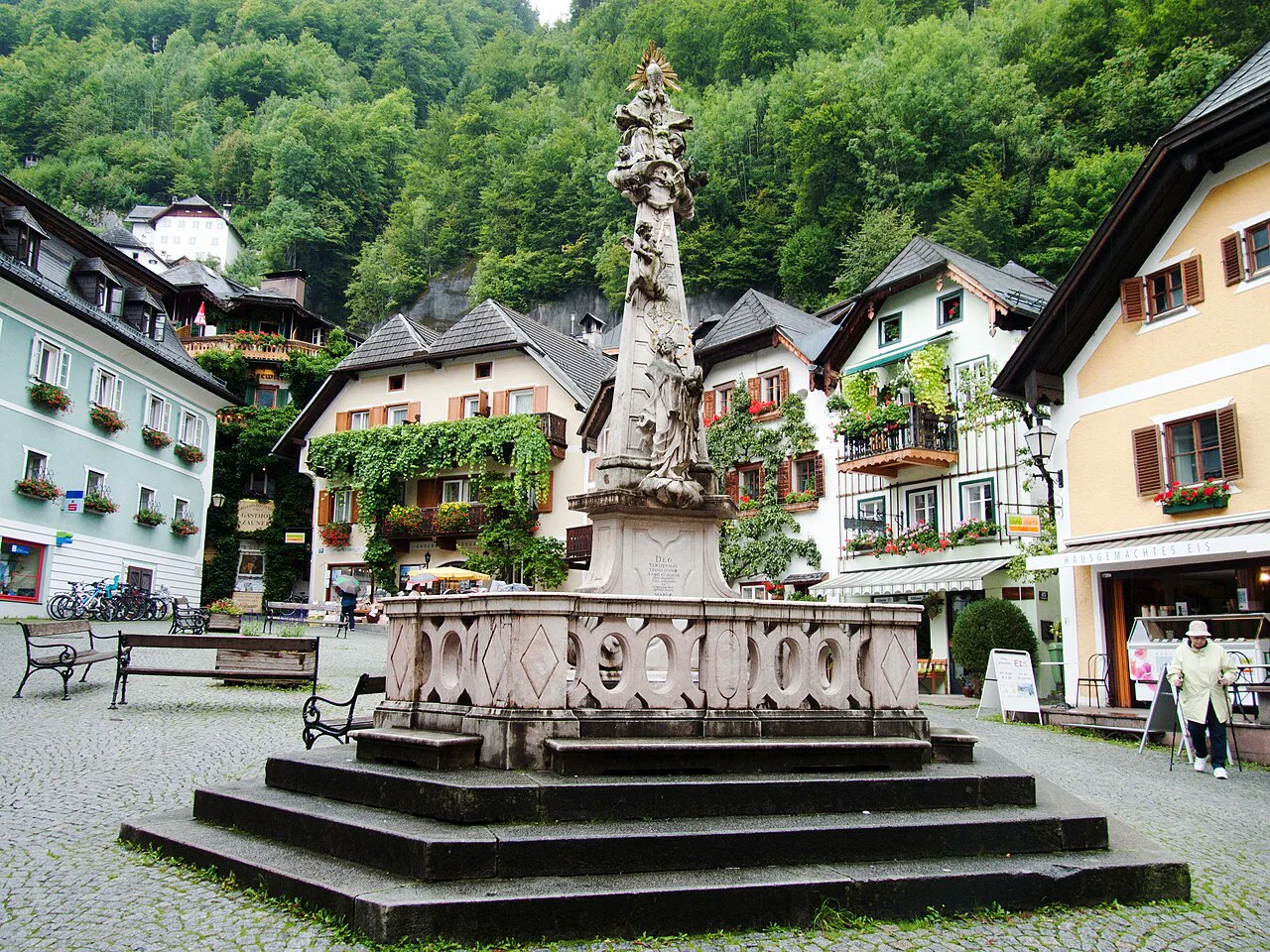
The Holy Trinity Column is the anchor of the square and the one piece of sculpture worth slowing down for; it sits at the center of a space whose footprint has barely changed since the 14th century. Around it you will find fountains and historic buildings, the setting that makes Marktplatz the postcard view of the village. Entry is free and the square is open to the public around the clock, so it functions outside shop hours too.
Because the square is open at all hours, the practical reward is timing: an early morning or evening pass gives you the buildings and the column without the midday crowd that fills the narrow lanes. The regional tourism listing records a maximum capacity of 1,000 people on the square, which tells you how busy the space can get at peak.

Cafes, shops and how the square is used
Souvenir stores, cafes, restaurants and a bar ring the square, which makes Marktplatz the obvious place to sit down between the lakeside and the uphill lanes. The regional tourism listing does not publish individual opening hours for those businesses, so treat the square itself as always accessible and the shops as a daytime proposition.
The square doubles as the village's event stage. In summer the Salinenmusikkapelle, the local saltworks band, gives concerts here, and during Advent the space becomes a pre-Christmas gathering spot for locals and visitors. Both are reasons to check what is scheduled for your dates before you set your day's plan around the market.

Where it sits in the village
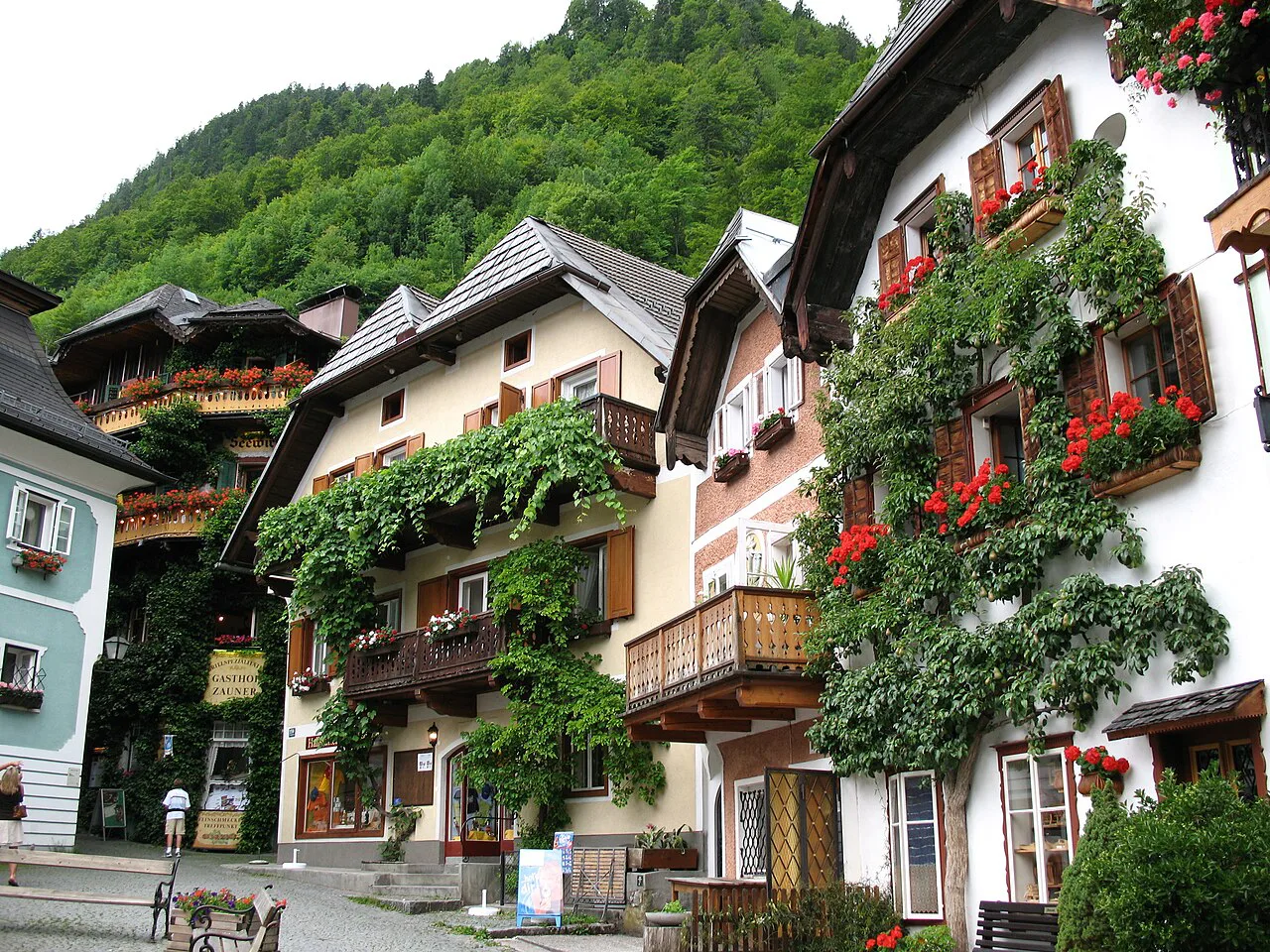
Marktplatz lies in the center of Hallstatt, on the slope between the lakefront landing at the Lahn, where boats and buses arrive, and the steep lanes climbing above the village. That position means you can reach it on foot from either end of a visit without any transport of your own.
If you come by train, you arrive at Hallstatt Bahnhof on the opposite shore and cross the lake by boat to reach the village, then walk up to the square. The market sits in the center of the village, so the shore of the Hallstätter See sits below it and the steep lanes climb above it; from the square the water is a short descent rather than a separate trip.
Getting there by road and rail
By car from Salzburg, the route runs via the Thalgau exit onto the B158 toward Bad Ischl, then the B145 to Bad Goisern, right onto the B166 and left at the Gosaumühle junction toward Hallstatt. From Linz you join the B145 at the Regau exit through Gmunden and Bad Ischl, and from Vienna or Graz you leave at Liezen, take the B320 and the B145 via Bad Aussee, then Koppenstraße through Obertraun to Hallstatt. From Villach, take the Tauernautobahn to Eben im Pongau and the B166 over the Gschütt pass through Gosau.
Trains on the Attnang-Puchheim to Stainach-Irdning line stop at Hallstatt Bahnhof, where the boat crossing brings you into the village. Postbus routes 542/543 run to the Hallstatt Lahn bus terminal, and current train and bus times are published by ÖBB and Postbus respectively.
Parking and what it costs
Drivers park at P1 to P4 above the village and walk down; the published short-stay tariff starts with 15 minutes free, then 4.00 EUR for one hour, 7.00 EUR for two, 9.00 EUR for three to four hours, 9.50 EUR for five to six hours and 10.00 EUR for seven to twelve hours, with a 15.00 EUR daily rate from the 13th hour. A lost ticket is charged at 30.00 EUR, and coaches pay 80.00 EUR per day through Hallstatt PEB. Treat these as the published rates rather than a promise they will not be revised.
The parking structure has 450 car spaces and 15 coach spaces, which matters in a village this small: arriving late in the morning on a peak day can mean circling or being turned away. Budget the day rate if you plan to combine the market with the salt mine and the lakeside, and the two-hour tier if you are only passing through the center.
How long to allow, and how to sequence it
Plan on twenty to thirty minutes on the square itself, enough to see the column, read the buildings and stop for a coffee, then add time for the lanes above and the lakefront below. The square is free and open around the clock, so it should not be the thing that limits your day.
A sensible order is to arrive, cross the market first, climb to the Hallstatt Skywalk for the view over the village and lake, and finish at the water. The Skywalk and the Hallstatt Salt Mine above town are separate ticketed attractions with their own seasons and hours, so confirm those before building the day around them.
Nearby sights within a few minutes
Below the square, the lakeside lido gives you a swimming spot and a view back up at the village, and the shore path is the calmest place to be when the lanes are packed. Above the market, St. Michael's Chapel and the Hallstatt Ossuary, with its painted skulls, sit within a short climb and deserve more time than most visitors give them.
The Hallstatt Museum (Museum Hallstatt) fills in the salt-mining and prehistoric background that the square only hints at, and it is the sensible rainy-hour substitute when the lanes are wet. If you are working through the village systematically, start with the full set of Hallstatt Attractions: 11 Visitor Guides to plan which sights get your hours.
Should the market be your first stop?
Yes, make Marktplatz your first stop after stepping off the boat or bus, because it orients you: the lake is downhill, the salt mine and Skywalk are uphill, and everything else in the village radiates from this one small space. It costs nothing, it is never closed, and it takes half an hour, which leaves the rest of your day free for the ticketed sights and the water.
Explore more Hallstatt guides
Frequently Asked Questions
Why is Hallstatt so popular?
Hallstatt draws visitors for the combination of a compact historic center on a steep lakeshore, a market square whose layout dates to the 14th century, and the surrounding Dachstein Salzkammergut mountains. The Holy Trinity Column at the center of Marktplatz was donated by a local salt-manufacturing couple in the mid-18th century, a reminder that the village's wealth came from salt.
Which city is closest to Hallstatt?
Salzburg is the usual approach from the west and connects by road via Thalgau, Bad Ischl and Bad Goisern, or by train with a change at Attnang-Puchheim and the boat crossing from Hallstatt Bahnhof. Linz and Graz are the alternatives from the north and southeast, and Villach from the south over the Gschütt pass.
Do I need a ticket for Marktplatz?
No. Entry to the market square is free and the square is open to the public around the clock, so you can walk through it at any hour. The ticketed sights above and below it, such as the Skywalk and the salt mine, have their own prices, seasons and hours to confirm before you go.