
Dachstein Salzkammergut: How to Visit the Hallstatt-Dachstein Region

The Dachstein Salzkammergut is the World Heritage region around Hallstatt, Bad Goisern, Gosau and Obertraun, and it rewards planning arrival before anything else. The four villages sit close together on the map but connect by specific roads, rail stops and bus links, so where you sleep and how you move shapes what you can see in a day. This guide covers how to reach each village and where to spend your hours once you are there.
Hallstatt is the name most travelers know, but the region is bigger than one lakefront village. Bad Goisern supplies everyday services and a working rail station, Obertraun anchors the Dachstein caves, and Gosau spreads out toward Lake Gosau under the Dachstein walls. Treating them as one destination with four parts makes a route far easier to build.
What the region covers
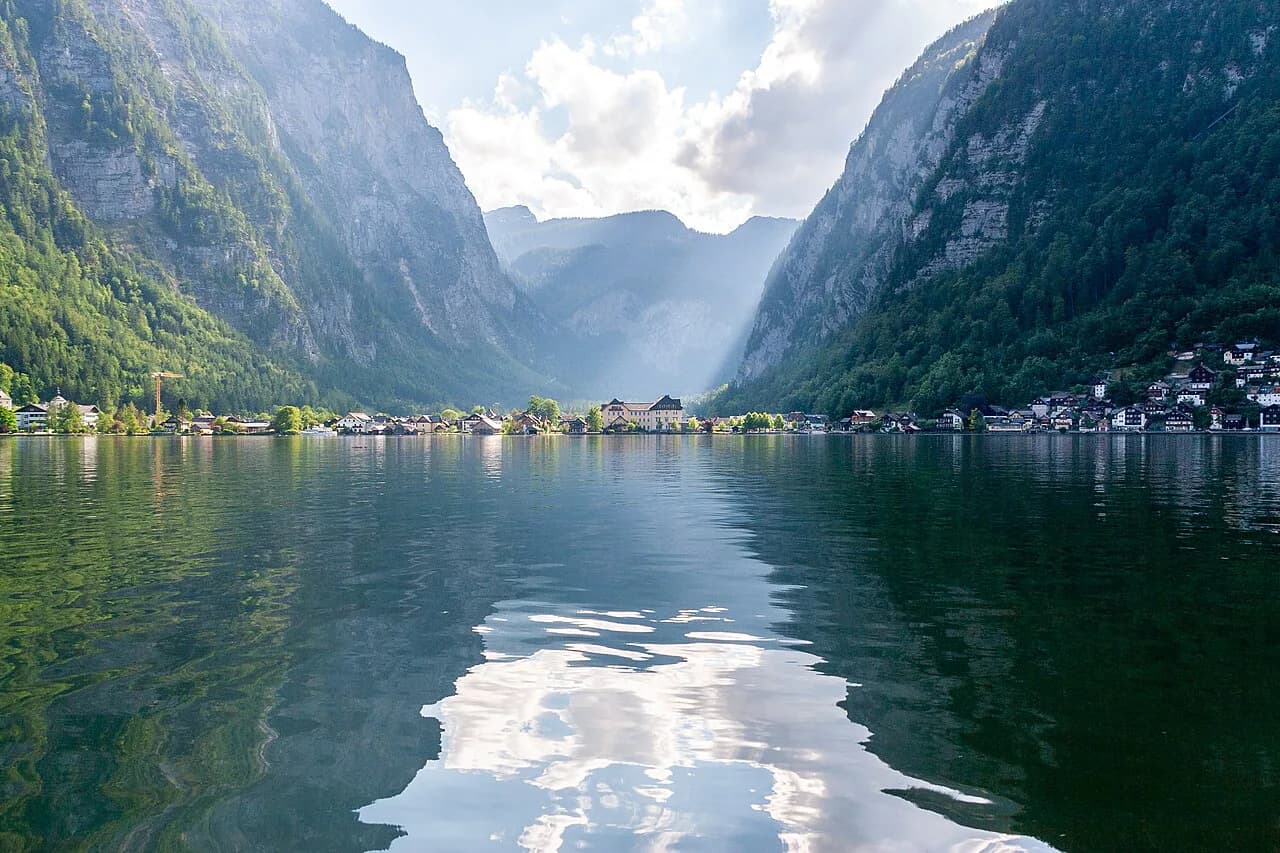
This is the Hallstatt-Dachstein/Salzkammergut World Heritage Region, a landscape shaped for roughly 7,000 years by salt mining. The official tourism region groups Hallstatt, Bad Goisern, Gosau and Obertraun under the Dachstein Salzkammergut name. You are not visiting one town but a small cluster of settlements linked by a lake, a valley and a mountain massif.
Each village has a different job. Hallstatt is the dense historic center on the steep lakeshore; Obertraun sits on flatter ground at the southern end of Lake Hallstatt near the Dachsteinhöhlen caves; Gosau fills a broad valley toward Lake Gosau; and Bad Goisern is the practical town with rail access and shops. If you want to start with the famous village itself, the Hallstatt Attractions: 11 Visitor Guides overview breaks down its individual sights.

Where the villages sit and how they relate
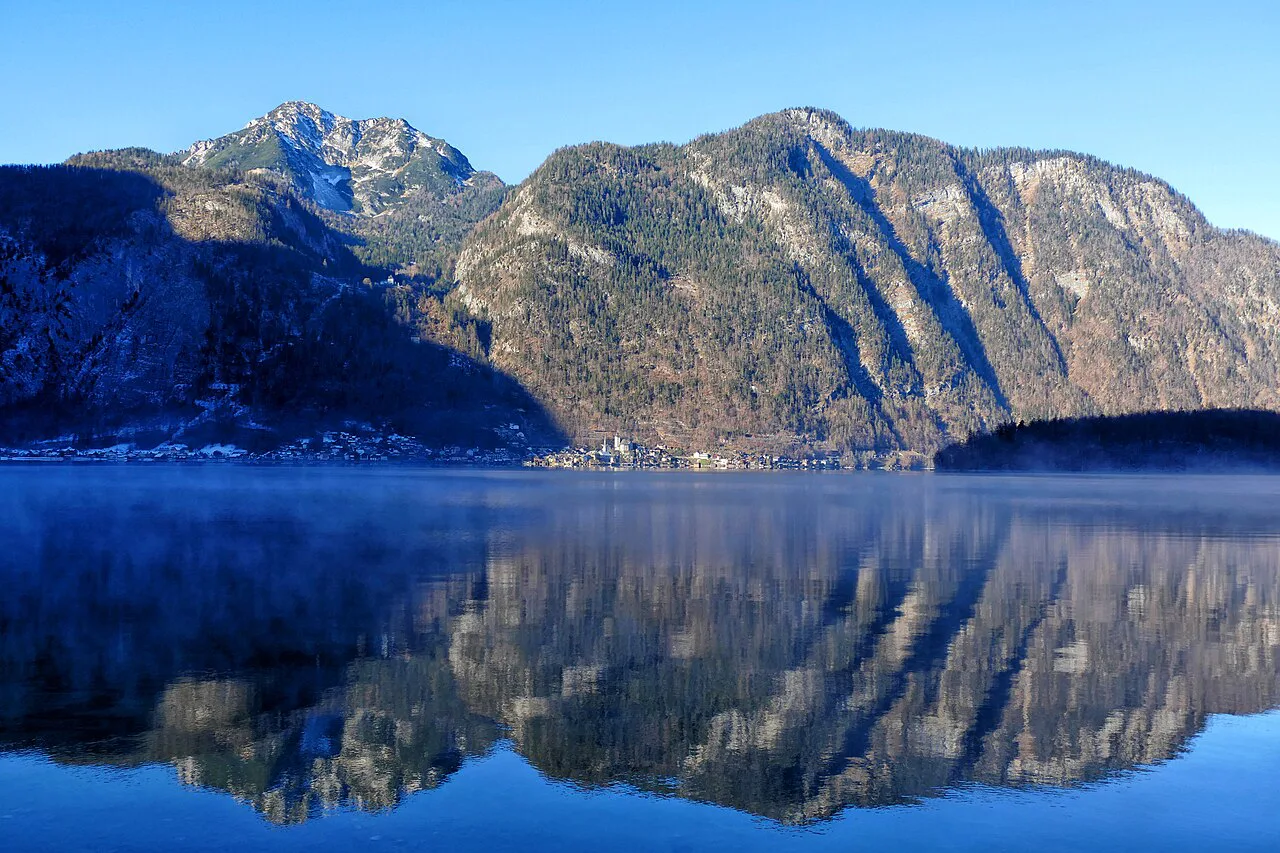
Lake Hallstatt, or Hallstätter See, runs roughly north to south, with Hallstatt village on the western shore and Obertraun at the southern tip. Bad Goisern lies northwest of the lake along the Traun valley, and Gosau sits in its own side valley southwest of Hallstatt. The distances are short in kilometers but the terrain dictates the roads and rail lines, so a straight-line look at a map can mislead you.
The single most important layout fact is that Hallstatt's train station is not in the village. The arrival guide notes that reaching the center from the station involves a boat crossing over the lake. Build the crossing into your schedule rather than assuming the train drops you at the market square.
For a visitor, this means you choose a base with care. Bad Goisern and Obertraun have stations on the same line that serves Hallstatt, while Gosau depends more on road access and buses. If your priority is the classic lakeside village, plan your days so that the boat crossing and the walk through the center are one continuous block.
Getting there by car
By car, the region's official arrival page lays out the main approaches clearly. From Vienna, take the A1 freeway and leave at the Regau exit, then continue on the B145 federal road into the region, a drive of about three hours. From Salzburg, the B158 brings you in directly in about one hour, which makes the region an easy add-on to a Salzburg stay.
From the south, the same guidance gives about two hours from Villach via the A10 and the B166, and about two hours from Graz via the A9 and the B145. Those times are for the drive itself and leave out stops, boat crossings or finding parking once you arrive. If you are coming from a longer tour of Austria, these figures help you judge whether the region fits as a single overnight or needs a fuller stay.
Once in the region, the car is most useful for Gosau and the valley roads, where rail options thin out. Between Hallstatt, Obertraun and Bad Goisern, though, the rail line and buses do much of the work, which can save you from hunting for parking in the tight lakeside center.
Getting there by train
The region has a string of small stations rather than one central hub. The official list includes Bad Goisern, Goisern Jodschwefelbad, Bad Goisern Mitte, Steeg/Gosau near Lake Hallstatt, Obersee on the lake shore, Obertraun and Obertraun Dachsteinhöhlen, which is the stop to use before continuing by bus toward Dachstein Krippenstein. The final stop, Hallstatt, sits across the water from the village center.
For practical planning, Obertraun Dachsteinhöhlen is the natural stop for the caves, while Steeg/Gosau serves the Gosau side of the lake. Bad Goisern's stations put you in a town with everyday services and onward connections. Read the station names carefully on the timetable; several sound alike and serve different villages.
For current train times, use the public transport timetable linked from the region's arrival page and confirm which station matches your accommodation. The boat timetable for Lake Hallstatt is listed separately on the same page, and it matters if you arrive at Hallstatt station and need to cross into the center.
Hallstatt by train: the boat crossing into the center
Hallstatt station is a stop on the lakeside rail line, and the village is on the opposite shore. From Hallstatt Bahnhof you take the boat over to the center. This is not a minor detail: it determines how long the final leg of a rail journey actually takes.
The corollary is that you should look up the boat schedule before booking a tight train. If the boat and train do not line up, you can lose time waiting at the small station. The Hallstätter See page and the region's boat timetable are the places to confirm crossings, and it is worth syncing arrival and departure around them.
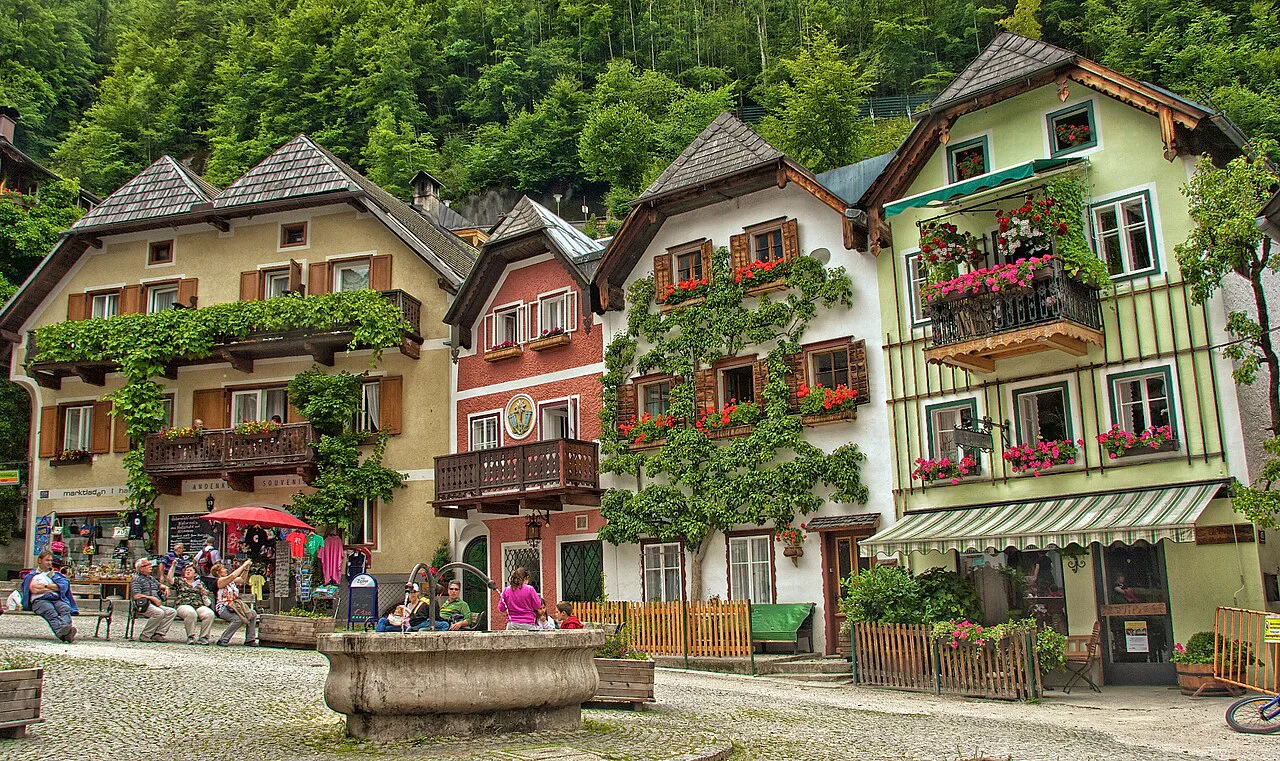
Once you are in the center, the village is compact. Hallstatt Market Square is a natural orientation point, and from there the lanes climb toward the churches and the salt mine side of town. Allow more time than the map suggests if you want to see the whole village rather than just the waterfront.

Bus links between the villages
Buses cover the gaps between villages and connect the stations to the sights. The official bus stop list includes Hallstatt Lahn and Hallstatt Bahnhof, with the latter marked for the boat crossing into the center, along with Gosaumühle, Steeg Bahnhof, Steeg Au and several stops in Bad Goisern such as Bad Goisern Mitte/B145 and St. Agatha/Agathawirt. These names tell you where a bus can drop you and how close it gets to your target.
When planning a day, match the stop to the destination rather than to the nearest big name. For the caves in Obertraun, the Dachsteinhöhlen stop links onward by bus toward Dachstein Krippenstein. For the Gosau side, Gosaumühle and Steeg are the relevant stops. Check the current timetable from the arrival page before you commit to a sequence of villages.
The Salzkammergut Shuttle and parking
Parking exists across the region, and the arrival page maintains a directory of lots for cars and other vehicles. The harder question is whether to move your car at all once you are based. In a compact region with a rail line and regular buses, a car can become a liability in the busiest places, where spaces are limited and the roads narrow.
The official Salzkammergut Shuttle is presented as a flexible, environmentally friendly way to get around the World Heritage region. For travelers who arrive by train and want to reach sights not directly on the rail line, it is a practical alternative to renting a car for the whole stay. Check its current routes and booking process on the arrival page before relying on it for a specific day.
What to see in Hallstatt village
Hallstatt's center is small enough to walk in an hour but layered enough to fill half a day. The market square, the two churches and the lakeside lanes sit close together, and the steep lanes climb toward the salt mine side of the village. The Hallstatt Catholic Church and the Hallstatt Lutheran Church anchor the upper and lower parts of the village.
Above the village, the Hallstatt Skywalk viewpoint is reached via the Salzbergbahn Hallstatt funicular from the valley. The funicular runs seasonally, so check operating dates before you build your day around it. The ride is short but the view over the lake and the Dachstein Alps is the reason most people go up.
The Hallstatt Salt Mine sits at the top of the same mountain and offers guided tours underground. Visiting the mine takes two hours or more between the funicular, the tour and the time at the Skywalk. If you have limited time, pick one: the view or the mine, not both at a rush.
Two smaller sights round out a village visit. The Hallstatt Ossuary in St. Michael's Chapel holds decorated skulls in a small space, and the Hallstatt Museum covers the region's long salt-mining history. Both are quick stops that fit between the churches and the waterfront.
Obertraun and the Dachsteinhöhlen caves
Obertraun is the southern shore village and the gateway to the Dachsteinhöhlen, which include an ice cave and a mammoth cave toured in groups. The caves sit at altitude and tours run on schedules, so plan a half day rather than squeezing them between two trains.
The rail stop Obertraun Dachsteinhöhlen puts you within reach, and from there a bus continues toward Dachstein Krippenstein. That makes Obertraun the logical base if the caves are a priority, and a reasonable alternative to Hallstatt for travelers who want quieter evenings. It has its own station and lakefront, so you can still reach Hallstatt by train and boat.
Gosau and Lake Gosau
Gosau spreads out in a valley southwest of Hallstatt, with the Dachstein walls rising above it and Lake Gosau at the head of the valley. It is the region's quieter side: fewer tour groups, more open road and a different pace. The stop Steeg/Gosau connects the area to the lake and the rail line, but a car makes the valley's scattered farms and trailheads much easier to reach.
Lake Gosau is the destination most visitors aim for, a small lake below the Dachstein with the classic alpine backdrop. There is parking near the lake, and the surrounding area has food options. Give it half a day if you want to walk the shoreline, or less if you are just there for the view.
Bad Goisern as a practical base
Bad Goisern is the working town of the group, with multiple rail stops and everyday services. It is less photogenic than Hallstatt but more functional: you can buy groceries, find a pharmacy and reach the lake and caves by train without a car. Travelers who want to avoid driving on narrow lakeside roads often use it as a base.
The town also sits at the junction of routes into the inner Salzkammergut, which makes it a sensible overnight stop if you are arriving late by train. The stations Goisern Jodschwefelbad, Bad Goisern Mitte and Bad Goisern put different parts of town within walking distance, so check which one matches your accommodation.
Lakes and side trips around the region
Lake Hallstatt is the central body of water, with boat crossings and lakeside villages along its shore. The Hallstätter See setting defines the region's character and shapes how you move around it. Beyond the core, the wider Salzkammergut includes other lakes and towns that fit a longer loop by car or train.
If you have a car, the lake towns around the Salzkammergut make easy additions to a Dachstein-based stay. By train, the regional line connects the villages around Lake Hallstatt, but reaching farther lakes takes more planning. Decide early whether your priorities are the World Heritage core or a broader Salzkammergut loop.
Ticket prices, cave tours and boat schedules to confirm
The region's arrival page publishes the public transport timetable, the boat schedule for Lake Hallstatt and a list of parking areas, but ticket prices and cave tour times come from the individual operators. The Salzkammergut Tourismus office in Bad Goisern is the official starting point for current details, and its contact is listed on that page.
For the salt mine and the Skywalk, the operator's own page gives current opening seasons and tour times. The caves at Obertraun and the Krippenstein connection likewise follow their own seasonal schedules. If you are visiting in shoulder season, confirm that the specific ride or tour you want is running on your dates before you shape a day around it.
Which village should anchor your stay?
Let your transport decide. If you are arriving by train and want the classic Hallstatt experience, base yourself in Hallstatt or Obertraun, where the boat and the caves are part of the daily rhythm. If you have a car and want more space, Gosau or Bad Goisern gives you breathing room and easier parking.
Either way, check the boat timetable and the station names before you book, and decide whether the Salzkammergut Shuttle can replace some of your driving. The region works best when you treat the villages as one connected destination and move between them deliberately rather than dashing from sight to sight.
Explore more Hallstatt guides
Frequently Asked Questions
Is there a cable car in Hallstatt?
Hallstatt has a funicular, the Salzbergbahn, which climbs from the valley to the Skywalk viewpoint and the salt mine. It is not a cable car to the Dachstein glacier. Check the funicular's operating season before you plan a day around it.
What is the most famous lake town in Austria?
Hallstatt is the lake town most travelers associate with Austria, and its setting on Lake Hallstatt below the Dachstein mountains explains the attention. The wider Salzkammergut has many other lake towns, but Hallstatt is the one that comes up first.
What is the Salzkammergut famous for?
The Salzkammergut is known for its lakes, salt mining heritage and alpine scenery. The World Heritage region around Hallstatt, Bad Goisern, Gosau and Obertraun is the core of that landscape, and the Dachstein caves and salt mine are the region's signature sights.
Is Dachstein Glacier worth visiting?
The Dachstein glacier is a separate destination from the Dachsteinhöhlen caves at Obertraun, and it is reached by a cable car from Ramsau on the Styrian side. If you want the caves, stay at Obertraun; if you want the glacier, plan a different route. Check the glacier cable car's operating schedule before committing.