
Hallstatt Catholic Church: What to See at the Pfarrkirche Mariä Himmelfahrt
The Hallstatt Catholic Church — the Pfarrkirche Mariä Himmelfahrt — is a parish church set on the slope above the Marktplatz between the rock face and the lake, so it reads as a landmark from the water and as a quiet detour from the lanes below. Its tower is the oldest part of the building, while the nave was rebuilt in the late-Gothic style, which is why the two halves look so different from the outside. This guide covers the location, the walk up, the altars to look for inside, pacing a visit around services, and the cemetery and charnel house beside it.
What the Hallstatt Catholic Church is and where it sits above the Marktplatz
The church belongs to the Catholic Parish of Hallstatt, listed at Kirchenweg 40, 4830 Hallstatt, and it sits uphill from the Marktplatz rather than on the waterfront. The address is the one the parish uses for its own event listings at the church, which is the simplest way to confirm you are heading to the right building. The church is dedicated to the Assumption of Mary, which is why German sources call it Mariä Himmelfahrt.
Position matters here: Hallstatt packs its houses into a narrow strip between the mountain and the lake, so buildings stack vertically. The church sits on that stack, above the market square and below the wooded slopes, which means the approach is a short climb rather than a level stroll. If you are arriving by ferry, the boat lands at the Landungsplatz and the Marktplatz is the natural starting point for the walk up.

Getting there: the walk up from the Marktplatz and the Kirchenweg address
From the Marktplatz, follow the lanes uphill toward Kirchenweg; the church is close enough that the walk takes minutes, not a hike, but the steps and gradients are steady. Hallstatt's center is compact and largely car-free in practice, so most visitors arrive on foot from the ferry landing or from a parking area on the edge of the village.
If you are coming for the day and also want the Skywalk or the salt mine, note that the Salzbergbahn valley station sits on the Salzbergstraße side of the village, a separate climb from the church. Combining the church, the cemetery, and the funicular requires some walking between them, so plan the order before you start.

Inside: the Knappenaltar, the Marienaltar, and a Romanesque tower against a late-Gothic nave
The exterior alone is worth the climb: the building pairs a plain Romanesque tower, the oldest surviving part of the building, with a high, light-filled late-Gothic nave begun in the early sixteenth century; the tower's baroque cap dates to after an eighteenth-century fire. That contrast tells you a lot about the village's wealth from salt mining and how the church was rebuilt as the town prospered. Look up at the tower before you go in.
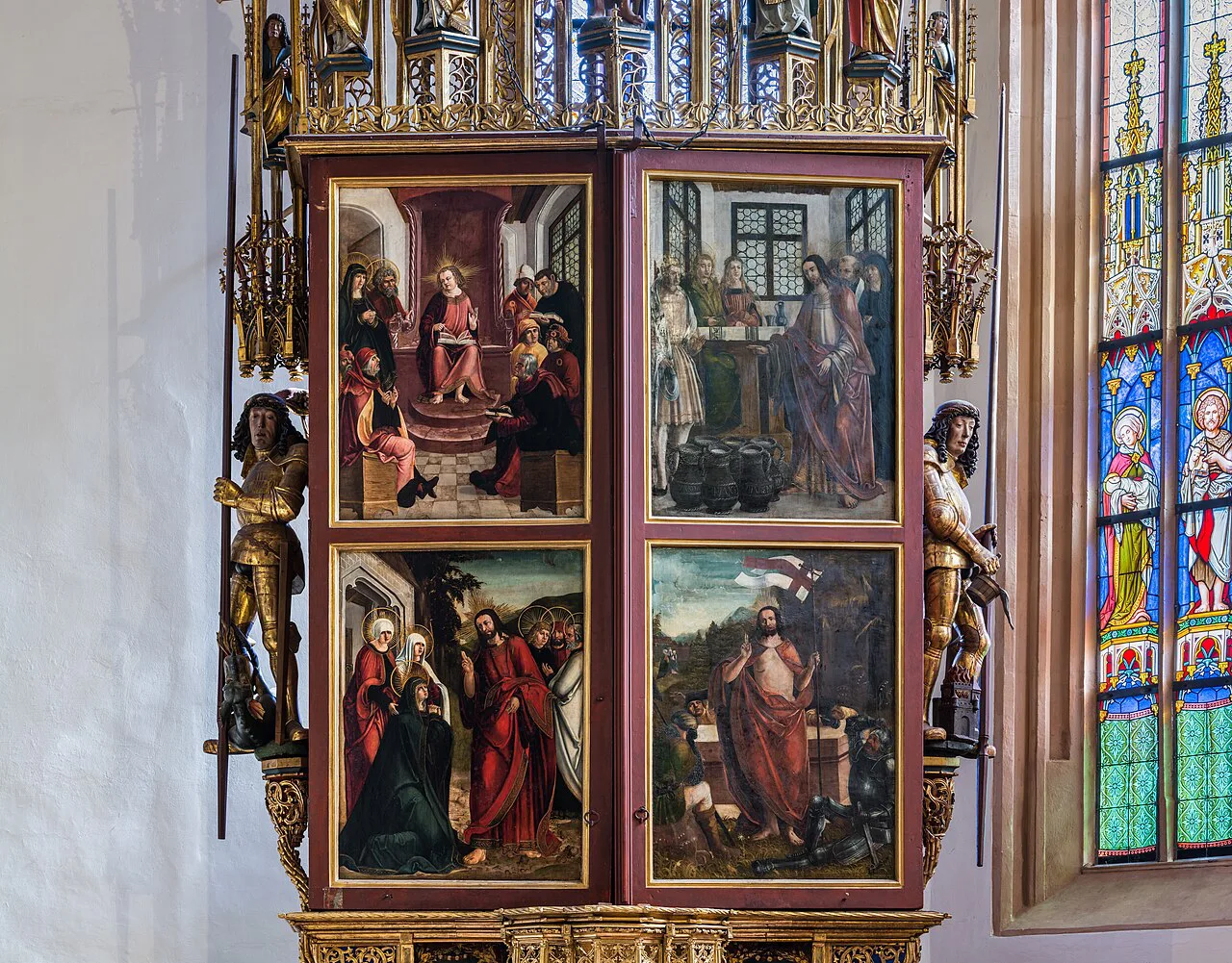
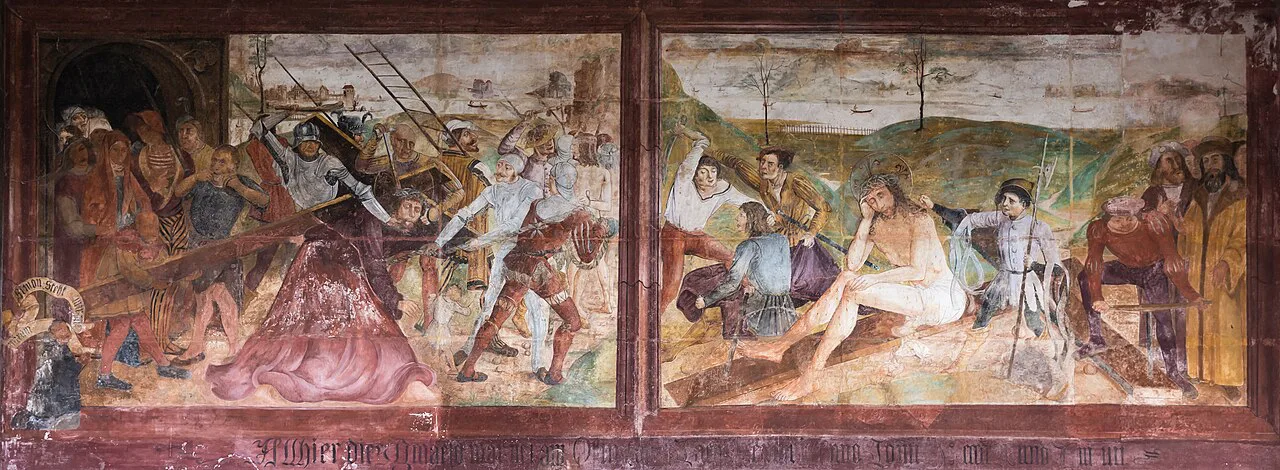
Inside, the piece to find first is the Knappenaltar, a carved altarpiece donated by Hallstatt's miners around 1500, showing scenes from the life of Mary and of Saint Bartholomew, the miners' patron. Near it stands the Marienaltar, a late-Gothic winged altar from the mid-fifteenth century with painted panels. The net-ribbed vaulting overhead, the neo-Gothic altars of the nineteenth century, and the carved figures between the altars reward a slow second look, and a restoration in 2002 brought much of the color and woodwork back into view.
How much time to allow and how to pace a visit around services
Plan on twenty to forty minutes inside the church, plus ten minutes outside for the tower, the graveyard views, and the walk back down. That is enough to see the altars and the nave without hurrying. Photography is polite only when no service is in progress, so time your visit around the church calendar rather than the other way around.
The parish holds services here, and its listings for Mass in the Pfarrkirche note that services are held in German only, so visitors who want to attend rather than simply look should expect a German-language liturgy. Individual service dates on such listings belong to specific days rather than a standing weekly schedule, so confirm the current time with the parish before you build an evening around it.
The churchyard, the cemetery, and the charnel house next door
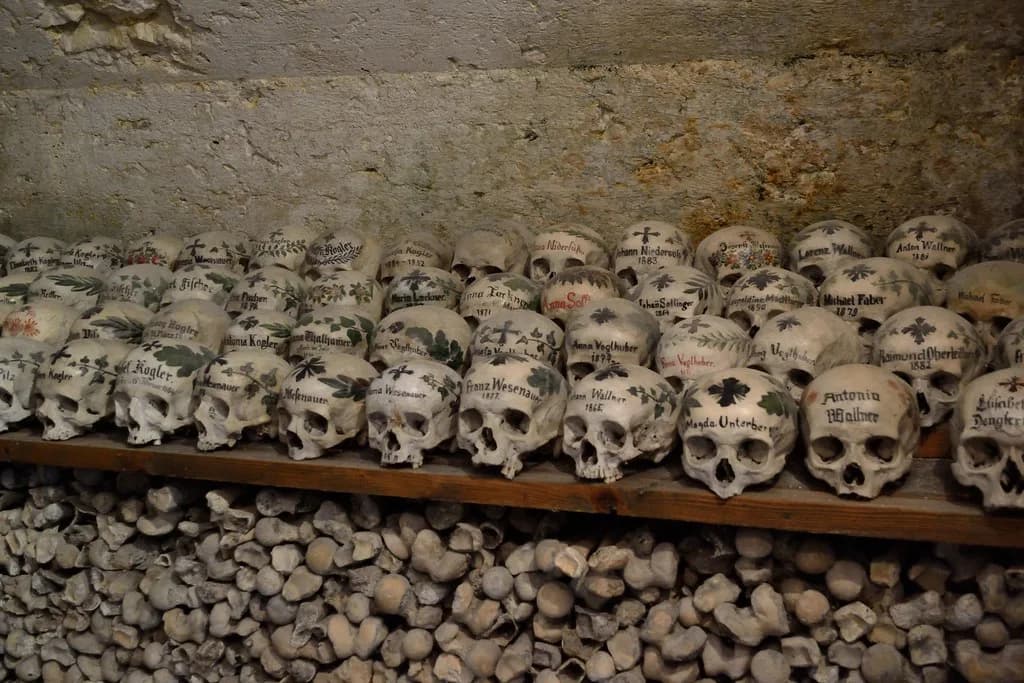
The cemetery beside the church is small, terraced, and densely packed with iron crosses and carved markers, and it is still in use, so treat it as a working burial ground rather than a display. The charnel house, known as the Beinhaus, is the reason many visitors climb this far: painted skulls and bones were moved here over the centuries because the graveyard had no room for new plots.
The Beinhaus is a separate small chapel-like space with its own visiting arrangements, so check its hours on site or on the village's visitor information rather than assuming it is open whenever the church is. Because the church, the cemetery, and the chapel sit within a few steps of each other, plan them as one visit and budget another fifteen to twenty minutes for the chapel and the graves.
Nearby: the Christuskirche at the Landungsplatz and the Kalvarienberg
Down at the Landungsplatz, the Evangelical Church of Christ in Hallstatt, the Christuskirche, gives the village its second church and a much plainer Protestant interior than the Pfarrkirche. It is a short walk from the ferry dock and pairs naturally with a lakeside stroll after you come down from the Catholic church.
Above the village, the Kalvarienberg is a small hilltop devotional site reached on foot; the climb adds to a church-focused half day rather than replacing it, and the path is steep enough that you should not attempt it in poor weather or after rain. If you have time for only one uphill effort, the church and cemetery are the better use of it.
Services in German and where to confirm current details
The Pfarrkirche is a working place of worship rather than a museum, so visits run alongside services, weddings, and funerals. Services are conducted in German, and the parish listings make that explicit for visitors. Check the church's own notices before you go if attending a service is the main reason for your stop.
The church is one stop in a compact village: the Hallstatt Museum holds the area's salt-mining and prehistoric story, the salt mine up the mountain continues that theme, and the lake itself fills the rest of a day. Build the church into a walking loop down to the Landungsplatz and back rather than treating it as a separate outing.
Should the church be on your Hallstatt shortlist?
Yes, and not only for the view: the church is brief to see and it sits right on the route between the Marktplatz and the upper village. The altars and the tower-to-nave contrast give it more substance than a quick photo stop, and the cemetery and Beinhaus next door turn it into a single stop of about an hour.
Go early in the day if you want quiet, since Hallstatt fills up by midday, and avoid service times unless you are attending. Pair it with the lakeside walk or the salt mine, and leave the village's other sights for a second visit rather than rushing all of them in one afternoon.
Explore more Hallstatt guides
Frequently Asked Questions
How do you get to Hallstatt Catholic Church from the ferry landing?
Walk from the Landungsplatz through the Marktplatz and continue uphill toward Kirchenweg, where the church stands above the square. The climb is short but includes steps and gradients, so allow a few minutes and wear shoes that handle uneven cobbles.
What should I look for inside the Pfarrkirche Mariä Himmelfahrt?
Start with the Knappenaltar, the miners' altarpiece donated around 1500, and the Marienaltar, a late-Gothic winged altar with painted panels. Then look up at the net-ribbed vaulting and compare the plain Romanesque tower outside with the tall, light late-Gothic nave.
Is the Beinhaus in the same place as the church?
Yes. The charnel house, with its painted skulls and bones, sits beside the church within the cemetery grounds, so you can visit both in one stop. It is a separate space with its own visiting arrangements, so confirm its hours locally before you plan around it.
Can I attend a service at the church?
The parish holds services in the Pfarrkirche, and its listings note that they are held in German only. Service dates published online refer to specific days rather than a fixed tourist schedule, so check the parish's own notices for current times before you go.