
Kurpark Baden bei Wien: What to See in Baden's Spa Park

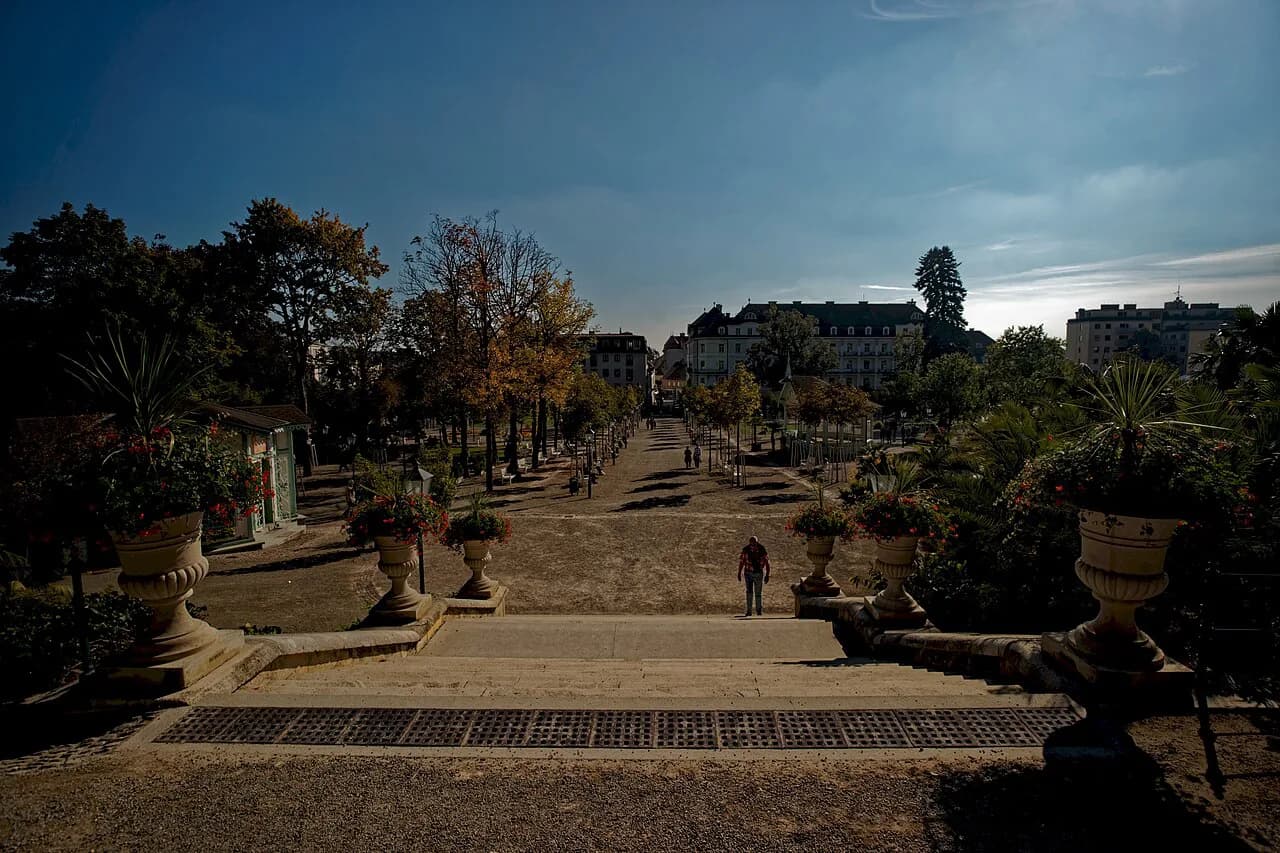
Kurpark Baden bei Wien is the town's historic spa park, spread across 52 hectares at the southwestern foot of the Kalvarienberg, and the place to go for an unhurried walk between the center and the hills. Budget roughly an hour for a slow loop past its monuments, the flower clock and the Beethoven-Tempel, and more if you stop at the Casino or Sommerarena. This guide covers where the park sits, how to reach it on foot, what each monument is, and how it fits with the rest of Baden bei Wien.
Where the park sits in town
The park lies north of Baden's built-up center and borders the edge of the Haselfeld plain, with a slope on its northeastern side separating it from the historic town. In practice you reach it by walking out of the pedestrian center toward the park and the Kalvarienberg beyond it, rather than driving to a gate.
Baden served as the summer residence of Emperor Franz and his family from 1796 to 1835, and the park hosted concerts and theater for the visiting public. Approaching from the center, you pass from shopfronts into open lawns, which is the simplest way to understand the layout. Set your orientation by the Kalvarienberg slope and you will not get turned around.

Getting there on foot
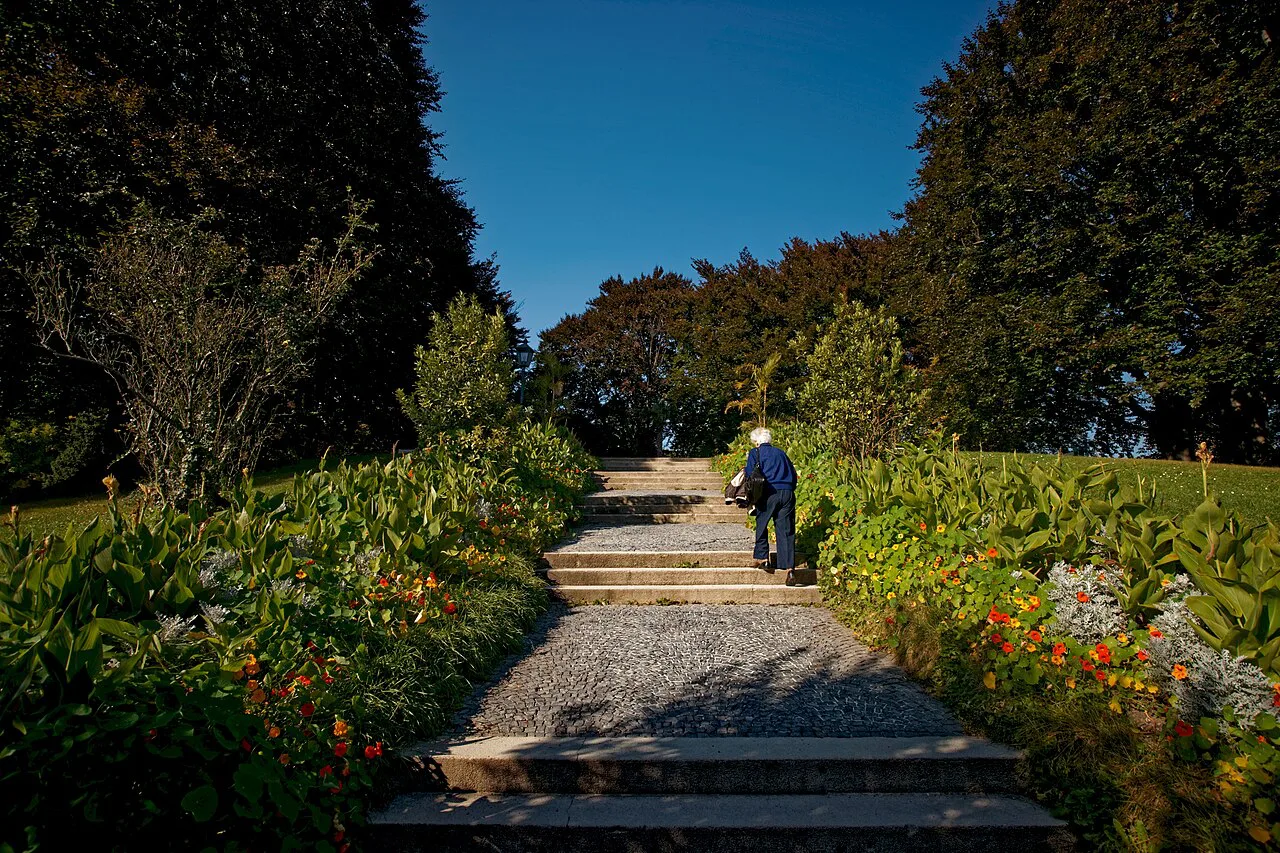
Walk from Baden's center out toward the park and the Kalvarienberg beyond it; the park opens up at the foot of the hill, and the slope on its northeastern edge is the clearest landmark for finding your way in. No gate or formal entrance is described, so follow the open ground away from the shopping streets.
If you are combining the park with a longer walk, the Felsenweg runs as a path segment within the Kurpark area and is used by walkers heading up toward the Kalvarienberg. Treat it as a walking connection rather than a separate ticketed sight.

How the park grew to its present shape
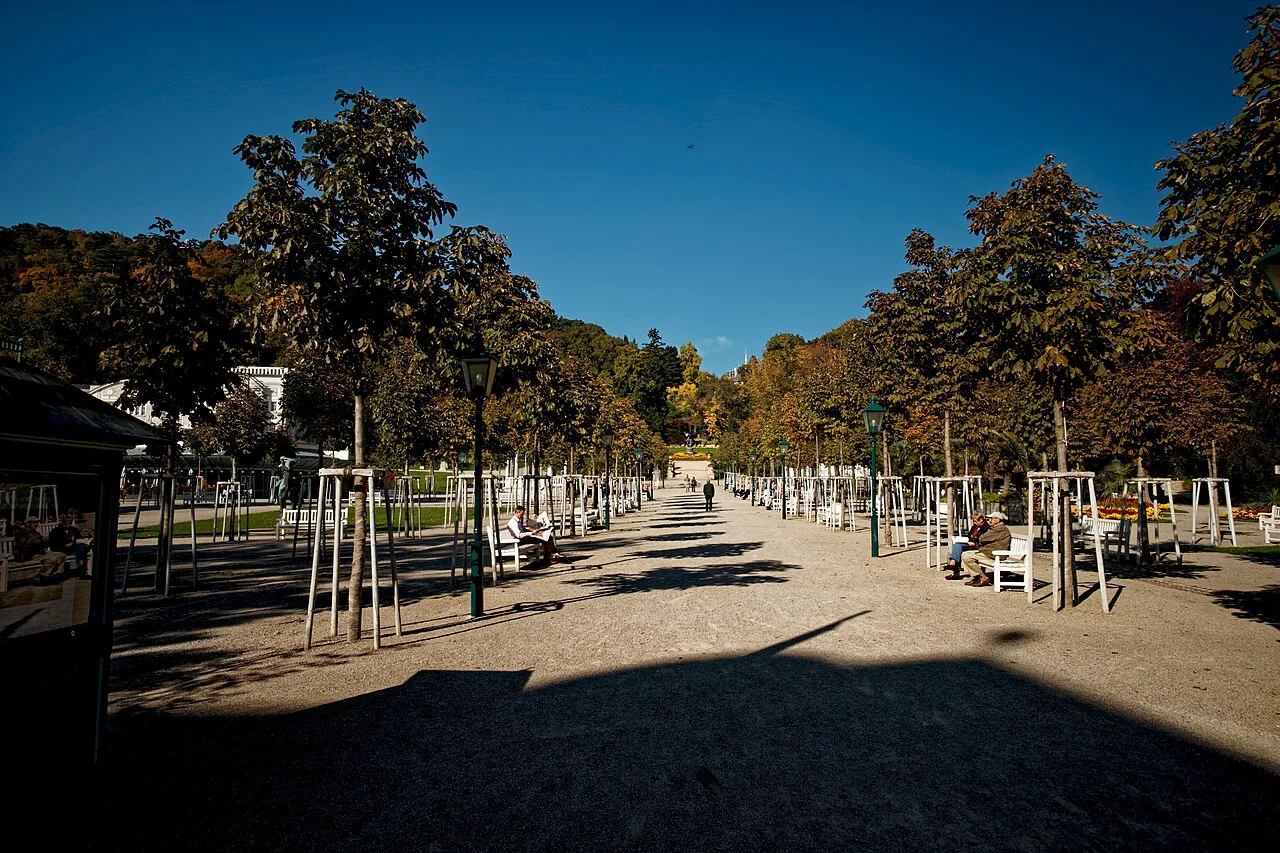
The oldest layer is a small public park handed over to the public in 1792, famous in the Biedermeier period and originally without a fence. In 1837 the town acquired the adjoining park laid out by industrialist Baron Ignaz Lang between that small park and the Kalvarienberg, and further land purchases completed the park's current form by 1925.
Several historic features arrived around the turn of the twentieth century: monuments to the poet Franz Grillparzer and to Emperor Joseph II were both erected in 1899, and a monument to the composers Joseph Lanner and Johann Strauss Vater followed in 1912. The Beethoven-Tempel and the Blumenuhr were added in 1928. Knowing the years helps you pick out the older stone pieces from the twentieth-century additions.
Monuments to look for
The Grillparzer and Joseph II monuments stand as a pair from 1899, and the Lanner and Strauss Vater monument from 1912 honors the Viennese waltz tradition that drew visitors to Baden in the spa years. They are modest stone monuments rather than grand statuary, so look for them along the main walking routes rather than expecting them to dominate a lawn.
Because the commemorative pieces were installed over decades, a single loop gives you a compact lesson in what Baden chose to celebrate: literature, imperial rule, music and, later, Beethoven's connection to the town. Pair the park walk with a visit to the Beethoven House Baden if you want the fuller story of the composer's stays.
The Beethoven-Tempel and the Blumenuhr
The Beethoven-Tempel is a small memorial structure from 1928, and the Blumenuhr, the flower clock, arrived the same year and remains one of the park's best-known features. Both sit within the park's core, so you can see them on the same pass rather than making separate trips.
Treat these two as short stops of a few minutes each rather than destinations in their own right, and let them anchor the middle of your walk. Photograph the flower clock from the path side, then continue toward the hill.
The Undinebrunnen fountain
The Undinebrunnen is one of the park's ornamental fountains, named for the water spirit Undine. Look for it as you move between the monuments, and check on the spot whether the water is running.
Water features in Baden tie back to the town's identity as a spa, and if that side of the story interests you, the town's other green spaces are worth adding. The Doblhoffpark in Baden bei Wien is a separate park with its own character and makes a logical second stop.
Casino Baden and the Theresienbad site
The ground now occupied by Casino Baden once held the baroque Theresienbad, built in 1758, with the small Theresiengarten in front of it that was later converted into a town park. That substitution explains why the park's oldest layer sits where the casino now stands rather than in an empty corner.
The casino and the Sommerarena are separate venues on the park's grounds, so confirm access, opening times and any ticketed events directly with each rather than assuming park access covers them. Plan the park walk independently and treat these as optional add-ons.
Sommerarena and the Musikpavillon
The Sommerarena and the Musikpavillon belong to the park's history as an entertainment ground, when up to three spa concerts a day plus theater performances filled the season for a fashionable visiting public. They are best understood as performance venues tied to the park's past rather than as sights you tour inside.
For the imperial side of Baden's story, the Kaiserhaus Baden bei Wien in the town center complements the park: the park shows how the summer resort entertained its guests, while the Kaiserhaus shows where the imperial household itself stayed.
How much time to allow
An hour covers the monuments, the flower clock, the Beethoven-Tempel and the Undinebrunnen at an easy pace, with time left to sit on a bench. Add thirty to forty-five minutes if you continue up toward the Kalvarienberg for the view back over town.
Start at the town end and work toward the hill so the Kalvarienberg climb comes last, and keep the casino and Sommerarena for the return leg on level ground. That order avoids doubling back and puts the uphill section where your legs are freshest.
Hours, tickets and what to verify
Check the town's own tourism pages for any seasonal arrangements before a special trip, and confirm access rules directly with the casino, Sommerarena and Musikpavillon, which run as separate operations. If your interests lean to art, the Arnulf Rainer Museum in Baden is housed in a former bathing building and makes a natural counterpart to the park's own bathing history.
Nearby: the Kalvarienberg and the Helenental
Above the park, the Kalvarienberg provides the slope that defines the park's northeastern edge and the natural next step for anyone wanting a view over Baden. The climb is short but steady, and the reward is the town spread out below.
South of town, the Helenental valley follows the Schwechat river and offers a longer, greener extension of a park day. The Helenental bei Baden is a separate excursion, so plan it as its own half-day rather than tacking it onto an hour in the park.
Should the Kurpark be your first stop in Baden?
Yes, if you want to understand Baden quickly: the park packs the town's imperial summer-resort history into an hour's walk, with dated monuments, a flower clock and the site of the old Theresienbad along the way. Pair it with the Kaiserhaus for the residence half of the story, and add the Doblhoffpark if you want a second garden.
Explore more Baden bei Wien guides
Frequently Asked Questions
How long does a walk through the Kurpark take?
About an hour covers the monuments, the flower clock, the Beethoven-Tempel and the Undinebrunnen at a relaxed pace. Add thirty to forty-five minutes if you continue up the Kalvarienberg for the view back over Baden.