
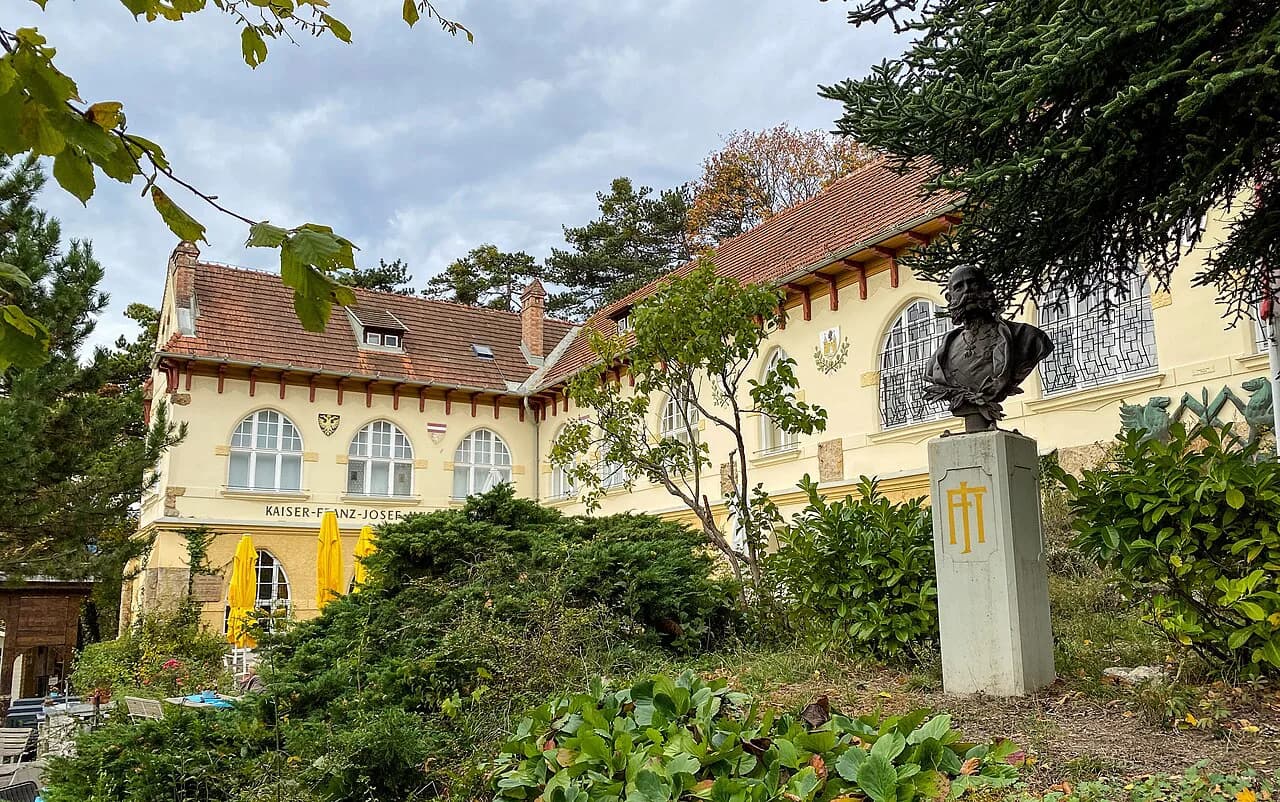
Kaiser Franz Josef Museum in Baden bei Wien: What to See on the Mitterberg

The Kaiser Franz Josef Museum is a compact local-history museum at the end of the Hochstraße on the Mitterberg above Baden bei Wien, run by a volunteer association rather than the city. It rewards a focused hour or two rather than a whole afternoon, and it works best as the anchor of a longer walk that takes in the upper Kurpark and the Wienerwald paths around it. This guide covers where the museum sits, how to reach it from the center, what to see inside and on the grounds, and how to fold it into a day in Baden.
What the Kaiser Franz Josef Museum is
This is a regional collection, not a Kunsthistorisches-style blockbuster: the emphasis is on the cultural history of Baden and its surrounding district, assembled from the private collections of early local researchers. The Verein der Niederösterreichischen Landesfreunde Baden, founded on 19 December 1893, owns the building and runs the museum, which gives it a distinctly volunteer, work-in-progress character. Visitors who expect polished national-museum presentation should adjust expectations; the appeal is the specificity of the objects and the setting.
The founders were the home historians Gustav Calliano, Carl Calliano, Anton Schiestl and Johann Wagenhofer, whose collections prompted the plan to build a dedicated museum. Carl Calliano donated the building plot, and Anton Schiestl contributed 28,000 kronen toward construction. Knowing this history helps you read the displays as a nineteenth-century civic project that has been continuously reshaped since.

Where it is and how to find it
The address is Hochstraße 51, at the top end of the Hochstraße on the Mitterberg, at the edge of the Wienerwald and near the upper Kurpark. The museum association describes the site as sitting within one of the area's better villa neighborhoods, which is part of the reason the walk up is pleasant in itself. Navigate by the street name and the hill rather than by a large sign; this is a small museum building, not a landmark visible from across town.
From Baden's pedestrian center the climb up the Hochstraße is short but steady, and it is the natural way to arrive on foot. Travelers coming from Vienna by train reach Baden's station first and then continue on foot or by local transport up toward the Kurpark and Mitterberg; confirm current train times on the ÖBB timetable before setting out. Once you are in the upper Kurpark, follow the Hochstraße uphill to its end.

The building and its imperial name
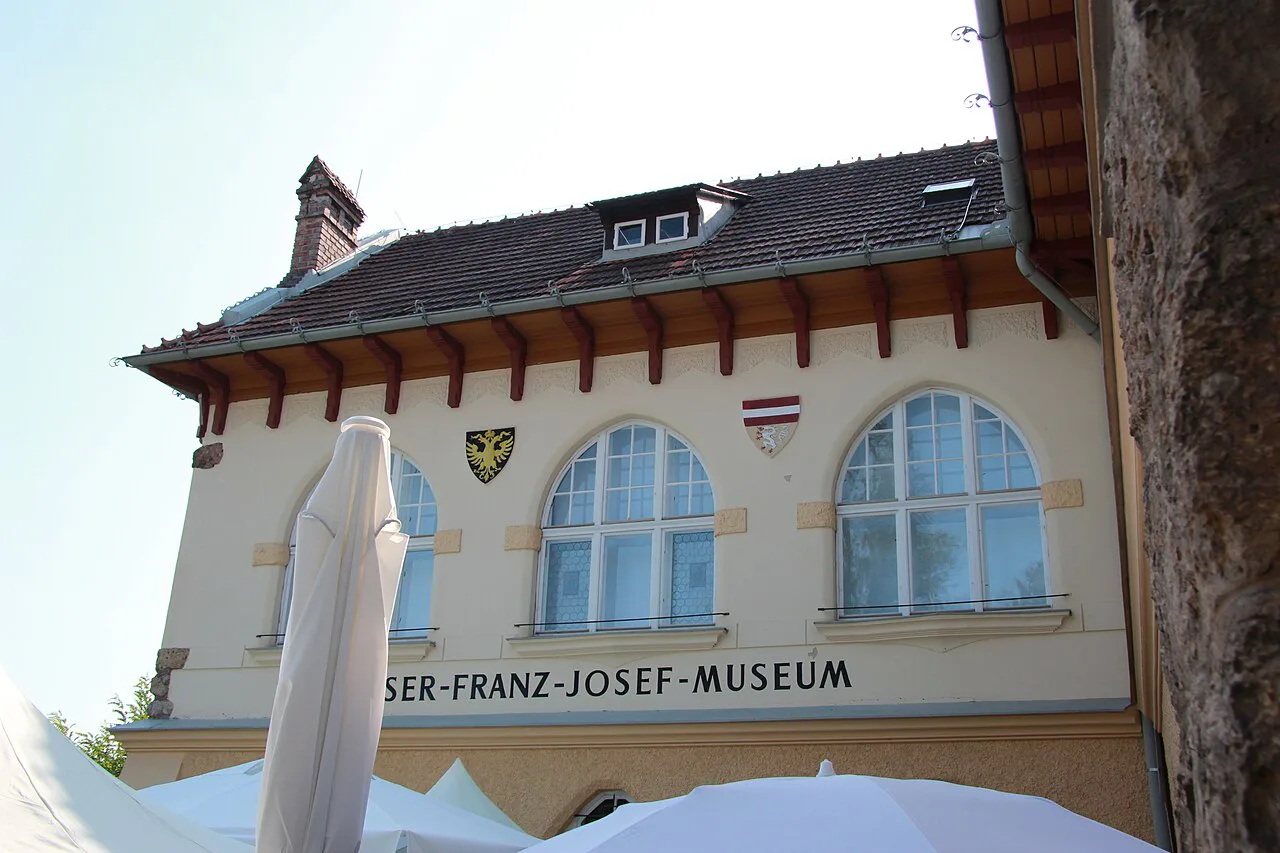
The one-story museum was designed by the architects Karl Reiner and Karl Badstieber and opened on 8 September 1905 with three halls. Two more halls followed on 27 September 1908 and 26 September 1909, so the building grew in stages rather than arriving complete. These are construction dates, not current opening dates, but they explain why the interior feels like a sequence of added rooms rather than a single planned gallery.
The imperial name is a genuine honor rather than a marketing device: Emperor Franz Josef I granted the association permission for the museum to carry his name. That permission is the reason a modest district museum bears such a grand title, and it says something about how local collections were legitimized in the late Habsburg period. Look for the naming story as part of the museum's own institutional history.
What to see inside
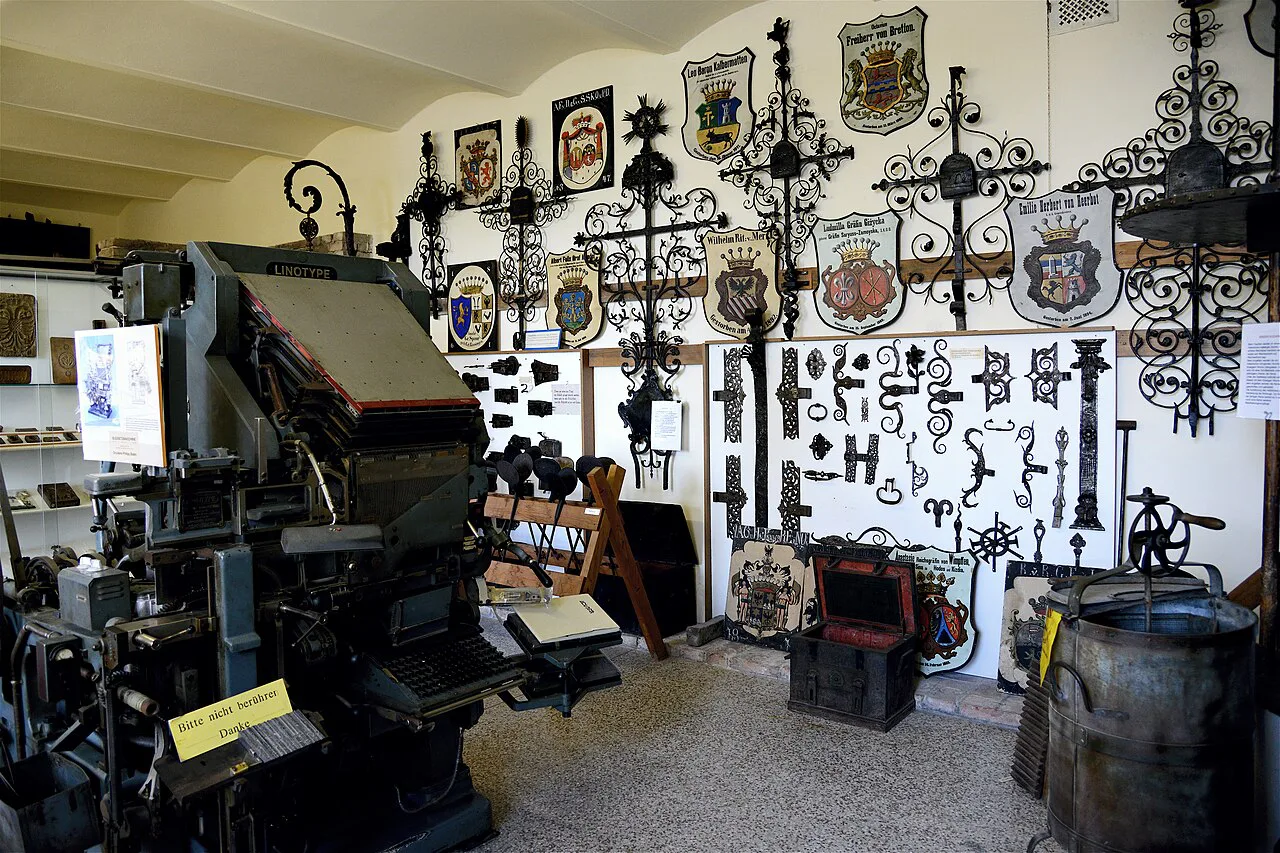
The association frames its work around the three core museum tasks of collecting, preserving and presenting, and states that it is deliberately experimenting with new forms of display to reach different audiences. In practice that means you should expect a mix of traditional vitrine presentation and newer thematic arrangements rather than a uniform exhibition style. The founding collectors' material remains the backbone of what is shown.
The long-standing Schausammlung on Handwerk und Volkskunst dates from 1965 and is currently being reworked, with all rooms receiving new thematic focuses. This matters for planning: part of what you see may be in transition, and no completion date is given. If a particular display is the reason for your visit, ask at the entrance which rooms are currently open rather than assuming the full collection is on show.
The grounds and the Museumshöhle
The museum grounds include a small cave immediately west of the building inside the fenced area, set in Dolomite rock. The association's own description gives a portal about 9 m wide and 4 m high, a total mapped length of roughly 20 m, and a height difference of about +6 m to −3 m, based on a 1981 survey. When the museum opened in 1905 the cave was worked into a garden layout with paths, steps, benches and water basins, and a cleanup by the Seibersdorf cave association in April 2010 restored that arrangement.
Treat the cave as a modest curiosity rather than a show cave: it is short, partly altered by historic sand extraction, and best understood as part of the garden rather than as a separate attraction. Its interest lies in the wider story of the many small caves around Baden that were used over centuries as dwellings, storage space and sand quarries. Give it a few minutes on the way in or out.
How long to allow and what to pair with it
Budget roughly one to one and a half hours for the museum and grounds, longer if a temporary display or a conversation with the volunteers holds you. The bigger draw is the setting: the Mitterberg sits at the edge of the Wienerwald path network and close to the upper Kurpark, so the museum slots naturally into a half-day of walking. Build the visit as a loop up the Hochstraße, through the museum, and back down via the park.
Nearby in town, the Kurpark and the Doblhoffpark give you two very different green spaces within easy reach of the center. The Doblhoffpark in Baden bei Wien is the larger landscape park, while the Kurpark Baden is the formal garden area closer to the spa district. Pairing one of them with the Mitterberg climb turns a single museum stop into a full afternoon on foot.
For a different side of Baden's museum scene, the Arnulf Rainer Museum Baden occupies a former bath house in the center and shows modern art rather than local history. The Kaiserhaus Baden bei Wien covers the town's imperial connection from another angle. Both make sensible add-ons if you are spending a full day rather than an afternoon.
The café-restaurant and its view
A café-restaurant operates in the museum building and is known for its outlook over Baden and the southern Vienna Basin, with the museum director describing the position at the Mitterberg, near the upper Kurpark, as the source of that panorama. The association has newly advertised the lease of the café-restaurant for 2027, which means the operator may change rather than the view. Plan the museum independently of the café so a lease transition does not derail your visit.
Tickets and opening hours: what to confirm
The association's pages reviewed here give no ticket prices, opening hours or guided-tour times for the museum, so there is no figure to quote. Check the Besucherinformation page on the association's site before you make the climb. The museum's volunteer operation also means seasonal variation is likely, so confirm for your specific dates rather than relying on a general impression.
If you are combining the museum with a wider tour of the town's sights, the Baden bei Wien Attractions overview sets out what else is within walking distance of the center. Beyond town, the Helenental bei Baden and the Beethoven House Baden extend a Baden day in different directions.
Is the Mitterberg museum worth the climb?
Yes, if you want a small, specific collection with a genuine imperial naming story and a garden cave attached, and if you are already walking the Mitterberg and upper Kurpark. Skip it if you are short on time and want the town's headline sights, which sit lower in the center. The climb itself is the real reward on a clear day.