
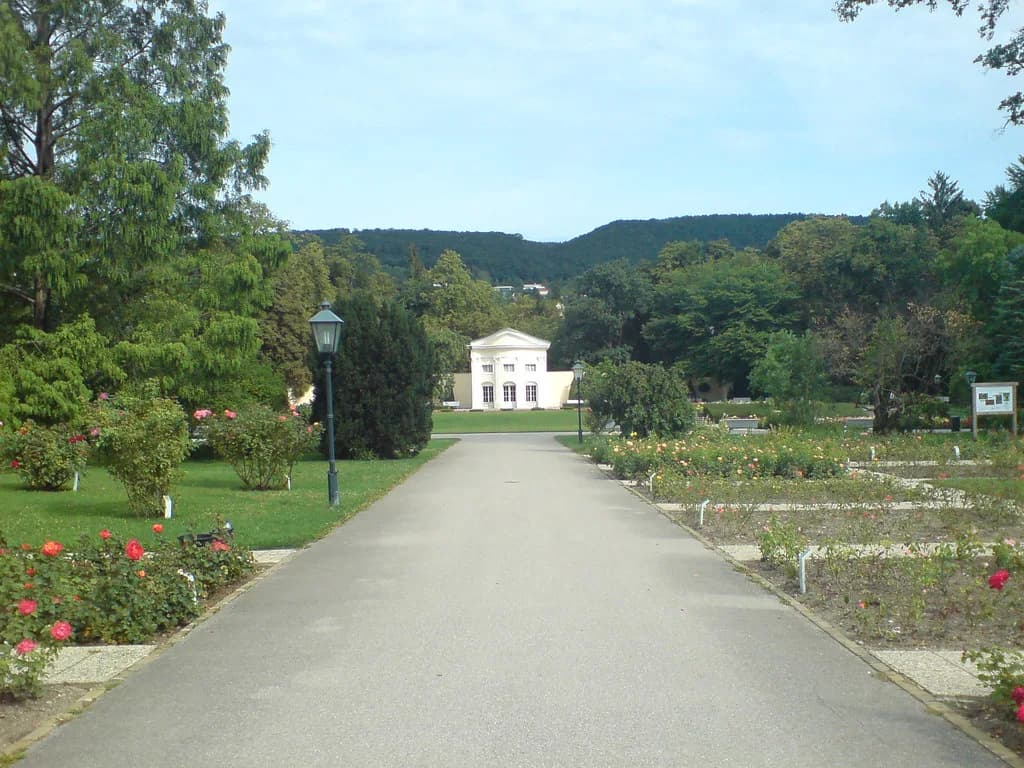
Doblhoffpark in Baden bei Wien: Rose Garden, Orangerie and Pond
Doblhoffpark is the easiest green hour in Baden bei Wien: a public park of more than 8 hectares with an idyllic pond, a rose garden known as the Rosarium, and a restored baroque orangery that forms the backdrop to a loop through the grounds. It began as the garden of Schloss Weikersdorf, which took the name Schloss Doblhoff from its last owners, and it passed into public ownership in the 1960s. This guide covers the three landmarks worth finding and what each season gives you, so you can slot it into a day in Baden bei Wien without guesswork.
What Doblhoffpark is: a castle garden turned public park
The park covers over 8 hectares and holds a pond, the Rosarium, broad lawns and the orangery, which is why it reads as a landscape garden rather than a formal town square. That layout makes sense once you know its origin: it belonged to Schloss Weikersdorf, called Schloss Doblhoff after its last proprietors, before the city took it over in the 1960s. Plan your visit around the three landmarks rather than treating the park as uniform open space.
Because the grounds were laid out for a castle, the buildings and water sit inside the park rather than at its edge. Expect to walk between the Rosarium, the orangery and the Doblhoffteich, with town streets closing in along the boundary.

How to reach Doblhoffpark in Baden
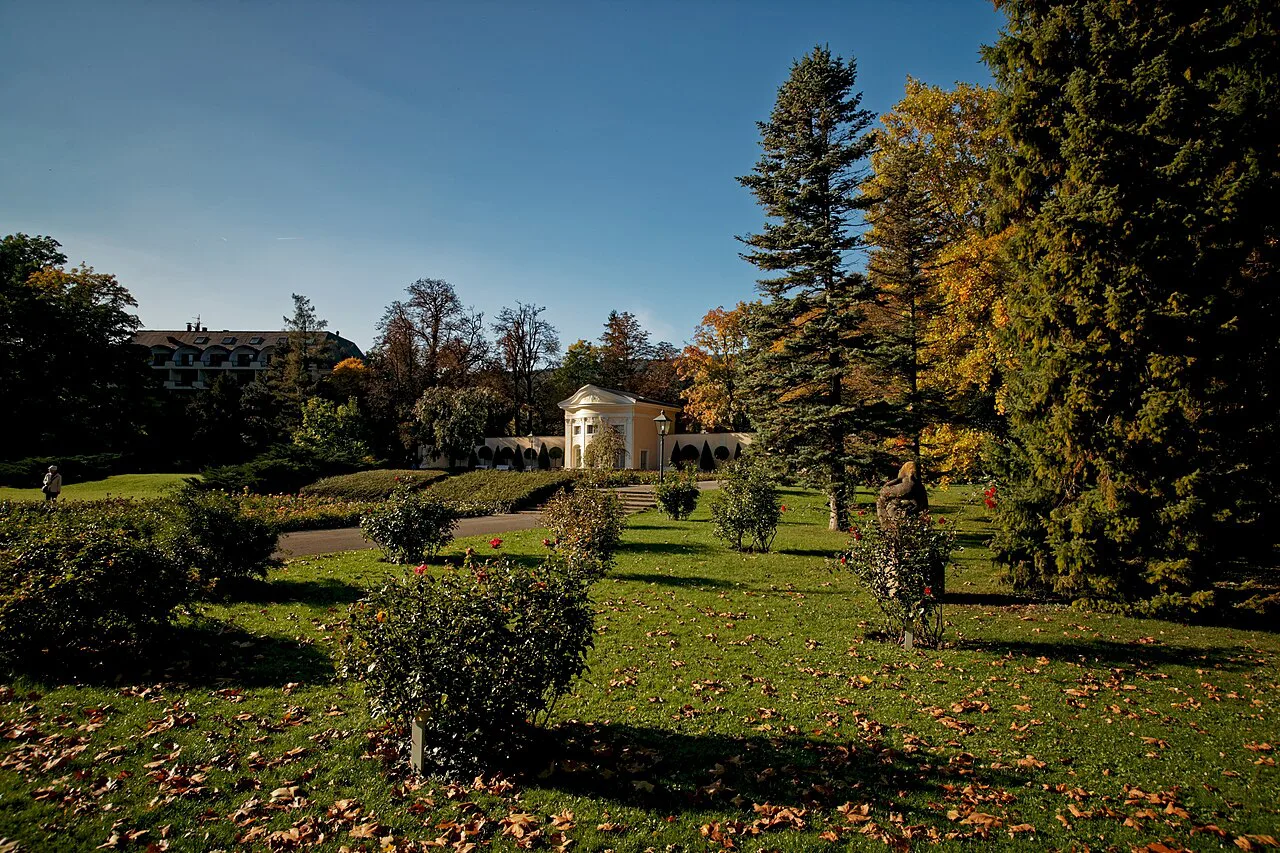
Doblhoffpark is close enough to Baden's center that you can walk in rather than plan transport. The park cafe uses the address Pelzgasse 1, which is the simplest landmark to navigate toward if you are coming from the pedestrian zone; the gates and paths into the grounds are a short walk from there.
If you are already in town, pair the park with the Kurpark for two very different gardens in one day: the Kurpark is the formal spa garden, while Doblhoffpark feels more like a rambling estate. The town itself is compact, so the walk between them is short and level.
Baden bei Wien is served by direct trains from Vienna, which makes the park feasible as a half-day outing from the capital.

The Rosarium: Baden's rose garden
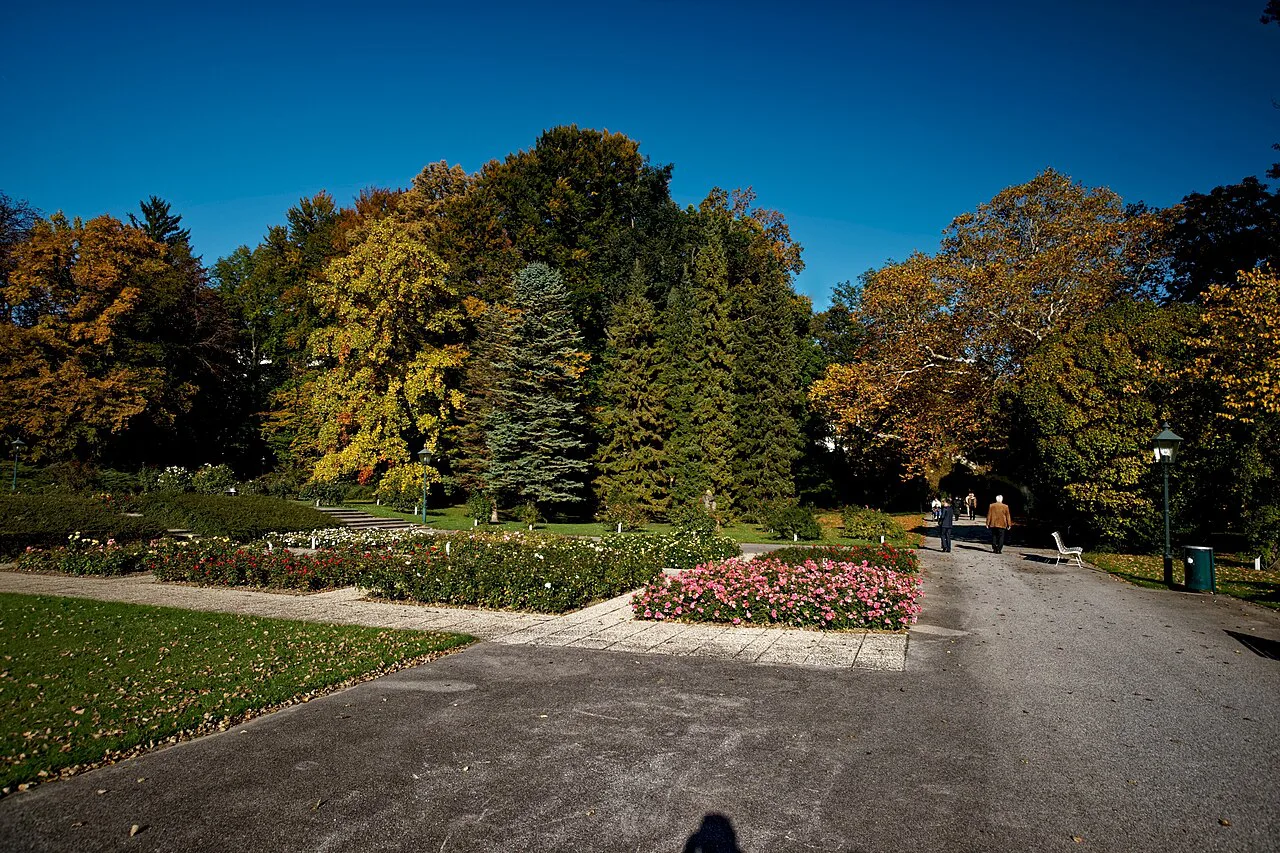
The Rosarium is the park's most deliberate feature: a dedicated rose garden set within the grounds, with the meadow by the pond used for summer picnics in past years. At the World Rose Conference in Copenhagen, an international jury gave the Badener Rosarium the Award of Garden Excellence, placing it among the recognized rose gardens internationally. Treat that as the garden's distinction rather than a current ranking, and come for the planting itself.
Roses do the work in late spring and early summer, when the beds are at their fullest. Outside that window the Rosarium is a structured garden of beds and paths rather than a wall of color, so adjust expectations if you visit in high summer or autumn.
Come for the rose beds themselves; that is where the garden makes its case.
The Orangerie and the Doblhoffteich
The restored baroque orangery is the park's architectural anchor, a long, low building that once sheltered tender plants and now provides the classical backdrop for a stroll. It is the one structure in the park that tells you this was a castle garden, not a municipal lawn, and it rewards a slow look rather than a photo stop.
The Doblhoffteich, the park's pond, is the second landmark: water, willows and a path around the edge, with the meadow beside it used for open-air gatherings. In 2021 the pond area hosted the La Gacilly Baden photo festival, with works installed in and around the water. That was a dated program, so treat it as background on how the park is used rather than a fixture.
How long to allow in Doblhoffpark
A simple loop past the orangery and the pond takes about an hour at an easy pace, making the park a natural add-on to a morning in town rather than a destination in itself. Allow extra time if you want to walk the Rosarium beds properly and sit by the water.
If you are combining the park with Baden's other sights, give it a half-day slot together with the Kurpark and one indoor stop such as the Kaiserhaus Baden bei Wien, where the town's imperial history is displayed. That keeps the walking manageable and gives you somewhere dry if the weather turns.
The paths through the grounds are largely level, so the park suits a slow visit with a book as much as a brisk circuit. Bring water in summer; shade is generous but not continuous.
Season and bloom: when the park looks its best
Spring and early summer are the park's high season, when the roses in the Rosarium come into flower and the lawns are green. Autumn brings color to the trees around the pond and a quieter park, which suits a walk without the summer picnickers. Winter strips the garden back to its structure: the orangery and the pond remain, the roses do not.
The park has hosted open-air events in past years, including a moonlight picnic in the Rosarium meadow in 2021 with local wine growers pouring, and a photography festival with works installed at the pond. Those ran in specific years, so treat them as background on how the park is used rather than a calendar.
Cafe Doblhoffpark on Pelzgasse
Cafe Doblhoffpark sits at Pelzgasse 1 at the park edge and is the one built-in food stop for a visit, with a garden setting that fits the surroundings.
The cafe has run on a garden-season rhythm rather than year-round town hours: it reopened for the season on March 1, 2022. Treat a coffee as a bonus and check the current hours before you walk over.
Nearby options to pair with the park
The Kaiser Franz Josef Museum in Baden bei Wien holds the town's broader collection, including its musical and imperial history, and works as an indoor counterpart to a park morning. Combine the two for a full Baden day, with a walking route through town covered in the Baden bei Wien Attractions: 7 Visitor Guides.
For contemporary art, the Arnulf Rainer Museum in Baden occupies a former bath house and gives you a modern contrast to the baroque orangery. Pair it with the park if you want one garden and one gallery in a single day.
If you have a car or a free afternoon, the Helenental bei Baden runs south of town through the Wienerwald and adds a valley drive or walk to a park visit. It suits travelers who want landscape rather than another town street.
Is Doblhoffpark worth a stop in Baden?
Yes, if you treat it as an hour of garden rather than a headline sight. The Rosarium, the baroque orangery and the Doblhoffteich are the three things to find, and the castle-garden layout makes the walk feel more purposeful than a generic park loop. Come in late spring or early summer for the roses, and accept that winter gives you architecture and water instead of bloom.
If you want the rest of the day planned, use the Baden bei Wien Attractions: 7 Visitor Guides, which point you to the Kurpark and the Kaiserhaus. In Baden you can do all of it on foot.
Frequently Asked Questions
Do you need tickets for Doblhoffpark?
Doblhoffpark is public parkland, so you walk in without a ticket. Any charges apply to the cafe or to specific events.
When are the roses in bloom at the Rosarium?
The rose beds are at their best in late spring and early summer. Exact bloom dates shift with the weather each year, so plan around the season rather than a fixed week.
Can you reach Doblhoffpark on foot from Baden's center?
Yes. The park lies close to the center, and Pelzgasse 1, the cafe's address, is the easiest landmark for finding the entrance on foot. Baden also has direct train service from Vienna.
Is the park suitable for a slow visit?
The paths are largely level, so the park works well for an unhurried loop. Bring water in summer, since shade is generous but not continuous.