Steyr, Austria: Old Town Guide to the Stadtplatz, Castle and Museums
Plan a visit to Steyr, Austria: the Stadtplatz and Bummerlhaus, the river confluence, Schloss Lamberg, the Wehrgraben and the Museum Arbeitswelt.
On this page
Steyr rewards a half day to a full day: an elliptical main square, a baroque castle over the meeting of two rivers, a preserved factory quarter and two strong museums all sit within a short walk of each other. This guide maps the old town from the Stadtplatz down to the river confluence and out along the Wehrgraben, flags what Schloss Lamberg is and is not, names a few cafes for a morning start, and explains how to reach Steyr by train or car from Linz and the Salzkammergut.
The town is small enough to cover on foot, and the walking order matters more than the tick-list: square first, castle and riverside second, then the Wehrgraben quarter downstream. The broader Upper Austria Travel Guide sets Steyr beside Linz, Enns and the abbey towns of the central province.
What Steyr is known for
Steyr is an old iron-trading town in Oberösterreich (Upper Austria) built where the Enns and the Steyr rivers meet. For centuries its citizens held trading privileges that carried their iron and goods as far as Venice, and the wealth that came back is what you read in the facades around the main square. The compact center still shows that commercial history in its merchants' houses, its storage buildings and its factory quarter rather than in a single headline monument.
Modern Steyr is also an industrial city with global manufacturing names, which is why the town's own museums lean on iron, labor and technology instead of royal pageantry. That makes it a different stop from the abbey towns and lake villages elsewhere in Upper Austria: you come for streetscape, rivers and social history, not for a single blockbuster sight.
Where the old town sits: the elliptical Stadtplatz
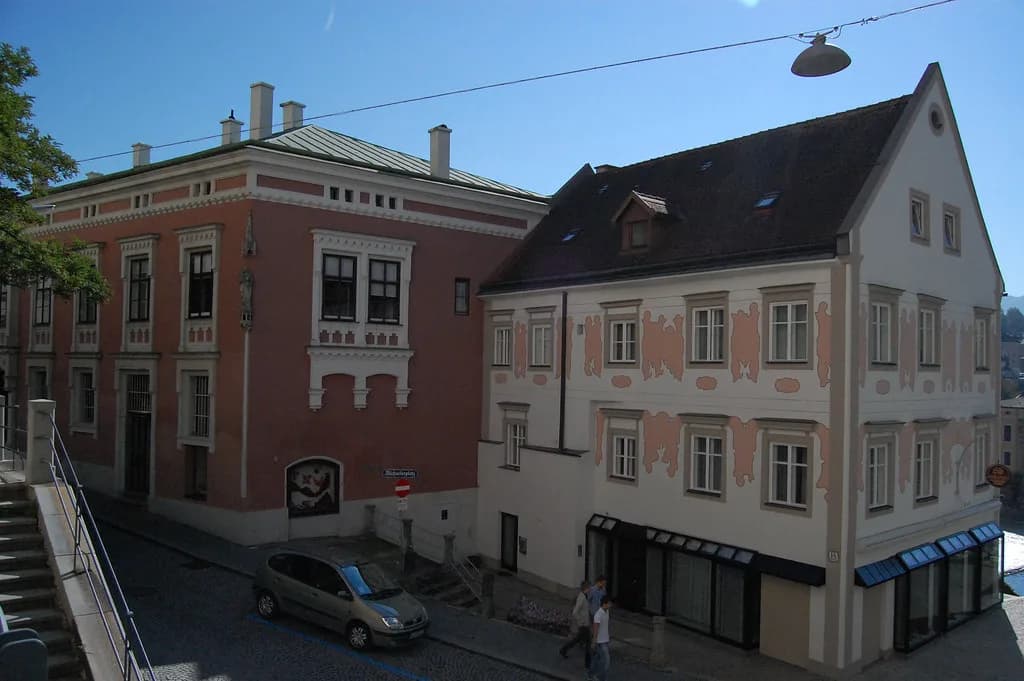
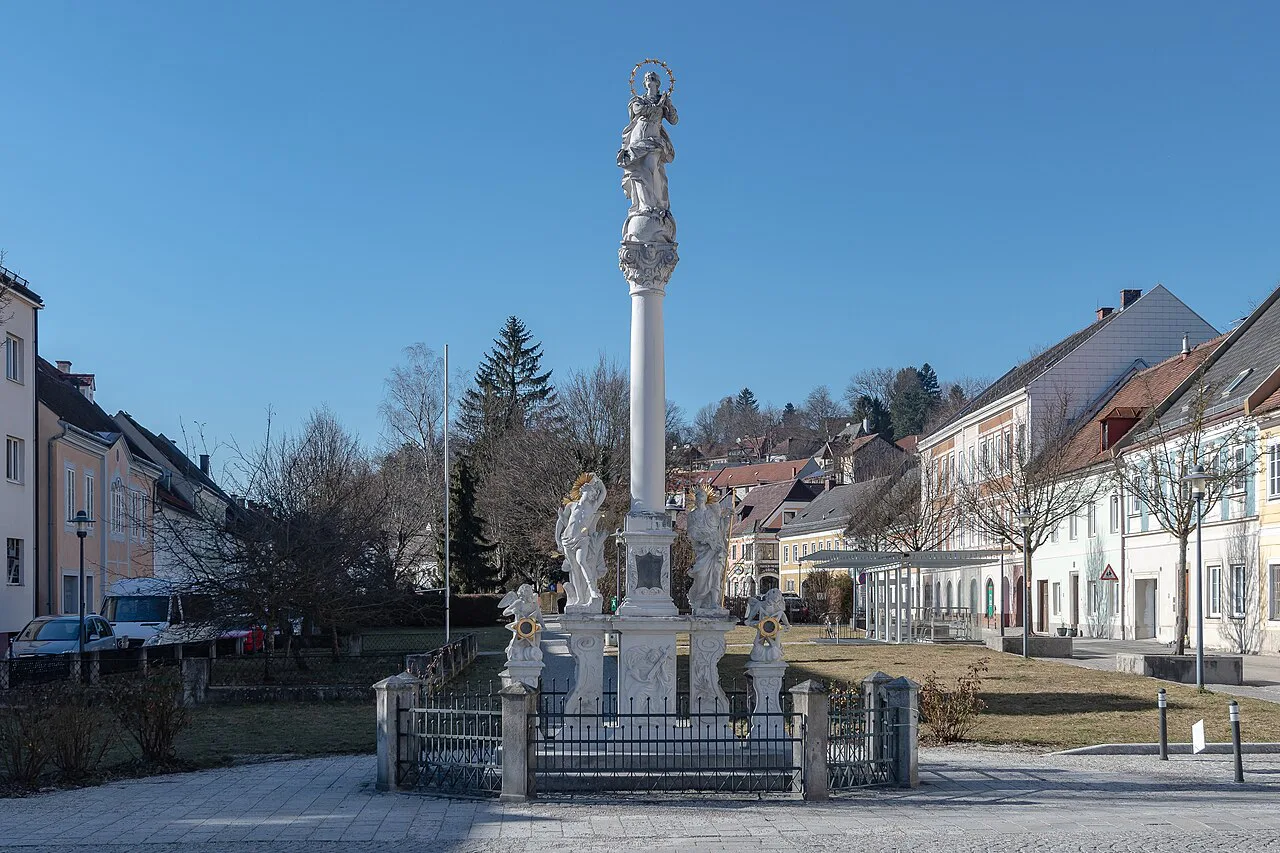
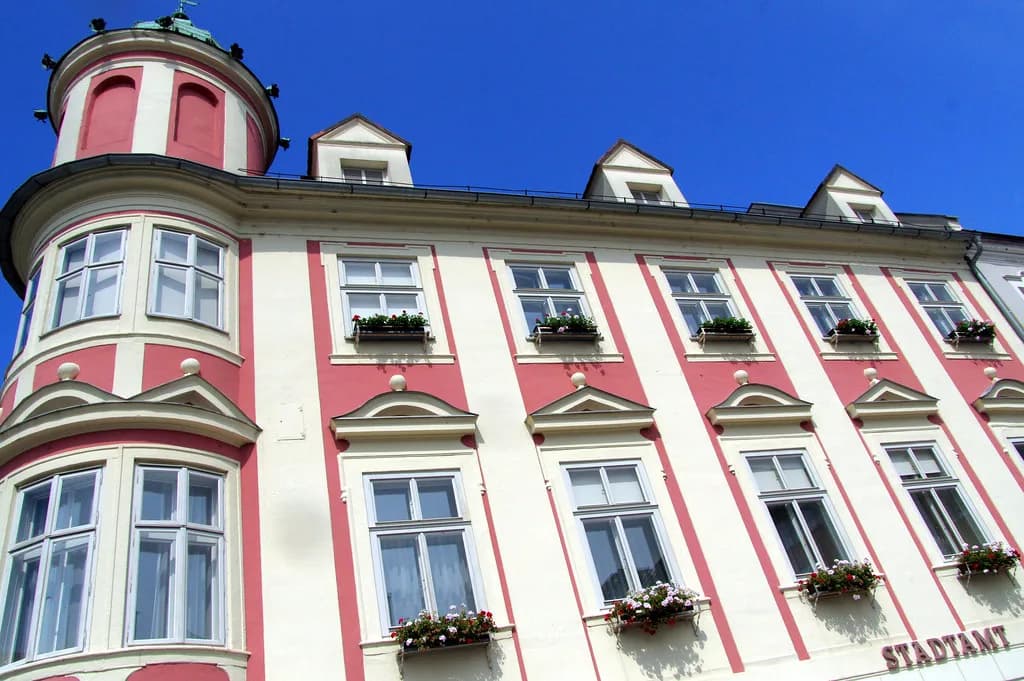
The center is anchored by an elliptical Stadtplatz, a long oval of joined burgher houses built across several centuries and styles. Start at the west end and walk the full loop before turning down any side street, because the square's shape only reads when you see the curve from one end to the other. Grünmarkt, the lane behind the square, holds the Stadtmuseum and several cafes, and it makes a natural second pass.
The square's landmark is the Bummerlhaus, a house whose core dates to the 13th century. A small lion at its portal marks the medieval trading connection, but locals mocked the figure as a little fat dog, a Bummerl, and the nickname stuck to the building. Look for the portal figure first, then the facade above it, which is where the house earns its reputation.
The river confluence and the view up to Schloss Lamberg
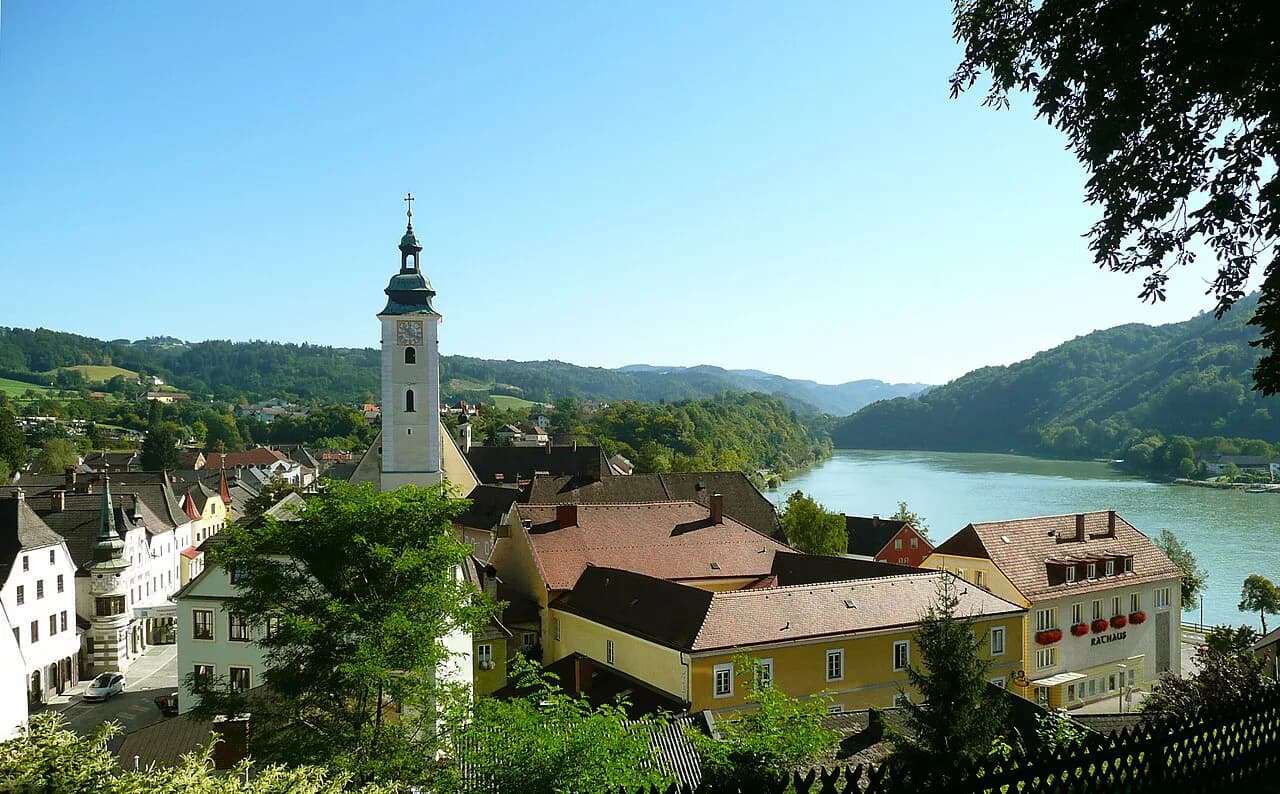
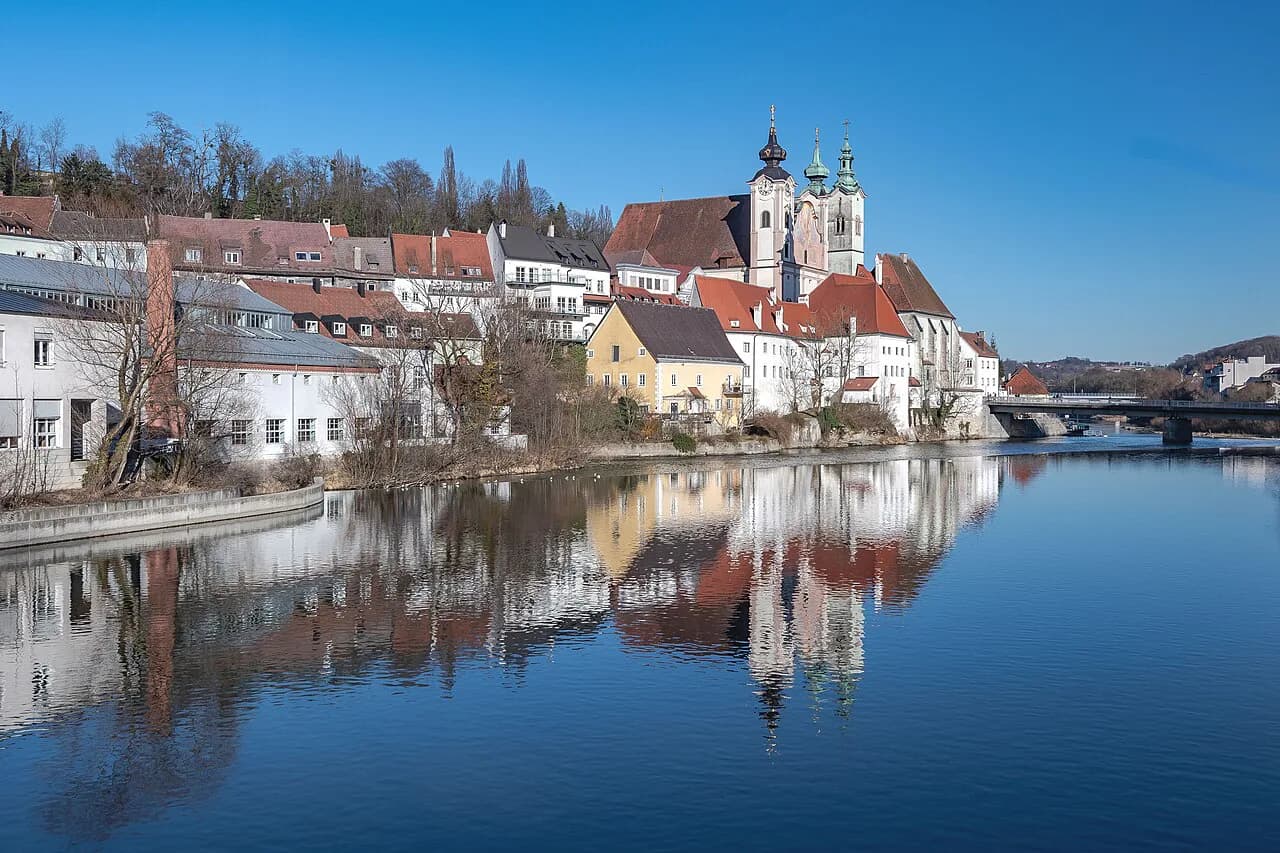
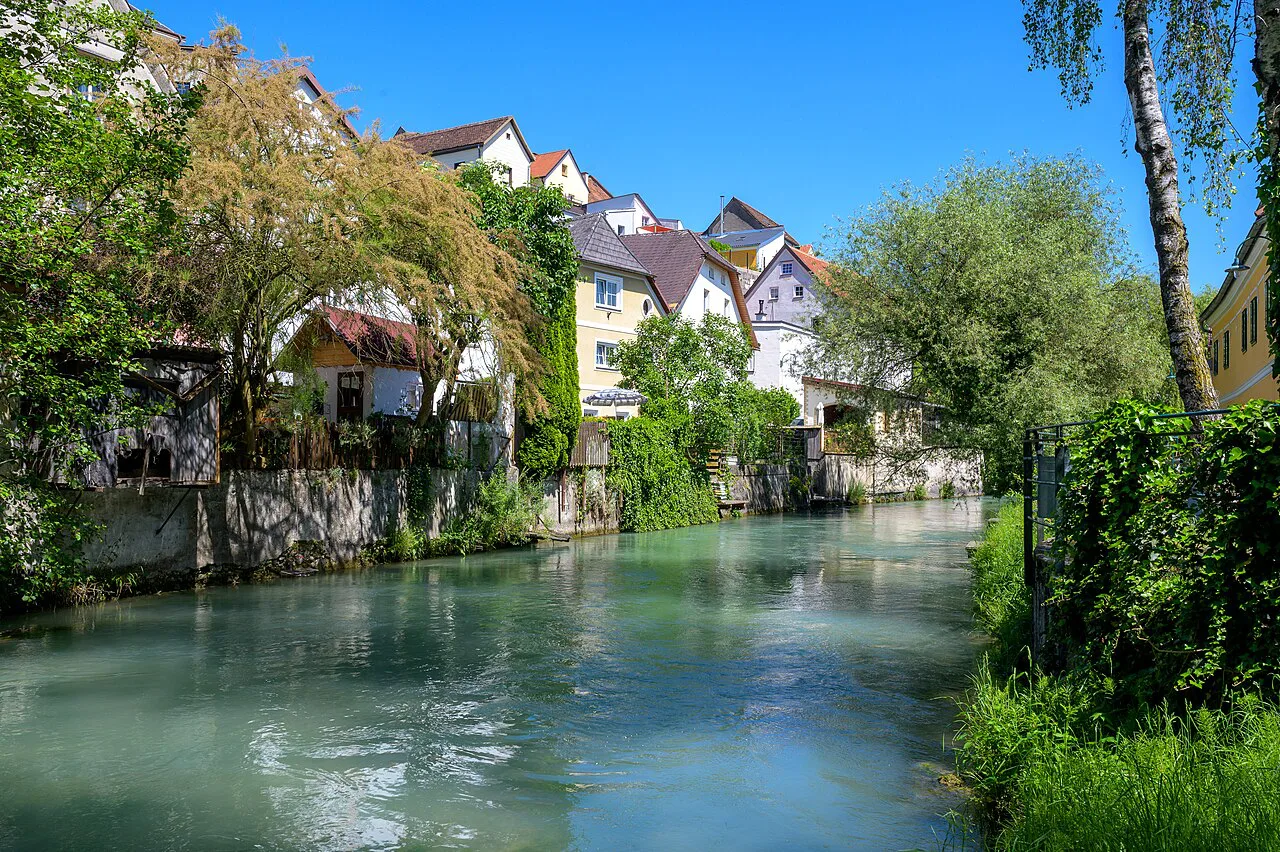
Below the old town the Enns and the Steyr join, and the two currents usually differ in color, the Enns running green and the Steyr blue. The point itself is not a formal viewpoint with a ticket booth; it is a stretch of riverbank where the whole stage set appears at once, with the baroque Schloss Lamberg, the Michaelerkirche and its adjoining monastery building and the Bürgerspital above the water. The Bürgerspital now houses Austria's first Christmas museum, complete with a ride-through exhibit.
The riverbank below the old town is where the castle, church and Bürgerspital line up above the water, and the walk down from the Stadtplatz is short but steep in places. The return climb is the part that catches people out.
Schloss Lamberg: a baroque landmark in government use
Schloss Lamberg is the baroque castle on the ridge above the confluence, rebuilt in its present form after the town fire of 1727; the site was the starting point for the town's settlement. It is owned by the Austrian federal forests and today serves as the seat of the provincial police directorate and several administrative offices, with a registry office in the former castle chapel. Its noble library holds more than 12,000 atlases and books.
Treat the castle as architecture and silhouette rather than a museum interior: the building is in official use, and the former stables and granary spaces are used for exhibitions and celebrations rather than daily public tours. The payoff is the approach and the view back over the roofs, not a state-room circuit.
The Wehrgraben quarter and the Museum Arbeitswelt
Downstream along the Steyr river, the Wehrgraben quarter grew around a working water channel that powered craftsmen from early medieval times; the district is protected as a historic area and now mixes student life with old industrial buildings. Allow time simply to walk the channel edge, because the point of the quarter is the relationship between water, workshops and housing rather than any single address.
The Museum Arbeitswelt occupies a revitalized 19th-century factory building on the Steyr river and builds changing exhibitions around working life and social-political themes, with a strong education program and events that bring in international artists and thinkers. This is the museum to choose if you want one deep stop rather than three shallow ones, and its riverside setting pairs naturally with a Wehrgraben walk.
The Stadtmuseum and the Stollen der Erinnerung memorial
The Innerberger Stadel, a striking double-gabled building that once housed the Innerberger Hauptgewerkschaft iron company, is now the Stadtmuseum. After a full renovation for the 2021 provincial exhibition it shows the town's art-historical treasures, the tradition of iron trading and ironworking, and the history of the Lamberg noble family. It sits on Grünmarkt, so it fits neatly between the square and the Wehrgraben.
The Stadtmuseum keeps a program of changing temporary exhibitions and offers guided tours as well as a free audio guide, which makes it workable for an English-speaking visitor.
At the Museum Arbeitswelt, the Stollen der Erinnerung is a memorial in a former air-raid tunnel commemorating the victims of National Socialism and the people brought to Steyr for forced labor. It is reached through the museum and can be visited on weekdays during the museum's opening hours. Plan it as a quiet, sober stop of its own rather than an add-on between coffee and shopping.
Cafes and a morning in Steyr
Breakfast is a good reason to arrive early. Café Drahtzug serves breakfast variations between 9 and 11:30 a.m., while Das Ufer opens from 7:30 a.m. to 2:30 p.m. with bagels, vegan options and a terrace view. Das kleine Schwarze on the Stadtplatz is a smaller coffee bar for specialty coffee and a pastry while you plan the day.
For lunch, the water is the theme: the Unterhimmler Au, a small nature reserve just outside town, has natural swimming banks and paths along the clear Steyr. Closer in, the Teufelsbach waterfall is a short look rather than a hike, and in deep cold it can freeze over the crib scene behind it.
Getting around on foot and the Taborlift view
The center is compact enough that you will not need transport between the square, the confluence and the museums; the only variable is the climb back up from the river. The Taborlift links the lower town with the higher district and doubles as a viewpoint, and a footbridge pushes you further out into the panorama over Steyr's roofs. Check the lift's operating times locally, since seasonal schedules vary.
Wear shoes that handle cobblestones and steep lanes, and keep the walking loop tight: square, riverbank, castle approach, then Wehrgraben and back along the channel. If it rains, the Stadtmuseum and Museum Arbeitswelt are the obvious places to wait it out indoors.
How long Steyr needs and how it fits an Upper Austria route
A half day covers the Stadtplatz, the Bummerlhaus, the confluence and the castle exterior at an unhurried pace; add the Stadtmuseum or the Museum Arbeitswelt for a full day, and both only if you start early. Trying to add the Wehrgraben walk, both museums and a long cafe breakfast in one afternoon is where the itinerary breaks.
Steyr sits naturally between Linz and the Enns valley, so it pairs best as a stop on the way to or from the Salzkammergut rather than as a dash from Vienna or Salzburg. The nearby old town of Enns makes a sensible second Roman-and-medieval stop on the same leg. Confirm train and Postbus departure times directly with ÖBB and the regional operator before you fix the day, because the timetable, not a blog, is the authority on connections.
By car, Steyr is a straightforward stop on the Upper Austrian road network, and the old center is best left to pedestrians once you park outside the ring. If your route is built around abbeys, St. Florian Abbey (Stift St. Florian) is an easy companion visit on the Linz side.
Steyr in one day, or on the way to the Salzkammergut?
Steyr works best as a compact, walkable half or full day built around the Stadtplatz, the river confluence and one museum, with the Wehrgraben and Museum Arbeitswelt as the deeper alternative to the Stadtmuseum. The town's honesty is its appeal: a baroque castle you admire from outside, a factory quarter still in use, and a memorial that asks for time rather than a photo stop.
Explore more Steyr guides
Frequently Asked Questions
Do I need to book tickets for Steyr's sights in advance?
The Stadtmuseum offers guided tours and a free audio guide, which you can arrange when you visit. The Stollen der Erinnerung at the Museum Arbeitswelt is reached through the museum and can be visited on weekdays during the museum's opening hours, so plan that stop around a weekday.
How do I reach Steyr without a car?
Steyr is served by rail and by regional Postbus services, with Linz the obvious rail hub for connections. Timetables change by season, so check the current departures with ÖBB and the regional bus operator rather than relying on a general travel article.
Is the river confluence a marked viewpoint?
It is a stretch of riverbank below the old town where the Enns and the Steyr meet, not a gated attraction with tickets. You look up at Schloss Lamberg, the Michaelerkirche and the Bürgerspital from the water, and the walk back up into town is the only real effort.
Sources
Notes for your next Austrian town break
Optional updates when we add or revise town guides.
You might also like
Continue reading
More guides you'll find useful