Kremsmünster Abbey: What to See at the Benedictine Monastery
Kremsmünster Abbey is a Benedictine monastery in Upper Austria with art treasures, an observatory and a musical instrument museum at Kremsegg Castle.
On this page
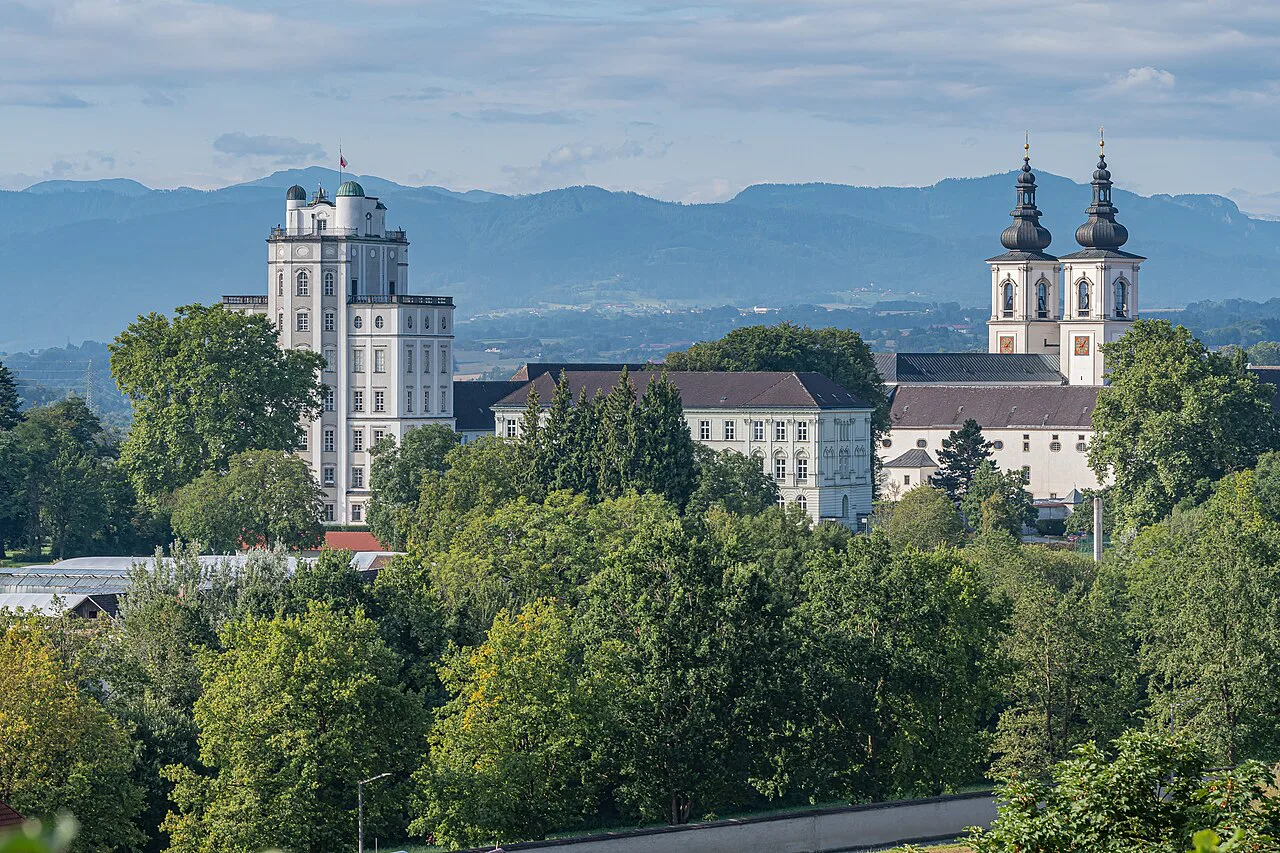
Kremsmünster Abbey is a Benedictine monastery in Upper Austria, founded in 777 by Duke Tassilo III of Bavaria and counted among the oldest abbeys in central Europe. It is not a single photo stop: the complex holds art treasures, an observatory and an imperial hall, and the town's second sight, Kremsegg Castle with its musical instrument museum, sits separately from the monastery. This guide sets out what is inside, how the town is laid out, and how the abbey slots into a route between Linz, Wels and Steyr.
A monastery with a scientific streak
Kremsmünster is a working Benedictine house, not a museum dressed up as a monastery, and its reputation rests on two things that rarely share a roof: church art and astronomy. The University of Vienna's manuscript project describes the abbey as one of the oldest in central Europe, founded in 777 by Duke Tassilo III of Bavaria. That founding date frames everything a visitor sees, because the treasures and the later remodeling read as layers on an early medieval foundation.
The founding legend explains the boar on the town's coat of arms: Tassilo is said to have built the monastery where his son Gunther was killed by a boar during a hunt. Tourism material for the town lists the abbey's art treasures, the observatory and the Musical Instrument Museum at Kremsegg Castle as the principal sights. Treat those as separate pieces of a half day rather than one ticket.
Where Kremsmünster sits in Upper Austria
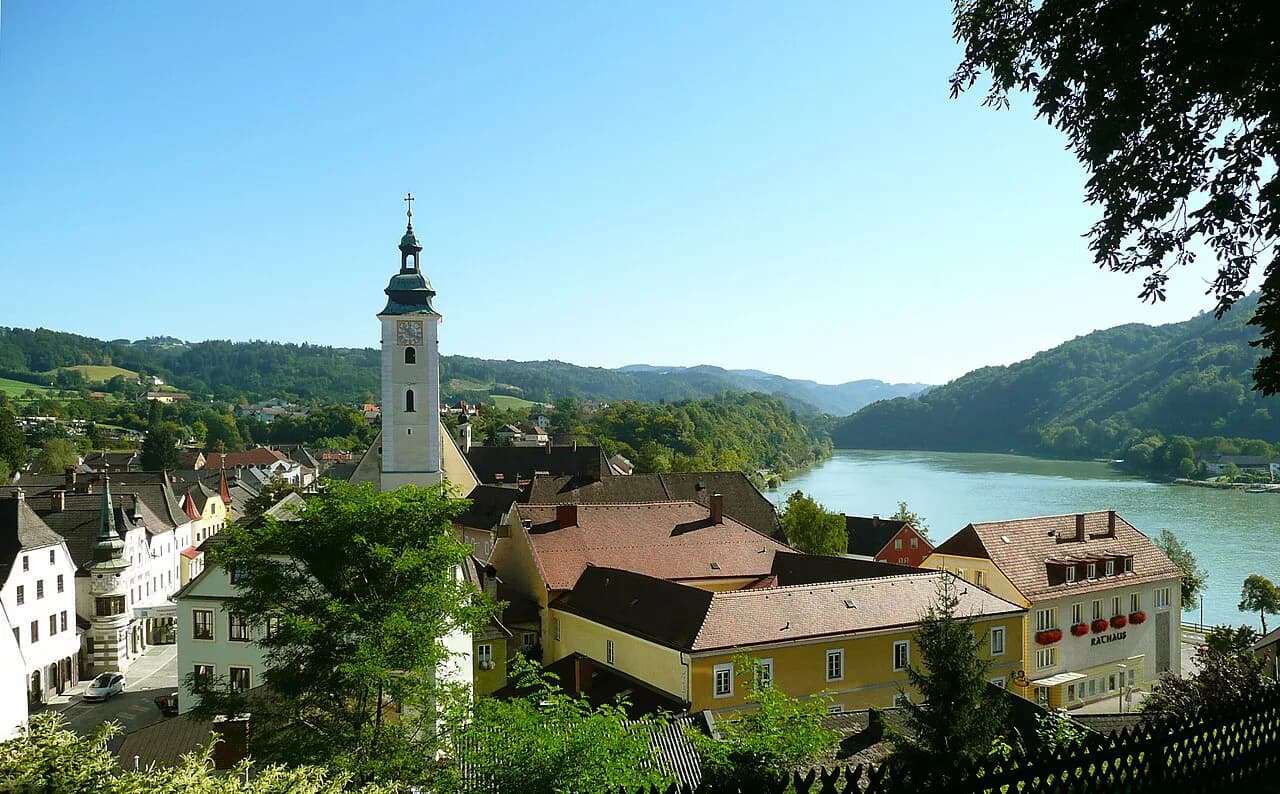
The town lies in the Traunviertel on the river Krems, in a protected valley hollow at the foot of the Alps, and the regional tourism board gives its distances plainly: 33 km from Linz, 18 km from Wels and 28 km from Steyr. That geometry makes it a natural half-day between Wels and Steyr rather than a destination you build a trip around.
The countryside between the Enns and Traun rivers is farming land, and the soft hills run south to the Alps and east toward the Mostviertel. Practically, that means a quick approach by road and a compact town once you arrive, with the abbey and the market center close together.
Arriving by car and by train
By car the route is straightforward: the A1 motorway to the Sattledt exit, then about 7 km on the B122 into town. That makes Kremsmünster a short detour from the main east–west corridor between Linz and Wels rather than a separate expedition.
Public transport is the weaker option, and the regional tourism page points travelers to a route planner rather than publishing a timetable. Check ÖBB and Postbus connections from Wels or Linz for your date, since an arrival by rail usually means a connecting bus or a walk at the end. If you are stringing together several Upper Austrian towns without a car, Steyr is the more useful base for the eastern side of this circuit.
Inside the abbey: art treasures and the Emperor's Hall
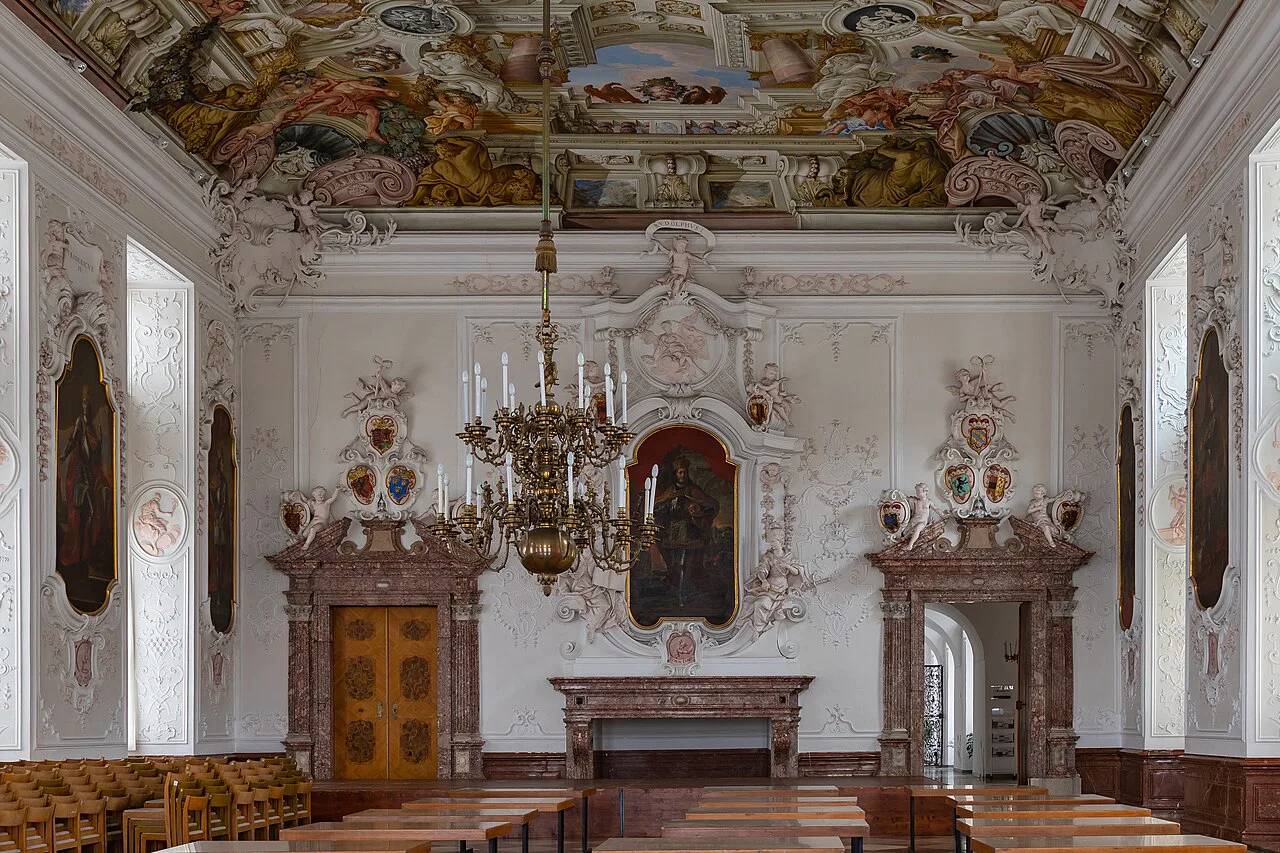
The monastery's art collections are the core of a visit, and the Emperor's Hall is named in the town's tourism material among the places where Kremsmünster's year-round concerts take place. That tells you something useful: this is a live institutional building with a calendar, not a static display. Plan on seeing the treasury and ceremonial rooms within whatever visiting arrangement the abbey offers on your date.
The art visit and the abbey's history are the same stop rather than two, and the value is in the sequence from early medieval foundation to later rebuilding. Allow time to read the labels; rushing the rooms flattens that story.
The observatory and the abbey's mathematical tower
The observatory is what separates Kremsmünster from a hundred other Austrian abbeys, and it appears on the town's list of sights alongside the monastery and the castle. It reflects centuries of monastic scientific work rather than a modern add-on, and it is the reason to give the abbey more than a quick look. Ask at the abbey how the observatory is shown on your date, since the tourism listings do not publish its visiting hours.
Plan the abbey around whatever visiting times are offered on your date rather than around your own arrival. If the observatory is not open during your visit, the town and the castle museum still fill the time.
Kremsegg Castle and its musical instrument museum
Kremsegg Castle is a separate site from the abbey and houses a musical instrument museum, installed there since 1996. The castle was rebuilt by Jakob Prandtauer, the Baroque architect best known as the master builder of Melk, which gives the building architectural weight beyond its collection. Treat it as its own stop with its own admission and its own opening arrangement.
The instrument collection suits travelers with an interest in sound and craft more than the general castle-goer, and it rewards an hour of attention rather than a lap of the cases. Because it sits outside the monastery walls, do not assume an abbey ticket covers it. Pairing it with the abbey makes a full, varied half day; skipping it leaves the abbey as a focused single stop.
The town around the abbey
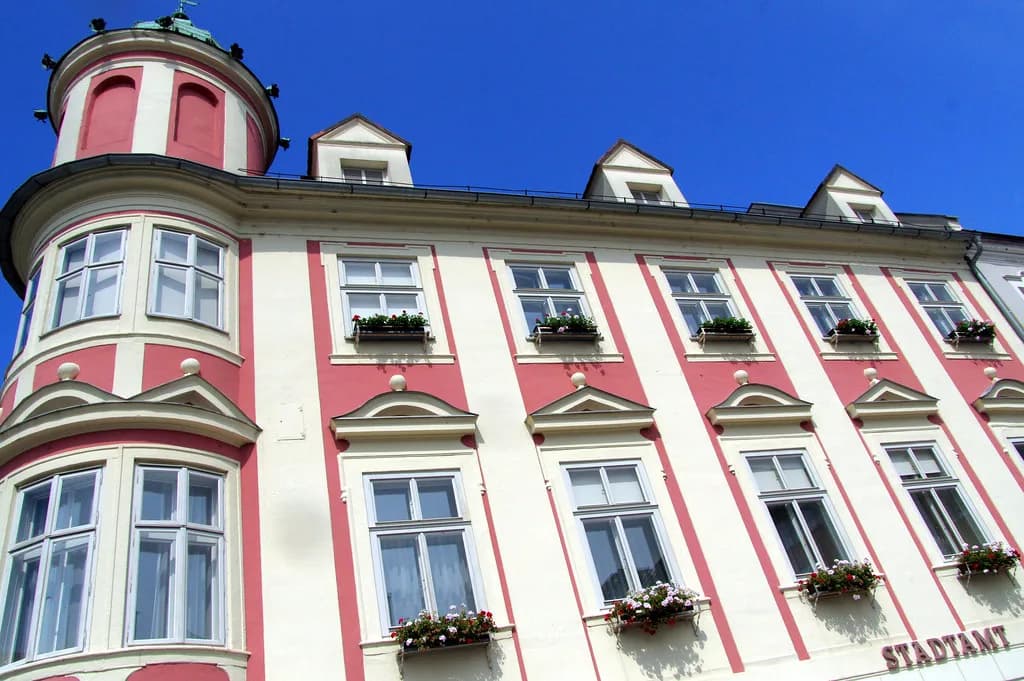
Kremsmünster received its market rights in 1489 from Emperor Friedrich III, and the market town that grew from them is compact: a Rathausplatz at the center, a small grid of streets, and the abbey precinct at one edge. The town has around 6,450 residents, so orientation takes minutes rather than an afternoon of map-reading. Music runs through its cultural calendar, with concerts in the churches, the abbey's Emperor's Hall, Kremsegg Castle's concert hall and the Cultural Centre Cinema.
For a visitor, the practical upshot is a center worth a slow loop after the abbey: Rathausplatz, the church, a cafe, and a look at the shopfronts. This is not a town that demands a checklist; it rewards an unhurried hour between timed entries.
How long the visit takes
A realistic shape is two to three hours for the abbey, plus an hour for Kremsegg Castle's museum and half an hour in the town center. That is a half day, and the right unit to plan around, because the abbey and the castle each keep their own visiting arrangement. Trying to bolt Kremsmünster onto an already full day between Linz and Salzburg usually produces a rushed visit.
Lock in the abbey first, then fit the castle and the town walk around that slot. In a town of this size the constraint is opening arrangements rather than distance. If you have an hour to spare, use it for the town and the castle, then return for the monastery.
Where Kremsmünster fits a route
Between Wels and Steyr, Kremsmünster is the obvious intermediate stop: 18 km from Wels and 28 km from Steyr, on the B122 just off the A1 at Sattledt. Steyr, Austria rewards a full day on its own with its old town and river confluence, so give the abbey the half day and keep moving. Travelers circling the region's monastic sites can also compare it with St. Florian Abbey, another foundation in the same Traunviertel orbit.
The wider logic of the region is three monasteries — St. Florian, Kremsmünster and Schlierbach — that shaped the area's economic development under the church, so treating them as a set makes sense. Kremsmünster is the one with the observatory and the working scientific tradition, which is the reason to give it the half day instead of a photo pause.
Tickets, tours and seasons
The abbey's art treasures and observatory are its principal sights, and the castle museum keeps its own arrangement, but the town's tourism material lists no admission prices. Plan around whatever visiting times the abbey offers and ask about prices at the entrance or on the monastery's own visitor information. Regional sights often close one weekday, so confirm opening days for both the abbey and Kremsegg before you drive out from Wels or Linz.
The town's music programming runs all year in the churches, the Emperor's Hall, Kremsegg Castle and the Cultural Centre Cinema, so a concert can overlap with a sightseeing day. Check the venue's own calendar for the date you are in the region; otherwise a weekday morning is the quieter bet.
Is Kremsmünster worth the detour off the A1?
Yes, if you are already moving between Linz, Wels and Steyr and can give it half a day. The combination of a 777 founding, a treasury, an observatory and a separate Prandtauer-built castle museum is unusual for a town of 6,450 people. It is a poor fit for a rushed Vienna–Salzburg run, where motorway miles and visiting times fight each other.
Build the day around the abbey's visiting times, add Kremsegg Castle if instruments interest you, and leave an unhurried hour for Rathausplatz. The distances — 18 km from Wels, 28 km from Steyr, 33 km from Linz — make this an easy insertion into an Upper Austria route rather than a destination of its own.
Explore more Steyr guides
Frequently Asked Questions
Do you need a guided tour to see Kremsmünster Abbey?
The tourism pages list the abbey's art treasures and observatory as the main sights but do not publish its visiting hours or tour times. Confirm the day's schedule at the abbey entrance or on the monastery's own visitor information before you rely on a particular slot.
Is the observatory open to visitors?
The observatory is listed among the town's principal sights alongside the abbey and Kremsegg Castle, but the listings give no separate opening hours. Check with the abbey on arrival whether it can be visited on your date.
How old is Kremsmünster Abbey?
The abbey was founded in 777 by Duke Tassilo III of Bavaria and is counted among the oldest monasteries in central Europe. The town itself received market rights in 1489 from Emperor Friedrich III.
Sources
Notes for your next Austrian town break
Optional updates when we add or revise town guides.
You might also like
Continue reading
More guides you'll find useful