Hallstatt Parking: Where to Park and What It Costs
Hallstatt's numbered lots sit above the village at the Salzbergbahn cable car station. Here are the published rates and the train-and-ferry alternative.
On this page
You park above Hallstatt, not in it. Lots P1 through P4 sit on the slope by the Salzbergbahn cable car station and the Salzwelten visitor center, so you leave the car at the top and walk down into the village. This guide covers what each duration costs, how the bus fee works for groups, and why arriving by train and ferry avoids the parking question altogether.
Where the parking lots are
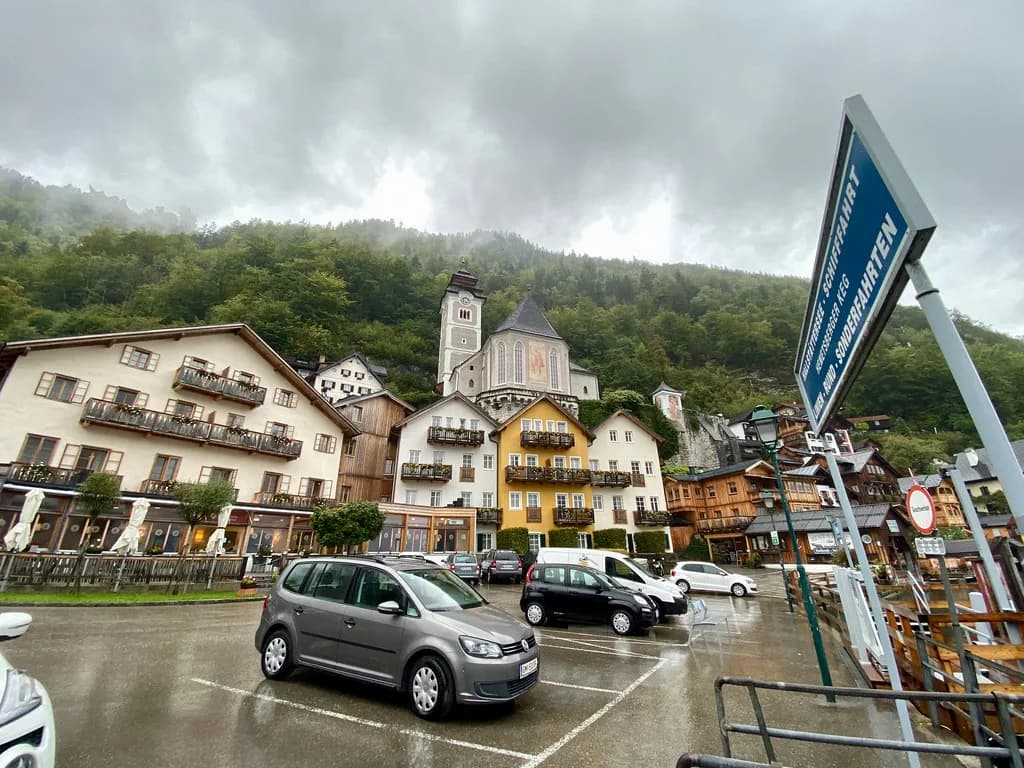
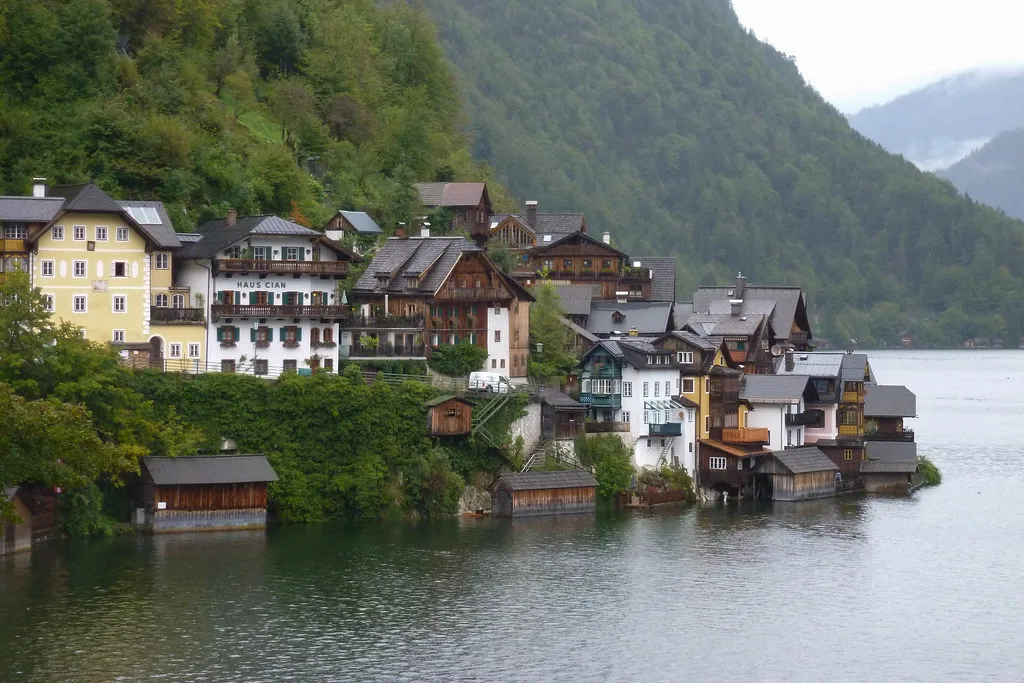
All four lots share one tariff system and sit together above the village, next to the Salzbergbahn cable car station that lifts visitors toward the salt mine. P2 at Kohlstattweg carries the clearest published detail of any of them: it sits beside the Salzwelten visitor center at a listed elevation of 511 meters. That height explains the layout, because the village is squeezed onto the narrow strip between mountain and lake.
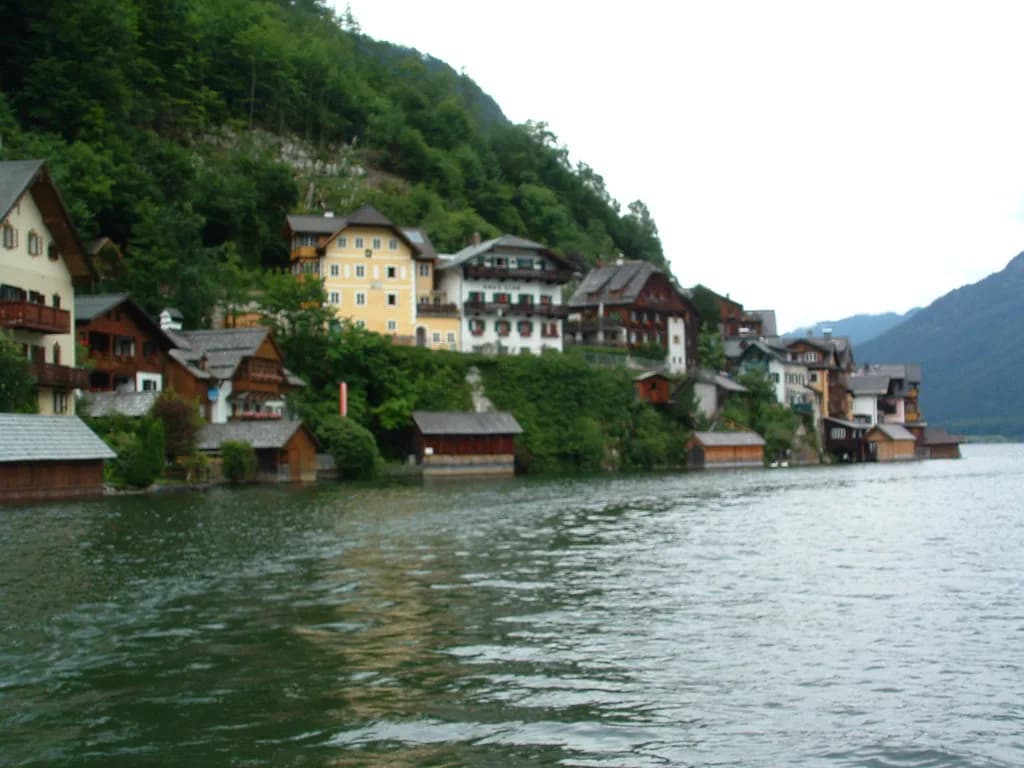
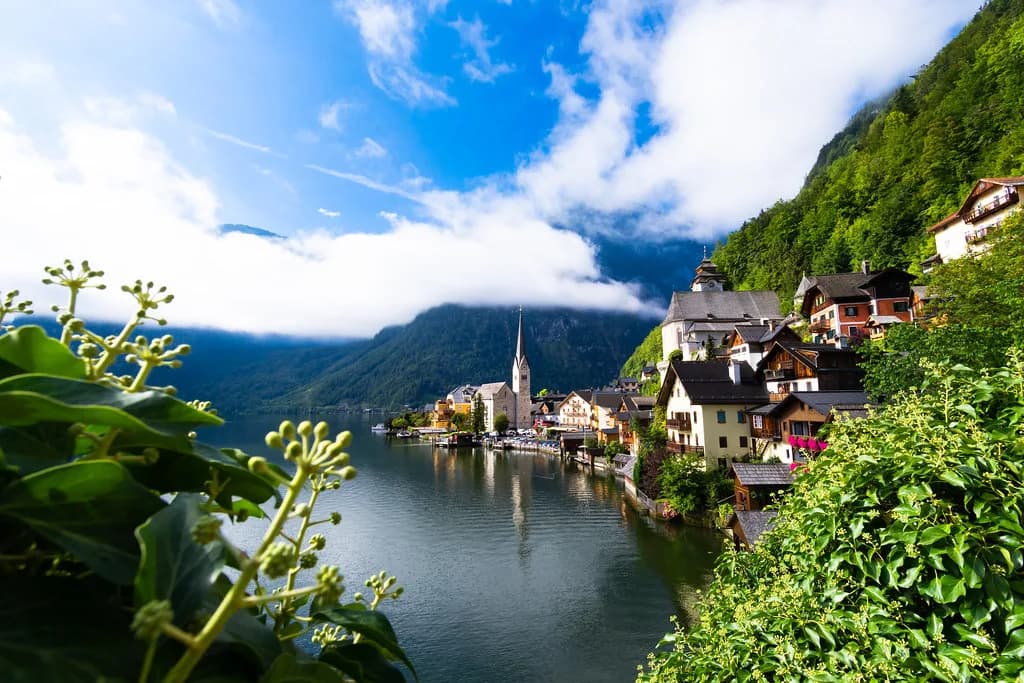
Hallstatt sits on the southwestern shore of Hallstätter See in Upper Austria's Salzkammergut, with Obertraun a short drive away. For how the village fits a wider route, the Hallstatt guide covers layout, sights and season. The practical point is simple: you are driving to a lot above the rooftops, not to a street address in the center.
What parking costs by duration
The published rates run on a short-term scale: 15 minutes free, then a stepped charge that rises with the hours you stay, at 1 hour 4.00 Euro, 2 hours 7.00 Euro, 3 to 4 hours 9.00 Euro, 5 to 6 hours 9.50 Euro, and 7 to 12 hours 10.00 Euro. A second table on the same operator page lists higher figures, so treat these as the published rate rather than a guaranteed tariff and read the board at the barrier when you arrive.
Staying past 12 hours moves you to a daily tariff, published at 15.00 Euro on one table and 18.00 Euro on the other, so the exact daily charge is worth confirming at the barrier. That matters for a long lake day, because the gap between the two is real money. Losing your ticket carries its own published charge of 30 to 36 Euro, so keep the ticket with you rather than in the car.
Hallstatt's numbered lots above the village are paid, so budget for parking as part of the visit and you will not spend the first half hour circling for a spot you assumed would be free.
P2 at a glance: spaces, hours and payment
P2 describes itself as open around the clock, so a late arrival is not locked out. Cash, debit and credit cards, including Visa and Mastercard, are all accepted. That combination makes P2 the easy default if you want the shortest roll from barrier to cable car.
Accessibility is partial rather than complete: the lot suits wheelchairs in principle but does not meet every point of the Austrian ÖNORM standard. Coaches pay a separate per-bus day fee rather than a car tariff, and tour operators should contact Hallstatt PEB GmbH before the trip.
Driving in: the approach roads
From Salzburg, the published approach leaves the motorway at Thalgau, follows the B158 toward Bad Ischl, joins the B145 and continues to Bad Goisern, where you turn onto the B166 and swing left at the Gosaumühle junction. From Linz, it uses the Regau exit and the B145 through Gmunden and Bad Ischl to the same turn.
From Vienna or Graz, the listed route leaves the motorway at Liezen onto the B320, picks up the B145 at Trautenfels toward Bad Aussee, and turns onto the Koppen road through Obertraun. From Villach, it runs the Tauern motorway to the Eben im Pongau exit and crosses the Pass Gschütt road through Gosau to the Gosaumühle junction. Reading these before you set off keeps you off the wrong side of the lake, which is a long detour rather than a short correction.
Bad Goisern am Hallstättersee is the last junction town before the B166 turn, and the Gosausee valley branches off south of the Gosaumühle junction. Neither replaces Hallstatt, but both give a driver a reason to break the journey.
Why you park above the village and walk down
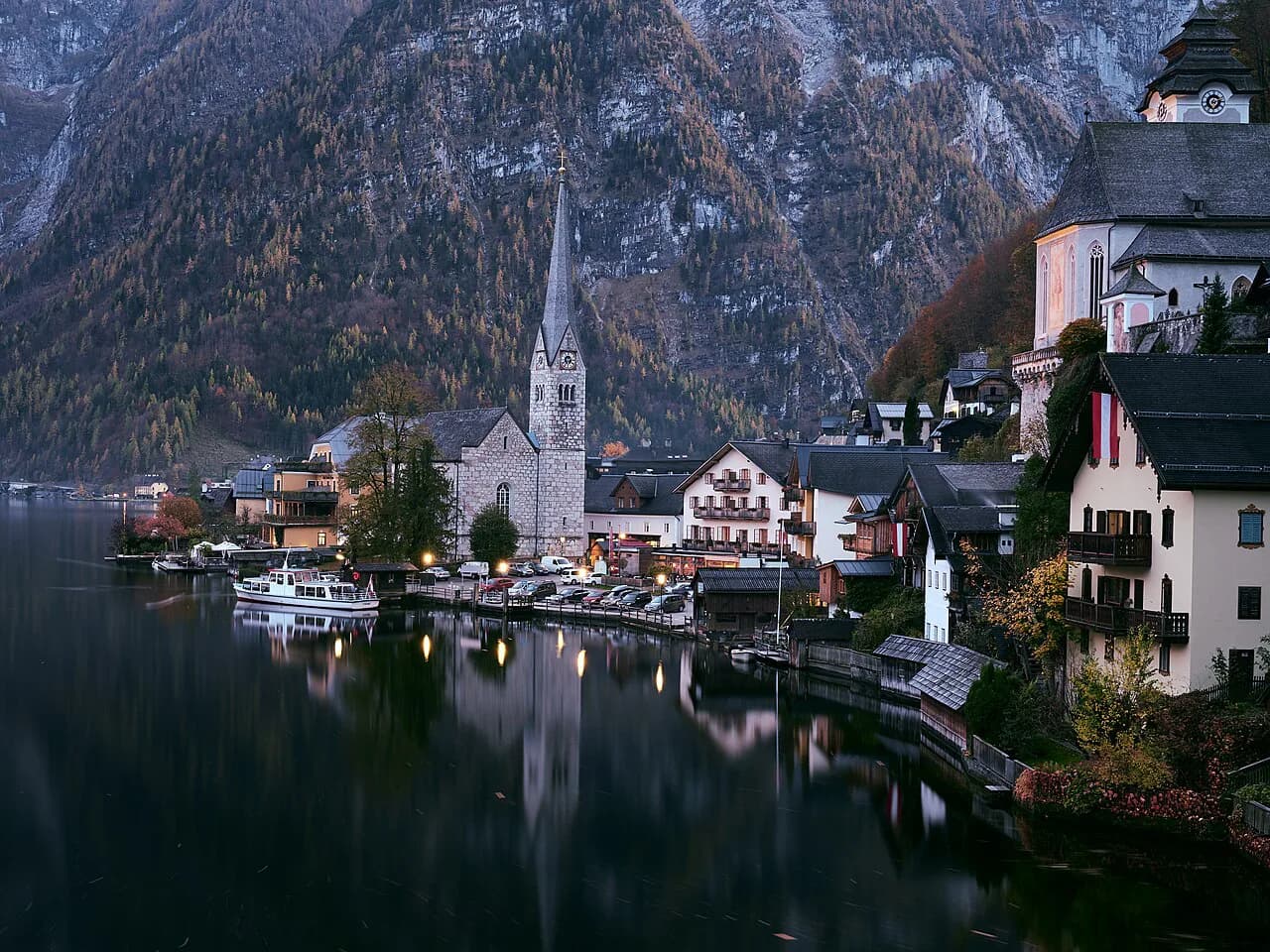
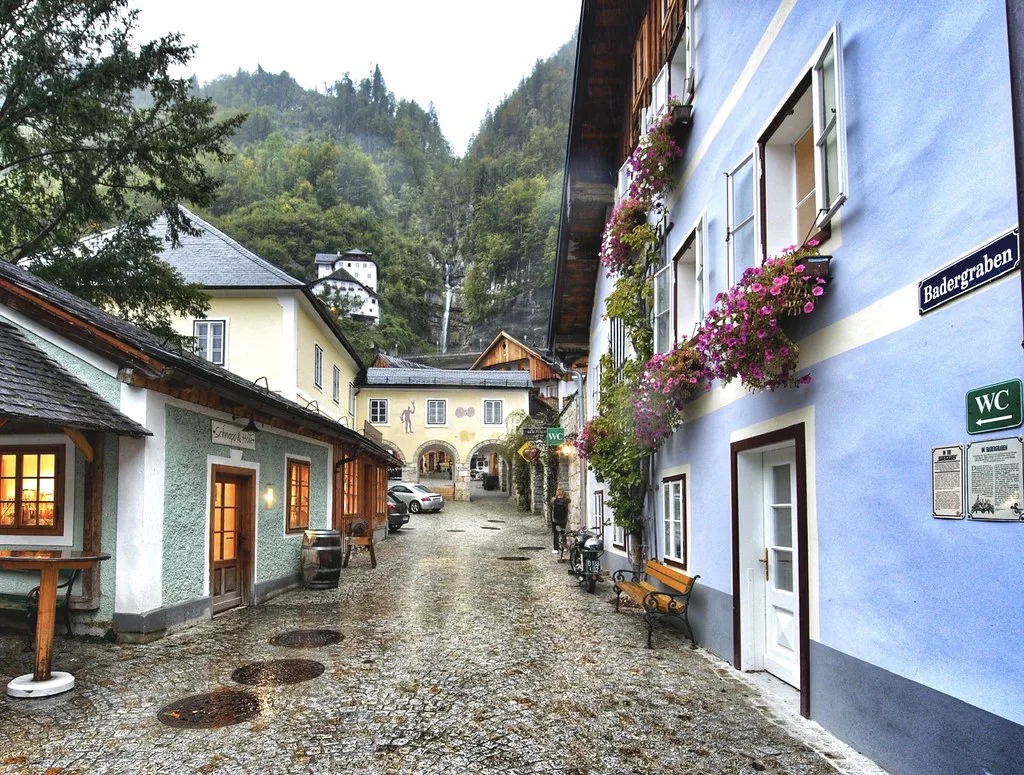
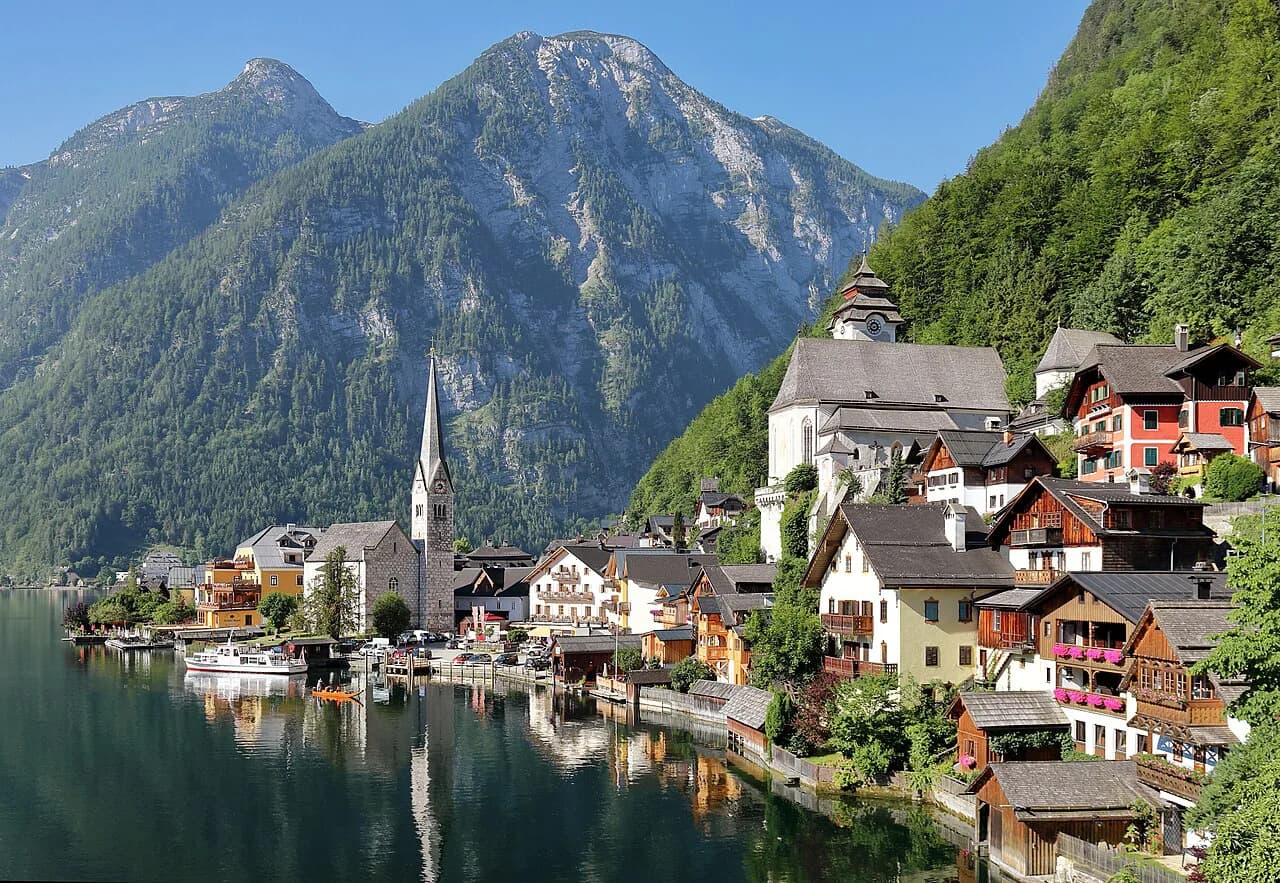
The village occupies the thin ground between lake and mountain, so the historic center is a compact run of lanes rather than a grid. Its main square, the Marktplatz, is busy for a village of 778 residents, with cafes and restaurants packed into a small space. Driving into that tangle is the classic first-time mistake; the walk down from the lots is the trade-off for leaving the car where there is room.
The market square sits a few minutes' walk from the Catholic church on its cliff, and the Beinhaus bone house occupies the lower level of St. Michael's Chapel. The chapel has stored bones since the 17th century, with skulls painted with names, dates and floral patterns, and the church is reported as free to enter.
Count on the climb back up at the end of the day and leave a margin on the parking clock rather than cutting it fine. Hallstatt has been a UNESCO World Heritage site since 1997 as part of the Hallstatt-Dachstein cultural landscape, and the old center rewards a slow hour or two rather than a photo stop by the water.
Arriving by bus: 542 and 543 to Hallstatt Lahn
Bus service to the village stops at Hallstatt Lahn, which puts you at the bottom of the village rather than in the lots above it. That is the low-effort version of the trip: no ticket machine, no barrier, no walk back up a hillside at the end of the day. Lake Hallstatt draws heavy midday crowds, so an early bus buys a quieter Marktplatz.
Confirm Postbus timetables before committing to the bus, because the service pattern changes with the season. If your travel dates are flexible, the best time to visit Hallstatt lays out how the seasons change the experience.
Arriving by train and ferry instead
Hallstatt's railway station does not sit in Hallstatt. It stands on the eastern shore of the lake, opposite the village, and the ferry crossing completes the journey, with boats scheduled to meet the trains. That makes the crossing part of the trip rather than an optional extra, and it is why rail arrivals see the village from the water before they set foot in it.
If you are coming from Salzburg and weighing rail against the car, A Hallstatt Day Trip from Salzburg works through the timings and the lake connection. The Hallstatt ferry page covers the crossing itself, including how the boat meets the train.
Travelers coming from further afield can compare the rail option with How to Do a Hallstatt Day Trip From Vienna. Whichever you choose, the last leg into the center is on foot or by boat, never by car.
Common parking mistakes
The first mistake is driving down into the narrow center on the assumption that a village this small must have somewhere to pull in. The lots are up by the cable car station, and the lanes below are for walking. Park high, walk down, and accept the climb back as part of the day.
The second is running out of short-term time, because the tariff steps upward in bands and a long lunch plus the salt mine can push you into the next one. The third is losing the paper ticket, which carries its own published charge. Keep the ticket on you, note your entry time, and decide the exit hour before you walk down.
In summer, the sensible order is to arrive early, park once, and stay parked. The village's history runs deep, from the Iron Age culture that carries its name to the brine pipeline that has moved salt water since the sixteenth century, and Hallstatt history fills in that background.
Which arrival plan fits your trip
If you drive, aim for the lots above the village by the Salzbergbahn, pay for the band that covers your realistic stay, and walk down to the Marktplatz from there. If you would rather not think about a ticket at all, take the bus to Hallstatt Lahn or the train to the far shore and cross by ferry.
Explore more Hallstatt guides
Frequently Asked Questions
Is there free parking in Hallstatt?
The numbered lots above the village by the Salzbergbahn are paid, with a short free window at the start and stepped charges after that, and coaches pay a separate day fee. Treat parking as a cost of the visit and read the board at the barrier for the tariff that applies when you arrive.
Can I reach Hallstatt by train without a car?
Yes, but the station sits on the opposite shore of the lake, so the ferry crossing is part of the journey and boats are scheduled around the trains. From Salzburg the connection runs through the Salzkammergut, and the exact departure times belong to the current ÖBB timetable rather than to any fixed schedule.
Sources
Notes for your next Austrian town break
Optional updates when we add or revise town guides.
You might also like
Continue reading
More guides you'll find useful