Hallstatt Day Trip From Vienna: Train, Boat and Tour Options
A Hallstatt day trip from Vienna means a train ride via Attnang-Puchheim and a boat crossing to the village. Here is how the logistics work and what to see.
On this page
A Hallstatt day trip from Vienna is doable but the travel time, not the sightseeing, decides the shape of your day. Vienna sits far east of the Salzkammergut, and the standard rail route runs via Attnang-Puchheim to Hallstatt Bahnhof on the far shore, where a boat carries you over to the village. This guide walks through the route stages, the bus alternative, driving and parking fees, tour options, and what to see once you arrive on the Marktplatz.
How long the trip from Vienna actually takes — and why it eats the day
The trip is built from three stages: a train from Vienna toward Attnang-Puchheim, a connecting train on the Attnang-Puchheim–Stainach-Irdning line to Hallstatt Bahnhof, and then the crossing to the village. Add the walk from the landing stage to the Marktplatz and the day's visiting window shrinks to a handful of hours even if you leave early.
Touring companies sell this as a single package, which removes the connection-building but adds their own departure and return times. One Vienna-origin tour offers a boat-ride option and a Skywalk upgrade, so you spend part of the day in a group rather than on your own schedule. Compare the group's time in the village against a self-planned trip before you decide which suits you.
An overnight in the Salzkammergut shifts the balance, since you trade a second long rail leg for an evening and a morning in the region. Travelers coming from the other direction may find a shorter run; this Hallstatt day trip from Salzburg is the closer starting point if your itinerary allows it.
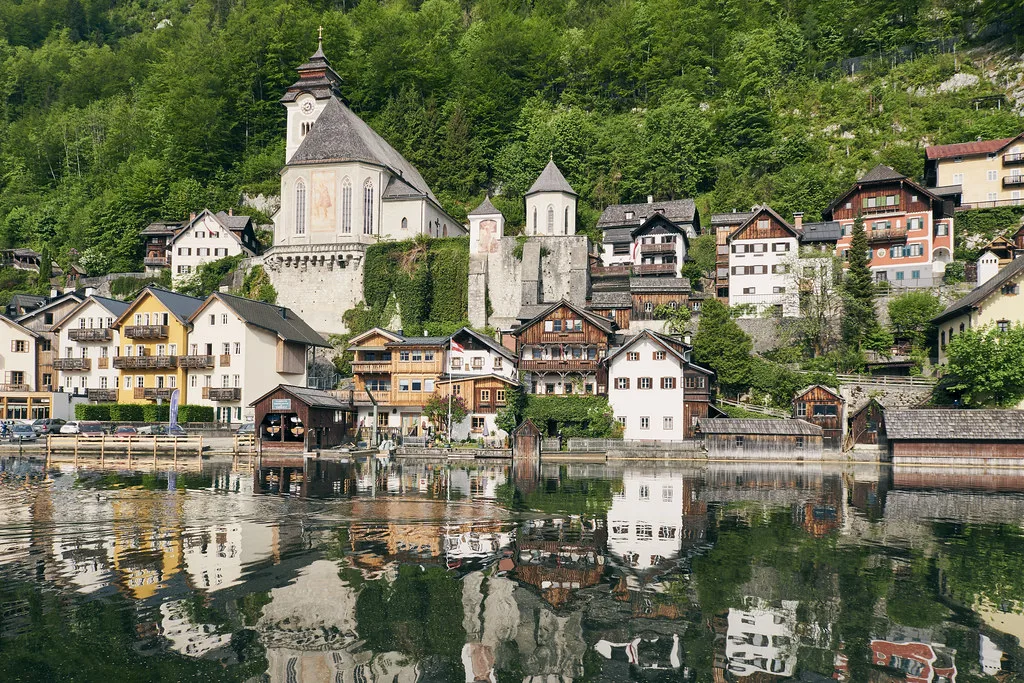
Getting there by train: the Attnang-Puchheim connection and the boat crossing from Hallstatt Bahnhof
Hallstatt Bahnhof sits across the lake from the village, and the station is reached on the Attnang-Puchheim–Stainach-Irdning line. From the station, a boat crosses to the village landing stage, which is the step travelers most often miss when they plan a rail day.
Build a buffer at each change: a missed boat means waiting for the next crossing, not a short walk.
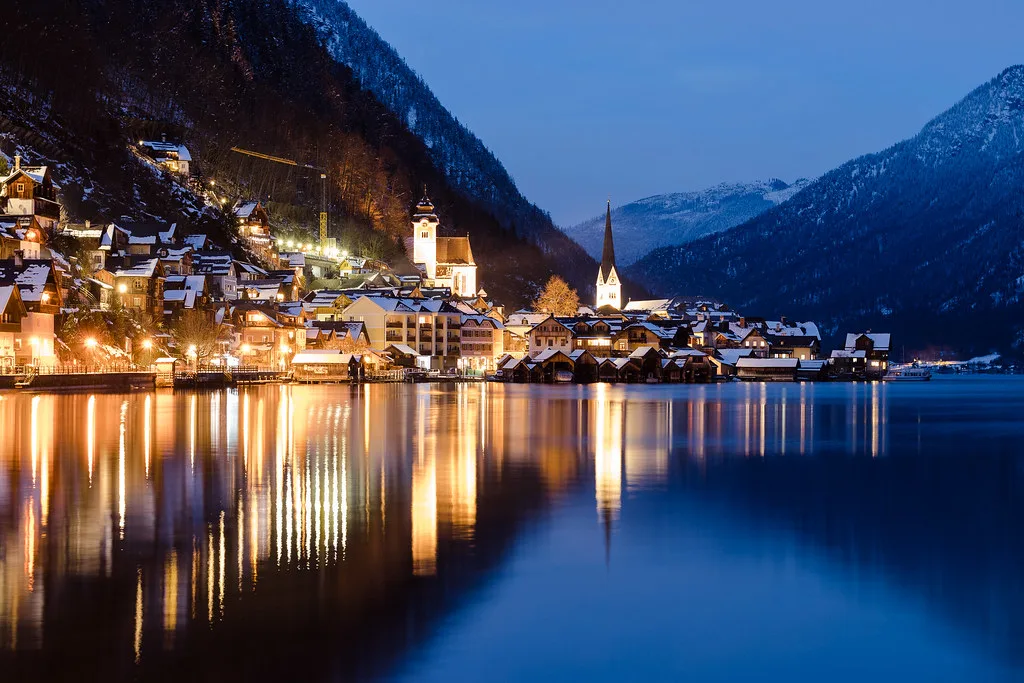
Arriving by bus: route 542/543 to the Hallstatt Lahn terminal
Postbus routes 542 and 543 arrive at the Hallstatt Lahn bus terminal, a different arrival point from the railway landing stage and one that puts you at the southern edge of the village. From Lahn, the Marktplatz is a walk uphill through the lanes, and the final stretch to the church and charnel house climbs steps.
Driving from Vienna: the route and what parking in Hallstatt costs
Drivers from Vienna take the Liezen motorway exit onto the B320, then the B145 through Bad Aussee and the Koppenstraße into Hallstatt, following the route the market-square listing describes. The B158, B145 and B166 are the other main approaches from Salzburg, Linz and Villach. The village core has little room for cars, so parking happens in the signed lots at the edge and near the cable car.
The P1 to P4 short-term rates run 15 minutes free, then 4.00 Euro for one hour, 7.00 Euro for two, 9.00 Euro for three to four hours, 9.50 Euro for five to six hours and 10.00 Euro for seven to twelve hours, with a 15.00 Euro daily rate from the thirteenth hour. A lost ticket costs 30.00 Euro, and buses pay 80.00 Euro per day.
Budget for a full day in the higher tiers if you plan to combine the village with the salt mine and Skywalk, and read the tariff board at the entrance rather than assuming a flat fee. More detail on lots and approaches sits in this Hallstatt parking guide.
Organized day tours from Vienna: what the Skywalk and boat-ride options include
A packaged tour typically covers the long transfer and gives you a fixed block of time in the village, with optional additions such as a lake boat ride or the Skywalk above the roofs. The Skywalk upgrade is worth weighing against the village sights: it trades ground-level time in the lanes and at the charnel house for the mountain view.
Tours work best if you want a single fixed itinerary and do not want to manage the train-to-boat transfer yourself. If you prefer to choose your own hours at the museum or the salt mine, the self-planned rail route gives you more control over the return.
The village layout: Marktplatz, the lakeside lanes and the climb to the church
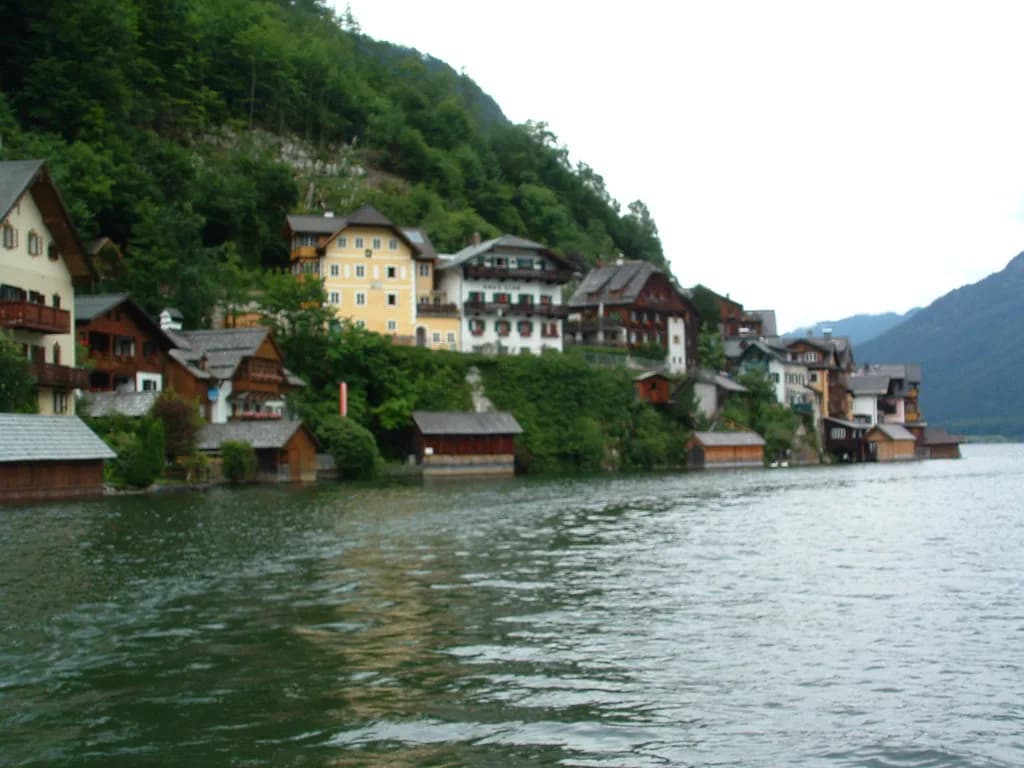
Hallstatt's historic Marktplatz is the center of the visit, laid out since the 14th century and built around the Holy Trinity Column donated by a local salt-making couple in the middle of the 18th century. Souvenir stores, cafes, restaurants and a bar face the square, which is free to enter and open to the public at all hours. Use it as your orientation point before branching into the lanes.
From the square, sights sit at different heights: the lakeside lanes are level, while the Catholic parish church, the mountain cemetery and the charnel house are up flights of steps or the steeper Kirchenweg. Plan the climb while your legs are fresh and leave the flatter lanes for the end of the day. The community's own Hallstatt pages group the sights by theme so you can build a short loop.
The Classic Village Viewpoint photo point, a short walk from the market square
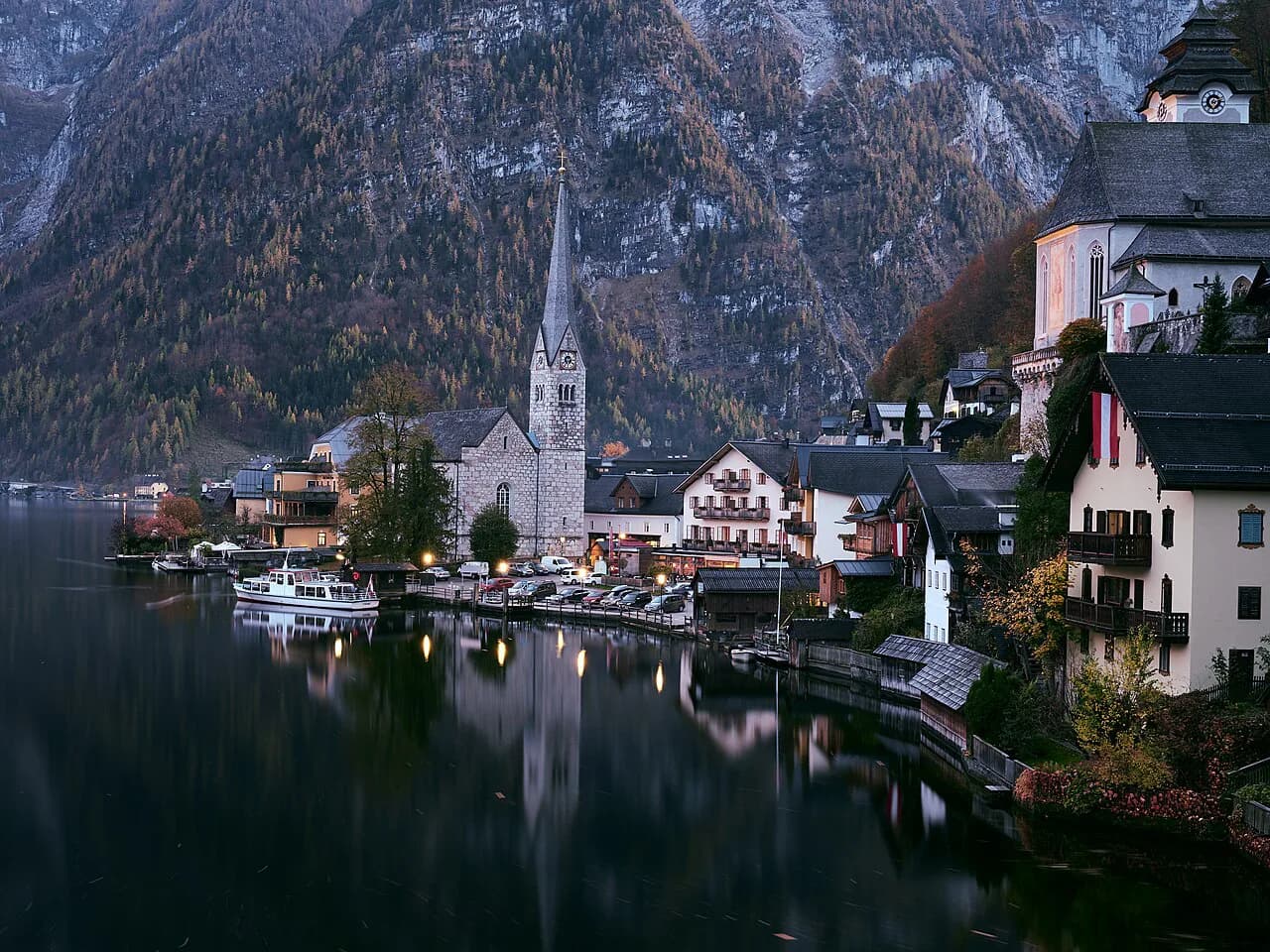
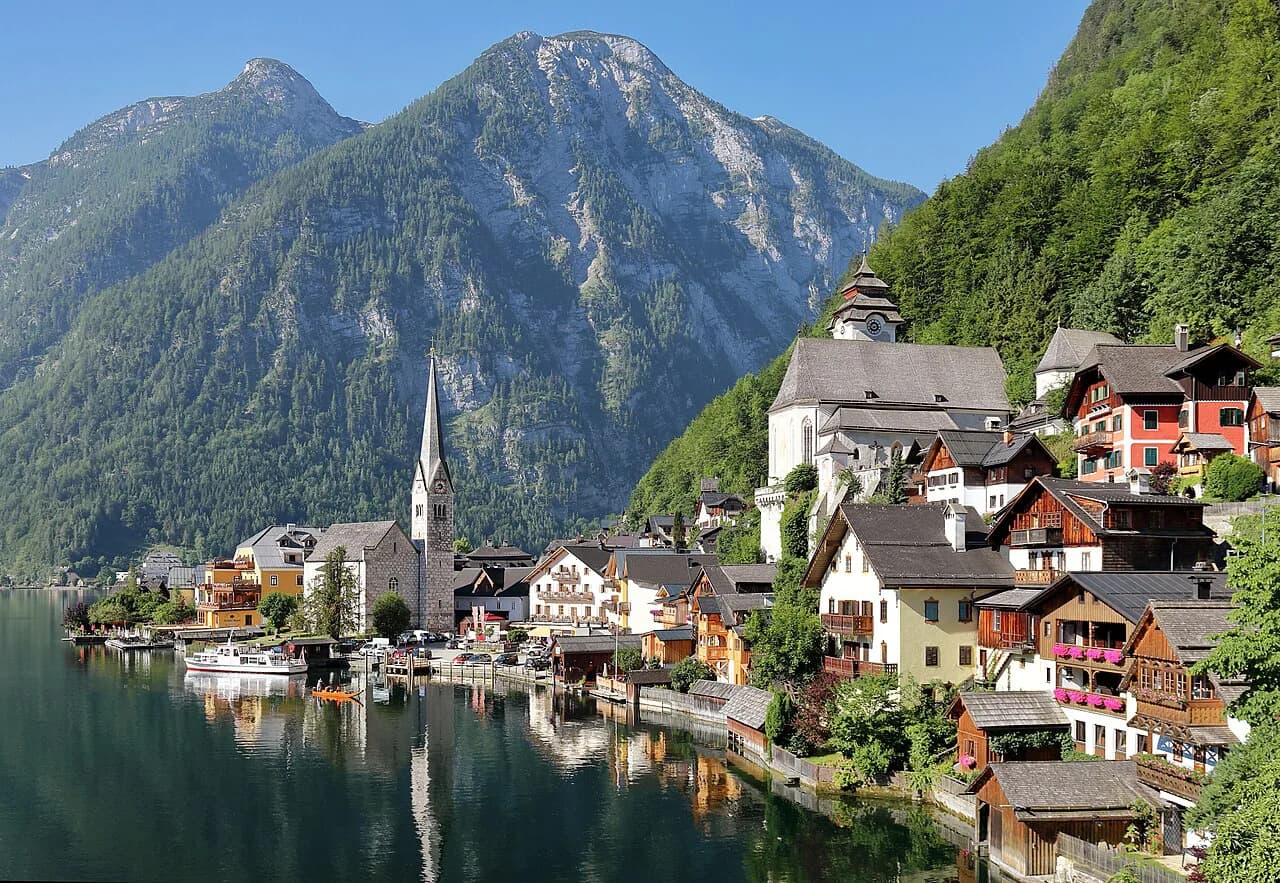
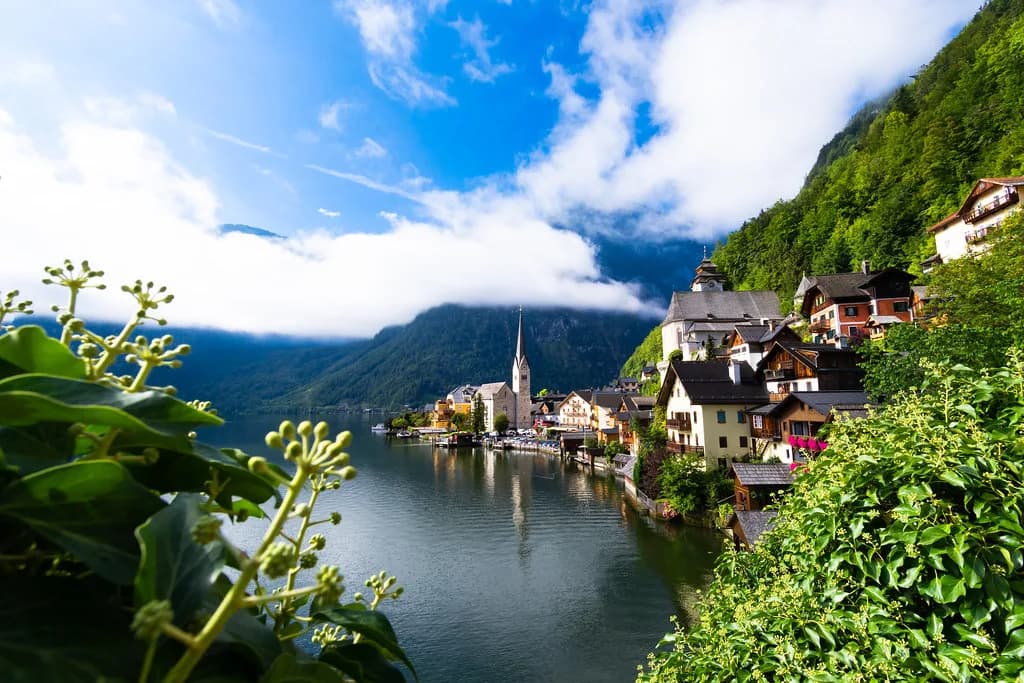
The classic photo point, also called the Classic Village Viewpoint, frames Lake Hallstatt, the Protestant church, the old houses against the rock and the Salzkammergut mountains in one postcard image. It sits a short walk from the market square, so it fits into a tight day without becoming a separate excursion. Go there first if the light matters to you, then double back for the lanes.
St. Michael's Chapel and the charnel house with its painted skulls
The Beinhaus, or charnel house, occupies St. Michael's Chapel next to the Catholic parish church and holds a collection of more than 600 artistically painted skulls, with over 1,200 skulls in total. Skull painting peaked in the 19th century across the eastern Alpine region, and the painted names and initials preserved each person's identity when bones were moved from a reused grave. Reach it by the steps from the center or the steeper Kirchenweg, and combine it with the mountain cemetery.
The chapel itself dates to the 12th century and holds a baroque Michael Altar donated by the salt merchant Eysl in 1612, plus a pulpit moved from the parish church in 1905. The visit is short and contained, which makes it a good fit when the rail return is fixed.
The World Heritage Museum as a rain-proof stop; it is open all year
The Hallstatt World Heritage Museum in the heart of the village traces how Hallstatt's people lived and worked, and it stays open all year. That makes it the reliable fallback when rain or heat makes the lakeside lanes unpleasant, and it is compact enough for a short visit. It also supplies the context for the Iron Age settlement that gave the village its place in European prehistory, covered further in this Hallstatt history piece.
The Salzberg cable car and Skywalk World Heritage View above the village
The Salzberg cable car lifts you from the valley to the salt mountain, where the Skywalk World Heritage View platform stands 360 meters above the rooftops. From there you look down on the village, the lake and the mountains — the view that most condensed day trips hope for. Check the cable car's operating season and last ascent before you build the ride into a tight schedule, since a fixed return train makes a late descent risky.
Lake Hallstatt by boat: the sightseeing cruise and the Navia wooden salt boats
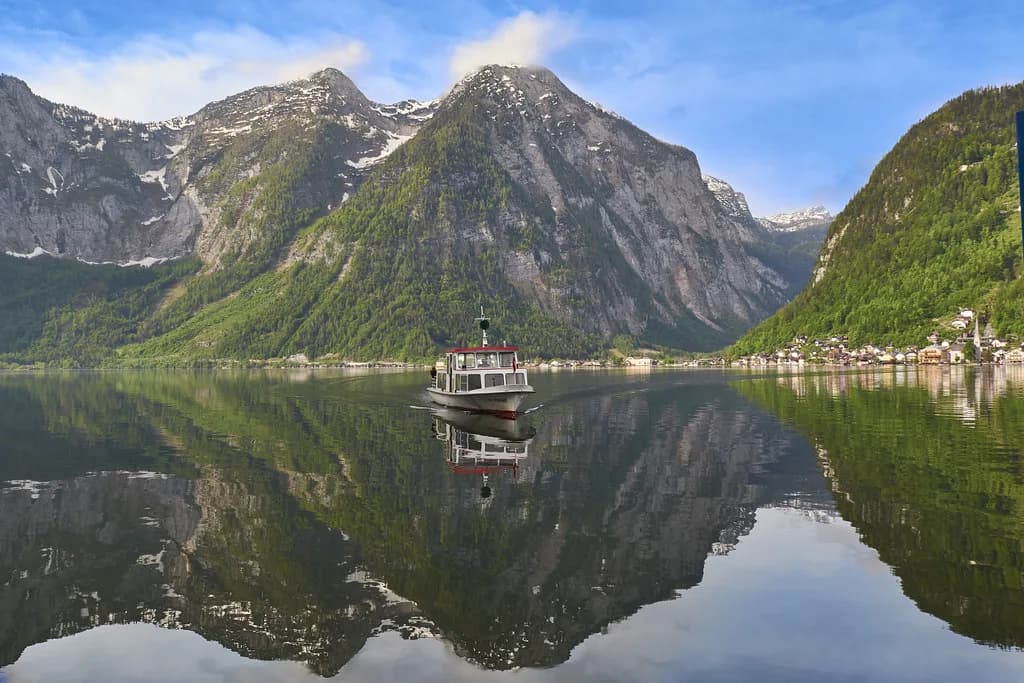
Sightseeing cruises on Lake Hallstatt give a view of the village from the water that the shore cannot match. The Navia boats run in traditional wooden salt-boat style, giving the crossing a historic flavor. Both fit around the village visit if you check departure times at the landing stage and leave a margin before your train.
For a day shaped by the water rather than the mountain, note that summer brings more boat capacity and longer daylight, which is why the season changes how much you can fit in. See what else shifts with the season in Hallstatt in summer.
The salt mine: guided tours and the 8-10°C interior in summer
The Salzwelten salt mine runs daily guided tours and holds a constant interior temperature of 8 to 10 degrees Celsius, which makes it a sensible choice on a hot day or in rain. Bring a layer even in July, and allow for the walk and the guided-tour pace when you plan the return. It pairs naturally with the cable car, since both start from the valley station below the village.
Hallstatt within a Vienna itinerary: a long day out versus an overnight in the Salzkammergut
The realistic choice is between a long day trip and a night in the Salzkammergut. A day trip buys you a compact slice of the village, while an overnight gives you an evening and morning without the same rail pressure and lets you add a nearby stop such as Obertraun, Bad Goisern or the Gosausee.
If you stay, the lakes and smaller villages reward a slower pace, and the expanded Hallstatt Attractions: 11 Visitor Guides hub helps you choose what earns a second day.
Midday crowds and why an early or late slot changes the visit
The market square carries a maximum capacity of 1,000 people in the visitor-volume listing, a reminder of how compact the center is when tour groups arrive together. Aim to be in the lanes early or late, and use midday for the museum, the salt mine or a boat trip on the lake. That ordering keeps the tightest spaces, like the narrow climb to the charnel house, more manageable.
Which arrival suits your day
Choose the self-planned rail route if you want to control time at the charnel house, Skywalk or salt mine, and book a departure that leaves a margin for the boat crossing and the connection at Attnang-Puchheim. Take a tour if you would rather the transfer and the boat or Skywalk add-on are arranged for you, and accept its fixed schedule.
Either way, arrive early or late to dodge the midday squeeze, layer up for the salt mine, and keep the Marktplatz as your anchor point.
Explore more Hallstatt guides
Sources
Notes for your next Austrian town break
Optional updates when we add or revise town guides.
You might also like
Continue reading
More guides you'll find useful