Hallstatt Day Trip from Salzburg: Train, Bus and Driving Plan
Plan a Hallstatt day trip from Salzburg with the bus and train-and-boat routes, the Hallstatt parking rates, and a compact walking order for the village.
On this page
A Hallstatt day trip from Salzburg is realistic, but the day is decided by how you arrive and how early you start. Travelers who take the bus land at Hallstatt Lahn beside the village center, while the train puts you across the lake at Hallstatt Bahnhof and requires a boat crossing. The village itself compresses into a compact loop on foot, so this guide focuses on the transport choice, the parking fees in euros, and a walking order that leaves time for the Salzberg above the rooftops.
Getting there: bus 542/543 versus the train and boat
The bus option is the simplest because bus routes 542 and 543 arrive directly at the Hallstatt Lahn bus terminal, which sits at the lower edge of the village. From there the Marktplatz and the lakefront are a short walk, with no water crossing and no funicular needed to begin your day. Get departure times from the ÖBB and Postbus timetables before you commit, because the service pattern changes with the season.
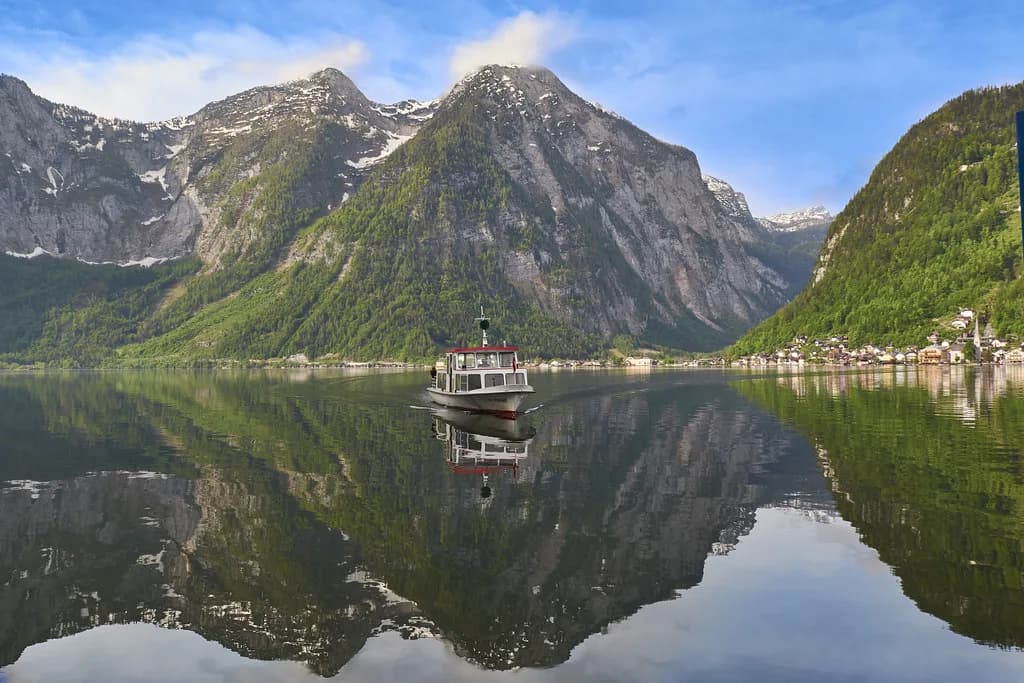
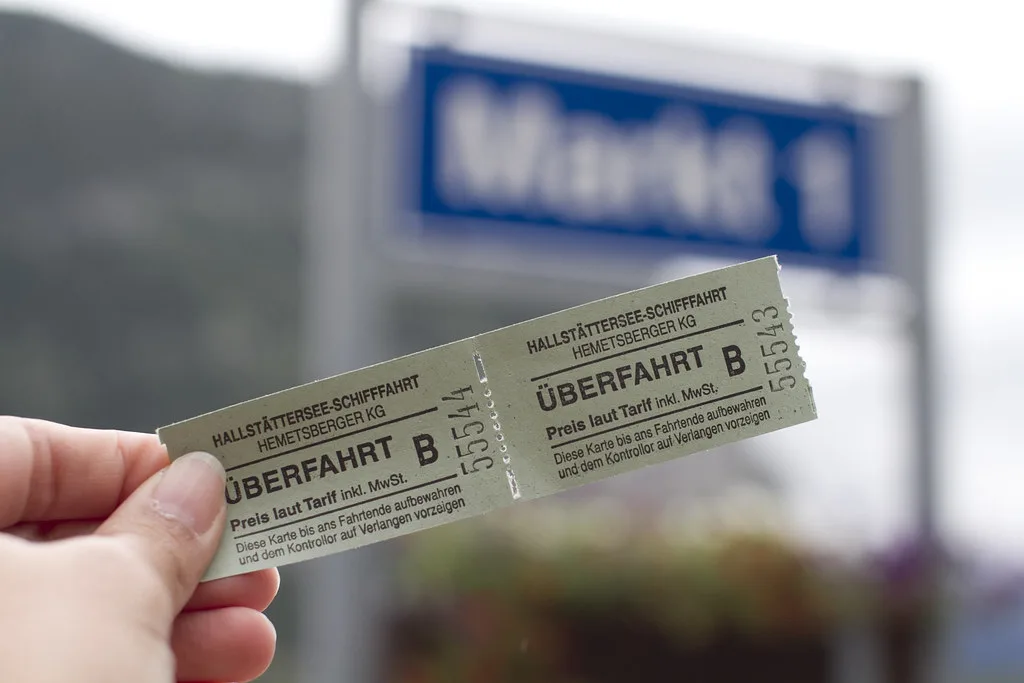
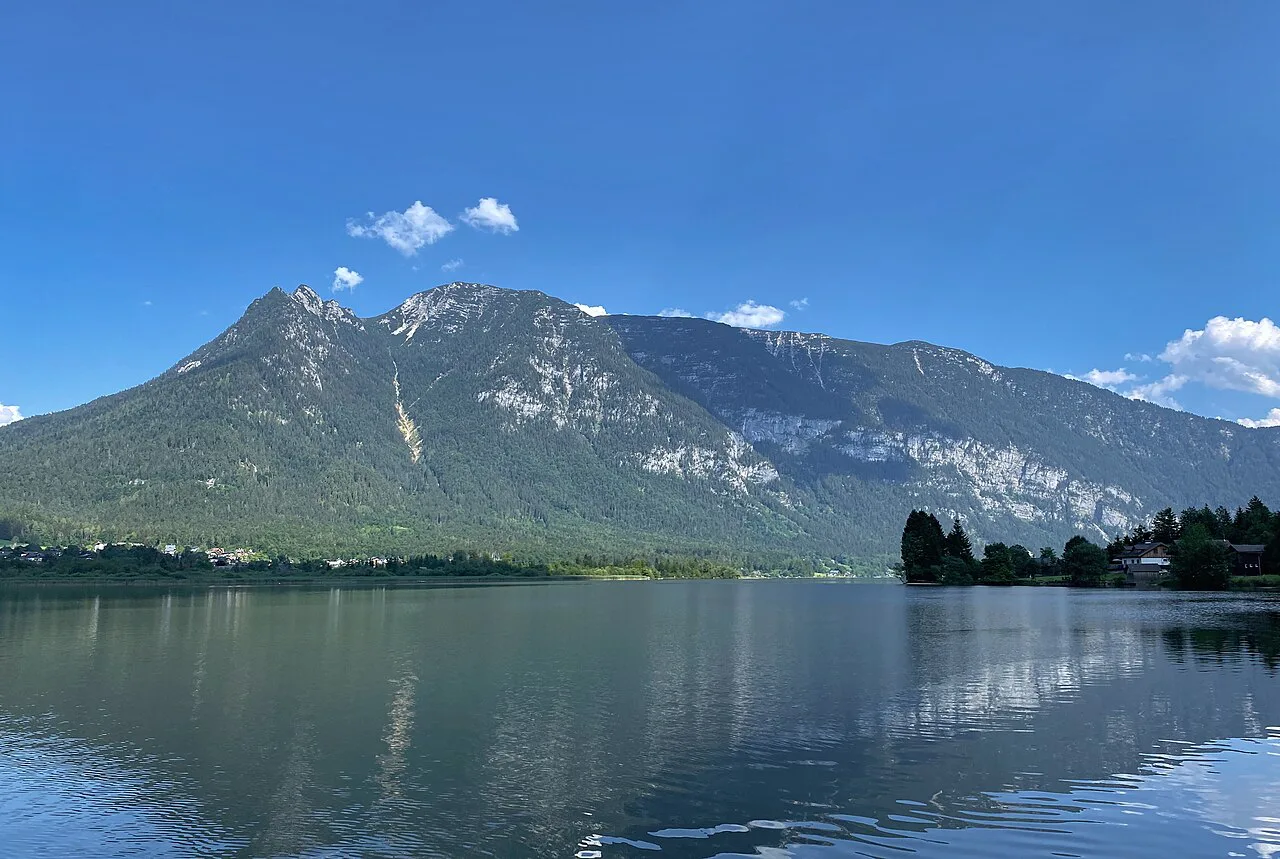
The train is the scenic option, but Hallstatt Bahnhof sits on the opposite shore, so the last leg is a boat crossing to the village landing stage. A useful alternative is to pair the railway with the Hallstatt ferry and plan your day around that water leg rather than treating it as an afterthought. Work out both the outward and return crossings against the train times first; if the matching is awkward, the bus removes the problem entirely.
Driving from Salzburg and what parking costs
By car from Salzburg, the published route runs via the B158 through Bad Ischl, then the B145 to Bad Goisern and the B166 to the Gosaumühle junction, where you turn toward Hallstatt. The turns are straightforward, but the village is pedestrian at its core, so the car stays in one of the lots outside the center for the whole visit.
Parking at P1 to P4 is metered: the first 15 minutes are free, one hour costs 4.00 EUR, two hours 7.00 EUR, three to four hours 9.00 EUR, five to six hours 9.50 EUR, and seven to twelve hours 10.00 EUR. From the thirteenth hour the daily rate is 15.00 EUR, a lost ticket is charged at 30.00 EUR, and a bus pays 80.00 EUR per day. For a comfortable day on foot, budget for the three-to-four-hour band and read the rest of the Hallstatt parking rules before you drive in.
Arriving in the village: Lahn, the landing stage and the Marktplatz
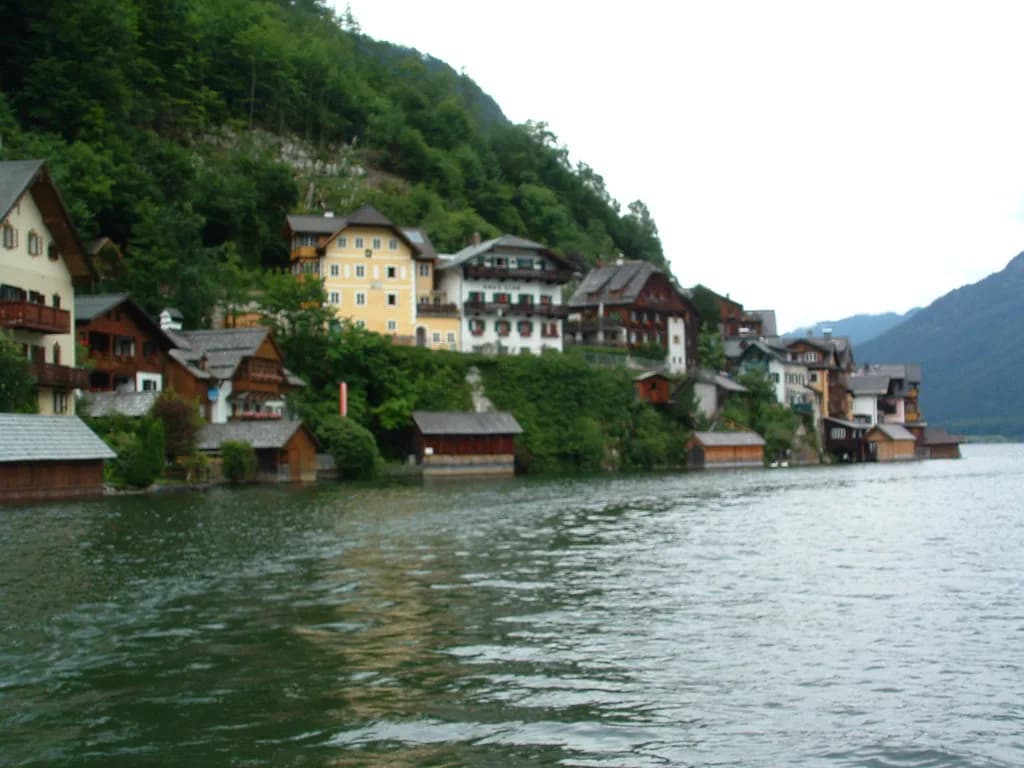
Most arrivals funnel into the Lahn area at the bottom of the village, where the bus terminal and the boat landing stage sit close together. The Marktplatz is a few minutes uphill from there, and it is the natural place to start because everything else radiates from it. Keep the map in your head as a single line: Lahn at the bottom, Marktplatz in the middle, church and Beinhaus above.
Hallstatt's market square dates its layout to the fourteenth century, and the Holy Trinity Column stands at its center, donated by a local salt-manufacturing couple in the mid-eighteenth century. Around the square you find souvenir stores, cafes, restaurants and a bar, which makes it the obvious stop for coffee before the climb or lunch after it. The square is public and open at all hours, so it also works as a meeting point if your group splits up.
The classic photo point
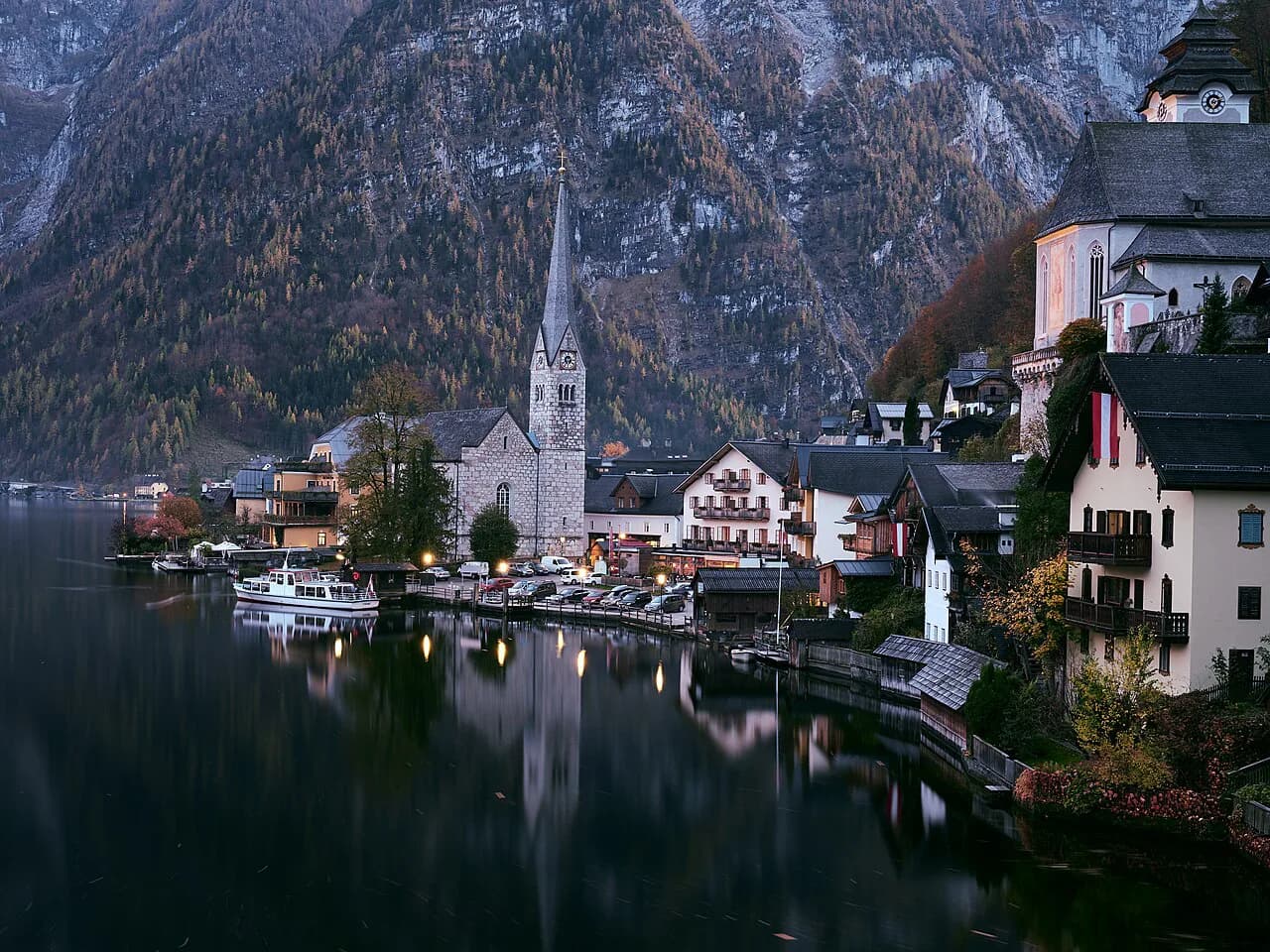
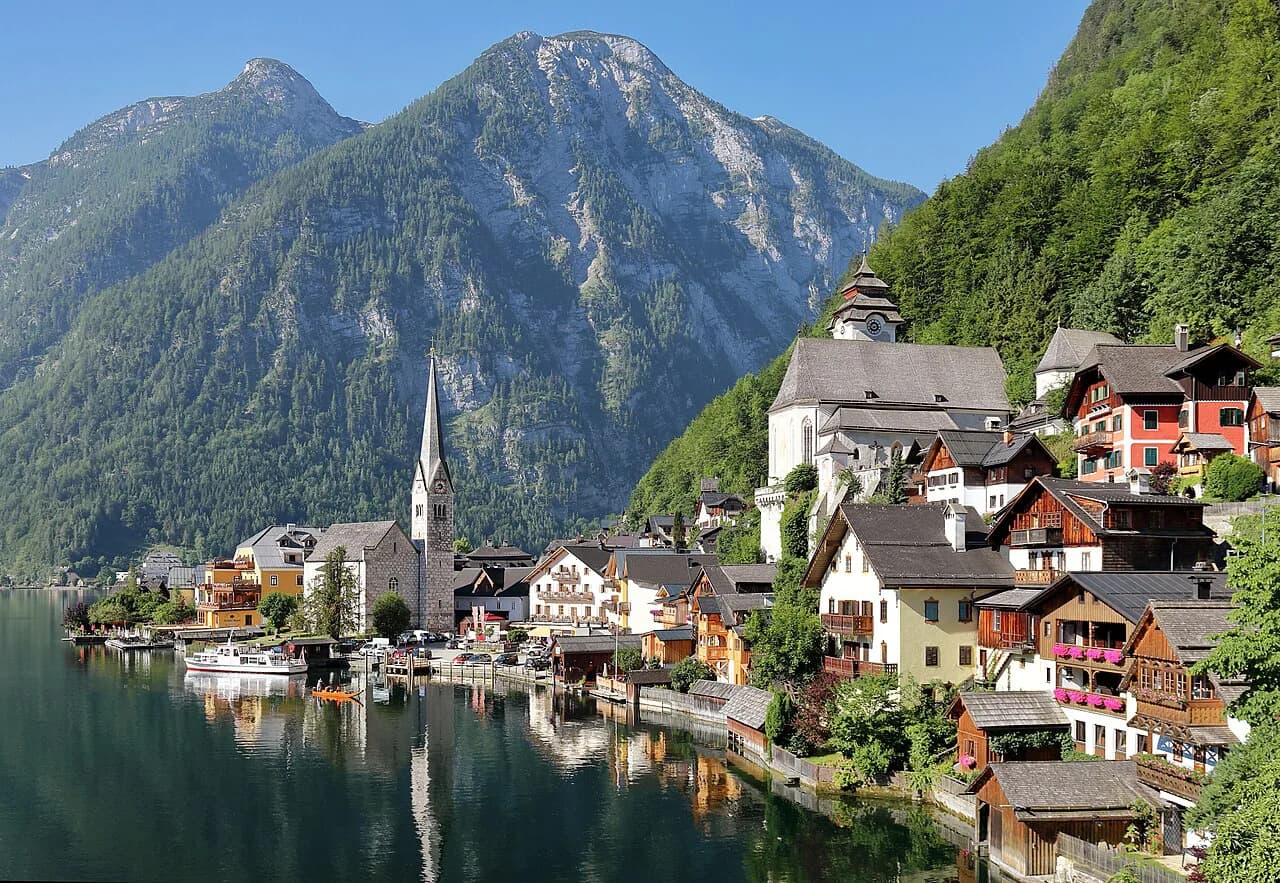
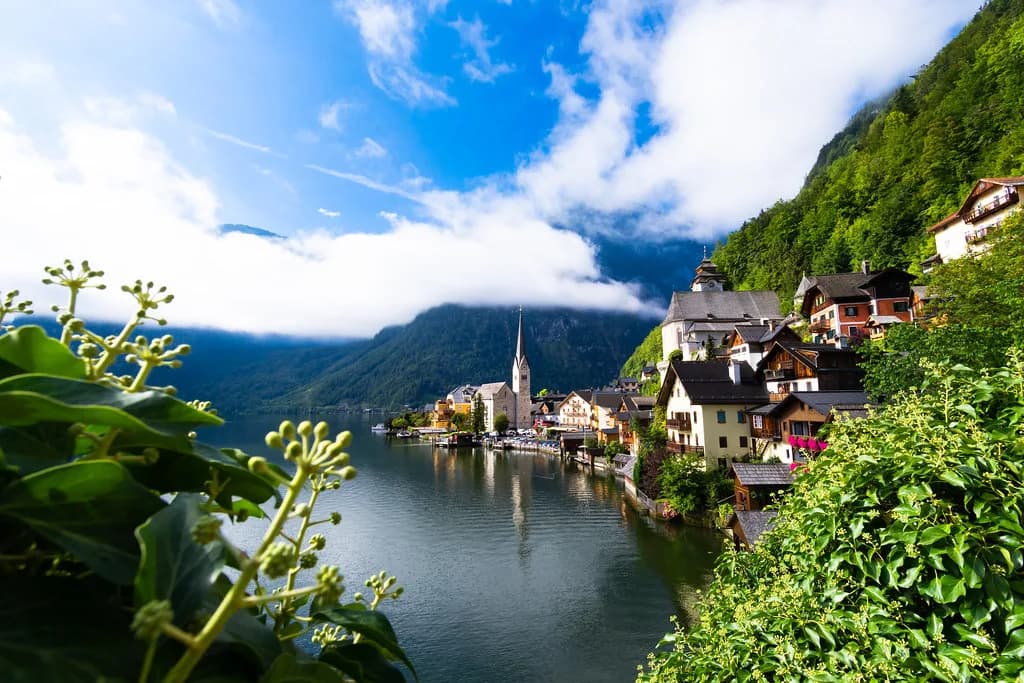
The postcard view of Hallstatt, with the Protestant church, the old houses against the rock and the lake in front, is taken from the Fotopoint, a short walk from the Marktplatz. From there you can frame the ship landing stage and the heritage hotel in the same shot, which is why it is one of the most photographed spots in the Salzkammergut. Go early or late if you want the viewpoint without a crowd of tripods, since this is the image everyone comes for.
Up the Salzberg: cable car and the Skywalk
The Salzberg cable car valley station is the start of the ascent to the salt mountain, and the Skywalk viewing platform, labeled the World Heritage View, sits 360 meters above the rooftops of Hallstatt. The platform gives you the village and the lake from directly above, a completely different picture from the lakeside photo point. Buy the cable-car ticket at the valley station and check the day's operating times there, since the mountain install does not run on the same clock as the village square.
Salzwelten salt mine: the hot-day and rainy-day card
The Salzwelten salt mine above the village runs daily guided tours and holds a constant 8 to 10 degrees Celsius underground all year, which makes it the practical choice on a hot afternoon or a wet morning. That temperature is the trade-off: bring a layer even in July, because the mine does not warm up with the weather outside. Tour times and admission are set by the mine, so confirm them when you buy your cable-car ticket rather than assuming a walk-up slot.
St. Michael's Chapel, the Beinhaus and the mountain cemetery
Above the Marktplatz, the Beinhaus in St. Michael's Chapel holds more than 600 painted skulls, many decorated in the nineteenth century and a few in the twentieth, sorted by family and inscribed with names or initials. The chapel itself dates to the twelfth century and stands beside the Catholic parish church and the small mountain cemetery, so the three belong to one visit. The ascent is by a long flight of steps or the somewhat steeper Kirchenweg, a real climb in warm weather; wear shoes that grip and leave the pushchair at the bottom.
World Heritage Museum in the center
The Hallstatt World Heritage Museum sits in the heart of the village and is open all year, which makes it the reliable indoor stop when the weather turns. Its exhibits explain how the people of Hallstatt lived and earned a living, including the iron-age and salt history that put the village on the World Heritage list. An hour here gives context to the salt mine and the Beinhaus you have just seen, and it does not depend on a boat or a cable car running.
On the water: sightseeing boats and the Navia wooden boats
Lake Hallstatt looks different from the water, and the sightseeing boats give you a view of the village that you cannot get from the shore. For something closer to the region's history, the Navia boats carry passengers in traditional wooden salt boats, a slow ride rather than a transfer. Both are weather-dependent and run on their own timetable, so check sailing times at the landing stage before you build the rest of the day around them.
A one-day walking order
Start at the Marktplatz, walk the few minutes to the Fotopoint for the classic view while the light and the crowds are still manageable, then climb to St. Michael's Chapel, the Beinhaus and the cemetery. Come back down for lunch around the square, then take the cable car up to the Skywalk and, if the day allows, the salt mine tour. Finish with the World Heritage Museum or a boat trip, depending on whether you want indoors or on the water.
The honest trade-off is time: the village center fits into a few hours on foot, while the Salzberg block, meaning the cable car, the Skywalk and a mine tour, eats a bigger part of the day. Midday brings the heaviest crowds to the Marktplatz and the Fotopoint, so push the village walk to the edges of the day and put the mountain in the middle. If the return leg is tight, drop the boat trip first, then the museum, and keep the Beinhaus, which is the sight you cannot see anywhere else.
The return leg toward Salzburg
The end of the day is a matching exercise: bus passengers need the route 542/543 departure from Hallstatt Lahn, and train passengers need the boat back to Hallstatt Bahnhof before the train. Check both connections for the same evening in the ÖBB and Postbus timetables, and note that the boat and the train are separate operators with separate last departures. Leave a buffer at the landing stage; missing the crossing means waiting on the wrong shore.
What to skip on a single day
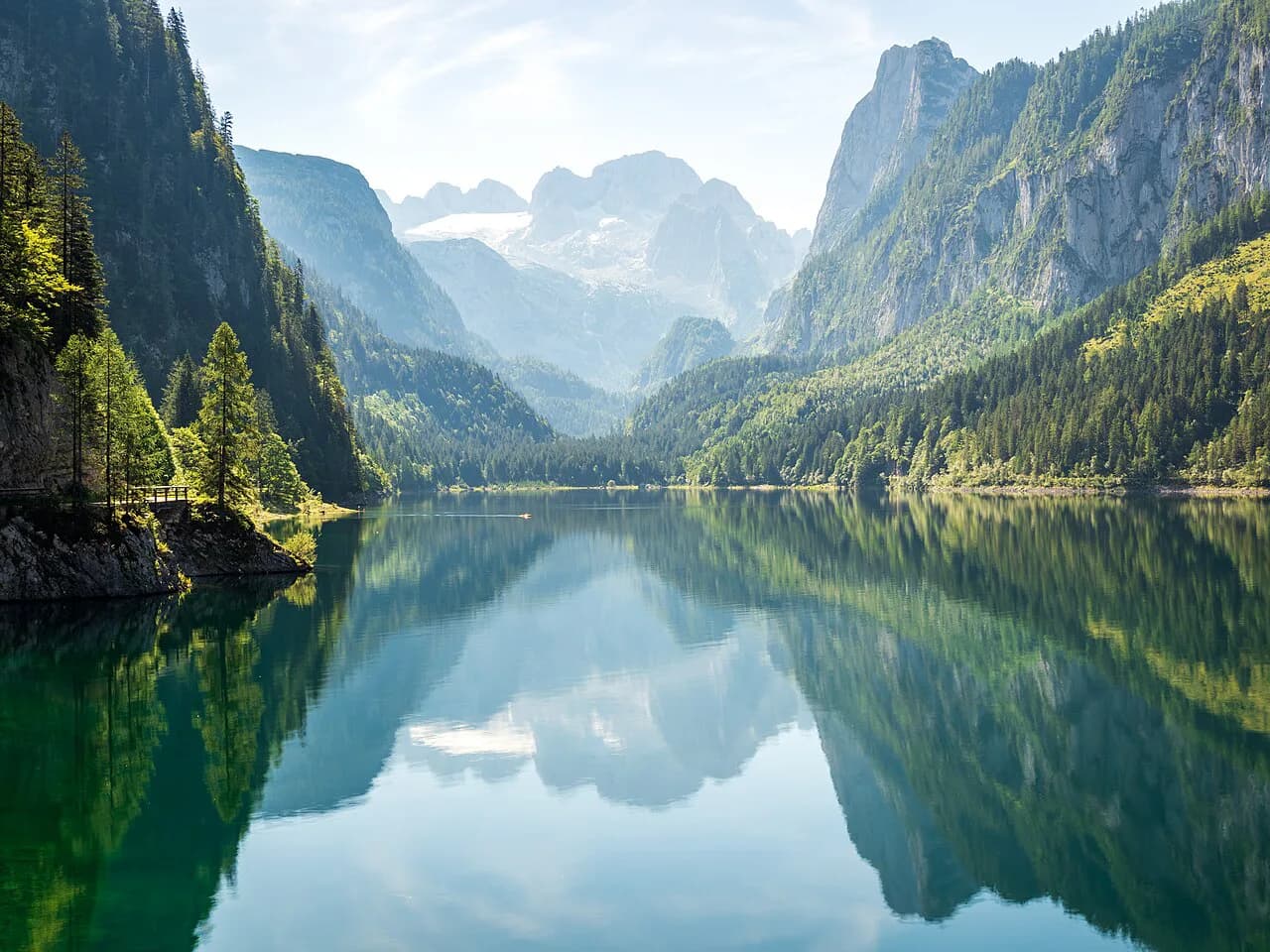
Anything that requires a second valley or a full afternoon away from the village does not belong in a Salzburg day trip. That includes the Dachstein Krippenstein cable car above Obertraun and the lakes at Gosausee, both of which reward a separate day based in the Salzkammergut rather than a hurried add-on. If you have a car and a long summer evening, Bad Goisern on the way back is a gentler stop than another mountain, and it keeps you on the road toward Salzburg.
Book the arrival before anything else
The arrival decides the day: bus 542/543 for the shortest walk into the village, or the train plus the boat crossing for the better approach. Price the parking if you drive, keep the Salzberg block in the middle of the day, and match your return connection before you leave Salzburg. Build the rest of the trip around that spine and Hallstatt fits into a day without feeling rushed.
Explore more Hallstatt guides
Frequently Asked Questions
Can you do Hallstatt as a day trip from Salzburg?
Yes, provided you fix the arrival and the return first. Bus routes 542 and 543 reach the Hallstatt Lahn terminal at the edge of the village, while the train stops across the lake at Hallstatt Bahnhof and needs a boat crossing to the landing stage. Choose one, check both directions in the ÖBB and Postbus timetables, and the village center itself fits into a few hours on foot.
Where do you park in Hallstatt and what does it cost?
Cars use lots P1 to P4 outside the pedestrian center. Rates are published on the market square page linked above, and the first quarter hour is free; check the official table for hourly and daily charges.
Do you need a boat to reach Hallstatt from the train station?
Yes. Hallstatt Bahnhof sits on the opposite shore of Lake Hallstatt, so the village is reached by boat to the landing stage. Treat the crossing as part of the journey and check its times against your train rather than assuming it runs whenever you arrive.
Sources
Notes for your next Austrian town break
Optional updates when we add or revise town guides.
You might also like
Continue reading
More guides you'll find useful