
Schattenburg Castle, Feldkirch: A Visitor's Guide to the Castle Museum
Schattenburg Castle is worth an hour of your Feldkirch afternoon: it is a hilltop castle turned museum, so one ticket buys both the medieval building and the collection inside it. The rooms run from a surviving High Gothic interior to a costume room and a cabinet of town views. This guide covers where the castle sits above the old town, the walk up from the station, what each room holds, and the rules for groups.
Treat the castle and the museum as separate things to plan. The building is the landmark you spot from the streets below; the museum is the ticketed sequence of rooms inside, run by the Heimatpflege- und Museumsverein Feldkirch, the town's local-history society, at Burggasse 1. Knowing that split keeps expectations honest, especially if you have an hour between trains and only want the view.
What Schattenburg Castle is and where it sits above Feldkirch
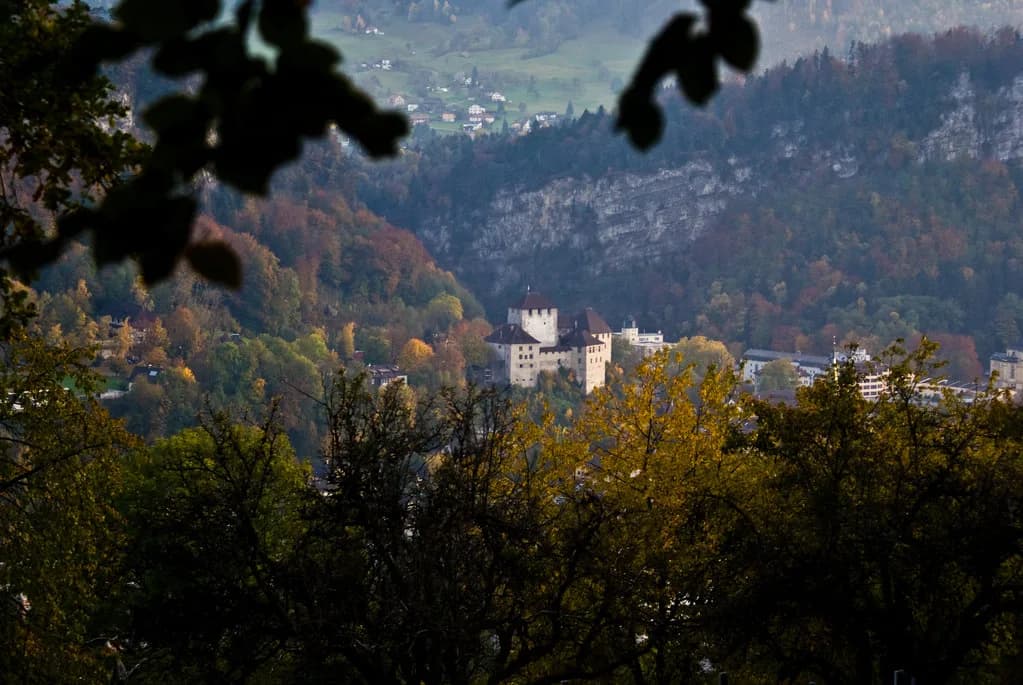
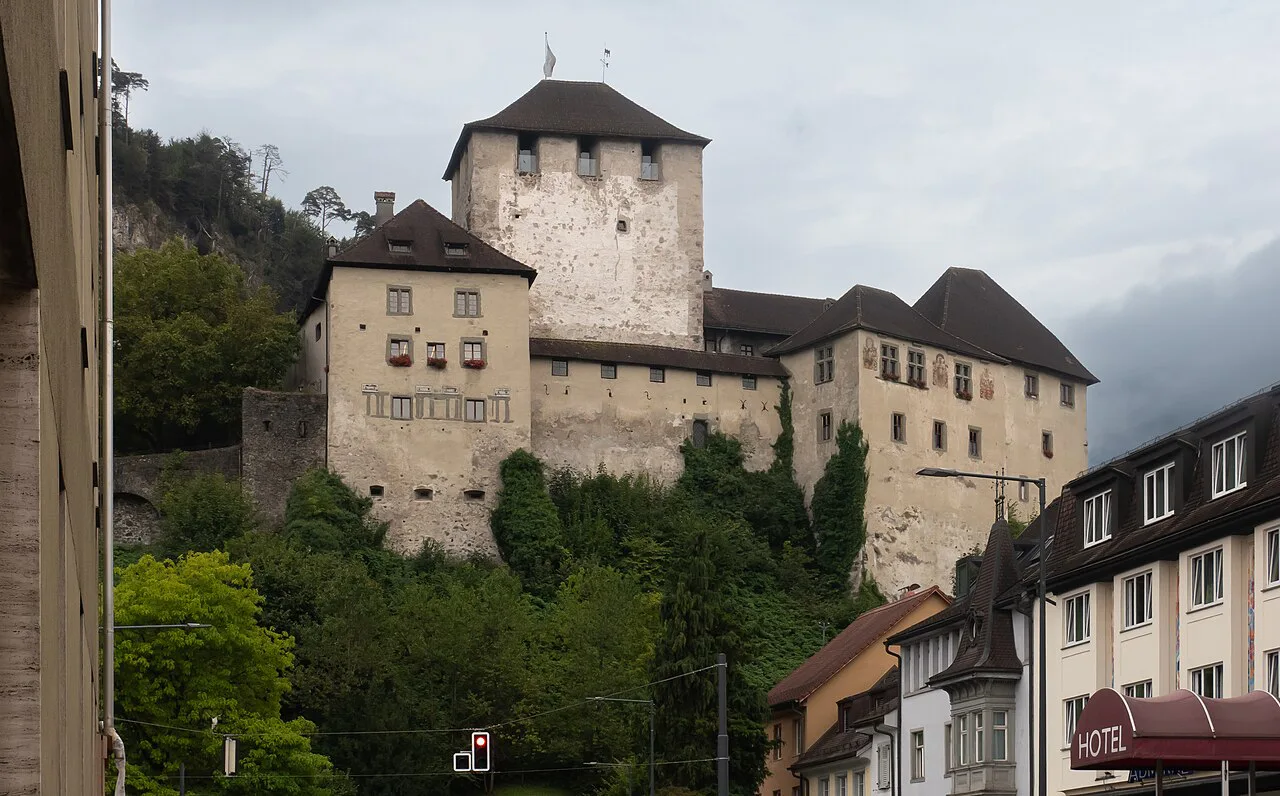
Schattenburg is the castle on the hill directly above the old town of Feldkirch, a town in Vorarlberg in western Austria, close to the Swiss and Liechtenstein borders. Because it rises straight out of the town, you never need a car to reach it.
The museum occupies real castle rooms rather than a purpose-built gallery, and its address is Burggasse 1, 6800 Feldkirch. That matters for orientation: once you are in the lanes of the Altstadt, the castle is the building above you, and the museum entrance is reached on foot. Fill the visit around the architecture and the local-history collection rather than expecting a state treasury.

Getting there: on foot from the old town and the railway station
Walk. The climb from the old town is short enough to fold into an afternoon. Because the approach is uphill, wear shoes you can climb in and leave the suitcase at your lodging; the lanes below are cobbled in places.
Pair the walk up with a slow loop through the old town on the way back down. The lanes around the Marktgasse and the arcaded squares give you the feel of the town, and you can end at the Katzenturm, the stout round tower that once formed part of the town walls. That way the hill is the high point of a single circular walk, not a separate outing.

Admission fees and opening hours for the castle museum
Check the museum's own admission-fees and opening-hours pages before you climb the hill; those pages set the current ticket prices in euros and the days the rooms are open. The castle also publishes a separate page for booking group visits. Do not rely on prices quoted in reviews, which age quickly.
Two practical rules come straight from the museum. All groups, with or without a guided tour, must register their visit in advance, and guided tours for groups are offered outside regular opening hours. If you are traveling as a party of several households, send the registration before you arrive rather than turning up at the door.
What the museum covers, room by room
The museum is organized as a sequence of named rooms, and the route is easy to follow without a guide. You move through the bailiff's office, the old castle chapel, the ladies' bower, the small hall, the keep, and a set of domestic rooms. Each room has its own label and display, so you can linger where your interest sits.
Most visitors should give the Gothic Room the longest stop, then move faster through the costume and family rooms unless folk furniture is your thing. The castle also offers a virtual tour online, useful for deciding in advance whether the interior justifies the climb. If you are short on time, that preview tells you which rooms to prioritize.
The Gothic Room: the castle's surviving High Gothic interior
The Gothic Room is the highlight because it is the only room in the castle that still keeps its High Gothic decoration, including wood paneling with pointed arches and profiled cover strips. The room sits in one of two projecting structures added in 1427 under Count Friedrich von Toggenburg, and it then served as the bailiff's office. Stand back to read the carving rather than rushing to the display cases.
Of the twenty coats of arms of Feldkirch patricians and bailiffs that once covered the walls, only two survive: those of bailiff Heinrich Walther von Weissenberg and his wife Maria Elisabeth née Furtenbach, dated 1667. The room also holds late medieval religious sculpture from churches and chapels around Feldkirch. That combination of original woodwork and carved figures is what sets this room apart from the rest of the museum.
The bailiff's office, the old castle chapel and the keep
Beyond the Gothic Room, the bailiff's office and the old castle chapel widen the story from administration to worship within one fortress. The chapel is a small medieval space, so expect to spend minutes rather than half an hour there. Then continue to the keep, which the museum lists among its rooms and which marks the climb to the top of the castle.
The ladies' bower and the small hall continue the domestic side of castle life. Read the room labels as you go, because the museum explains each space with its own note rather than a single catch-all panel. That structure rewards a slower walk than you might take through a conventional history museum.
Objects worth pausing on: Feldkirch's city treasury coffer and the 1550 clock
In the Gothic Room, an iron coffer dated 1786 served as Feldkirch's city treasury, and it is decorated with the town's coat of arms and the red-white-red shield of the Habsburgs. In that same year Empress Maria Theresia ordered the modernization and reorganization of the town's finances, which explains why a municipal strongbox ended up in a castle. It is a small object with a large story about how the town was governed.
Near the tiled stove, five supporting feet survive, some carved with a lion's head, and the clock hanging between the two windows dates from around 1550. Look for these details at eye level and low down; they are easy to pass while reading the bigger panels. They give the room its texture as a working medieval office rather than a period set.
The Traditional Costume Room, the middle-class family room, and the Feldkirch room
The Traditional Costume Room and the room of a middle-class family shift the museum into the everyday life of the region. Local dress and a furnished family interior show how people lived after the Middle Ages, which balances the medieval architecture elsewhere. These rooms suit anyone traveling with an interest in folk culture rather than military history.
The Feldkirch room, labeled the Veduta cabinet, collects views of the town, and it works well as a final stop because it shows the streets you have just walked. The museum publishes a virtual tour and a room-by-room index online, which helps you decide whether the costume and family displays merit the time.
How much time to allow and how the visit fits an afternoon in Feldkirch
Plan roughly an hour to ninety minutes for the castle interior and the keep, and allow extra if you read every room panel. The rooms are modest in size but numerous, so the visit can stretch without feeling padded. Pair it with a walk through the old town below for a comfortable half day.
If you are short on time, do the Gothic Room and the keep first, then leave the costume rooms for a second pass. That order secures the castle's standout interior and the best view before any closing time matters. Groups should fix their registration before building an afternoon around the visit.
Booking rules for groups and guided tours outside regular hours
Every group must register its visit with the museum, whether or not it books a guide, and guided tours can be arranged outside the normal opening hours. That makes Schattenburg unusually flexible for a small club or a family reunion, provided the request goes in ahead of time. Use the online registration form on the castle website rather than calling at the door.
Solo travelers and couples can simply turn up during opening hours and buy admission; the registration rule applies to groups. Entry is to the castle museum as a whole, so there is no separate ticket for individual rooms. Check the site before you travel to confirm the hours on the day you plan to visit.
Nearby in Feldkirch after the castle
Come down the hill into the old town and take in the lanes around the Wasserturm, the old water tower. These are the town's compact landmarks, easy to see on the way back to the station. They round out a short visit without another climb.
For a quieter contrast, the Johanniterkirche holds contemporary art in a former church, and the nearby Palais Liechtenstein gives you a town palace to visit after a fortress. If you are traveling with children, Wildpark Feldkirch on the Ardetzenberg makes an alternative afternoon.
Should the castle be your first stop in Feldkirch?
Yes, if you want the town's history in one compact place and can handle a short climb. Make the Gothic Room and the keep the core of the visit, and let the costume and family rooms fill any spare time. Groups should register ahead, and everyone should confirm hours and fees on the museum's own pages before setting out.
If you would rather stay on level ground, the old town holds the Katzenturm and the cathedral close together, and those fill an afternoon without the hill. Either way, Schattenburg is the landmark that tells you where the old town sits, and it is worth the walk even on a tight schedule.