
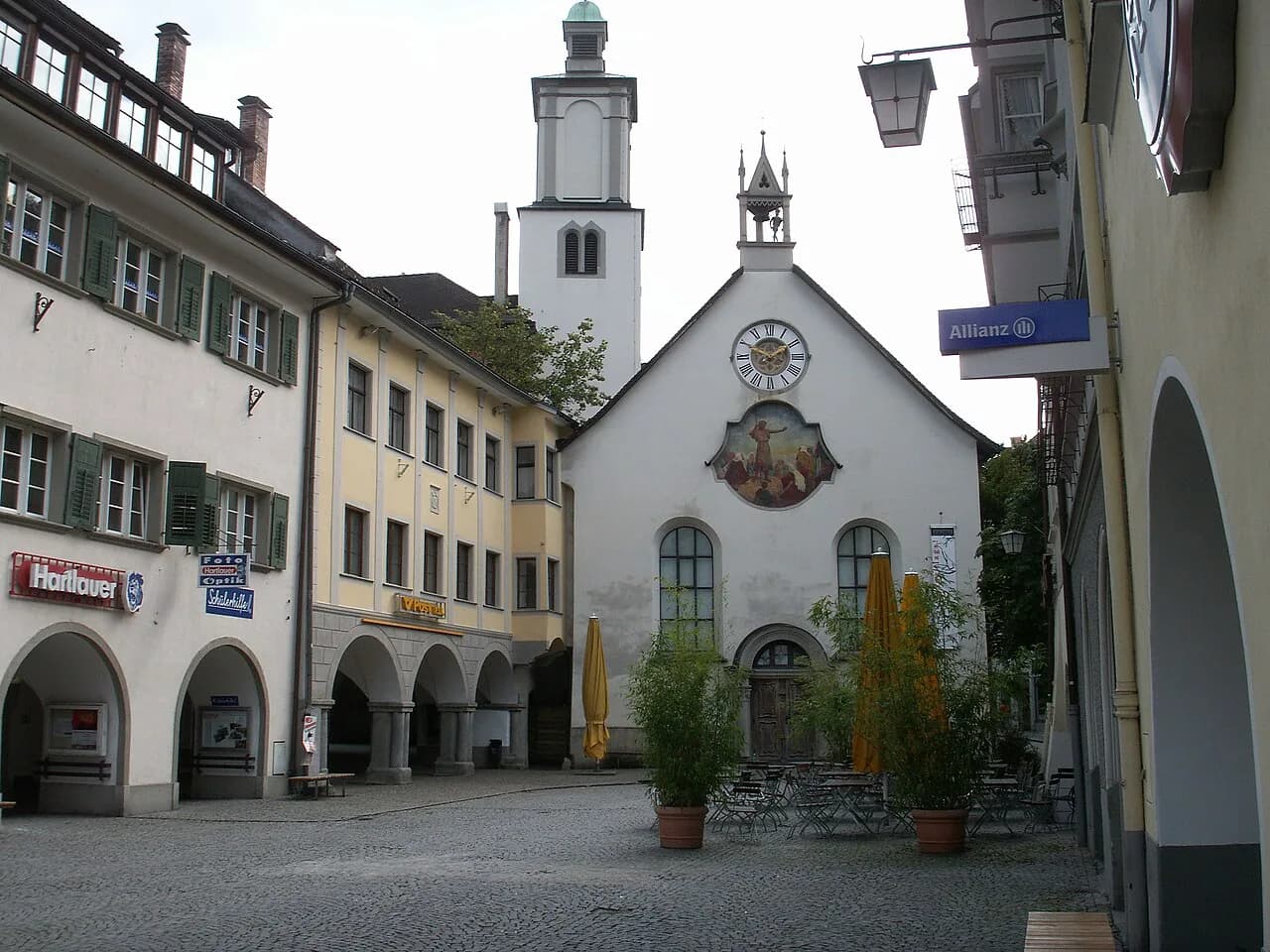
Johanniterkirche Feldkirch: A Visitor's Guide to the Art Church

The Johanniterkirche is worth 30 to 45 minutes of a Feldkirch old-town walk, not a trip of its own. It is a compact church building on Marktgasse that now serves as a contemporary art space, and the format is the draw: one artist takes over the nave, the floor and the rear rooms, so you read the show through the building rather than in a neutral white room.
This guide covers what the space is, how to find it on Marktgasse, what a visit involves inside, and what to pair with it on the same short loop through the center. Hours, fees and exhibition dates are given only as published, with the year attached where the run has ended.
What the Johanniterkirche is now
The building presents itself as the Johanniterkirche Feldkirch, an exhibition venue in the city's old town rather than a parish church with a standing congregation. What it stages is contemporary art: installations, video, sculpture, textiles and sound pieces by individual artists, listed year by year in its archive. Visitors should arrive expecting a gallery in a sacred shell, with the architecture doing part of the work.
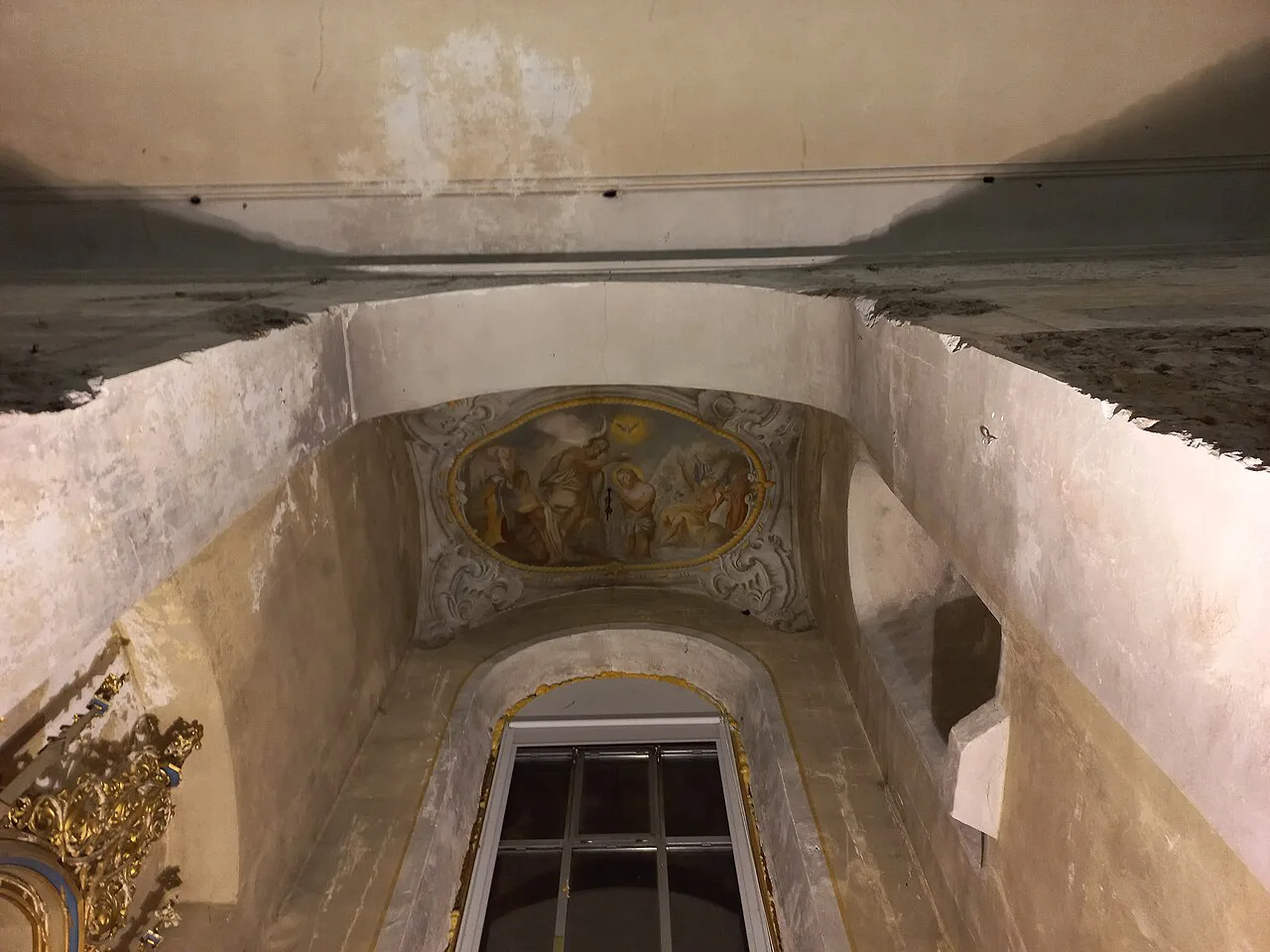
That means the room is never neutral. An installation may hang above an exposed floor, occupy the choir, or sit in the small chamber at the back, so the show changes the way you move through the building as much as what you look at. If you want a conventional church interior with altars and pews set out for services, Feldkirch has other churches for that; come here for the art.

Where it sits on Marktgasse
The address is Marktgasse in 6800 Feldkirch, a street in the old town a few minutes on foot from the main squares. Because it is embedded in the historic center, the church works best as one stop on a walking loop rather than a destination you drive to and leave. Wear shoes you can walk in, since the surrounding lanes are cobbled and the approach is on foot.
Feldkirch itself sits in Vorarlberg in Austria's far west, close to the Liechtenstein border, which makes the old town an easy stop for travelers moving between Switzerland, Liechtenstein and the Austrian Alps. If you are building a short list of sights in the center, the city's other monuments fill out the same afternoon without any further travel.
What you see inside
Inside, the format is one artist across the whole church. The building contributes a nave for large-scale work and a former sacristy at the rear; in the 2026 Kessler show that rear room held the most enclosed piece, a skull slowly overgrown by coral. Walk to the back before you leave, since a single installation can put its quietest work there.
The exhibition archive shows how varied the material is across shows: video, woven textile, sculpture, photography, performance-based projects and sound all appear in the year-by-year list. Individual installations have included a large suspended woven carpet, a projected video work and a transforming skull, and that range is why a single visit can feel longer than the square meters suggest.
The rotation of exhibitions
Each show is a single-artist installation with a fixed run of weeks or months, then it comes down and the next artist takes over. The archive groups past exhibitions by year, so you can see the pattern rather than guessing at the program. Read the current exhibition notice on the venue's own pages before you travel, since the building is given over to one show at a time.
Because one artist fills the building, expectations should match a small venue. There is no permanent collection to fall back on and no second gallery to wander into if the current show does not land with you. The trade-off is intimacy: you can usually stand close to the work and take it in slowly instead of filing past it.
A recent example: Between States of Matter
Mathias Kessler's Between States of Matter ran from 20 June to 26 September 2026, curated by Arno Egger, and shows what the single-artist format looks like at full stretch. Kessler, who comes from the Kleinwalsertal and has long lived in New York, built the show around transformation and ecological change, treating the church as an active part of the work rather than a container.
In the nave, a video piece took Caspar David Friedrich's Das Eismeer of 1823/24 as its starting point and let the romantic ice landscape dissolve in accelerated time. Above the opened-up church floor hung a large handwoven carpet made from plastic waste collected in Turkey's informal recycling trade, setting global material cycles against the archaeology of the building. In the former sacristy, a human skull was gradually overgrown by coral, and admission to that 2026 exhibition was free.
How much time to allow
Budget half an hour for the church itself and up to 45 minutes if a video work is running or you like to read the accompanying texts. The space is small, so the constraint is attention rather than distance walked. A single installation rewards a slow second pass; a quick photo lap misses why the artist used this building.
Pace it as the middle of an old-town walk rather than the first or last item. Arrive, see the show in full while your attention is fresh, then carry on to the surrounding lanes and squares. If you are traveling with someone who prefers monuments to installations, split up for this stop and regroup nearby.
Admission and opening times
The church's own site publishes opening hours of Tuesday to Friday 10:00–12:00 and 15:00–18:00, and Saturday 10:00–14:00, with the building closed in the midday gap on weekdays. A news report on the 2026 Kessler exhibition separately lists Tuesday to Friday 10:00–18:00 and Saturday 10:00–14:00, so the two published versions differ on weekday afternoons. Read the current notice on the venue's own pages before you go; the hours confirmed there cover Tuesday to Saturday, so do not build a Sunday or Monday visit around this stop.
For the 2026 exhibition the entrance was free, which is useful as a guide to the venue's usual scale but not a standing guarantee for later shows. Fees, if any, appear with the individual exhibition listing. Treat this as a low-cost stop and keep your ticket budget for the castles and museums elsewhere in town.
Nearby in the old town
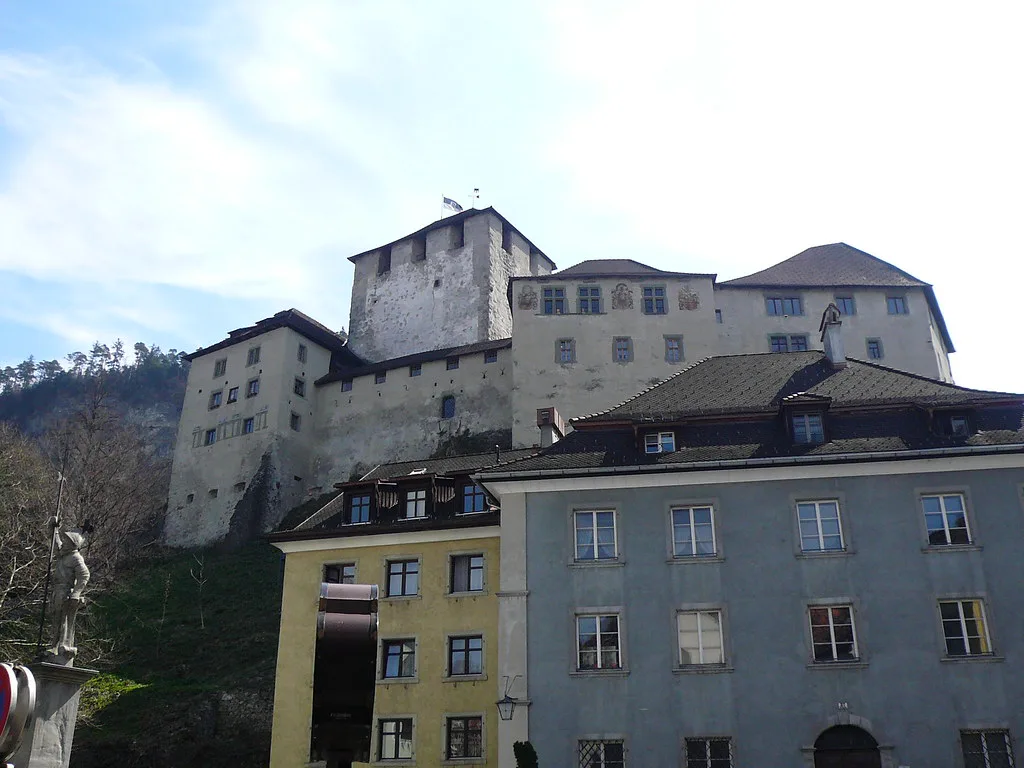
Pair the church with Schattenburg Castle Feldkirch, the hilltop fortress above the center that gives you the town's history and a view back over the roofs. The climb is the trade-off, but it turns a 30-minute art stop into a proper half day. Do the castle first if the day is warm and the church in the cooler middle hours.
Two smaller landmarks, the Katzenturm and the Wasserturm, sit in the same old-town fabric and can be worked into the same stroll without a detour. Neither needs a long stop, so they suit the walk between the church and the river. If you have children along, Wildpark Feldkirch is the outdoor alternative on a separate half day.
Practical notes before you set out
The entrance is on Marktgasse, and the church answers inquiries by email at the address published on its site, which is the right channel for questions about a specific show, group visits or access. Plan a self-directed visit and read the wall texts as you go, since the published material describes exhibitions rather than guided tours or a shop. Opening hours and the current exhibition are the two things to confirm, and the venue's own pages carry both.
Feldkirch is easy to reach by train from Bregenz and the Rhine valley, and the station is a walkable distance from the old town, which makes the church a sensible stop without a car. Travelers driving through Vorarlberg can leave the car for the day and cover the center on foot. Either way, the visit costs you little more than the time you give the current installation.
Is the Johanniterkirche worth a stop?
Yes, if you accept it for what it is: a 30-minute art stop inside a historic church, not a museum you cross town for. The single-artist format is the reason to go, and a show that uses the nave, the floor and the rear sacristy will stay with you longer than its size suggests.
Slot it into a Marktgasse walk, check the current exhibition first, and keep the rest of your Feldkirch time for the castle and the squares. If the installed show does not appeal, skip it without regret and give the hour to the old town instead.
Explore more Feldkirch guides
Frequently Asked Questions
Is the Johanniterkirche still a working church?
It functions as a contemporary art venue in Feldkirch's old town, with exhibitions by individual artists installed in the church space and its former sacristy. Its own pages present it as an exhibition site with published opening hours, and the archive lists shows by year.
How do I find out what exhibition is on when I visit?
Check the venue's own pages, which carry the current exhibition and its dates, and use the archive to see what has been shown in past years. Opening hours appear alongside the exhibition notice, so read both before you travel to Feldkirch.
How long does a visit take?
Allow around 30 to 45 minutes. The building is compact, but a video work or a large installation can extend the stop, and the room at the rear is easy to miss if you leave quickly.