
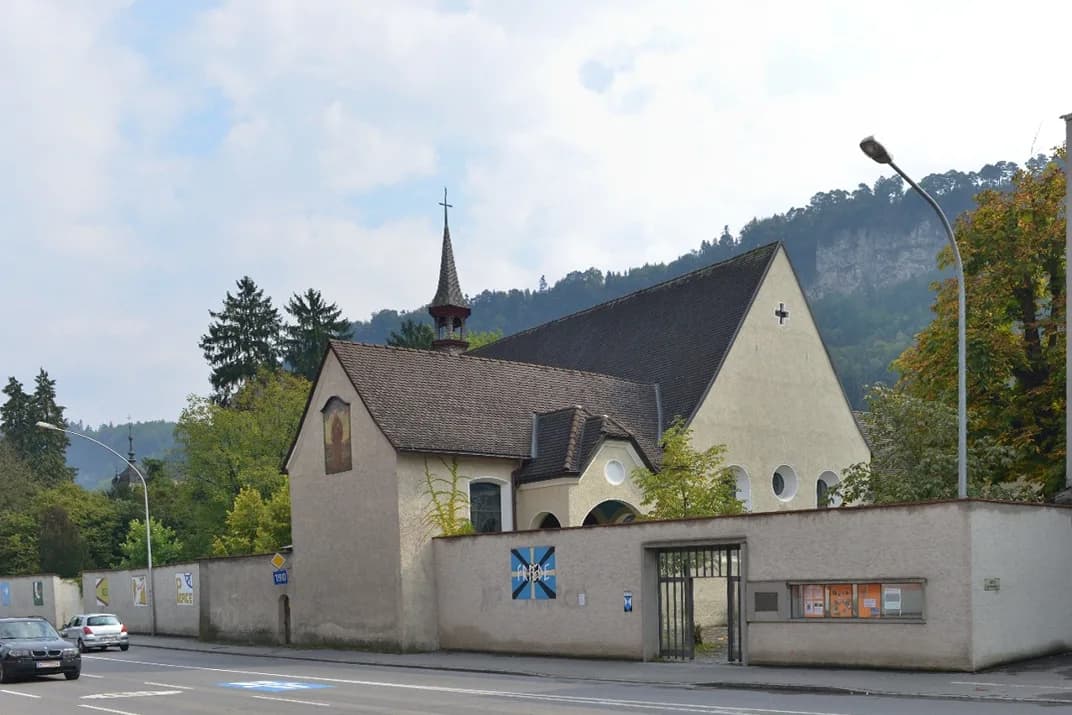
Kapuzinerkloster Feldkirch: A Capuchin Friary Inside the Old Town

The Kapuzinerkloster Feldkirch is a small working Capuchin friary, not a museum with a ticket desk, and its main visitor-facing element is the friary church consecrated in 1605. It sits at Bahnhofstraße 4 at the edge of Feldkirch's old town, close enough to the station that it fits naturally into the first or last hour of a visit. This guide covers where the friary is, what to see in the church, how long to allow and what else the grounds hold.
What the Kapuzinerkloster Feldkirch actually is
Capuchins have lived at this site since 1602, when the foundation stone was laid at the request of Feldkirch's citizens, and the church was consecrated three years later. The church holds the principal relic of Saint Fidelis von Sigmaringen, who is a patron of both Feldkirch and Sigmaringen, which makes the interior the centerpiece rather than the building's exterior. Expect a compact, plain Capuchin church rather than a baroque showpiece, and treat the rest of the compound as a home and workplace.
The friary self-describes as a place of prayer and of encounter, and the friars are active in pastoral care inside the house and across the region. Since a general renovation finished in 2007, many groups have used the friary's rooms and its garden, and pilgrims can stay a night in the friary's pilgrim room. That mix of worship, social work and group use is what you are walking past, so keep voices low and do not wander into closed wings.
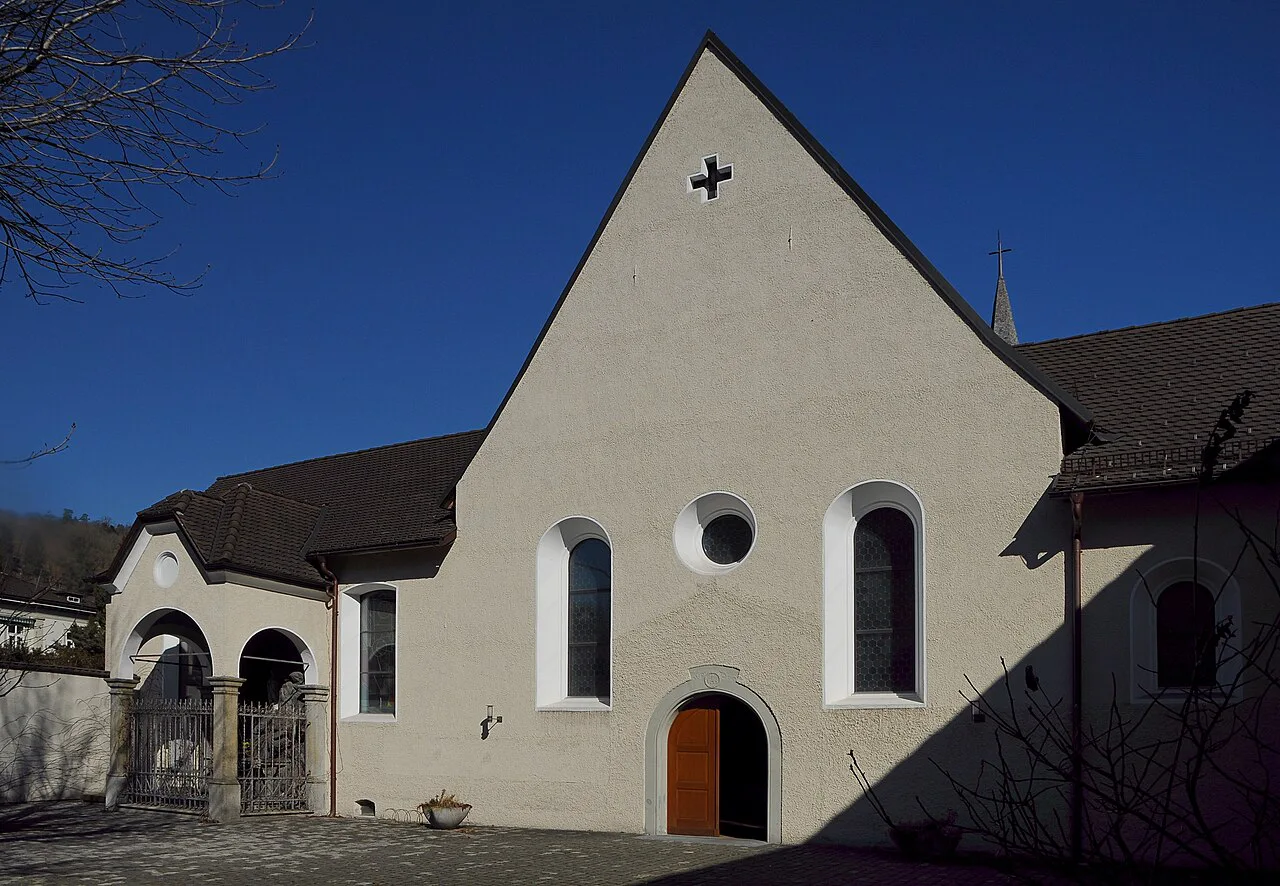

Where it is on the map
The address is Bahnhofstraße 4, 6800 Feldkirch, on the station side of the old town rather than deep inside it. When the friary was built, the site lay outside the city walls; the town has long since grown around it, which is why the walk from the platform is so short. If you are working through the sights in Feldkirch, the friary makes sense as a pause between the station and the historic center.

How to get there and what to do next
Arrive by train at Feldkirch station and walk to Bahnhofstraße 4; the friary is a few minutes on foot, so no bus or taxi is needed. The friary works as a first stop on arrival or a last one before departure, and Feldkirch's wider rail and Postbus connections are worth checking at the station departure boards rather than assuming a frequency.
Coming by car, the friary lies just off the ring around the old town, and central Feldkirch parking is metered in places. The friary's own source gives the street address but no visitor parking of its own, so plan on a public garage or a short walk from the station area.
Inside the Capuchin church
The church is the part of the complex to enter. Its dedication in 1605 and the Fidelis shrine give it a specific identity among the town's churches: Fidelis von Sigmaringen was a Capuchin friar, and his relic has drawn pilgrims here for centuries. The interior follows Capuchin restraint, so look for the shrine and the side chapels rather than fresco cycles on a grand scale.
Services and prayer times are published by the friars themselves and can change with the liturgical calendar, so read the notices at the door or the Gottesdienste page on the friary's site before you plan a visit around Mass. Outside service times the church may be open for quiet prayer, but the friars do not run a ticketed sightseeing program.
Visitors often treat the church as a photo stop on the way to the Altstadt, but the Fidelis shrine deserves a few quiet minutes on its own. If a service is in progress, wait outside or come back later rather than walking through.
The story in short: 1602 and the walls
The founding in 1602 was a civic project: the townspeople asked for the friary and paid for it to stand outside the walls, in keeping with Capuchin foundations of the period. The church followed in 1605, and the community has held the site through reformations, fires and the changes of the nineteenth and twentieth centuries. The present buildings reflect the 2007 general renovation more than the original sixteenth-century fabric.
Who lives here now
Five Capuchins from Austria, Germany and India live in the friary, and their ministry reaches people in difficult circumstances, including through the slw Soziale Dienste der Kapuziner, the order's social-services arm. On the grounds, the Tischlein deck dich charity hands out food to people in need once a week. Those activities mean the courtyard and entrances can be busy with volunteers and guests at certain hours rather than with tourists.
What else happens on the grounds
After the 2007 renovation, many groups have used the friary's rooms and the garden, and a pilgrim room allows pilgrims a night's lodging. The friars also run retreats and adult formation within the German Capuchin province, and the grounds host Franciscan gatherings. For a visitor, that means the friary is alive with programmed use, so a quick look at the courtyard is fine but do not expect an open-house tour.
The garden and the guest room
The friary garden is used by groups rather than kept as a public park, and the pilgrim room serves overnight guests rather than tourists booking a city stay. A brief visit means the church plus a look at the entrance area; a quiet stop means sitting in the church for prayer or lighting a candle. If you want to see more of the grounds, ask at the friary office on Bahnhofstraße rather than assuming access.
How much time to allow
Allow 20 to 30 minutes for the church and the entrance area, and longer only if you attend a service or want unhurried prayer at the Fidelis shrine. The compound is compact, so there is no circuit to walk; the time goes into the church itself. Budget more of your day for Schattenburg Castle, Feldkirch, and the old-town lanes and keep the friary as a short, deliberate pause.
Around Bahnhofstraße: how the friary fits a walk
From the friary it is a short walk into the Altstadt with its lanes and squares, and uphill to Schattenburg Castle Feldkirch, the Habsburg-era fortress that now holds a museum and looks down on the town. The Katzenturm, a stout round tower from the old fortifications, stands on the old-town edge and pairs naturally with the castle on the same walk. Together these give Feldkirch a half-day of sights without a single train ride.
For something slower, Wildpark Feldkirch on the Ardetzenberg has an animal enclosure and easy paths above town, and it suits an afternoon when the church and castle are done. Fuchshaus PETER KAISER is the Wildpark's alpine-style restaurant and a natural lunch stop for that side of town. Both sit outside the center, so save them for a day with time to spare.
If you are planning the whole town rather than one sight, the Feldkirch Attractions: 8 Visitor Guides overview maps the castle, the towers and the churches against each other so you can order them in a single afternoon. The friary fits best as the stop closest to the station, at either end of that round.
Practical notes: services, prayer and the grounds
Service times and prayer times change through the church year, so read them on the friary's own site or on the notice board at the door. The friary does not sell tickets, and it does not offer guided tours of the buildings on a set schedule, so do not plan around one. If you want to bring a group, contact the friary office in advance at the number listed with the Bahnhofstraße address.
A short stop at the friary adds a working religious house to a Feldkirch walk that is otherwise heavy on castle walls and town squares. Come with the expectation of a church, not a museum, and the visit lands well.
Should the friary get part of your Feldkirch afternoon?
Yes, if you want the church and the Fidelis shrine; it takes less than half an hour on the way from the station into town. No, if you are hoping for cloisters, a museum or a garden tour, because the friary is a home for five Capuchins and their social work, not a visitor attraction. Pair it with Schattenburg Castle, Feldkirch, and the Katzenturm and Feldkirch's compact center fills a satisfying half-day.
Explore more Feldkirch guides
Frequently Asked Questions
Is the Kapuzinerkloster Feldkirch open to visitors?
The church is the part visitors enter, and the friars publish service and prayer times on their own site and at the door. The buildings and garden are used by the community, its groups and its social services, so access beyond the church depends on the friars on duty.
Do you need a ticket for the Capuchin church in Feldkirch?
No ticket desk operates at the friary, and a visit to the church for prayer or a look at the Fidelis shrine is a short stop, not a guided tour. Service and opening times are listed on the friary's own site.
How far is the Kapuzinerkloster from Feldkirch station?
It stands at Bahnhofstraße 4, a few minutes on foot from the station platform. That makes it the easiest sight to slot in on arrival or before a train.
What is there to do nearby?
Walk into the Altstadt, look at the Katzenturm on the old-town edge, and climb to Schattenburg Castle, which now holds a museum and looks down on the town. On a longer day, Wildpark Feldkirch on the Ardetzenberg offers an animal enclosure and paths above town.