Linz History: A Timeline Tied to Places You Can Still See
Linz history in a short timeline, from river town to twentieth-century industrial city, tied to the squares, churches and buildings you can still see today.
On this page
Linz is known as an industrial city on the Danube, and its history reads best as a walk: nearly every period left a structure you can still find. This guide runs from the medieval town on the river through the 1919 merger with Urfahr to the New Cathedral, the interwar factories and the sites tied to the National Socialist years.
Dates and building facts come from the Archive of the City of Linz and its published history pages, so you can match each one to a street or facade. Pair the timeline with the things to do in Linz for the modern city around it, or with the Linz architecture guide for the buildings themselves.
Linz history in one answer
Linz began as a crossing point on the Danube and became a regional capital, then an industrial city whose population grew through a series of incorporations. The Archive of the City of Linz traces its holdings to charters from 1298, which is the earliest documentary layer in its collection rather than a founding date for the town.
That distinction matters on the ground: you will not find a single medieval core sealed off from everything else. Linz expanded by absorbing neighboring communities, so the city you walk through is a patchwork of former villages, riverside quarters and twentieth-century housing, each with its own center and church.
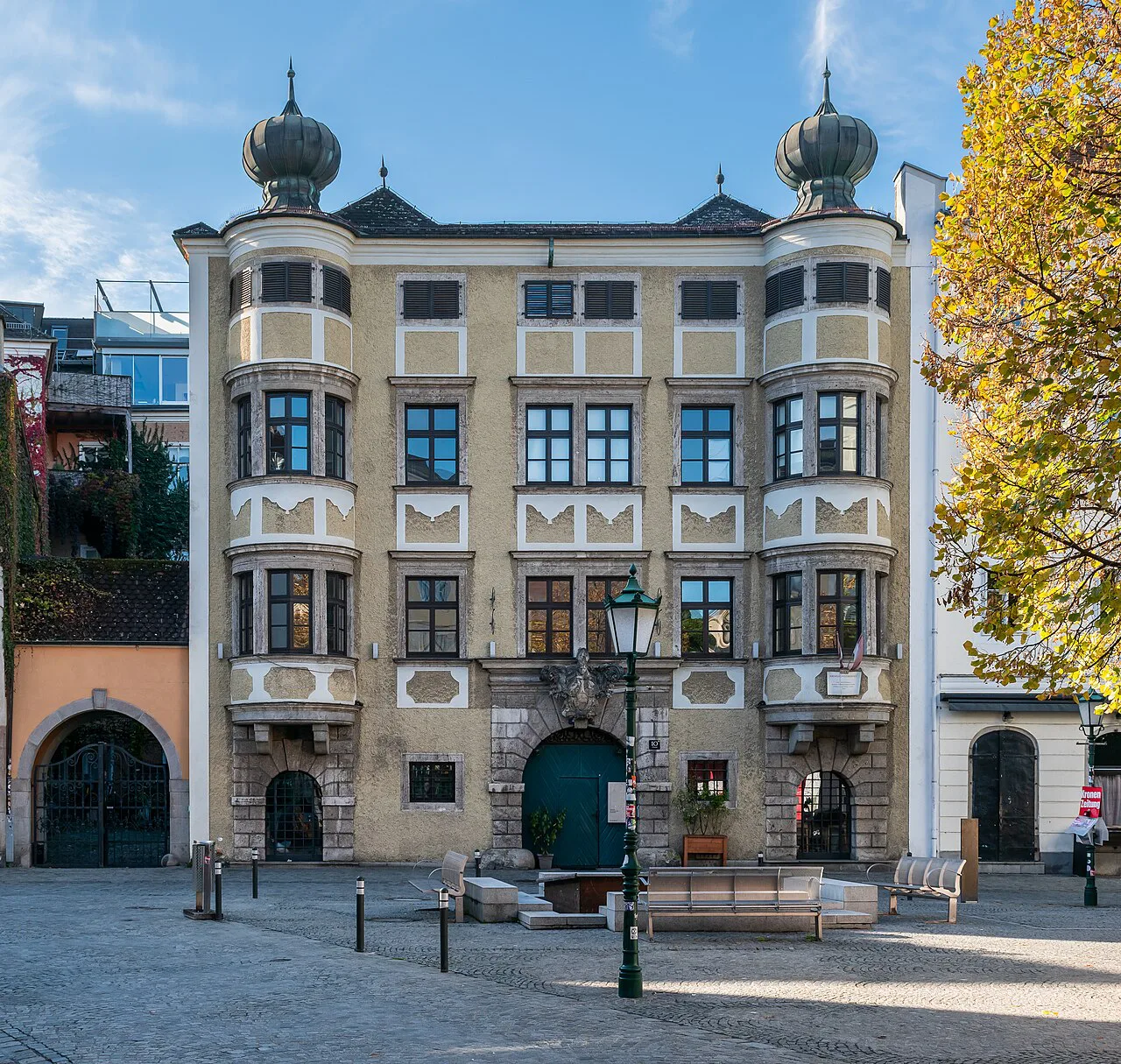
Medieval and early modern Linz: the archive and the town on the river
For a visitor, the practical takeaway is that Linz's earlier history is most visible in its street layout and surviving churches rather than in one blockbuster monument. The archive itself sits in the Neues Rathaus, with a reading room on the third floor.
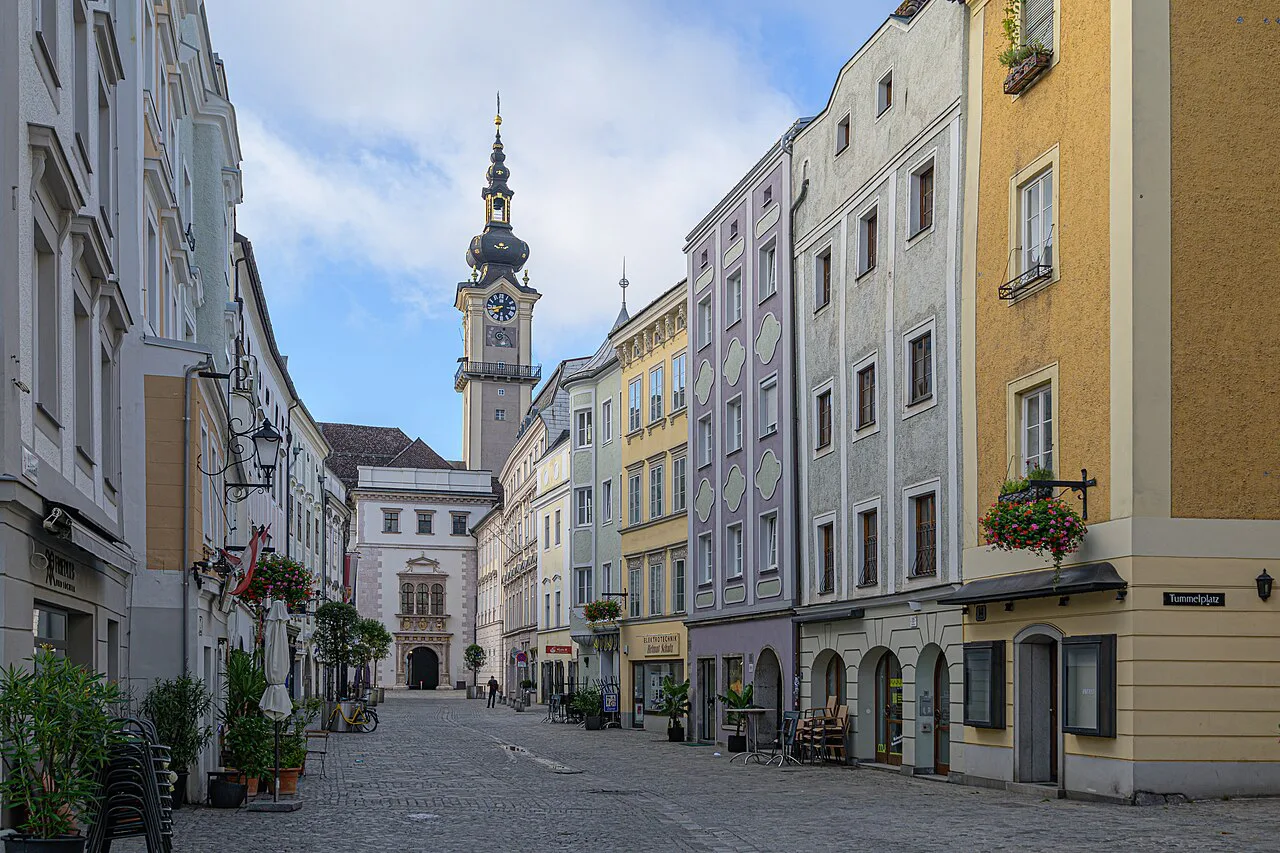
Habsburg and nineteenth-century Linz: trams, railways and new parishes
Parish building kept pace with the growing city. The Pfarrkirche zur Heiligen Familie on the Bürgerstraße was built between 1907 and 1912 to plans by Mathäus Schlager, and a new parish church followed in Kleinmünchen in 1905 and 1906. These are the churches that anchor the outer districts rather than the old center.
The First World War in Linz: shortages, requisitioned schools and camps
The war's aftermath was harsher still: unrest, riots and looting broke out between 1918 and 1920 because of the catastrophic food situation, and martial law was imposed repeatedly. When you see early twentieth-century school buildings in the outer districts, that wartime double use is part of their history.
1919: Urfahr and Pöstlingberg join the city
This is why the city you visit today sits on both banks, with the Pöstlingberg as a northern height above Urfahr rather than a separate excursion town. In the same year, on 16 May 1919, the Social Democrats won the first municipal election held under universal, equal, direct and secret proportional voting for men and women, and Josef Dametz became the city's first Social Democratic mayor.
The interwar city: Parkbad, Tabakfabrik and the Freinberg transmitter
On the Freinberg, a large radio transmitter went into operation in 1936, following an earlier half-kilowatt Marconi transmitter installed in 1928. Other interwar buildings worth knowing by name include the Kolpinghaus, rebuilt in 1930 and 1931 to plans by Hans Steineder, and the Kreuzschwesternschule on the Stockhofstraße, built between 1926 and 1929 to plans by Clemens Holzmeister.
12 February 1934: the uprising that began at the Hotel Schiff
In the years that followed, Linz became a center of organizing by National Socialist activists. The Landstraße address is the one spot in the city center where that February day can be pinned to a specific facade.
Linz as a National Socialist city: the label and what was actually built
Hitler's vision for Linz was an administrative, cultural, industrial and transport center and the most beautiful city on the Danube, planned with leading German architects. In practice the major works carried out served armaments production, above all the expansion of heavy industry, which drove rapid structural change and apartment building as the population grew. The monumental plans for the administrative, cultural and transport center largely never left the drawing board.
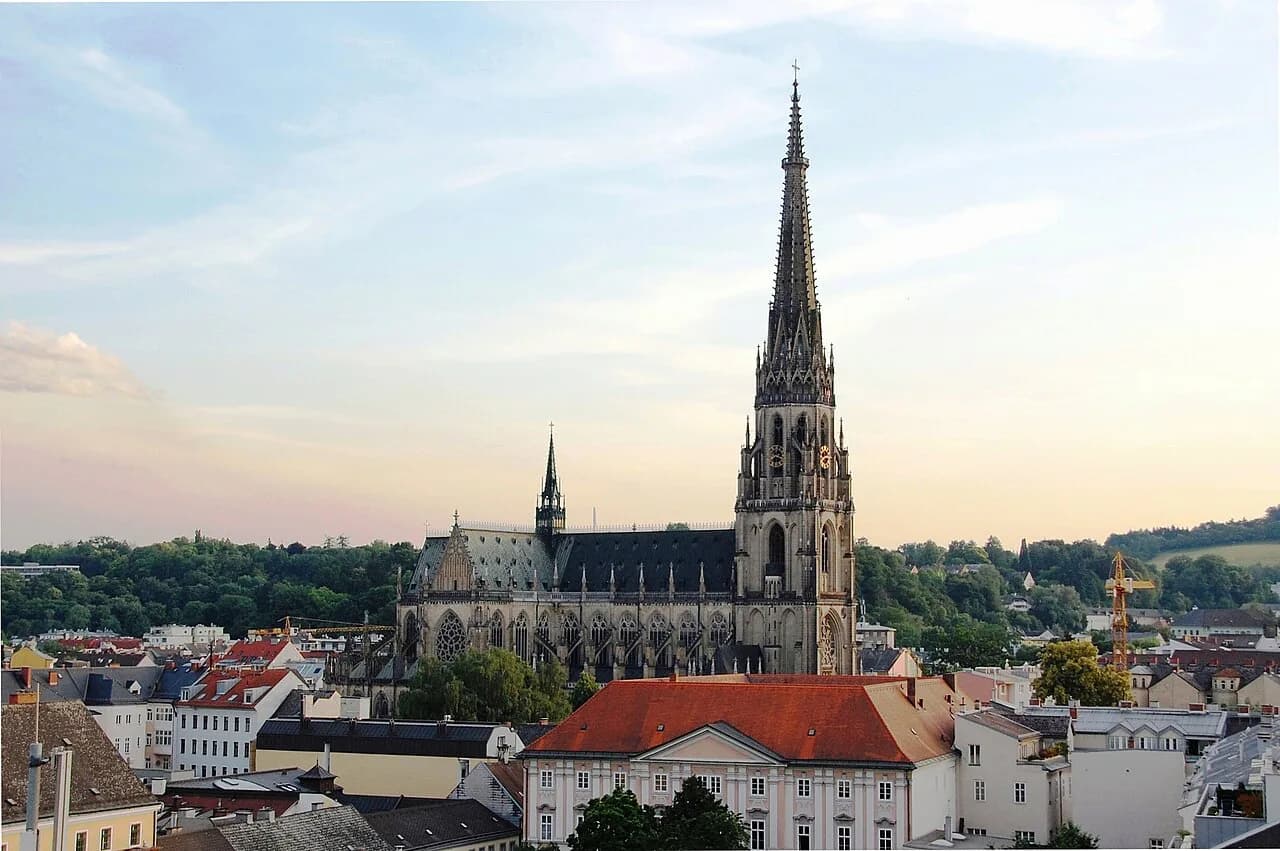
The New Cathedral, dedicated in 1924, as the landmark of the era
Set the cathedral beside the interwar buildings and the pattern of the period becomes clear: Linz was building civic and religious infrastructure for a population that had been assembled through annexation. For the wider set of museums in Linz, including the cathedral's neighborhood, the city's collections fill in the rest of that story.
Where to read more: the archive and its publications
For the National Socialist period, the archive points to the two-volume Nationalsozialismus in Linz, edited by Fritz Mayrhofer and Walter Schuster, and Linz im 20. Jahrhundert, edited by Mayrhofer and Schuster. Visitors who want to follow a single thread through the city should confirm reading-room hours and appointment details directly with the archive before traveling.
Which period will you follow through Linz?
For the practical shape of a day, the one day in Linz itinerary fits these stops into a route, and the archive's own publications let you go deeper on any single period.
Explore more Linz guides
Frequently Asked Questions
What does the name Linz mean?
The city archive's timeline does not give an etymology for the name, and the documented history begins with charters from 1298 rather than a naming explanation. Treat name-origin stories you read elsewhere as separate claims and check them against the archive's publications.
What is Hitler's connection to Linz?
The Archive of the City of Linz explains that Hitler had a close relationship with Linz from his youth, which produced the "Patenstadt" label. Linz was a center of National Socialist political activity in Austria between 1931 and 1934, and his plans to rebuild it as an administrative and cultural center were largely never realized; heavy industry for armaments was what actually expanded.
Sources
Notes for your next Austrian town break
Optional updates when we add or revise town guides.
You might also like
Continue reading
More guides you'll find useful