Bad Gastein: Austria's Belle Époque Spa Town and Its Waterfall
Bad Gastein is a Salzburg spa town built around a thermal waterfall and Belle Époque hotels. See the center, churches and how it fits your route.
On this page
Bad Gastein is a Salzburg spa town at 1,002 m in the Gasteiner Ache valley, and its center is built directly around a waterfall of that river. It is a cure town first and a sightseeing stop second, so the Belle Époque hotels, bath houses and churches are the sight rather than a backdrop. This guide covers the layout, the buildings worth your time and how the town fits a route through the Gastein valley.
Plan on a half day for the center and the waterfall, and a full day if you add the town museum and a look down the valley. The ground is steep, with stairs and slopes linking the terraces, so the walking matters as much as the list of sights.
Where Bad Gastein sits in the Gastein valley
Bad Gastein belongs to the province of Salzburg, in the district of St. Johann, and lies in the valley of the Gasteiner Ache at the foot of the Graukogel. The town has long been Austria's leading medicinal spa, known for thermal springs that issue at the base of that mountain.
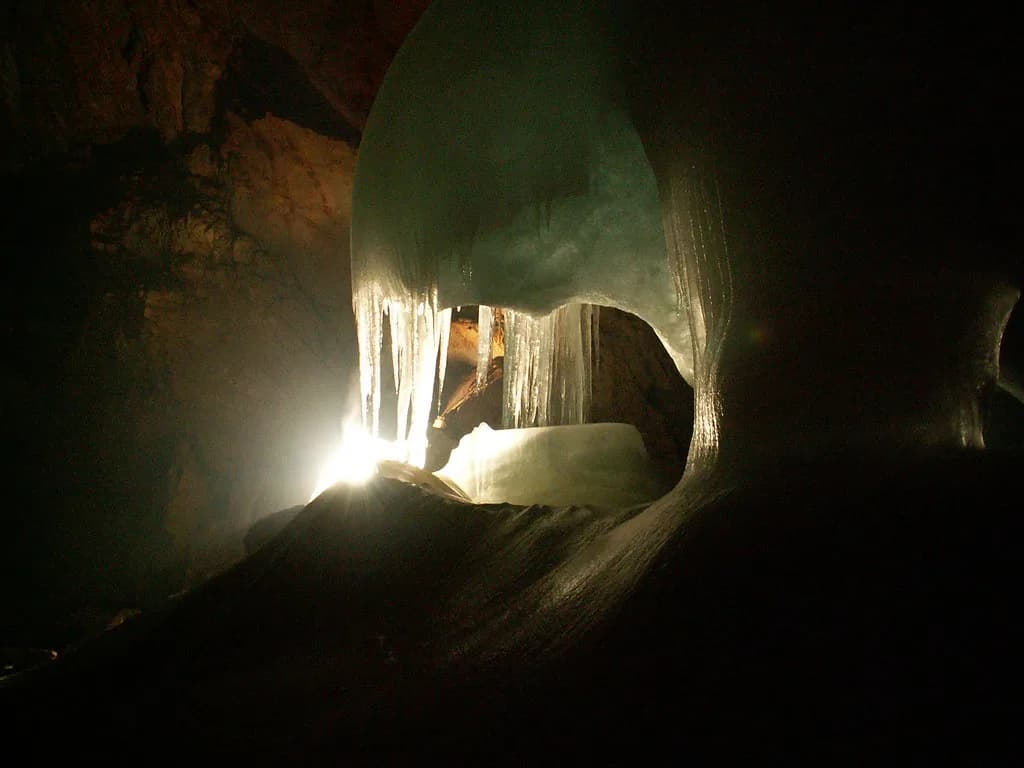
The valley continues to Bad Hofgastein, the next town down the Gastein valley, which makes Bad Gastein easy to fold into a wider Salzburg-land route rather than a standalone destination. The Eisriesenwelt near Werfen sits on a northern branch of the same trip planning.
How the town is laid out: a waterfall through the center
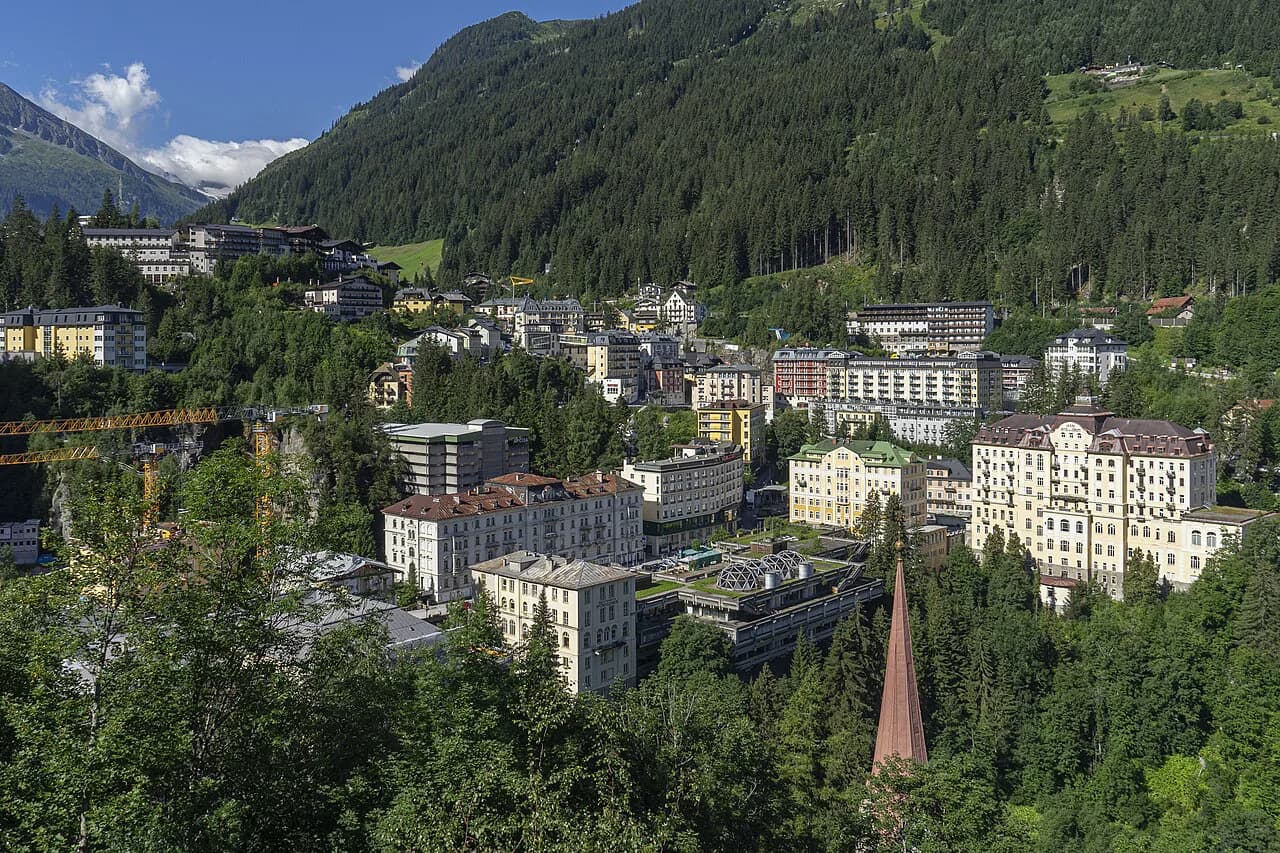
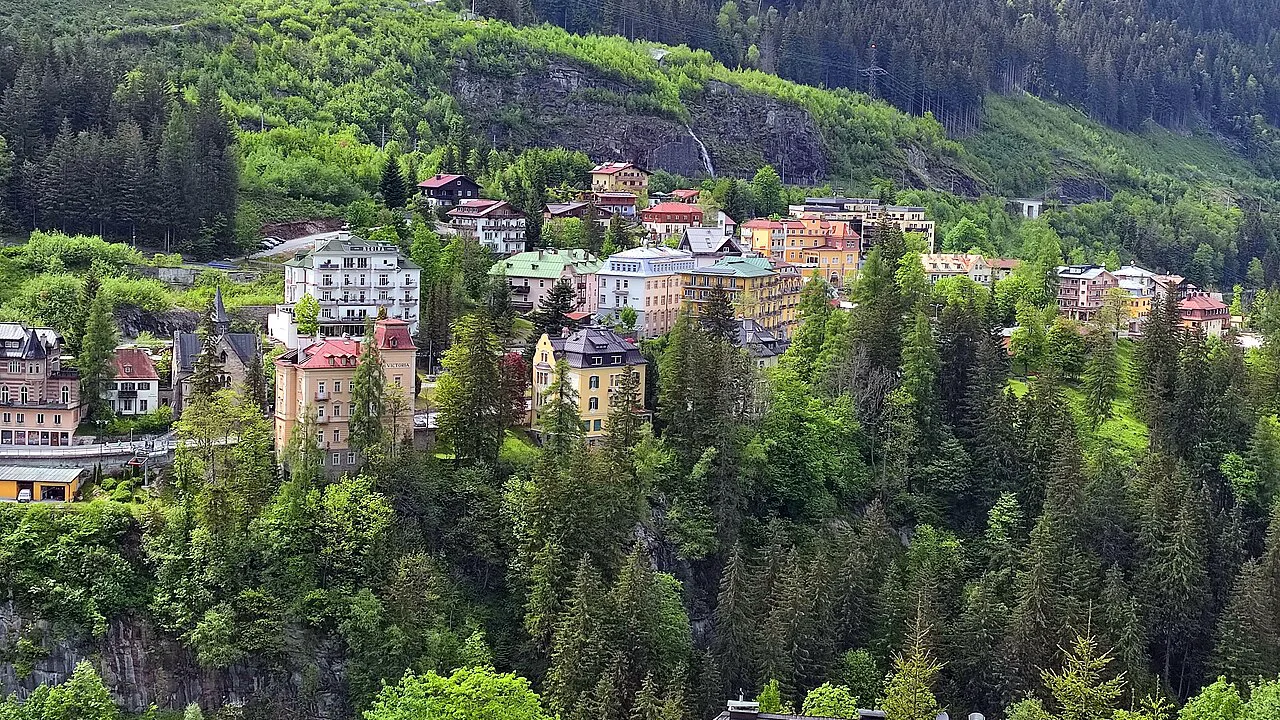
The defining fact of Bad Gastein's plan is that the waterfall of the Gasteiner Ache runs through the middle of town. Buildings climb the slopes on both sides, connected by terraces, stair paths and sloping lanes, so the center is vertical rather than flat.
That layout shapes a visit: you move between levels rather than stroll a single high street. Wear shoes that handle wet stone and allow extra minutes for the climbs, because a short distance on the map can mean a flight of stairs. The reward is that viewpoints over the falls and the valley open up from the upper lanes.
Elisabeth park gives you a flatter breather between the slopes, and it is a useful orientation point when you are working out which side of the valley you are on.
The waterfall and the Belle Époque backdrop
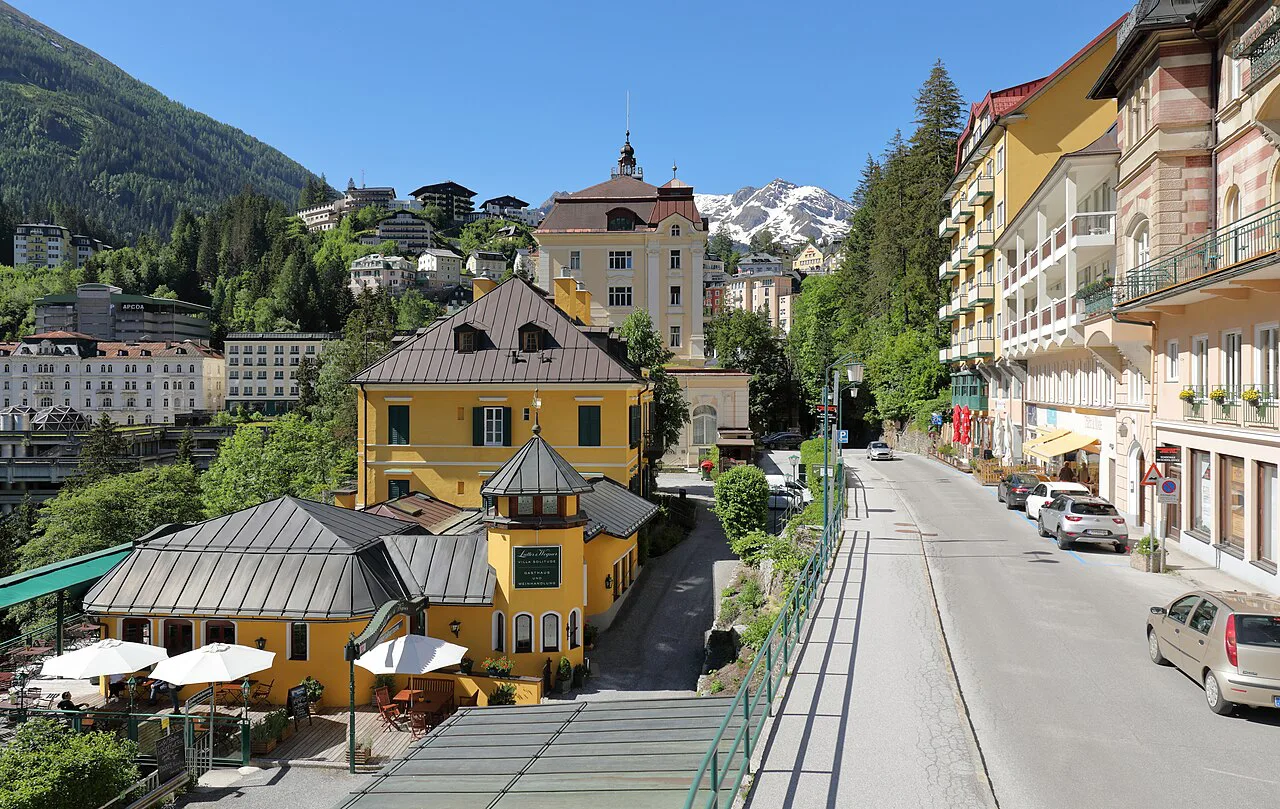
The hotels and bath houses cluster where they do because the springs and the falls are the reason the town exists. The Badeschloss, built by the prince-archbishop of Salzburg from 1791 to 1793, set off the first economic upswing, and in the second half of the 19th century prominent patrons brought the town international fame.
Treat the grand facades along the falls as the main sight of the old spa quarter. The architecture is the point here, and the spray from the gorge is what gives the town its particular atmosphere.
Churches and spa landmarks in the center
The Gothic St. Nikolaus church dates from 1389 and holds late Gothic frescoes from around 1480, which makes it the oldest sight on a short center walk. The parish church was built between 1866 and 1876, and the Protestant church followed between 1868 and 1872.
Haus Meran, an 1830 villa of Archduke Johann, sits alongside the Badeschloss in the town's early spa history. Together with the churches, these buildings give a compact circuit that covers the spa heritage without leaving the center.
Museums and collections
The town museum holds a 75 kg rock crystal, a striking single object that ties the collection to the mineral wealth of the Hohe Tauern mountains around the valley. Check the museum's own posted hours and admission before you build your day around it, since those details change.
A museum stop fits naturally into the half-day center plan, but it is the kind of small-town collection you visit for the object and the local story rather than for scale. If your time is short, the waterfall, the churches and the Belle Époque streets come first.
The thermal springs in plain terms
The springs are radioactive thermal waters at 47 °C, used for drinking and bathing cures and for treating rheumatic diseases, and they are piped into the town's baths for therapeutic use. The hydropathic center includes a thermal indoor pool and the Felsenbad, a thermal indoor and outdoor pool carved out of the rock.
The Boeckstein therapy tunnel is a 2,600 m former mining drift with hydrotherapy stations kept at 37 to 42 °C, which gives you a sense of how thoroughly the town built itself around the cure. For a visitor, the point is the spa identity that explains the architecture, and you confirm current access and rules with the operators rather than from a guide.
Getting there and continuing down the valley
Bad Gastein sits in the Gastein valley south of the city of Salzburg, and the valley is reached by road or on the regional rail and bus network. For current connections and journey times, use the ÖBB and Postbus Salzburg timetables rather than any fixed schedule printed in a guide.
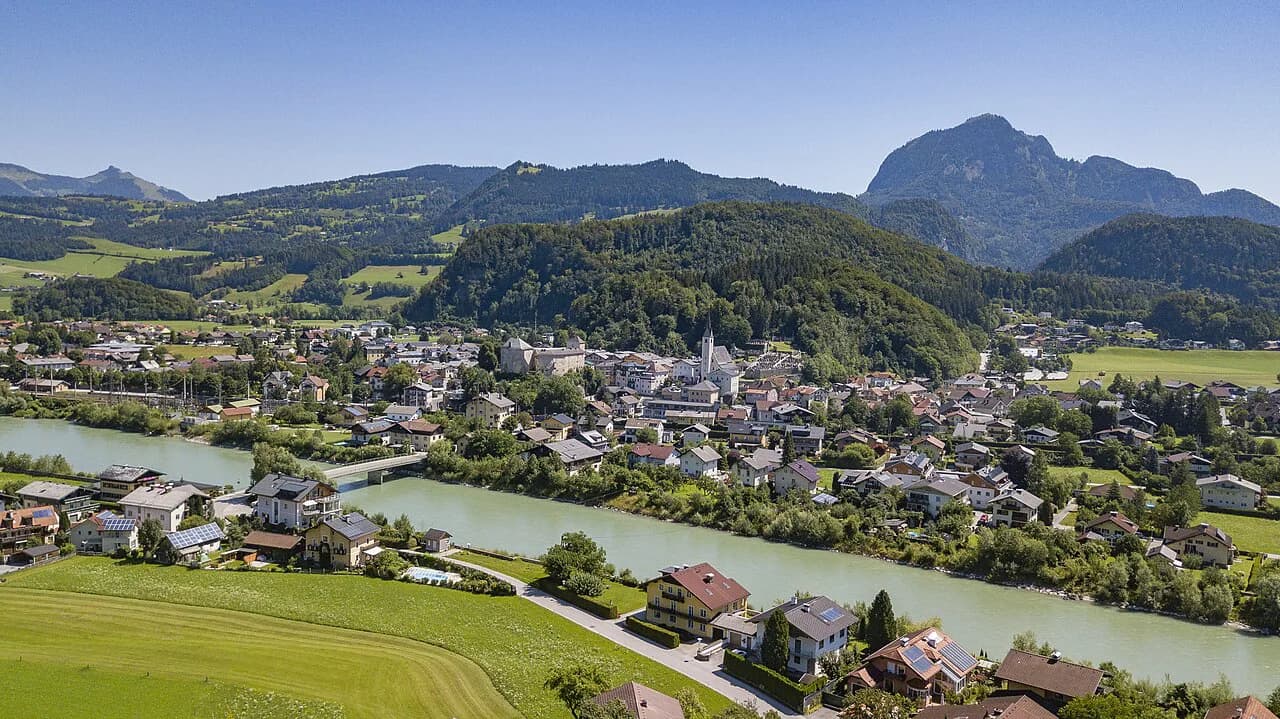
By road, the Gastein valley road links the town with Bad Hofgastein and onward toward St. Johann im Pongau, where the valley meets the Salzach corridor. St. Johann im Pongau is the practical junction on that approach, and the towns around Werfen, Austria make a natural northern anchor for a loop through this part of Salzburg-land.
If you are building the valley into a bigger Salzburg-land itinerary, the cave and fortress country below Werfen sits a comfortable drive or train ride to the north. The Eisriesenwelt near Werfen is a seasonal cave, so check its opening dates before you plan a combined trip.
How long Bad Gastein needs
A half day covers the waterfall, the stair paths on both sides of the gorge, and the churches and spa buildings in the center. Add the town museum and the valley view and it becomes a comfortable full day, with time to sit over coffee rather than rush the slopes.
Bad Gastein works as an overnight stop on a Gastein valley route, and it also works as a long pause on the way between Salzburg and Carinthia. A day here is enough for the town itself; more time belongs to the valley and its surroundings.
Summer walking versus the snow season
Outside the snow months the town is open to a walker: the waterfall paths, the center and the churches do not depend on lifts or snow. In the snow season the town shifts toward winter sports, and the walking terrain becomes a matter of cleared paths rather than free choice.
If your aim is the architecture and the waterfall, a summer or early autumn visit gives you the most freedom on the stairs and terraces. If you come for the snow, accept that the town's sights are shared with a resort crowd.
Honest trade-offs
Bad Gastein is steep, and the stair paths between terraces are the main practical obstacle for anyone with limited mobility. The center is compact, so it fills quickly when the valley is busy, and the spa town's rhythm is set by cure guests rather than by sightseeing.
The release valve is the valley itself: Bad Hofgastein and the surrounding villages spread the pressure, and the wider Salzburg-land countryside offers alternatives when the center feels crowded. Treat Bad Gastein as one stop on a valley route, not as a place you must exhaust in a single afternoon.
Where Bad Gastein fits a broader Austria trip
North of the Gastein valley, the Salzach Valley towns around Werfen and the Hohenwerfen Fortress give you a castle-and-gorge day that pairs well with a spa stop to the south. Werfen is the base for that stretch, and it connects easily with the valley road toward St. Johann im Pongau.
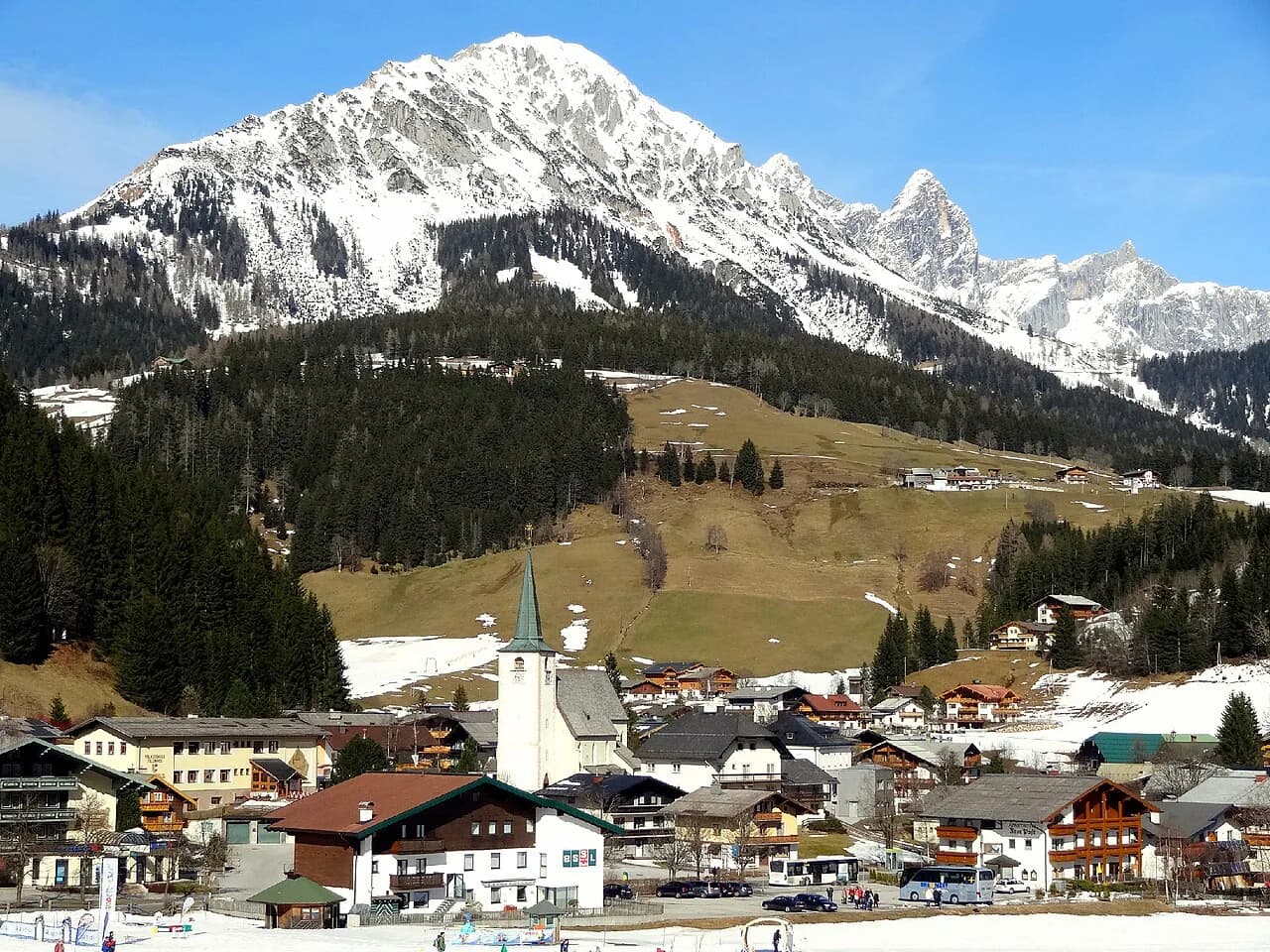
A Salzburg-to-Carinthia route that threads the Gastein valley gives you Bad Gastein in passing, with the option of an overnight. Travelers who want a market-town pause on the Salzburg side can look at Abtenau, Austria, in the Lammer valley, which sits on a different branch of the same regional road network.
Should Bad Gastein be an overnight or a long pause?
Make Bad Gastein an overnight if you want the waterfall paths, the churches and the museum without rushing the slopes. Make it a long pause if you are driving or training through the Gastein valley and only need the center and the falls.
Either way, confirm rail connections with ÖBB and the valley bus times with Postbus before you commit, and check the museum and bath operators directly for current hours and prices. The town rewards a slower pace than its compact size suggests.
Explore more Werfen guides
Frequently Asked Questions
How far is Salzburg from Bad Gastein?
Bad Gastein lies in the Gastein valley in Salzburg province, south of the city of Salzburg. Check the ÖBB timetable for current journey times and connections before you book, since schedules change by season.
Is Bad Gastein good for a non-skier?
Yes, if you come for the spa town itself. The waterfall paths, the Belle Époque buildings, St. Nikolaus church, the parish church and the town museum are the center of a half- to full-day visit, and none of them depends on snow.
How much walking does the center involve?
More than a flat town, because the buildings climb terraces on both sides of the Gasteiner Ache waterfall and are linked by stairs and sloping lanes. Allow extra time and wear shoes that handle wet stone.
Sources
Notes for your next Austrian town break
Optional updates when we add or revise town guides.
You might also like
Continue reading
More guides you'll find useful