
Schloss Eggenberg: A Visitor's Guide to Graz's Baroque Palace
Schloss Eggenberg is the one sight in Graz that rewards a half day rather than an hour: a Baroque palace on the western edge of the city whose 24 state rooms survive with original 17th- and 18th-century furnishings. The single most important thing to know before you go is that those rooms are open only on a guided tour, so your visit has to be built around the tour schedule. This guide covers where the palace sits, how to reach it, what the interiors and the on-site museums hold, how the park works, and how much time to budget.
What Schloss Eggenberg is
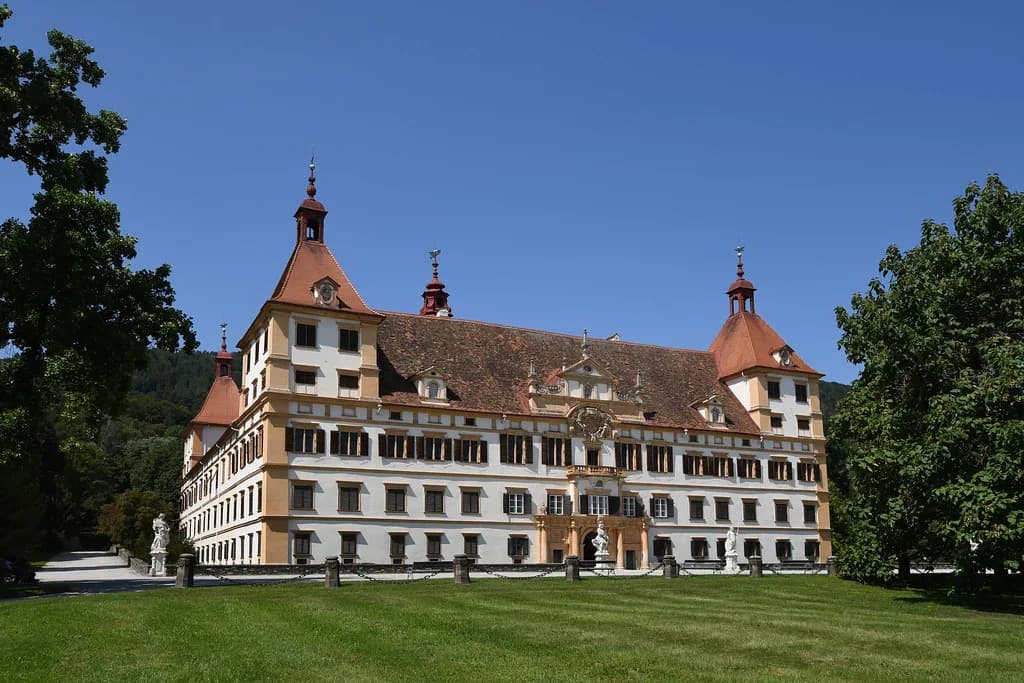
Schloss Eggenberg is a Baroque palace complex in Graz, the capital of Steiermark (Styria), and it belongs to the Universalmuseum Joanneum, the association of museums spread across the province. Its importance lies less in size than in survival: the circle of 24 state rooms, decorated in the 17th and 18th centuries, forms one of the most significant interior ensembles in Austria, with more than 500 ceiling paintings still in place. The centerpiece is the Planetary Room, a splendid chamber that anchors the whole sequence.
The plan of the palace is not arbitrary decoration. The architecture and the room sequence are read as a symbolic representation of the universe, which is why the Planetary Room carries the weight it does and why the interiors are best understood with a guide explaining the program room by room. If you have time for only one historic interior in Graz, this is the one to choose.

Where it is and how to get there
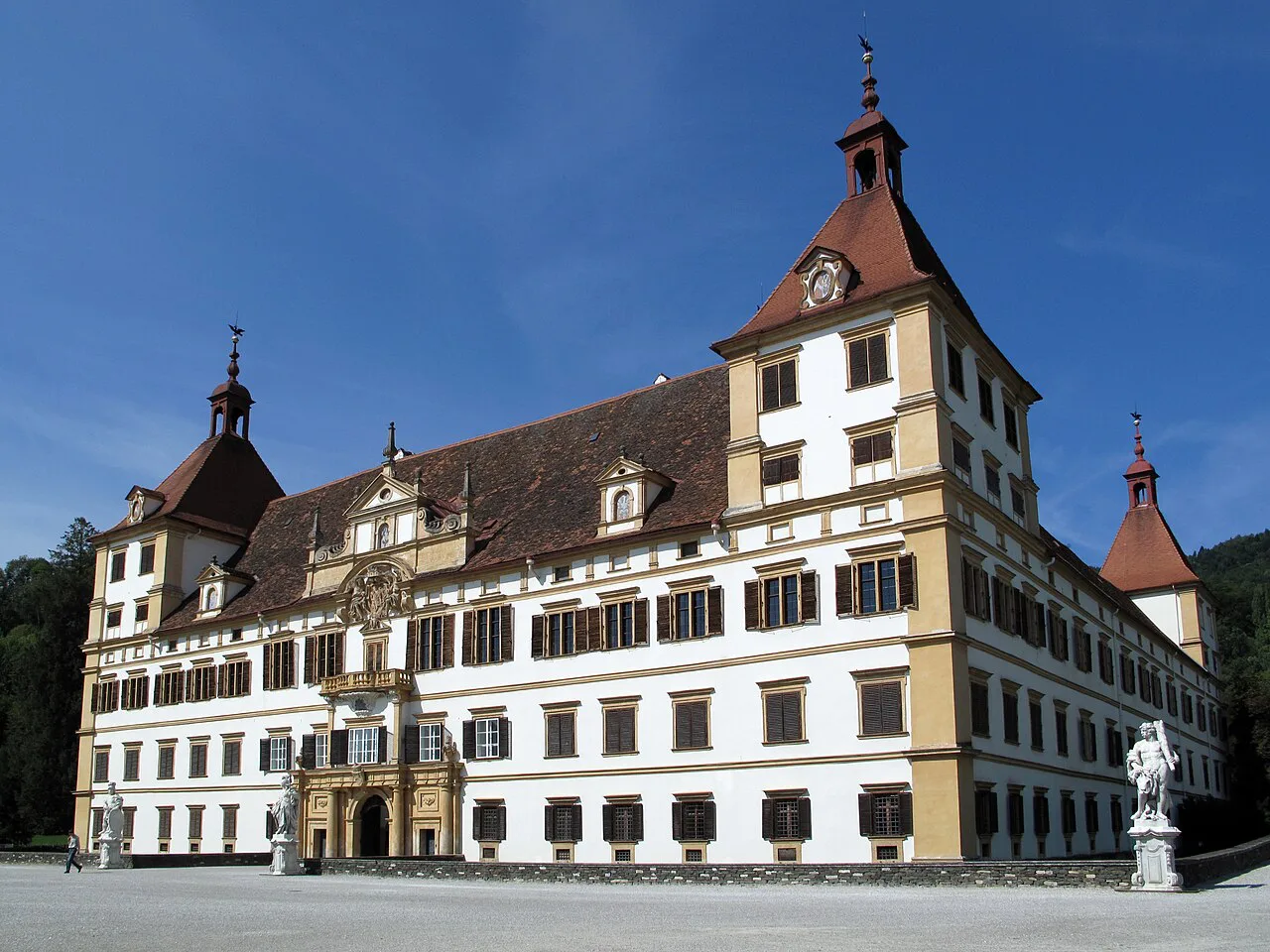
The palace stands in the Eggenberg district in the west of Graz, away from the dense old town, and it comes with its own park and garden grounds rather than sitting on a city square. That distance is the main logistical trade-off: you cannot simply stroll past it between coffee and cathedral, so treat it as a separate excursion within the city. The Universalmuseum Joanneum publishes directions and location details for the palace on its visitor pages, which is the place to confirm the exact approach and public transport stops before setting out.
From central Graz, the straightforward approach is by tram or bus toward the Eggenberg side of town, then a short walk to the palace gate; the Straßenbahn and bus network is the same one that serves the rest of the city, so a normal day ticket covers it. If you are combining the palace with the center, do Eggenberg first in the morning and return to the Altstadt Graz afterward, because the tour schedule shapes your morning more tightly than the old town does.
Drivers have an easier time reaching the western district than the center, but parking is the usual city constraint and the palace is not a roadside stop. Allow more time than the map suggests for the last stretch on foot.

The state rooms: guided tour only
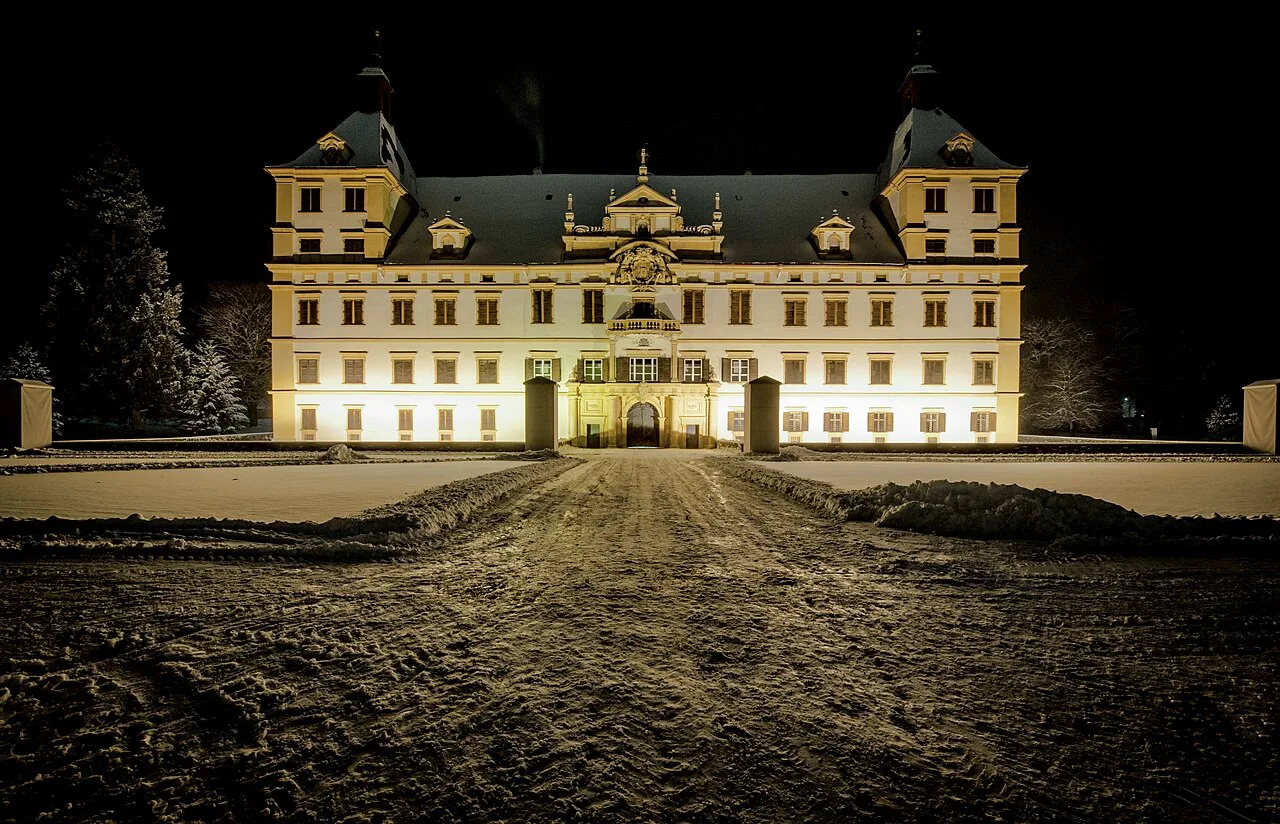
Visits to the state rooms are possible only as part of a guided tour, which runs Tuesday through Sunday and on public holidays at set times through the day, at 10am, 11am, noon, 2pm and 3pm among the departures. Tours are short, roughly 50 minutes, so the constraint is not duration but fitting your arrival to a departure slot. Check the official tour times for your date and book or arrive early enough for the slot you want, since a missed tour means no interior at all.
Inside, expect original furniture, decoration and painting rather than a stripped shell: the ensemble's value comes from the fact that the rooms were not rebuilt around a modern collection. The guide is what turns a sequence of handsome chambers into a legible program, so listen for the planetary scheme and the ceiling cycles. Photography rules and group sizes are set by the museum and are best confirmed at the ticket desk.
Because the interior is tour-only, budget your day around one fixed appointment and let the museums and gardens fill the time on either side. Travelers who arrive hoping to wander the rooms at their own pace will be turned toward the park instead.
What else is on site: the Joanneum museums
Schloss Eggenberg is not a single museum but a cluster. The Alte Galerie occupies part of the palace and holds masterpieces of fine art from the High Middle Ages to the late 18th century, including works by Lucas Cranach the Elder, Pieter Bruegel the Elder and Giovanni Pietro de Pomis. The Archaeology Museum on the same site displays Styrian finds such as the Cult Wagon of Strettweg and the Mask of Kleinklein, alongside objects from Classical Antiquity and Egypt. The Coin Cabinet completes the set with coinage in circulation in Styria from Antiquity to the Baroque period.
These are separate collections in one location, not one continuous exhibition, so choose deliberately instead of trying to absorb everything. If your interest is painting, give the Alte Galerie real time; if archaeology is the draw, the Strettweg wagon justifies the stop on its own. A third option is to skip the museums entirely and put the saved hours into the gardens and a slower lunch, which for many visitors is the better use of a sunny afternoon.
The park and gardens
The park and gardens are the part of Schloss Eggenberg you can roam without a tour, and they have their own hours separate from the museum. The garden opening times shift with the season, and the museum posts notices when the park hours change, so confirm the current garden schedule before planning a late-afternoon stroll. The park is the reason the palace feels like a country estate dropped into a city district.
Treat the gardens as a proper stop rather than a walk-through between the ticket hall and the tram. They work best before or after your tour slot, when you are not watching the clock for a tour departure.
How much time to allow
A realistic budget breaks into three blocks. The guided state-room tour takes about 50 minutes; one on-site museum adds an hour or more; the park and gardens can absorb 30 to 60 minutes depending on the weather. That puts a focused visit at roughly two and a half hours and a full palace-plus-museums-and-gardens visit at half a day.
The variable that most often wrecks the plan is the gap between your arrival and the next tour. Build in a buffer, and use it in the gardens or the Alte Galerie rather than standing in the courtyard. If you are on a tight schedule, check the tour times first and work backward to your transport.
Tickets and opening hours
The state rooms are accessible on the guided-tour schedule described above, while ticket prices, reduced rates and any combined tickets covering the palace museums are listed on the museum's admission and opening-hours page; buy there or at the desk rather than relying on secondhand listings. Note that the museum occasionally opens free of charge on designated days, which are announced on the same site and should not be assumed for your date.
Current notices on the official page also cover the park's seasonal hour changes, which do not follow the museum's hours. Confirm both before you go: the tour slot governs the interior, the park notice governs the grounds, and they are not the same schedule.
What is nearby in Graz
Schloss Eggenberg sits in a residential western district, so pairing it with other Graz sights means returning toward the center. The most natural contrast is the Kunsthaus Graz, the biomorphic contemporary-art building in the Lend district on the River Mur, which gives you a Baroque interior and a 21st-century facade in one day. The same riverside walk brings you to the Murinsel Graz, the island structure floating on the Mur River, both reachable on foot from the old town.
For a compact old-town loop, the Uhrturm Graz on the Schlossberg and the Schlossberg lift up the hill deliver the classic city view, while Graz Cathedral (Grazer Dom) anchors the historic core at street level. The UNESCO World Heritage historic centre of Graz is compact enough to cover on foot after an Eggenberg morning. Stadtpark Graz, with its white-flowering horse chestnut, is the calmest place to end a long walking day.
If you only have one day in Graz, give the morning to Schloss Eggenberg and its tour, then spend the afternoon between the Mur and the Schlossberg. That order puts the fixed appointment first and leaves the flexible sights for when your energy is lower.
Is Schloss Eggenberg worth building your day around?
Yes, if you accept the constraint: the state rooms are the reason to come, and they exist for visitors only inside a guided tour. Book your arrival around a tour time, add one museum if the collections speak to you, and leave room for the gardens on a fair day. Travelers who want an unstructured wander should give Eggenberg a pass and spend the hours on the Schlossberg instead.
Frequently Asked Questions
Can I see the state rooms at Schloss Eggenberg without a guide?
No. The 24 state rooms are accessible only as part of a guided tour, which runs on a fixed daily schedule Tuesday through Sunday and on public holidays. Plan your arrival around a tour departure rather than expecting to walk through at your own pace.
How long does the guided tour of the state rooms take?
The tour runs roughly 50 minutes, which keeps the interior visit short but makes the departure time the real scheduling constraint. The museum publishes the current tour times, so confirm the slot for your date before you travel out to the palace.
Which museums share the Schloss Eggenberg site?
Three Joanneum collections are housed there: the Alte Galerie with paintings from the High Middle Ages to the late 18th century, the Archaeology Museum with Styrian finds including the Cult Wagon of Strettweg, and the Coin Cabinet covering Styrian coinage. Each is a separate collection, so pick the ones that interest you rather than trying to see all three.