
Graz Cathedral (Grazer Dom): Gothic Bones, Baroque Furnishings
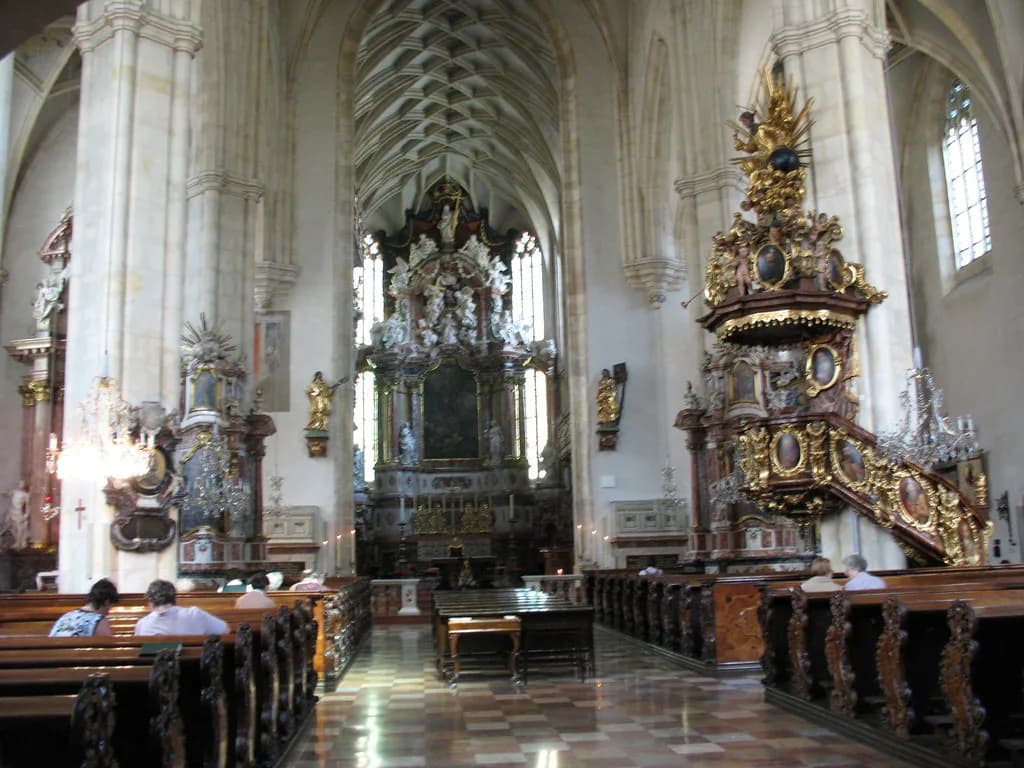
Graz Cathedral, the Grazer Dom, is the city's main Catholic church: a mid-fifteenth-century Gothic building dedicated to St Giles, furnished inside in Baroque style and set within the old town a few minutes' walk from Hauptplatz. Allow 30 to 45 minutes for the interior and the exterior fresco, longer if you want to read the art carefully. This guide covers the layout, the walk in, the plague fresco on the south wall, the Frederick III connection, the organ, and the monuments next door.
One practical note shapes the visit: the cathedral sits inside the dense historic core of Graz, near the mausoleum of Ferdinand II and the Stadtpfarrkirche, so it works best as one stop on a short walking loop rather than a separate trip. Read up on the frescoes and furnishings before you step inside; the small details are easy to miss in a quick walk-through.
What Graz Cathedral is and where it sits in the old town
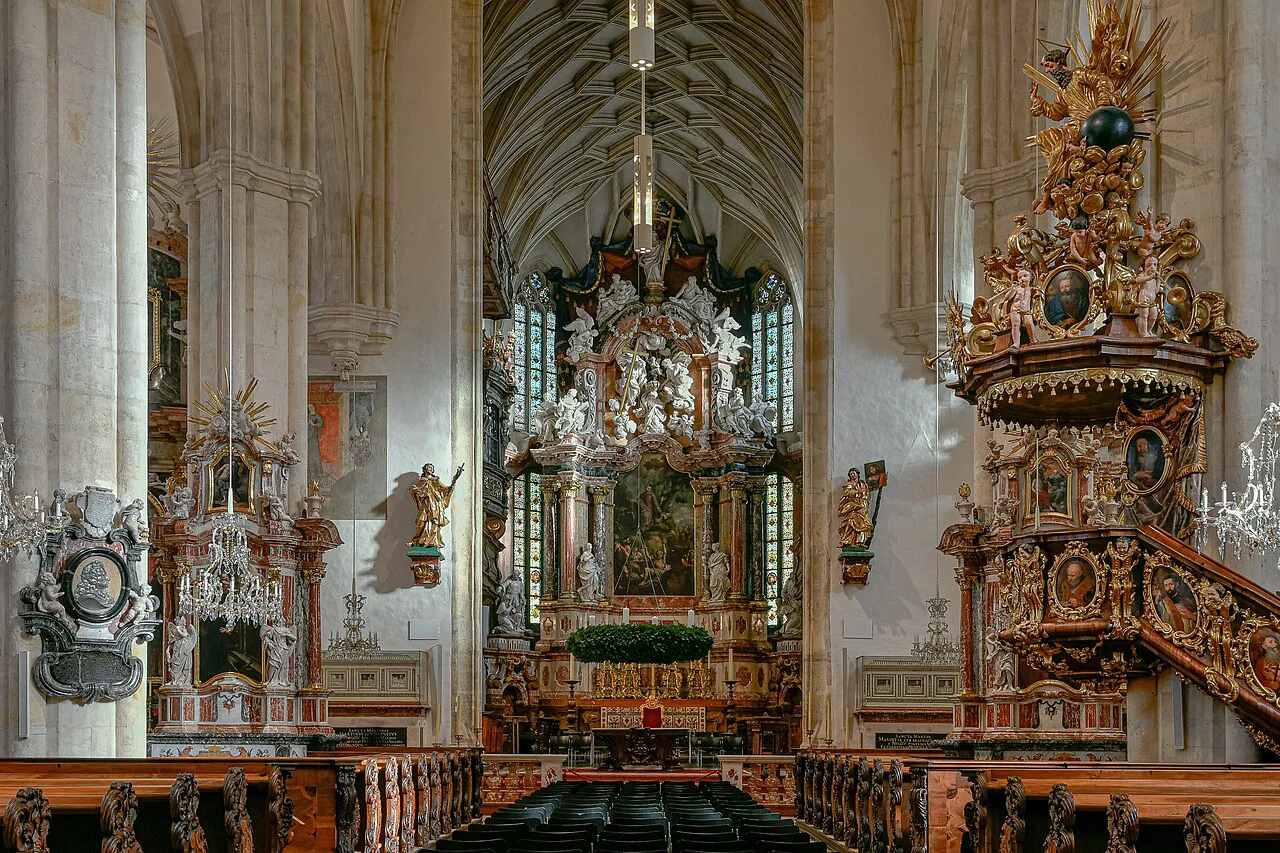
The cathedral is dedicated to St Giles and dates to the mid-fifteenth century, when the Gothic church took its present shape. Its exterior reads as Gothic; its interior is fitted out in Baroque style, so expect a darker medieval shell with later, ornate furnishings rather than a unified Gothic hall. Keeping those two layers apart in your head makes the visit far more legible.
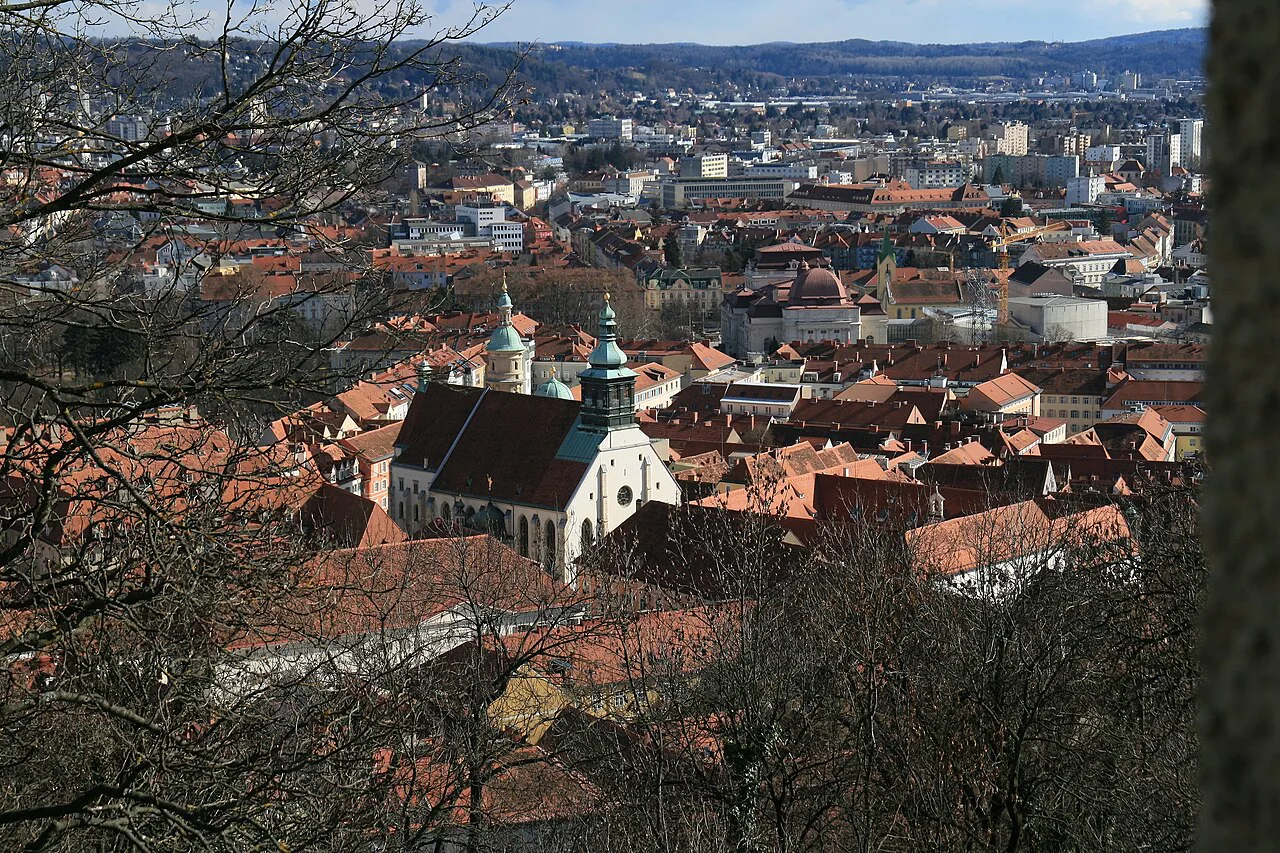
It stands in the old town on the east bank of the Mur, within the compact historic center that anchors most visits to Graz. From the cathedral you can walk to the Stadtpfarrkirche, the mausoleum complex, and the river crossings without a tram. Treat the cathedral as a fixed point on a short urban loop rather than a destination you drive to.

How to reach the cathedral on foot from Hauptplatz
If you start at Hauptplatz, the cathedral is a short walk southeast through the old town lanes, in the direction of the Stadtpfarrkirche and the mausoleum. Because the streets are narrow and occasionally closed to cars, walking is the practical way to arrive; trams serve the wider center but stop short of the door.
Cross the Mur and you are in Lend, where the Kunsthaus Graz and the Murinsel square off across the water; from there it is a straight walk back east to the cathedral. That makes a sensible loop: Kunsthaus Graz, the river, then the old town and the cathedral. Budget roughly a half day if you add both river sights.

The Gothic exterior and the Gottesplagenbild plague fresco
The exterior carries a well-preserved fresco known as the Gottesplagenbild, a depiction of the plague in Graz linked to the disastrous year of 1480. It is the kind of detail many visitors walk straight past on their way to the doors, so look at the outside wall before you go in. Because it is outdoors, it can be viewed from the street and in daylight.
Come back to it on your way out, when your eyes have adjusted to the Baroque interior and the contrast lands harder. The fresco is a public, street-facing work.
Inside: Baroque furnishings and the frescoes tied to Frederick III
Inside, the Gothic shell is furnished in Baroque style, with frescoes that date to the era of Emperor Frederick III. One of the most talked-about figures is a depiction of St Christopher that, with its crown, can be read as a portrait of the emperor himself. Knowing that before you look makes the fresco far easier to spot.
The AEIOU abbreviation associated with the Habsburgs has been read in several ways, from "Austria is best united by the Empire" to "all the world is subject to Austria." It is a Habsburg motto that shows up across imperial Austria rather than a fixture of this church alone, so treat it as background to the imperial era the cathedral belongs to.
A traveler account mentions Paola Gonzaga's wedding chests, later repurposed by the Jesuits as reliquaries for the bones of Christian martyrs, and how the building's furnishings changed hands and meanings over centuries. Their current location is not established here, so ask the parish if you want to track them down.
The high altar, side chapels and what to look for on a short visit
On a short visit, work in this order: high altar, then the side chapels, then the frescoes on the walls, then a look up at the vaulting. The Baroque furnishing rewards a slow look at the carvings and gilding, but the Gothic structure is what gives the room its proportions.
Treat this as a working church rather than a museum room. If a service is underway, step back and look at the exterior and the nearby streets instead.
The organ and the sound of the interior
The cathedral organ has more than 5,000 pipes and 70 stops, and it is the newest major element of the interior, installed in 1978. At noon, the organ plays, which is worth timing your visit around if you want to hear the room at its best. The sound is as much a part of the visit as the artwork.
Arrive a few minutes before noon so you can settle in the nave rather than hover at the door.
How much time to allow, and when the light and crowds are best
Plan 30 to 45 minutes for the cathedral interior and the exterior fresco, more if you want to linger over the Frederick III details. Noon is when the organ plays, so the nave is busiest then; come earlier in the day if you want the nave quieter.
Combine the visit with a walk up to the Schlossberg, where the Uhrturm Graz gives you a different view of the same old town.
Nearby: the mausoleum of Ferdinand II and the Stadtpfarrkirche
Practically next door to the cathedral is a smaller domed chapel or mausoleum that a traveler account describes as open daily and free to enter, though its exact dedication is not established—treat it as an easy add-on and check at the door. The described interior is a piece of sacred theater: from a lantern at the top of the dome, a figure of God the Father looks through an oval opening in the floor into the crypt below, with statues of Faith, Hope, Love and Justice in the arched niches around.
The larger, well-known mausoleum complex on the far side of the cathedral is the one to plan around: it keeps limited opening (a couple of days a week) and charges admission, so check the schedule before you rely on it. The smaller chapel next door is the simpler add-on to a cathedral visit and takes only a few minutes.
A little further away, the Stadtpfarrkirche is worth a detour for its stained glass, which was rebuilt after being destroyed in an explosion during the Second World War. The German artist Albert Birkle, whose work the Nazi Party had classified as degenerate, added a detail in plain sight: the faces of Hitler and Mussolini among Christ's persecutors. It went unnoticed for a couple of years until a journalist spotted the likenesses. Look for it without ceremony, and read it as a memorial in glass.
The river crossings give you a natural loop: the Murinsel sits on the Mur a short walk from the cathedral side, and the Kunsthaus Graz is just across in Lend. Both are worth an hour combined on the same outing.
Tickets, hours and entry details to confirm before you go
For hours, entry rules, and any charges, the cathedral's own website, graz-dom.at, is the place to check, along with the parish notice board at the door. Those details change with the church calendar and with restoration work, so confirm before a long detour.
Guided church and cathedral walks in Graz are bookable through tour platforms, which is useful if you want a guide to point out the Frederick III frescoes and the plague fresco for you.
Should the cathedral be on your Graz walk?
Yes, if you are already in the old town: Graz Cathedral gives you a Gothic shell and a Baroque interior in one stop, plus the plague fresco on the outside wall and the Frederick III frescoes within a few steps of the doors. Allow 30 to 45 minutes, aim for the noon organ, and pair it with a walk to the neighboring Stadtpfarrkirche.
Widen it into a half day with the Stadtpfarrkirche and its wartime glass, then cross the Mur toward the Kunsthaus Graz and Murinsel. If you have time for one more, Schloss Eggenberg, the Habsburg palace on the western edge of the city, is the most rewarding excursion beyond the center.
Explore more Graz guides
Frequently Asked Questions
Is Graz Cathedral the same as the Grazer Dom?
Yes. Grazer Dom is simply the German name for Graz Cathedral, the church dedicated to St Giles in the old town. Signs in the city may use either form.