
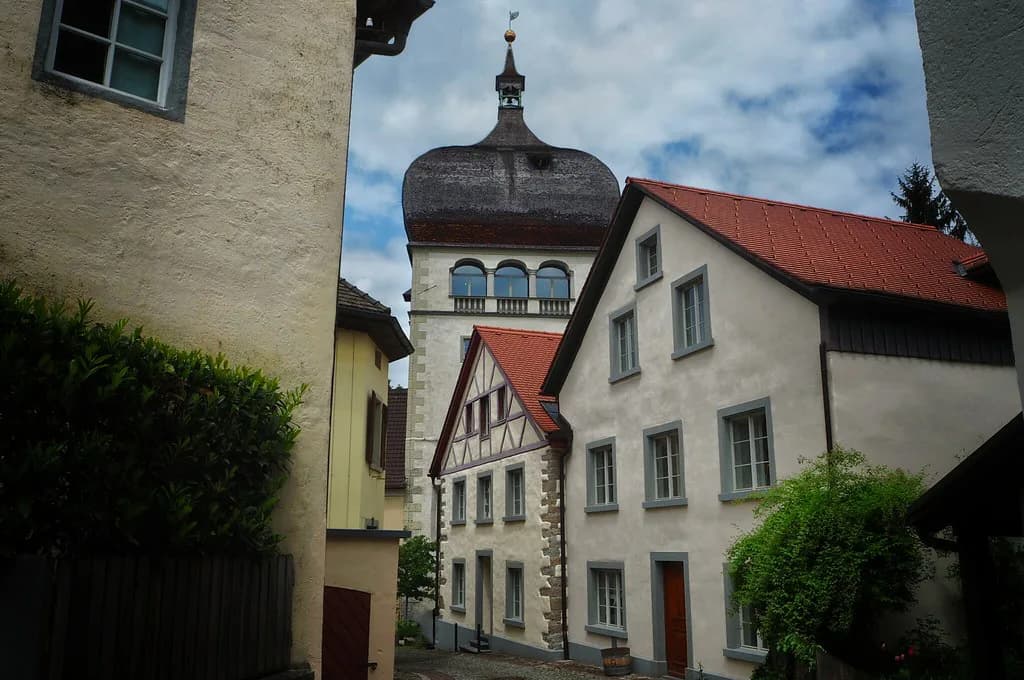
Martinsturm Bregenz: A Visitor's Guide to the Old Town Tower
The Martinsturm is the tower that marks Bregenz's Oberstadt, the upper old town set on the rising ground above Lake Constance. Treat it as the anchor of a short upper-town walk rather than a destination on its own, and you will get far more out of the climb up from the lakefront. This guide covers where the tower stands, how to reach it on foot, what sits around it, and which nearby sights fit into the same half day.
What the Martinsturm is
The Martinsturm is one of the named sights Bregenz's tourism office lists for the town, and its tower is the silhouette most travelers recognize in photographs before they arrive. The tourism office keeps its own page for the tower, which is the natural place to start for the town's own description of it.
Think of it as a landmark first and a sight second. The tower belongs to the streetscape of the Oberstadt, so the experience of finding it — lanes, stepped passages, old facades — matters as much as standing at its base. If you only have time for one thing above the lake, make it the walk itself and let the tower be the endpoint.
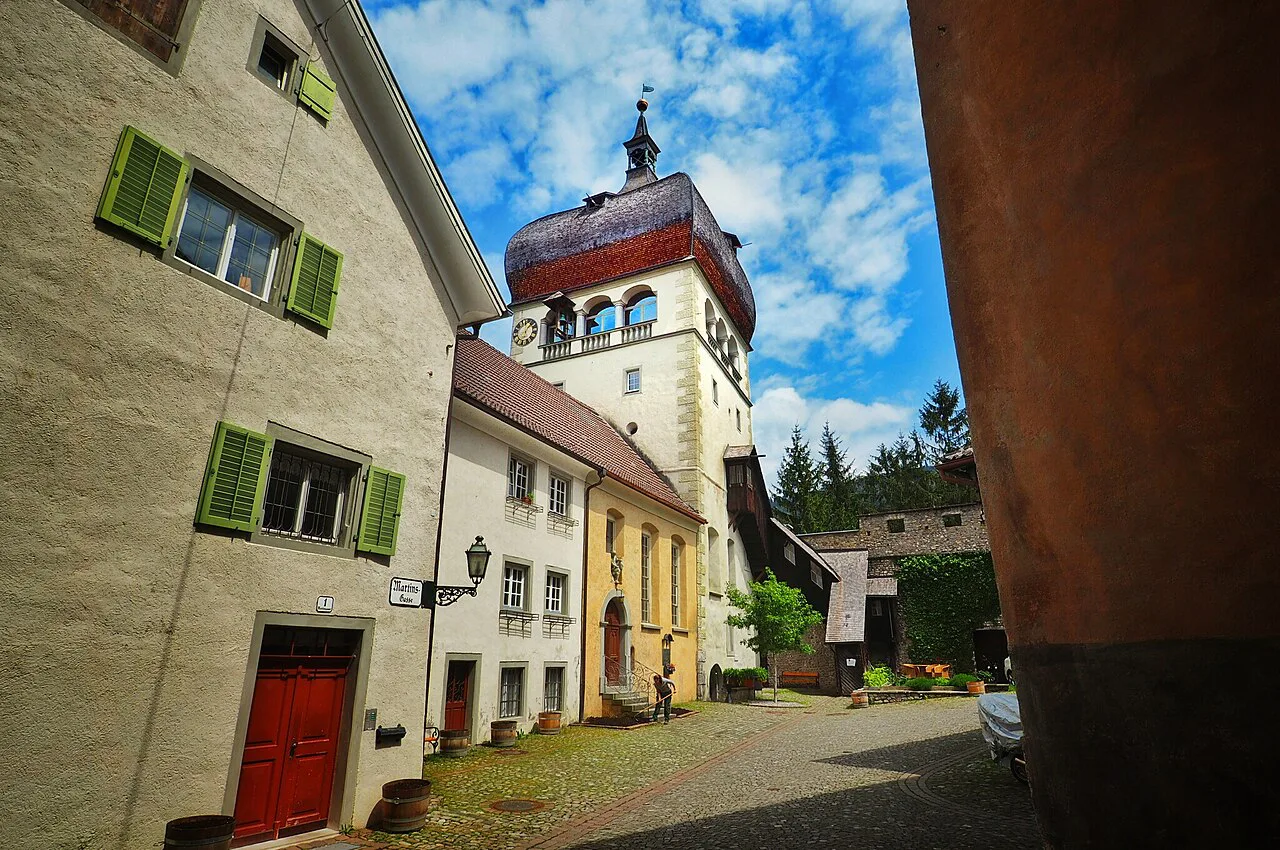

Where it sits in Bregenz
Bregenz runs in two layers: the lakefront with the harbor, the Festspielhaus and the museums, and the Oberstadt on the slope behind it. The Martinsturm belongs to the upper layer, which is why reaching it involves going up rather than along. Keeping that geography in mind saves confusion, because the two levels feel like separate small towns.
The Oberstadt holds more than the tower: churches, the Vorarlberg state library, and lanes that reward slow walking. If you want the full picture of what the upper town contains and how it connects to the waterfront, start from our overview of Bregenz Attractions: 8 Visitor Guides before you set out.
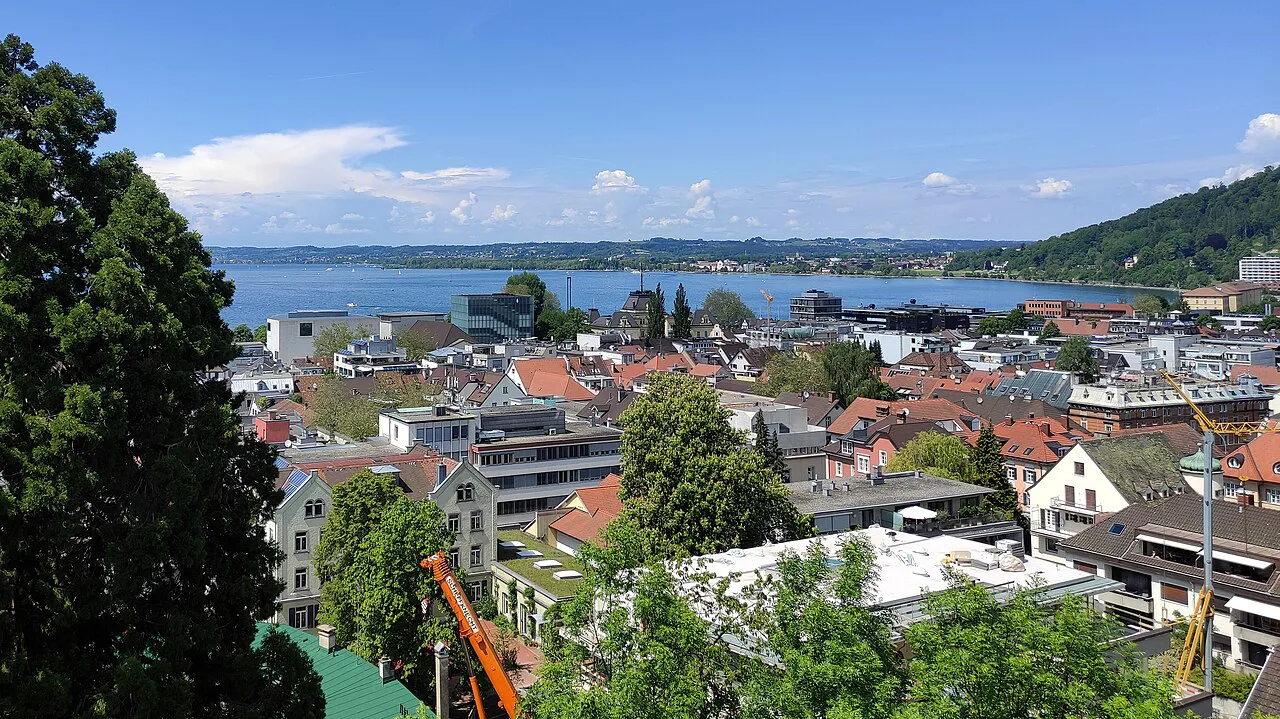

How to reach the tower on foot
Come up from the lakeside on foot. The distance is short in meters and longer in effort, because the old town sits above the shore and the route climbs. Comfortable shoes matter more than any planning here, and the walk is manageable for most travelers who can handle a few flights of stairs.
Bregenz's tourism office publishes a town plan and materials on getting around, which are the sensible tools for orienting yourself between the shore, the upper town and the station. Pick up the plan before you start climbing, because the lanes above the lake bend and signposting is not continuous. If you arrive by train, the walk begins at the station side of town and gains height steadily.
What to see around the tower
The lanes immediately around the Martinsturm are the point of the excursion. The upper town is compact enough to wander without a fixed route, with old walls, small squares and views opening between buildings. Give yourself room to take wrong turns; the streets are short and you will reorient quickly.
Bregenz's sight listings group the tower with the town's churches and the Oberstadt as a whole, which tells you how the locals frame it: part of a district, not an isolated monument. Walk the upper town as a loop and you will pass most of it without consulting a list.
How long to allow
Budget roughly an hour for the Oberstadt including the climb, and add time if you stop for a coffee or a church interior. The tower itself does not demand a long stay; the surrounding lanes do. Travelers with limited time should climb up, walk the upper lanes once, and descend rather than trying to see every corner.
Slot the upper town into the middle of a Bregenz day rather than the end. Morning light on the lakefront and an afternoon above it works well, and the climb is easier before you have spent hours on your feet. Keep the visit flexible: the tower is an outdoor landmark, so weather rather than a schedule decides when it looks its best.
Nearby sights that pair with the Oberstadt
Below the upper town, the Kunsthaus Bregenz is the obvious counterpart: a contemporary art building close to the lake. Pairing the historic upper town with the Kunsthaus gives you both ends of Bregenz in one day, and the walk between them is downhill.
The Vorarlberg museum, the harbor and the Festspielhaus all sit along the same waterfront strip, so a single loop covers them without backtracking. Check each venue's own page for opening days before you build the loop, because museum closing days vary, and see our guide to the Pfänder, Bregenz for the hill above town.
For height rather than history, the Pfänder rises above town and is reached by cable car. It is a separate outing from the Oberstadt, better on a clear day, and the two combine naturally if you start early.
Practical notes before you go
Plan the climb for daylight, when the lanes and views read best, ideally in the morning or early afternoon. Outside the summer months it is worth checking the tourism office's tower page before you go.
Bregenz sits on Lake Constance at the western edge of Austria, with the Swiss and German borders close by and Lindau just along the shore. Travelers arriving by boat or by train reach the lakefront first and climb from there. Allow for that final ascent when you plan your arrival time.
Is the Martinsturm worth the climb?
Yes, if you treat it as the centerpiece of an upper-town walk rather than a single ticketed sight. The tower gives the Oberstadt a focus, and the lanes around it carry most of the reward. Skip it only if stairs and slopes are a problem, in which case the lakefront museums deliver more for less effort.
Build the day around one climb, one museum and one waterfront stretch. That combination covers Bregenz's two layers without rushing either, and the town is small enough that the walking between them stays short.
Explore more Bregenz guides
Frequently Asked Questions
How do I get to the Martinsturm from Bregenz's lakefront?
Walk. The tower stands in the Oberstadt above the shore, so the route from the harbor or the Festspielhaus goes uphill through the old lanes. The tourism office's town plan shows the connections between the waterfront, the upper town and the station.