Bregenz, Austria: Upper Town, Lakefront and Pfänder Guide
Plan a visit to Bregenz on Lake Constance: the Oberstadt and Martinsturm, Kornmarktplatz, the lakefront promenade, the Kunsthaus and the Pfänder cable car.
On this page
Bregenz is a two-level town on Lake Constance (Bodensee) in Austria's westernmost province, Vorarlberg, and the quickest way to understand it is to separate the Oberstadt on the hill from the Unterstadt and lakefront below. Plan the Upper Town for medieval lanes and towers, the Lower Town and shore for museums, the promenade and the festival stage, and the Pfänderbahn cable car for the view over three countries. This guide walks through each level, then covers trains, boats and how the town fits a route.
Where Bregenz sits on Lake Constance
Bregenz occupies a prime spot on the banks of Lake Constance at the edge of the Austrian Alps, with Switzerland and Germany close enough that a boat ride crosses into another country. The city has roughly two millennia of history behind it, and that age shows in the Upper Town's walls and towers rather than in any single monument. Think of it as the lakeside anchor of Vorarlberg: a working provincial capital with an opera festival, not a museum town.
That border position shapes a visit. The lake is the reason the town exists as a destination, the mountains rise directly behind it, and the shore faces west toward the German side. If you are traveling through the region by car or train, Bregenz is the natural first or last stop in Austria before Switzerland or southern Germany.
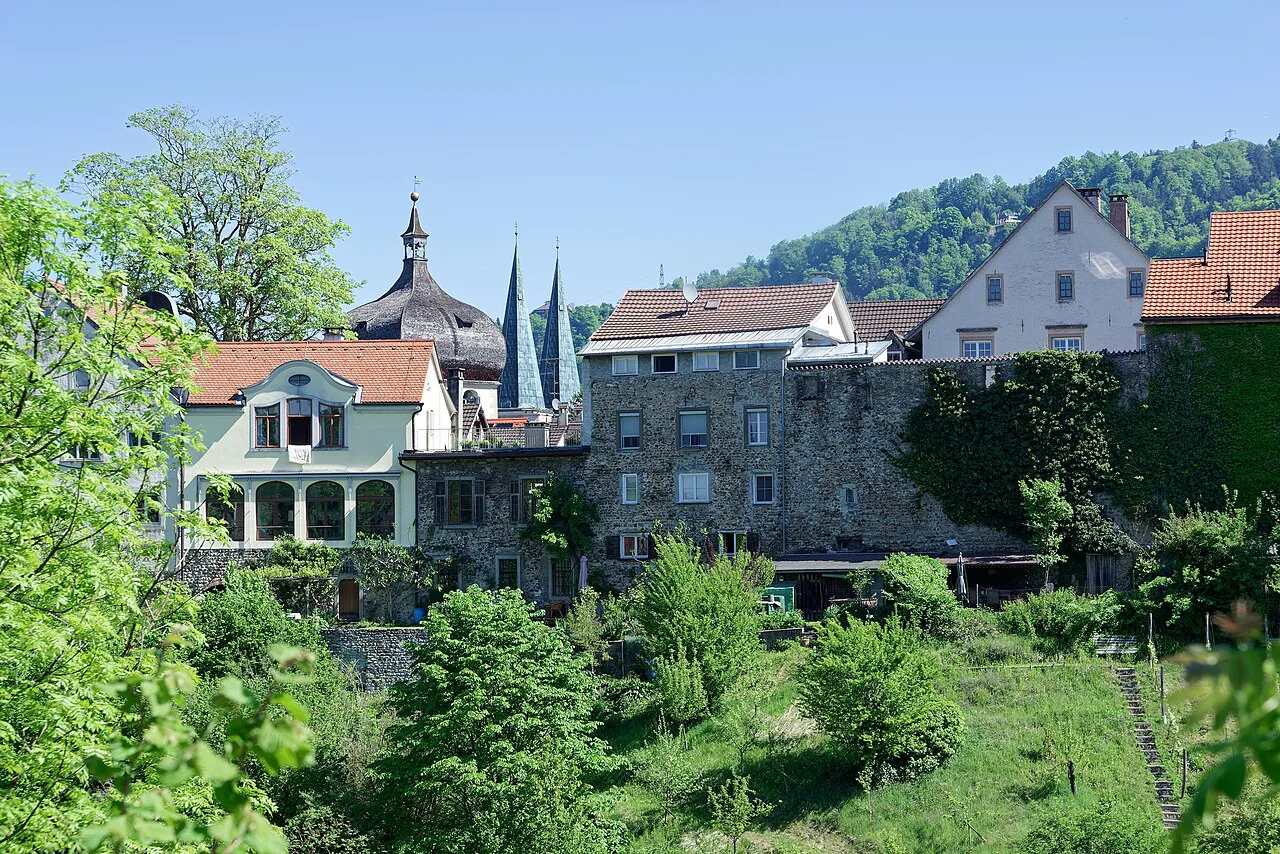
How Bregenz is laid out: Oberstadt above, Unterstadt and lake below
The old town splits into two districts: the Oberstadt (Upper Town), a once-walled quarter of cobblestone alleys and medieval landmarks, and the Unterstadt (Lower Town), the commercial level closer to the water. Both are compact and easygoing on foot, so you can move between them without transport, but the climb is real and worth planning rather than stumbling into.
A sensible shape for a day is to start high and work down: Upper Town first while your legs are fresh, then Kornmarktplatz and the museums, then the promenade and the lake in the afternoon light. That order also puts the festival stage and the boat docks at the end of the day, when you can decide whether to extend the trip across the water.
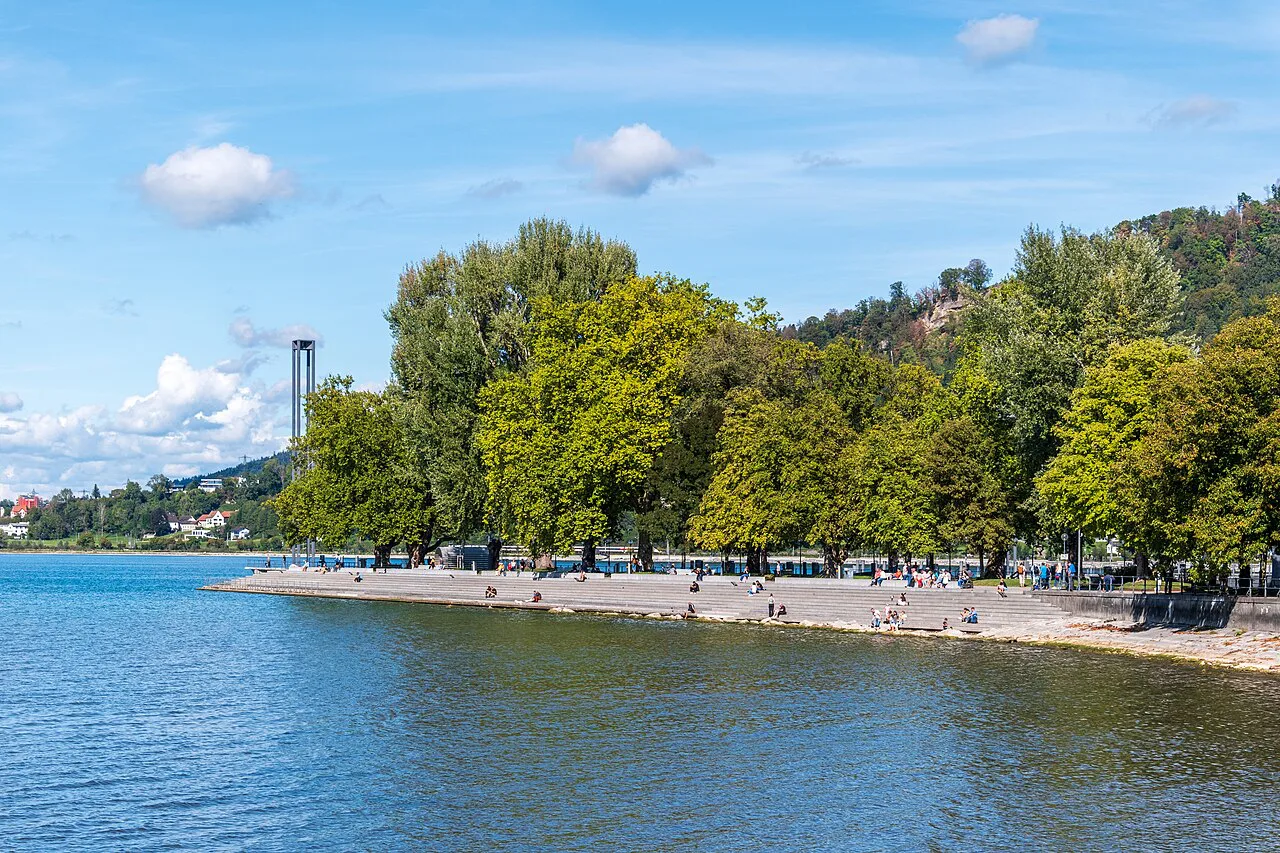
The Upper Town on foot: Martinsturm, Deuringschlösschen and Herz-Jesu-Kirche
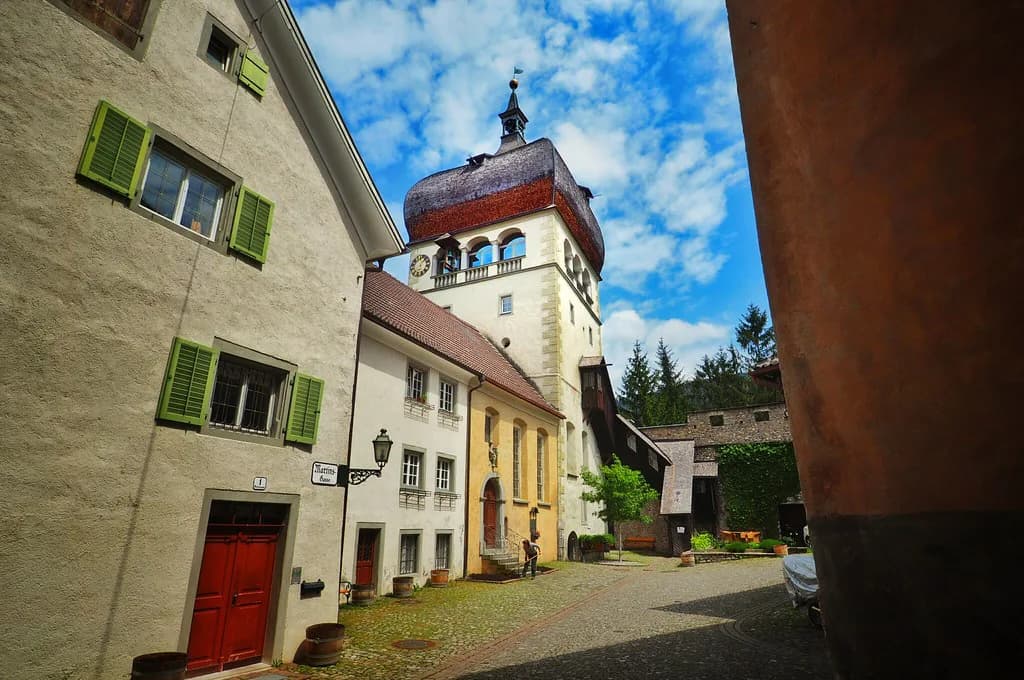
The Oberstadt is where the medieval city survives, framed by cobblestone alleys and the remains of its old wall. The most imposing landmark is St. Martin's Tower (Martinsturm), a Baroque-style tower that anchors the quarter and is the obvious first stop on any walk uphill. Give the Upper Town an unhurried hour rather than treating it as a photo stop.
Two more buildings round out the Upper Town circuit: the Deuringschlösschen, a small palace, and the Herz-Jesu-Kirche, both architecturally distinctive enough to justify a detour. These are exterior sights on a walking route, so pair them with the tower and the lanes rather than scheduling them as separate visits. Check the Martinsturm's opening arrangements locally before you climb, since a tower interior rarely follows the same hours as the street.
Kornmarktplatz: the square at the heart of the Lower Town
Kornmarktplatz is the center of the Unterstadt, a square ringed by bars, cafés and restaurants with outdoor terraces made for sitting and watching the town go by. It is the natural lunch or coffee stop after the Upper Town, and it sets the tone for the Lower Town's more contemporary feel.
Use the square as a hinge rather than a destination in itself: from here the Vorarlberg Museum, the Kunsthaus and the lakefront are all within a short walk. If you only have a couple of hours in Bregenz, Kornmarktplatz plus the Upper Town gives you the clearest sense of the place.
Museums: Vorarlberg Museum and Kunsthaus Bregenz
The Vorarlberg Museum covers centuries of provincial history, which makes it the right stop if you want context for the villages and valleys you will see elsewhere in the province. The Kunsthaus Bregenz shows modern art in a building that is itself part of the draw, and the two sit close enough to combine in one museum block.
For a fuller day, the Vorarlberg Landestheater stages comedies, musicals, plays and operas, so an evening performance can anchor an overnight stay rather than a rushed same-day return. Museum opening days and exhibition changeovers vary through the year, so confirm times and any Monday closures on each institution's own site before you build a day around them.
The lakefront: promenade, Strandbad Bregenz and the lake stage
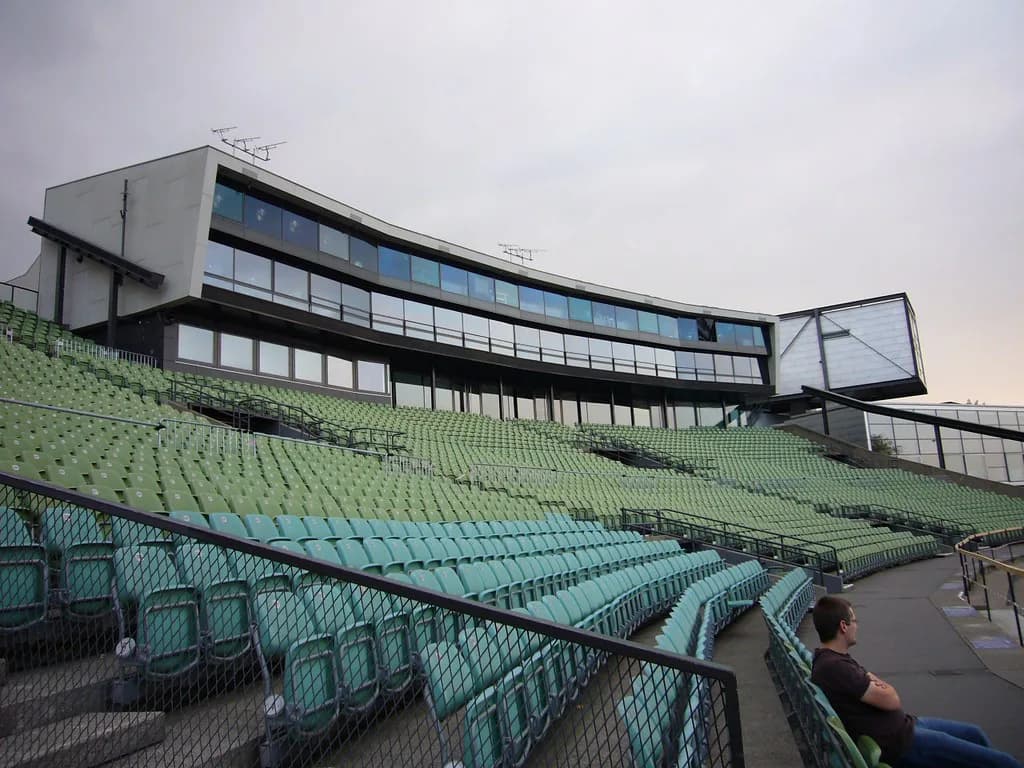
The lakefront does three different jobs, and knowing which one you want saves confusion. The Bregenz Promenade is the walking strip with lake and mountain views, Strandbad Bregenz is the city swimming beach where you can get in the water on a warm summer day, and the floating stage is the festival's performance venue on the lake itself.
In summer the shore is the busiest part of town, especially when the Bregenz Festival is running its music events at the opera house and on the floating stage. The festival is a summer fixture rather than a year-round attraction, so if the stage is your reason for coming, check the season's program directly before booking travel. Outside those weeks the promenade is simply a good place to end the afternoon.
The Pfänderbahn cable car and the Pfänder viewpoint
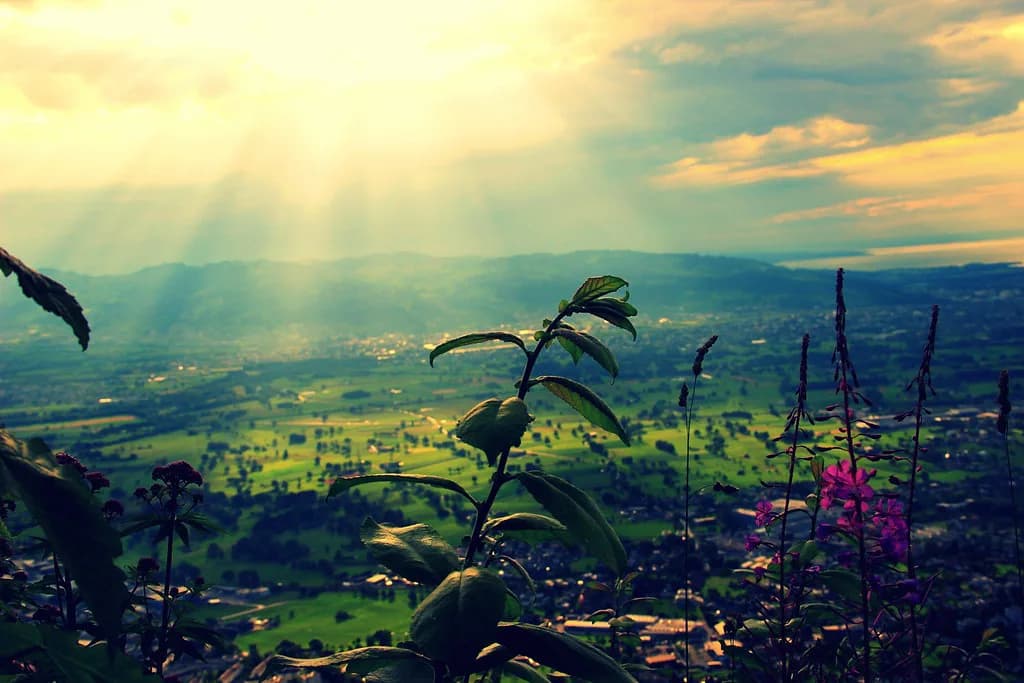
The Pfänderbahn cable car climbs to the summit of the Pfänder, the mountain directly above town, and the payoff is a panorama over the countryside of three countries with up to 240 peaks visible on a clear day. It is the one sight in Bregenz that depends entirely on weather, so keep it flexible and go up when the sky is open rather than saving it for a fixed slot.
Cable cars in this corner of the Alps typically run on seasonal timetables, and a mountain lift can close for maintenance or wind, so check the operator's current operating calendar and ticket prices in euros before you count on it. Build the Pfänder into a half day rather than a full one; the summit is a viewpoint and a short walk, not an expedition.
Arriving by train from Innsbruck, Salzburg, Vienna or Zurich
Bregenz is a rail junction rather than a branch line: trains connect it with Innsbruck, Salzburg, Vienna and Zurich, which makes it one of the easiest Austrian towns to fold into a multi-country route. Coming from Switzerland, it is the first meaningful Austrian stop; coming from the east, it is the far western end of the line.
Take journey times and connections from the ÖBB timetable for your date rather than from any guide, because alpine rail schedules shift with the season. If you are continuing into the province, Feldkirch makes an obvious next stop on the same line, and the Bregenzerwald villages sit behind the town to the east.
Boats across Lake Constance to Lindau and Mainau
From the Bregenz shore you can catch a boat to Lindau, the island old town on the German side, and to Mainau, the island botanical garden, both in Germany. This is the simplest way to add a second country to a lake stop without rearranging your rail plans, and it turns Bregenz into a base for the water rather than a single-town visit.
Sailing times and seasonal frequency are set by the lake's boat operators, so confirm the day's departures and fares at the dock or on the operator's site before you commit to a crossing. Allow enough margin to get back for a train, since a late return on the water can strand a tight connection.
How Bregenz fits a route through Vorarlberg
Bregenz works best as the opening or closing chapter of a Vorarlberg loop. Come in by train, spend the morning on the Upper Town and the lakefront, then push inland to Dornbirn and the Rheintal valley or south toward the Montafon, and you have a route that moves from lake to mountain without backtracking.
Travelers with a car can pair the town with the Bregenzerwald, the dairy-farming country behind Bregenz where the Bregenzwald Cheese Trail links alpine dairy farmers, cheesemakers, museums and restaurants into a culinary detour. Villages along that loop make a natural lunch stop, and the roads stay low enough to keep driving simple.
If you are heading west along the valley instead, Feldkirch, Austria offers a historic center, and it sits on the same rail corridor as Bregenz. That makes a two-town Vorarlberg itinerary easy to arrange around one train line.
Practical trade-offs: festival season, cable car weather and summer crowds
The main trade-off in Bregenz is timing. The festival and the lake stage bring the town to life in summer but also fill the promenade and the shore, so a midsummer visit means deciding whether you want the festival atmosphere or a quieter walk along the water. Late spring and early fall give you the layout and the views with more room.
The Pfänderbahn is the second variable: a mountain cable car can sit in cloud while the town below is sunny, so keep it as the flexible element of the day and check operating status before heading to the valley station. Museum closures fall on set weekdays in many Austrian institutions, so plan the indoor stops around confirmed opening days rather than assuming a seven-day week.
Which half of Bregenz do you book first?
Decide what you came for and build the day around it. If it is the old town and the tower, give the Oberstadt the morning and let Kornmarktplatz and the museums fill the afternoon; if it is the lake, put the promenade, the Strandbad and a boat to Lindau or Mainau first, and treat the Upper Town as the walk back up.
Either way, confirm three things before you travel: the day's train connections on the ÖBB timetable, the Pfänderbahn's operating calendar and fares, and whether the festival is using the lake stage during your dates. Those three checks decide how the rest of the day should be ordered.
Explore more Bregenz guides
Frequently Asked Questions
Where is the Bregenz Festival held?
The festival's music events take place at the opera house and on a floating stage on Lake Constance, which is the image most people associate with Bregenz. It is a summer season rather than a year-round program, so check the current season's schedule and venue details before planning a trip around a performance.
What is the closest airport to Bregenz?
Bregenz sits in Austria's far west on Lake Constance, close to the Swiss and German borders, and rail connections from Zurich, Innsbruck, Salzburg and Vienna make those cities practical arrival points. Compare flight options into the airports serving those cities against the train leg into Bregenz; the ÖBB timetable gives the rail times for your date.
Sources
Notes for your next Austrian town break
Optional updates when we add or revise town guides.
You might also like
Continue reading
More guides you'll find useful