
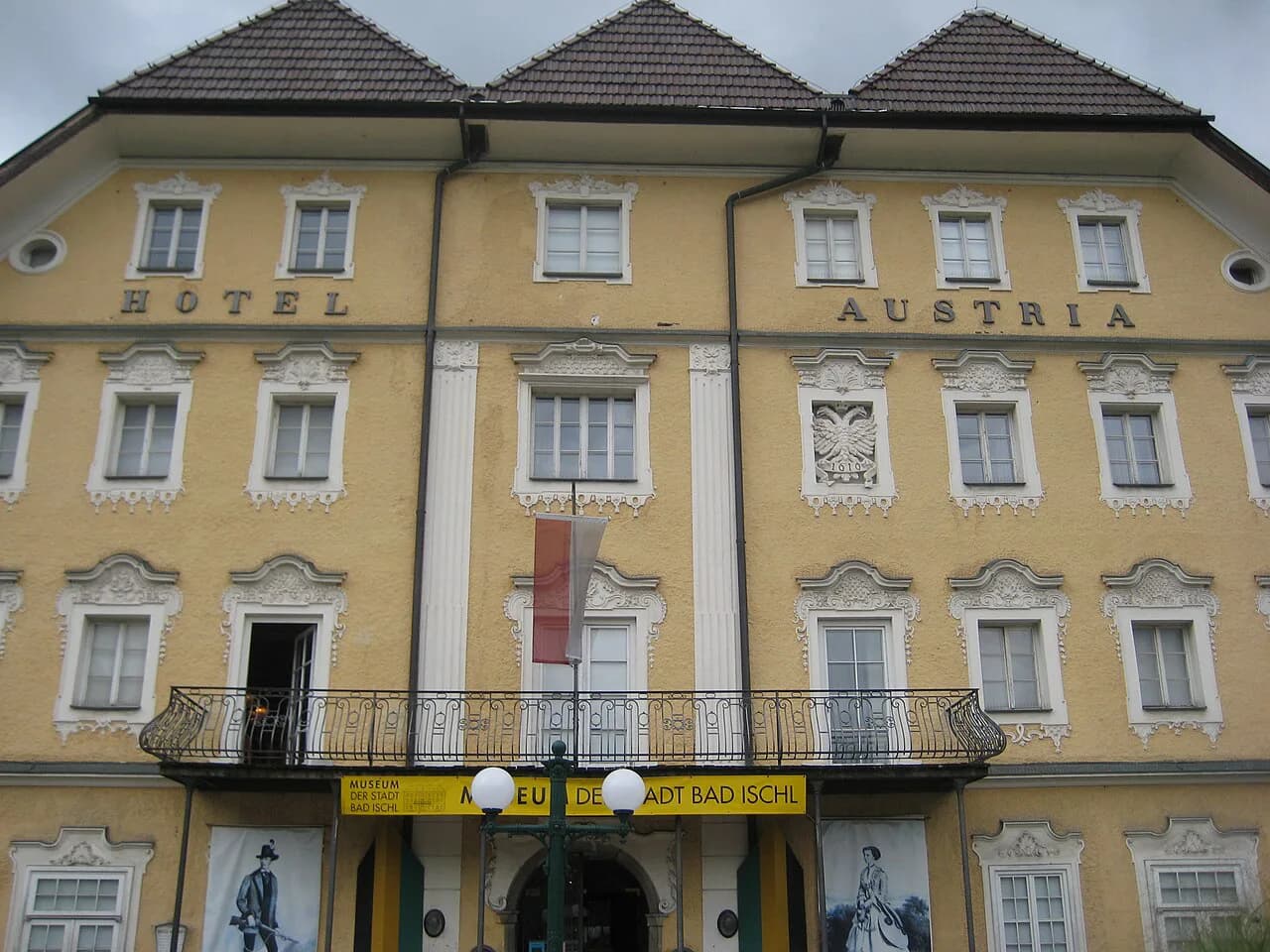
Stadtmuseum Bad Ischl: Inside the Hotel Austria Museum

The Stadtmuseum Bad Ischl is the town-history museum inside the former Hotel Austria at Esplanade 10 in the center of Bad Ischl. It reopened in July 2024 with a completely reconceived permanent exhibition after two years of renovation, so anyone who saw the old displays will find a different museum. This guide covers the location, the hours and closures worth planning around, the ticket tiers in euros, the fixed tour time, what the exhibition contains, and how the Lehárvilla fits alongside it.
Treat the visit as a two-hour stop rather than a full afternoon, and treat the 14:00 guided tour as the anchor for your day. The museum's network listing sets out the adult, student, senior and family tiers plus a combi ticket that covers the Lehárvilla as well.
What the Stadtmuseum Bad Ischl is, and why the building matters
The museum is run by the Museen der Stadt Bad Ischl, which also operates the Lehárvilla, and it is housed in a building with its own history. Before it became a hotel it was a Salzfertigerhaus, the home of the Seeauer family, a salt-trading household. From the 1820s Archduke Franz Karl and his wife Archduchess Sophie, the parents of Emperor Franz Joseph, spent their summers in the house.
The house later operated as the Hotel Austria and accommodated summer visitors and spa guests before the city acquired it in 1982 with support from the province of Upper Austria. A town museum opened on the site in 1989, and the building's own biography is woven into the current exhibition rather than displayed as a side note.
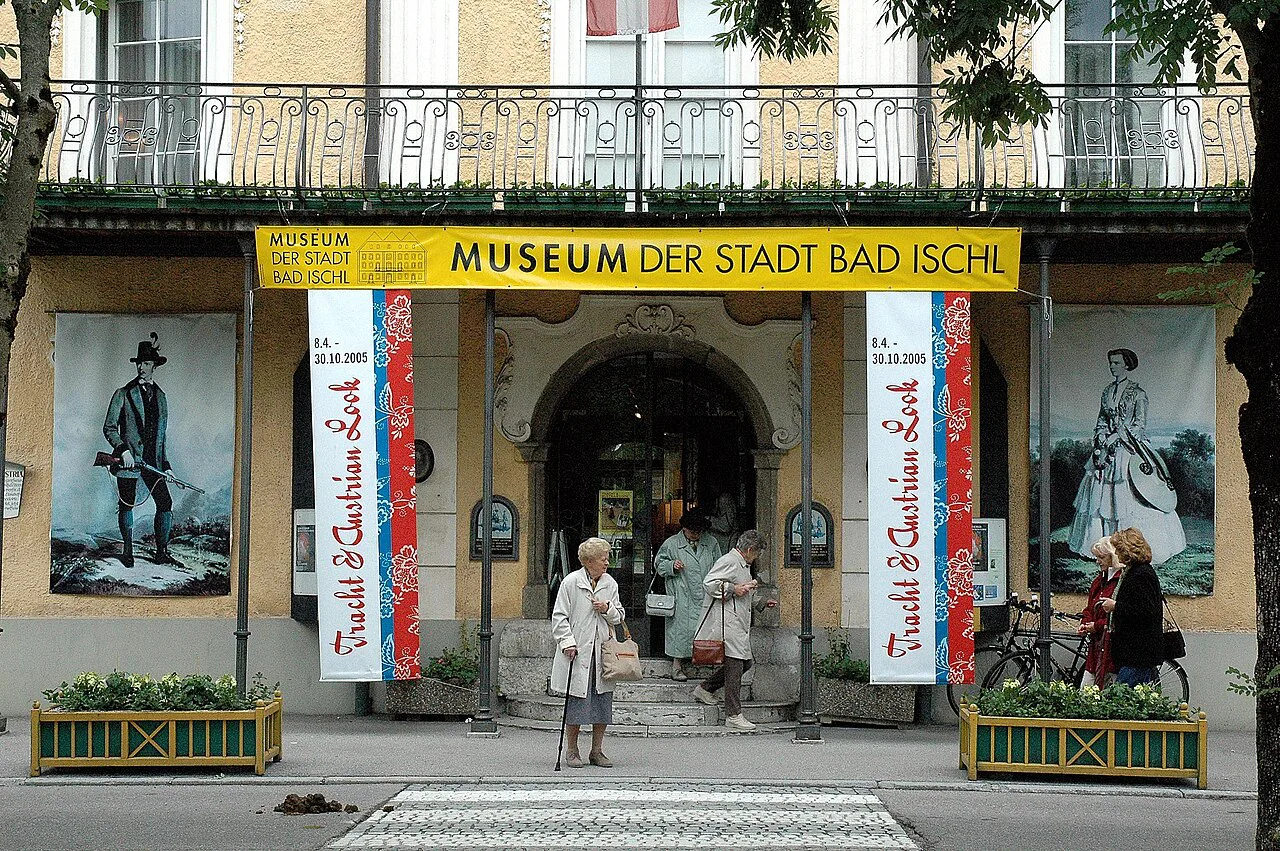

Where it sits on the Esplanade, and how to reach it
The address is Esplanade 10, 4820 Bad Ischl, on the riverside Esplanade in the town center. The museum works easily as a first stop before you fan out to the Kaiservilla or the Lehárvilla. The building is a historic house rather than a modern block, and its own past as a hotel is part of what the exhibition explains.
For the surrounding sights, the Kaiservilla Bad Ischl and the Kurpark Bad Ischl are the natural companions to a town-history visit, and the Pfarrkirche Bad Ischl and the Kalvarienberg Bad Ischl are both within walking distance if you want to continue a town-history thread after the museum.
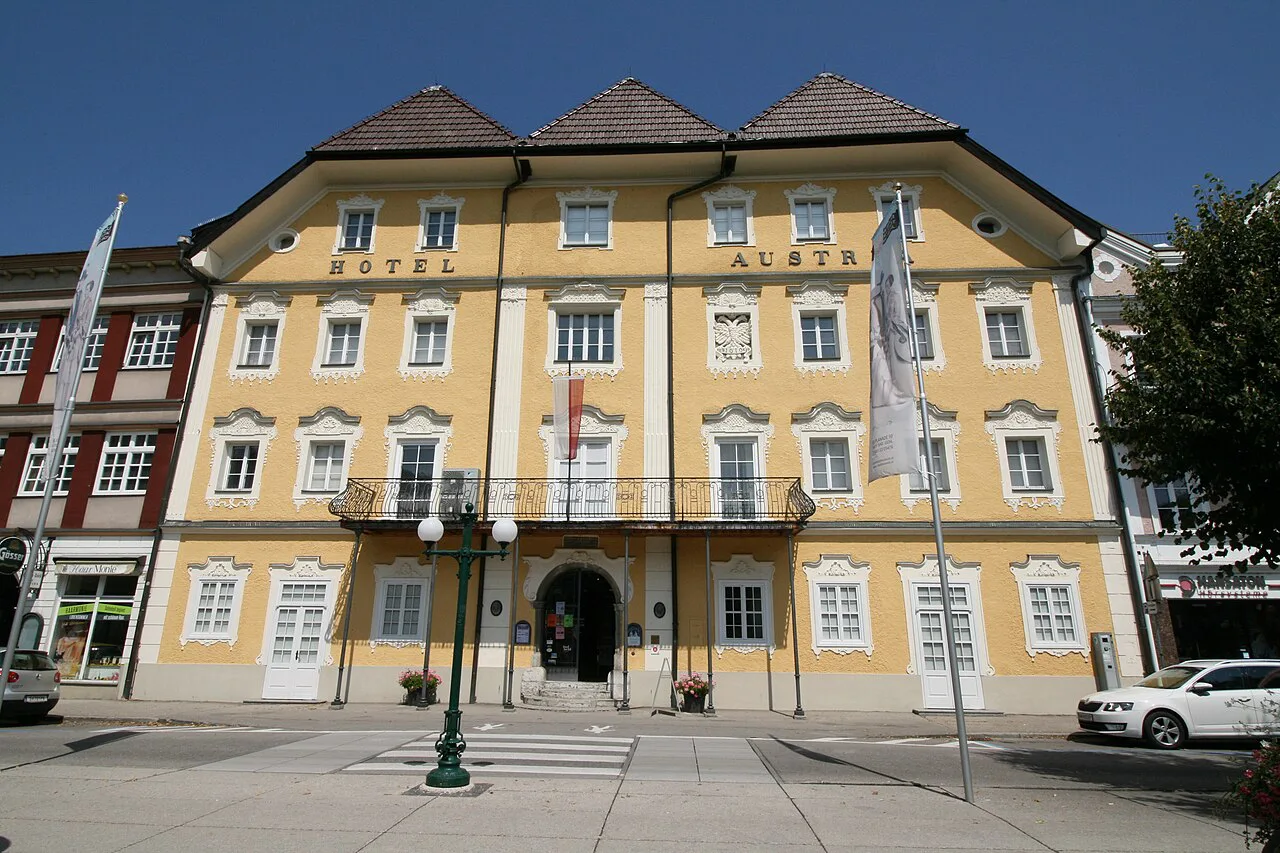

Opening hours, Tuesday closures and the 14:00 tour
The Hotel Austria museum is open Monday and Wednesday through Sunday from 10:00 to 17:00 and is closed on Tuesdays. Guided tours run at 14:00 on Monday and Wednesday through Sunday, the days the museum is open, and they last about an hour. On 24 and 31 December the museum closes early at 15:00, and it stays shut on 8, 25 and 26 December and on 1 January.
Groups of ten or more can book visits outside these hours, and the museum can also be booked for group tours during the day. If you are relying on the 14:00 tour, plan the rest of the afternoon around it rather than trying to squeeze in both the Kaiservilla and the Lehárvilla first.
Ticket prices in EUR, family and student rates, and the Lehárvilla combo
The adult ticket is 10.00 EUR, with group rates from ten people at 9.00 EUR per person. Children and teenagers up to 14 are free, students and young people aged 15 to 26 pay 4.00 EUR, and seniors pay 8.00 EUR. A family rate covers parents with children up to 14 at 8.00 EUR per parent, and the same 4.00 EUR reduced rate applies to people with disabilities and to members of emergency and blue-light organizations.
A guided tour of 60 minutes costs 3.00 EUR per person on top of entry, with a group size of between ten and 25 people, and a tour outside opening hours costs 6.00 EUR per person for groups of at least ten. The combi ticket with the Lehár-Villa, which includes a guided tour there, costs 20.00 EUR and is valid for one entry to each house within a year. Ischl Card, Salzkammergutcard and Kurkarte holders get reductions, so bring the card if you have one.
Inside the permanent exhibition: 7,000 years of Salzkammergut history
The permanent exhibition, titled Hotel Austria. Willkommen im Salzkammergut, was newly conceived by Herta Neiß and Michael John and covers roughly 7,000 years, with the 19th and 20th centuries as its main focus. The rooms connect the town's story to the wider region and to world events, running from salt production and the beginnings of the spa and summer resort through the railway era and famous guests to present-day life in Bad Ischl.
The presentation mixes scholarly content with staged scenery and multimedia tools, and a separate section called the Wunderkammer der Vereine looks at local customs and the volunteer work of Ischl residents. Temporary special exhibitions run alongside the permanent display, so ask at the desk or check the museum's own page for what is on during your dates.
Imperial Ischl: Franz Joseph and Elisabeth's engagement and the summer resort era
The building's most quoted moment is the engagement celebrated here in 1853 between the young Emperor Franz Joseph and Elisabeth, Duchess in Bavaria. That link between the imperial house and the spa town is the starting point for the museum's treatment of the Kaiserzeit, when the spa, the summer resort and the emperor's regular presence shaped Bad Ischl's boom.
Franz Joseph I and Elisabeth thread through the display as recurring figures, but the exhibition also sets them within a broader picture of spa doctors, visiting artists and the hotel trade that grew around them. The story reaches beyond Bad Ischl to the multinational Habsburg state, which explains why a small Salzkammergut town could become a seasonal capital.
The darker chapters the exhibition does not skip
The exhibition addresses difficult periods directly, including the First World War and the Nazi era, alongside the polished image of operetta evenings and summer society. The declaration of war on Serbia in 1914 was decided in Bad Ischl, and the museum presents that decision as part of the town's history rather than leaving it out.
Instead of ending with the death of Franz Joseph, the narrative now runs to the present, which means the darker chapters and the postwar decades are treated as part of the same story. Allow time for those rooms; they reward slower reading rather than a quick pass through the imperial displays.
The Lehárvilla as a companion visit: tours only, seasonal hours
The Lehárvilla at Franz-Lehar-Kai 8 is the second house of the Museen der Stadt Bad Ischl, and it is visitable only on a guided tour, with a maximum group of 15 people. From April to October it is open Tuesday to Sunday from 10:00 to 17:00, and from November to March only on Thursday and Friday from 10:00 to 17:00. It closes on 8, 24, 25, 26 and 31 December and on 1 January.
Franz Lehár bought the villa on the Traun in 1912 and kept it for 46 years, and he left it to the town on the condition that it be preserved unaltered and kept accessible. The restored villa gives an insight into the summer-resort world of the late 19th and early 20th centuries through his own working and living rooms. Because tours are the only way in, check the tour times on the day before you build an afternoon around the villa.
Read the Lehár Villa Bad Ischl guide before you commit, since the tour-only access and the shorter winter week decide whether it fits the same day as the town museum.
How much time to allow, and nearby sights
Two hours is a sensible allowance for the Hotel Austria museum including the 14:00 tour, and a morning or mid-afternoon arrival fits best if you want to avoid the tour crowd. The Esplanade itself is a short riverside walk, and the Kurpark is within a few minutes, so you can pair the museum with a stroll without a car.
For a fuller picture of the town, the Salzwelten Bad Ischl and the Siriuskogl Bad Ischl lie outside the immediate center, while a stop at Zauner Bad Ischl is a natural way to end the afternoon. The Bad Ischl Attractions: 9 Visitor Guides page collects the other sights so you can decide which ones deserve a slot.
Which ticket and which afternoon should you book?
Choose the 10.00 EUR adult ticket if you have a single afternoon, because the 14:00 tour slots into the rhythm of the day and adds context for an hour of your time. Choose the 20.00 EUR combi if you also plan to see the Lehárvilla, since one ticket then covers both houses within a year.
Confirm the current hours and tour times on the museum's own page the week you travel, then build the day around the Tuesday closure and the fixed 14:00 start. That way the museum anchors a Bad Ischl afternoon instead of being squeezed between the Kaiservilla and the Kurpark.
Frequently Asked Questions
What did Sissi have to do with Bad Ischl?
Elisabeth, Duchess in Bavaria, later known as Sisi, celebrated her engagement to the young Emperor Franz Joseph in the house that is now the Stadtmuseum Bad Ischl. The building was then a salt-trading family home where the imperial parents spent summers, and that 1853 engagement is why the display treats the imperial connection as part of the town's history.
When do tours of the Stadtmuseum run?
Guided tours of the Hotel Austria museum start at 14:00 on Monday and Wednesday through Sunday, the days the museum is open, and last about an hour. The museum is closed on Tuesdays, and tours of the separate Lehárvilla run only as guided visits.
Do I need to book the Stadtmuseum in advance?
Individual visitors can walk in during opening hours without reserving a slot. Groups of ten or more can arrange guided tours, including visits outside standard hours, so a group should contact the museum ahead of time rather than turning up and hoping for space.