
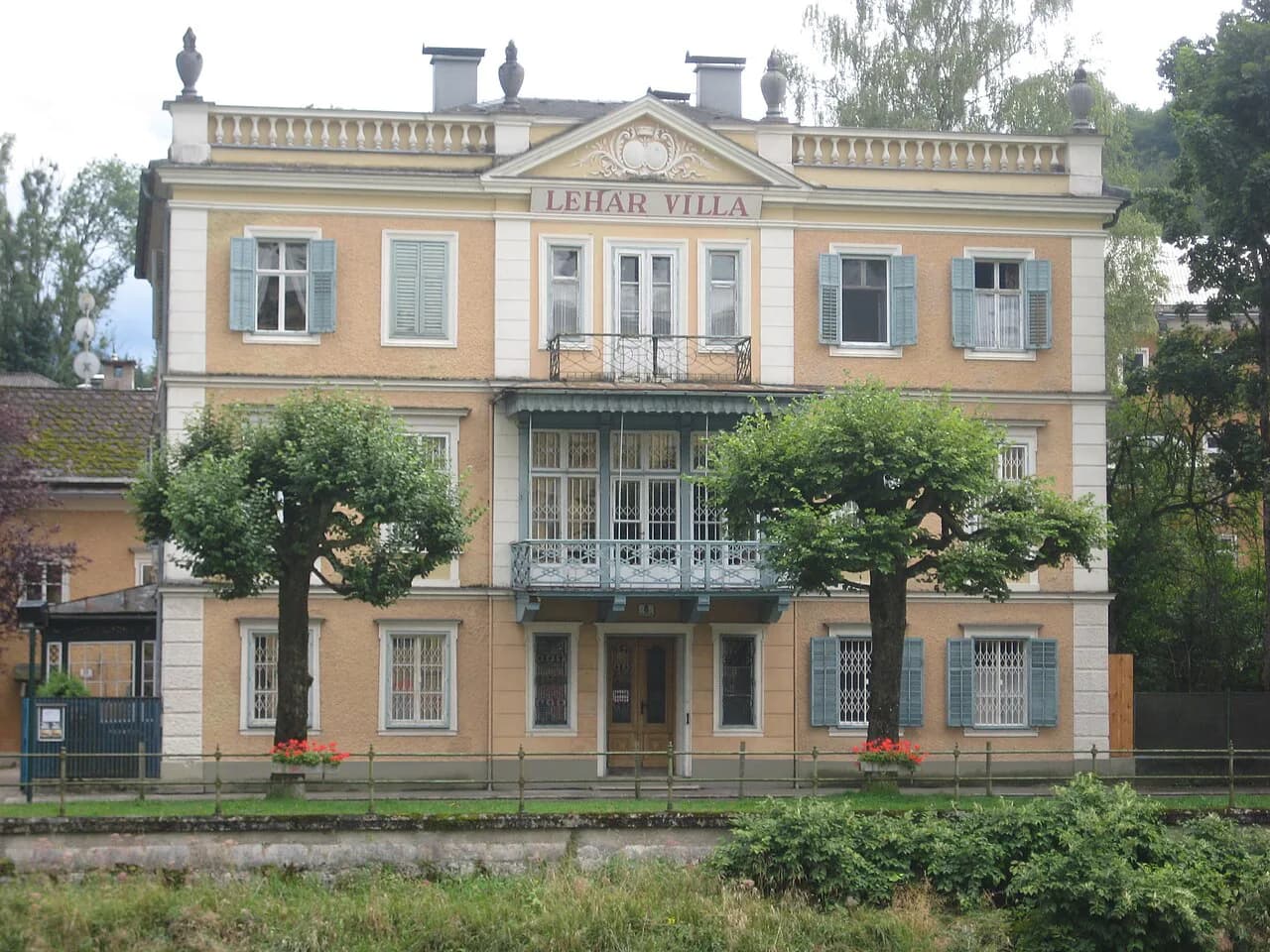
Lehár Villa in Bad Ischl: What to See Inside Franz Lehár's House

The Lehár Villa in Bad Ischl can be seen only on a guided tour, so the tour schedule — not the ticket desk — decides your day. The house at Franz-Lehar-Kai 8 is where the operetta composer Franz Lehár spent his summers, and it holds his working rooms and his own art and antiquities collection rather than a generic composer display.
This guide covers where the villa sits along the Traun, how to reach it on foot from the town center, what the rooms contain, which seasons and days it opens, and how to combine it with the Hotel Austria museum nearby. Ticket prices are not set out here; the Museen der Stadt Bad Ischl, which runs both houses, is where to confirm them with your tour booking.
What the Lehár Villa is
Franz Lehár first came to Bad Ischl in 1901 as a military bandmaster and met his future wife Sophie there; in 1912 he bought the villa on the Traun with its outbuildings and contents. He kept the house for 36 summers and completed works including “Paganini,” “The Tsarevich,” “The Land of Smiles” and “Giuditta” in it.
In his will Lehár left the villa and the rear outbuilding to the town of Bad Ischl on the condition that it become a Franz Lehár museum and that the furnishings stay as he left them. That condition shapes what you see: the furniture, carpets and works of art are the composer's own, kept in place rather than rearranged into a conventional exhibition.
Guests who passed through the house included Lehár's close friend Richard Tauber, who lived there for a time before buying his own villa farther along the Traunkai. The composer's grave is in the local cemetery, and Bad Ischl made him an honorary citizen shortly before his death in October 1948. Reading the villa as a summer home first, and a museum second, gets you closer to how it works as a visit.

Where the villa is and how to reach it
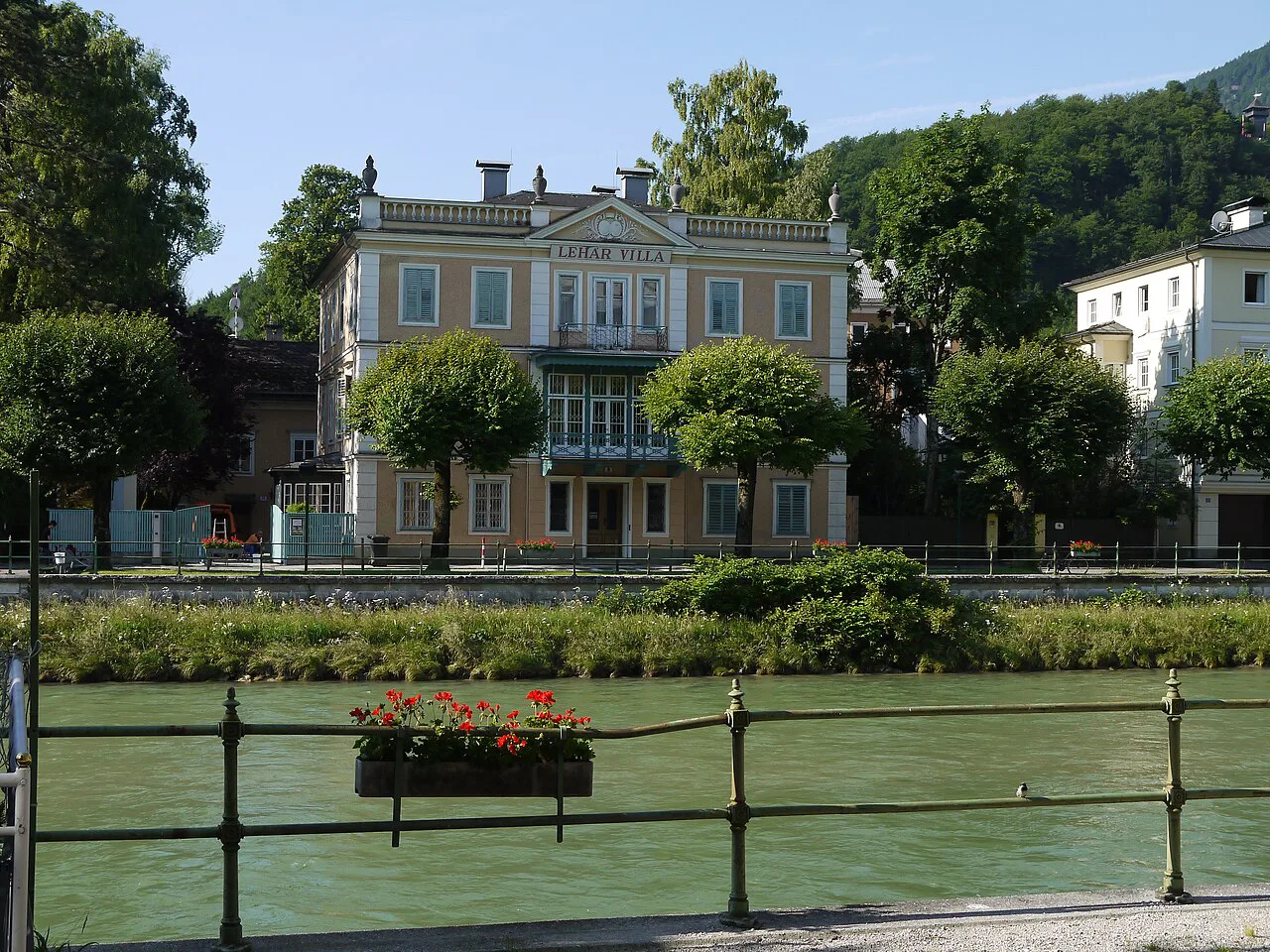
The address is Franz-Lehar-Kai 8, on the Traun in Bad Ischl, a short walk from the compact center where the Kaiservilla Bad Ischl and the parish church stand. Arriving on foot is the simple option: park once in the center and cover the villa, the riverfront and the town's other sights without moving the car.
Trains and buses run to Bad Ischl station, and the walk from there through town to the Traun takes only minutes; the Bad Ischl Attractions: 9 Visitor Guides page maps the sights around that core. If you are driving in from the Salzkammergut lakes, plan the villa as a stop inside town rather than a detour out of it.

Visits are by guided tour only
Entry to the Lehár Villa is possible only with a guided tour, and the maximum group size is 15 people. The cap makes the tour, not opening hours alone, the thing to plan around, so arrive with time to spare before your slot.
Group visits outside normal opening hours can be arranged on request, with a minimum of 10 people in both of the town's museum houses. If you are traveling as a small group, that threshold is worth knowing before you assume a private time slot is out of reach.
What you see inside
The tour takes you through Lehár's private working and living rooms and his extensive collection of art and antiquities, displayed in the house where he assembled it. Look for the everyday working setup of a composer who wrote at home in summer, and for the objects he chose to surround himself with rather than for glass-case biography.
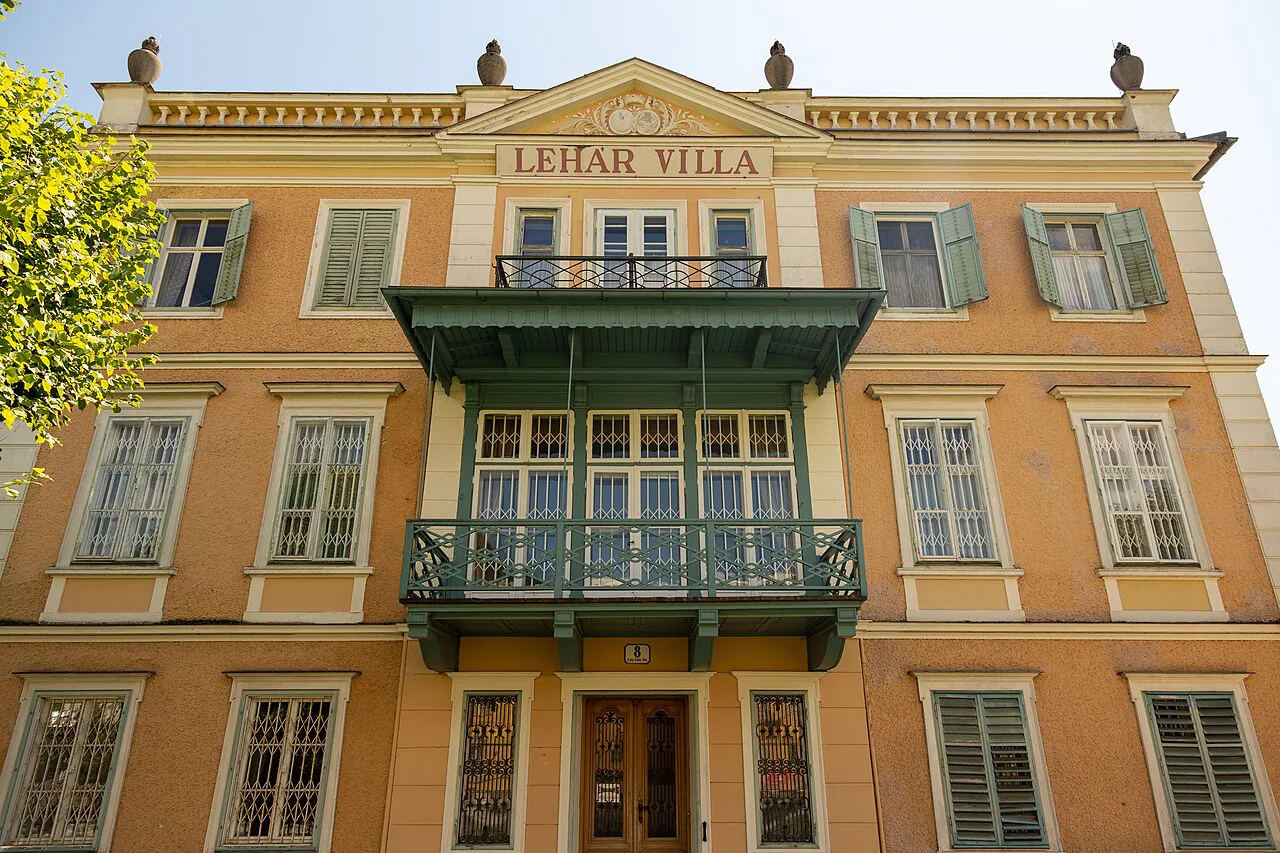
The 19th-century villa was rebuilt and given an extra story in 1888 for the Duke of Sabran-Pontevès, and a gable-shaped tympanum with a balustrade of vases was added on the north façade, deviating from the building plans. The house is therefore worth a look from the riverbank as well as from inside, where the rooms carry the collection.
Restoration and the “Dialogue with Franz” approach
After extensive restoration the villa reopened in May 2024, and the work was guided by the aim of showing the building and its furnishings as Lehár left them. The exhibition title “Dialogue with Franz” describes the method: questions about unclear points and necessary technical improvements were worked through as if in conversation with the builder.
For a visitor, that means the house reads as a preserved home rather than a refurbished one, with the historic fabric and the collection treated as a single object. The rooms are those of a private residence and the tour group is capped, so the experience turns on the guide and the time slot you take.
Opening seasons and days
Opening follows two patterns. From April to October the villa opens Tuesday to Sunday, 10:00 to 17:00; from November to March it opens only Thursday and Friday, same hours. The winter window is narrow, so a Tuesday or Saturday visit between November and March will not work.
The villa stays closed on December 8, 24, 25, 26 and 31, and on January 1. The Hotel Austria house keeps a different calendar, so check each house separately before you set a winter day.
Because every visit runs as a guided tour inside those hours, plan around a departure rather than the ticket desk; the museum office confirms the day's tours and current ticket prices when you book. Confirm the details for your date before you build the rest of the day around the villa.
How long to allow
Treat the villa as one stop rather than a half day: a house tour with a 15-person cap moves at the group's pace, and the rooms are those of a private residence, not a large museum. Leave the rest of the day for the town.
Build in slack before your slot. Since entry is only with a guide, a missed departure means waiting for the next one, so use the time for a walk along the Traun and the center's squares rather than losing the afternoon.
Combining the villa with the Hotel Austria museum
The Museen der Stadt Bad Ischl also runs the Hotel Austria at Esplanade 10, the town museum, and its guided tours run Monday and Wednesday to Sunday at 14:00. The house is closed on Tuesdays and on December 8, 25, 26 and January 1, and opens until 15:00 on December 24 and 31.
The two houses follow different calendars — the Hotel Austria tour is fixed at 14:00, the villa's hours change with the season — so sequence them around the fixed tour. The Stadtmuseum Bad Ischl page covers the town collection; the Franz Lehár house is the personal counterpart to it.
Nearby after the tour
The Kaiservilla, the summer residence tied to Emperor Franz Joseph, is the obvious second stop in town, and the walk between the two houses is short. The Kurpark Bad Ischl and its music pavilion make an easy pause if you are waiting for a tour time.
For a view over the town, the Siriuskogl Bad Ischl is the local lookout, and the Kalvarienberg Bad Ischl offers a short climb with stations and terracotta figures. Neither substitutes for the villa; they fill the hours around a fixed tour slot.
Book the tour slot before the rest of the day
The Lehár Villa rewards a visit planned backward from the tour: pick a day that fits the April–October or November–March pattern, confirm the departures and ticket price with the Museen der Stadt Bad Ischl, then fill the rest of the day with the Hotel Austria's 14:00 tour and a walk along the Traun.
Travelers who want the town's wider context can start from Bad Ischl Attractions: 9 Visitor Guides before fixing dates, since the villa, the Kaiservilla and the town museum each keep their own hours.
Explore more Bad Ischl guides
Frequently Asked Questions
Do I need to book the Lehár Villa in advance?
Every visit runs as a guided tour with a maximum of 15 people, so a place on a departure is what you need rather than a general admission ticket. Contact the Museen der Stadt Bad Ischl, which runs the house, to reserve a slot and confirm the current price for your date.
Can I visit the Lehár Villa outside opening hours?
Group visits outside normal hours can be arranged on request, with a minimum of 10 people in both of the town's museum houses. Smaller parties should plan around the regular tour departures instead.
Is the Lehár Villa open in winter?
From November to March the villa opens only on Thursday and Friday, 10:00 to 17:00, compared with Tuesday to Sunday from April to October. It is closed on December 8, 24, 25, 26 and 31, and on January 1.