
Kammerhofmuseum Gmunden (K-Hof): What to See Inside

The Kammerhofmuseum Gmunden, called the K-Hof, is the town's home for Gmundner Keramik and local history, set inside the historic Kammerhof building in the center of Gmunden. Allow about an hour to ninety minutes: the ceramic collection and the Klo & So display are the fixed core, while the gallery spaces change with each exhibition. This guide covers what sits where, which parts are permanent, and how the museum fits a walk through Gmunden.
What the Kammerhofmuseum (K-Hof) Is
The K-Hof is a town museum with two identities under one roof: a permanent collection built around Gmunden's pottery heritage and a program of temporary art and history exhibitions. Reports on the museum's own displays describe it as the place where the town's ceramic tradition is presented, including a dedicated hall for the classic green-flamed ware. Treat it as a compact local museum rather than a regional blockbuster, and you will get the proportion right.
Because exhibitions rotate, the sensible approach is to check what is on before you commit an afternoon to it. The museum's program has ranged from ceramics shows to contemporary art and local-history displays, so the fixed highlights and the temporary ones deserve separate planning.

The Kammerhof Building in the Town Center
The museum occupies the Kammerhof, a protected historic building in Gmunden's old center, which means the visit is as much about the building as the cases inside. The Kammerhof is recorded as a protected monument, and the museum's own historic sanitary fittings are part of what it preserves and interprets.

Its position in the center puts it within easy walking distance of the lakefront and the town's other landmarks, so it slots naturally into a half-day in town rather than requiring its own trip. Pair it with the Rathaus and the parish church, both a short walk away, and you have covered the historic core without a car.

Gmunden Ceramics: The Green-Flamed Hafner Ware
The collection's anchor is the white-glazed, green-flecked and flamed Hafner ware that has become the signature of Gmundner Keramik. A dedicated hall at the K-Hof presents a set of especially old and fine pieces spanning four centuries, drawn from the museum's holdings to show how consistent the pattern has been.
The display traces the ware back to continuous production from 1625, and the museum's presentation notes that the green-flamed pattern is exported worldwide today and turns up on tables in films and television series. That context is what makes the ceramics worth more than a glance: you are looking at a living local industry with a four-century run, not a nostalgic relic.
If the pottery is your main reason for coming, see the museum's ceramics first and then compare it with the working side of the trade at the Gmundner Keramik Manufaktur, where the same patterns are made and sold. The two visits reinforce each other: one shows the history, the other the current production.
Changing Exhibitions and the K-Hof Gallery
Beyond the permanent collection, the K-Hof runs temporary exhibitions in its gallery spaces, ranging across ceramics, contemporary art and local history. Past programs have included ceramics prizes and group shows by regional artists' associations, alongside thematic exhibitions that mix sculpture, photography, archive material and video.
That means the exhibition you find will differ from any description written earlier, so the current program is the thing to confirm before you go. The gallery is the part of the museum most likely to justify a return visit, and also the part most likely to disappoint if you arrive expecting a specific show.
The Klo & So Display of Historic Sanitary Objects
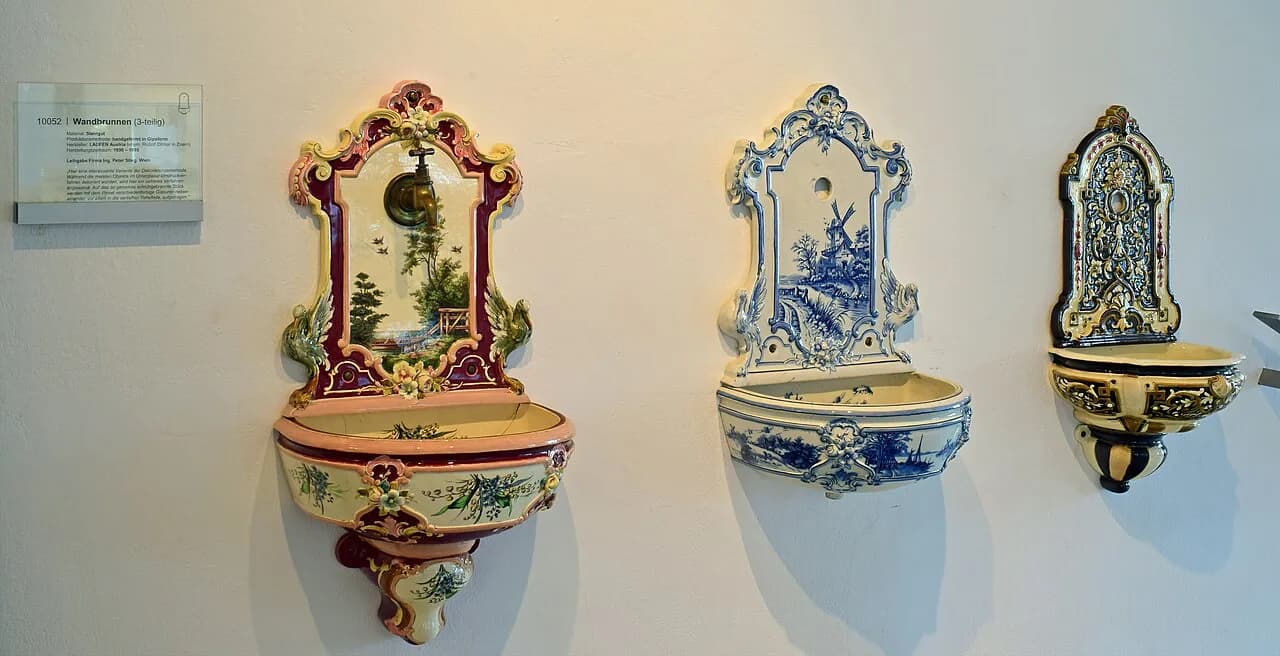
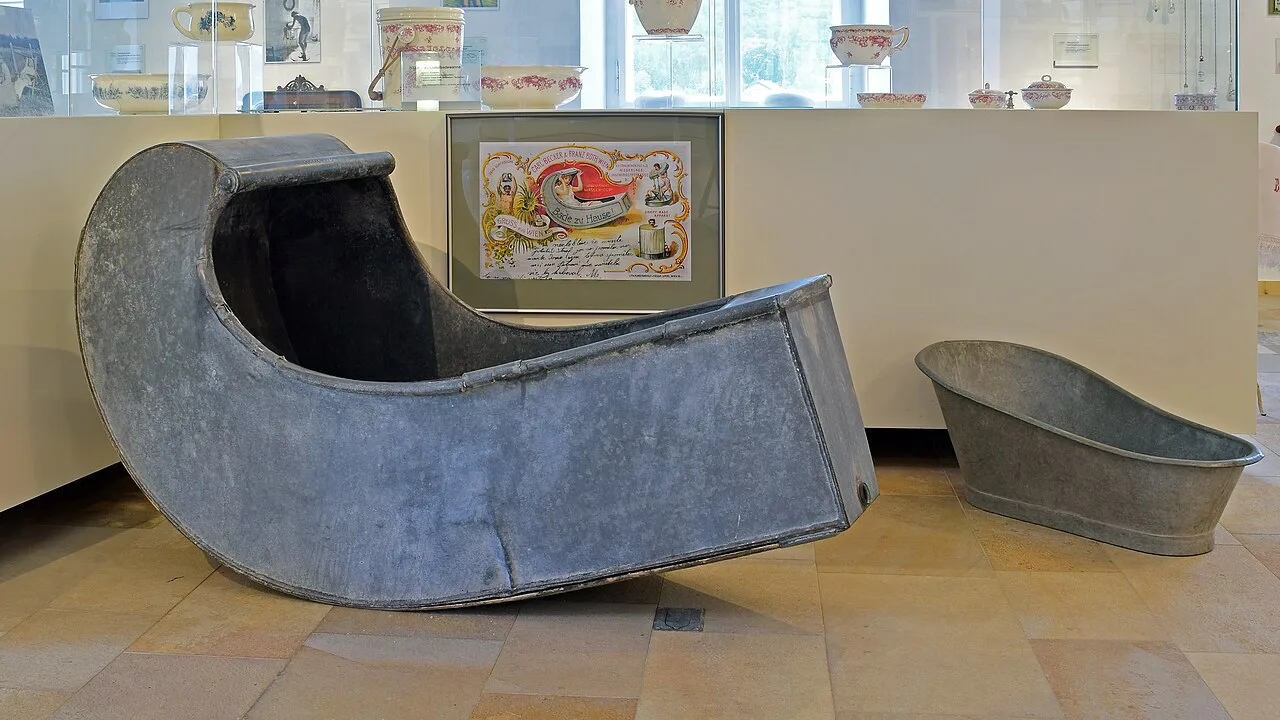
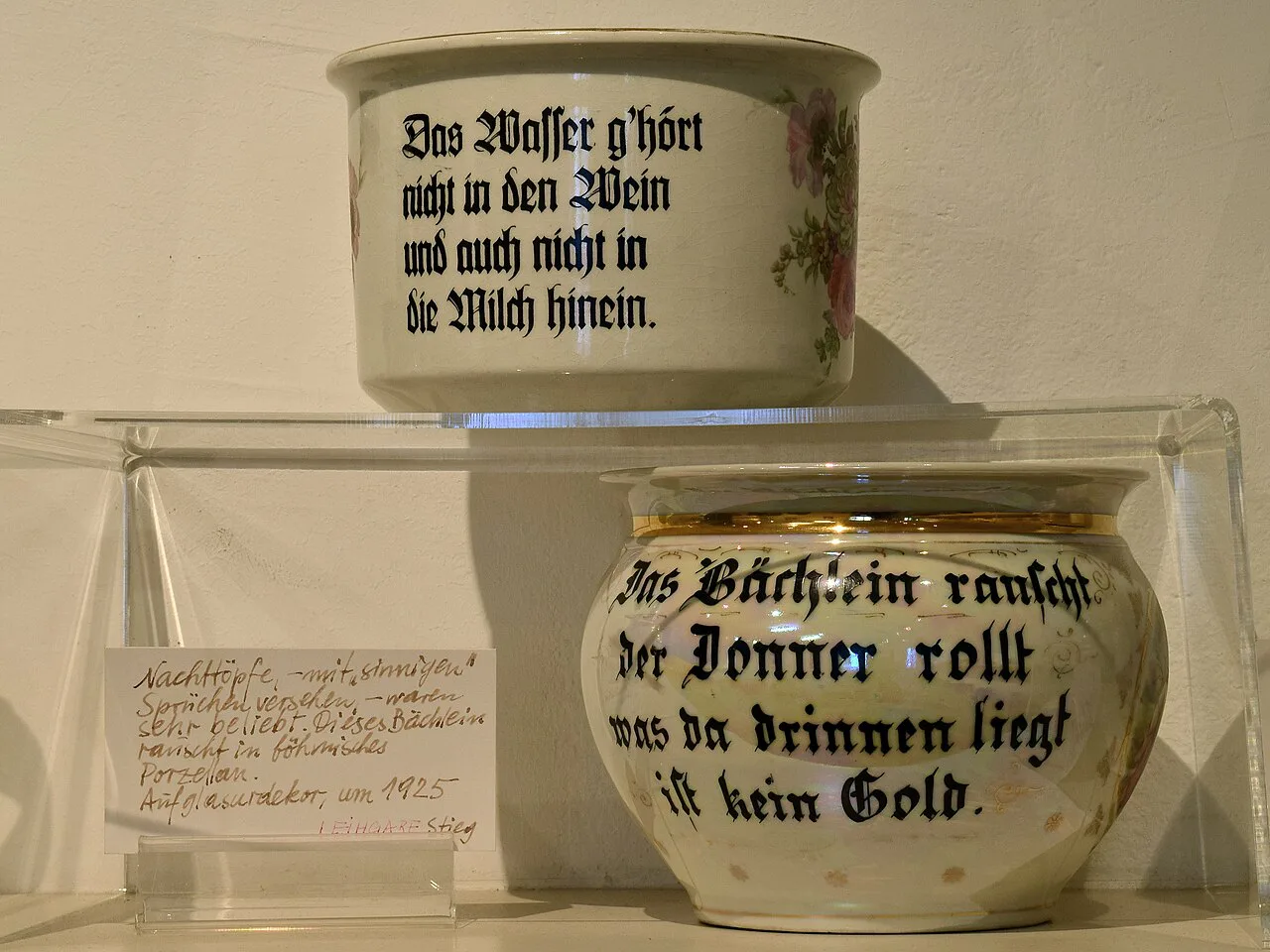
One of the museum's more unusual permanent features is Klo & So, a display of historic sanitary objects held in the Kammerhof. It has been re-staged with contemporary artistic positions added to the historical fittings, which turns a collection of washbasins and WCs into an exhibition about domestic life and design.
It is the kind of small, odd display that gives a town museum its character, and it takes only a short time to see. Go in expecting a compact cabinet of curiosities rather than a design museum, and it earns its place in the visit.
Other Collection Highlights: Clay Nativity Figures
The collection also holds the Loahm-Manderln, small clay nativity figures made since the 18th century in the countryside around Gmunden, especially in the Viechtau and at Traunkirchen. They are naive rural work, a plain counterpart to the refined carved figures that wealthier townspeople commissioned, and the museum has received a large group of them about two centuries old.
For a visitor, these figures are the best window onto the rural Salzkammergut behind the polished lakefront, and they connect the ceramics collection to the farming and craft life of the hinterland. Look for them alongside the pottery rather than treating the museum as a single-subject ceramics hall.
How Long to Allow Inside
Plan on an hour for the ceramics hall, Klo & So and the nativity figures, and add thirty minutes if a temporary exhibition interests you. The museum is small enough that two hours is a generous upper limit; anyone spending longer is reading every label.
The honest trade-off is that this is a town museum, not a destination collection, so it rewards curiosity about Gmunden specifically more than general museum-goers. If your time in town is short, the ceramics hall and Klo & So are the two things to prioritize.
Tickets, Opening Hours and Seasonal Closures
Opening days at the K-Hof have followed the exhibition calendar rather than a year-round fixed schedule, and the museum has run Wednesday-to-Sunday, 10am-to-3pm hours during past shows. Because that pattern shifts with each program, and because no admission price is given in the available reports, confirm both the current hours and the ticket price directly with the museum before traveling.
Closed days are most likely to catch you out on a Monday or on a changeover between exhibitions, so check the dates of the show you want to see rather than assuming the doors are open. If a specific exhibition is your reason for the visit, verify its run first and build the rest of the day around it.
Getting There on Foot or by Train
Gmunden's center is compact, and the Kammerhof sits within the old town, so the museum is a short walk from the lakefront and the main square. If you arrive by train, the station is on the edge of the center and the walk in is straightforward; pair the museum with the Rathaus Gmunden to round out the historic core on foot.
Driving into Gmunden means dealing with limited center parking, so leave the car at the edge and walk in rather than hunting for a space near the museum. Either way, the museum works as a walking stop, not a separate excursion.
Nearby Options to Pair with the Museum
The obvious pairing is Schloss Ort, the lakeside castle reached by a short causeway, which gives you the town's best-known view and a contrasting kind of sight. Do the museum first for context on the ceramics and local life, then walk the lakefront to the castle.
The Esplanade along the Traunsee shore is the natural place to end the walk, with cafes facing the water and the boat landings nearby. If you have a clear afternoon, the Grünberg cable car above town offers a different angle on the lake and the Salzkammergut, though it runs seasonally rather than year-round.
Is the K-Hof Worth an Hour of Your Gmunden Day?
Yes, if you want to understand why Gmunden calls itself a ceramics town: the green-flamed ware hall and the clay nativity figures give an hour of local context that the lakefront alone does not. Skip it if your day is built around Schloss Ort and the lake, and use the time on the water instead.
Either way, check the current exhibition and opening days before you set out, since the gallery program and the museum's schedule change with it.