
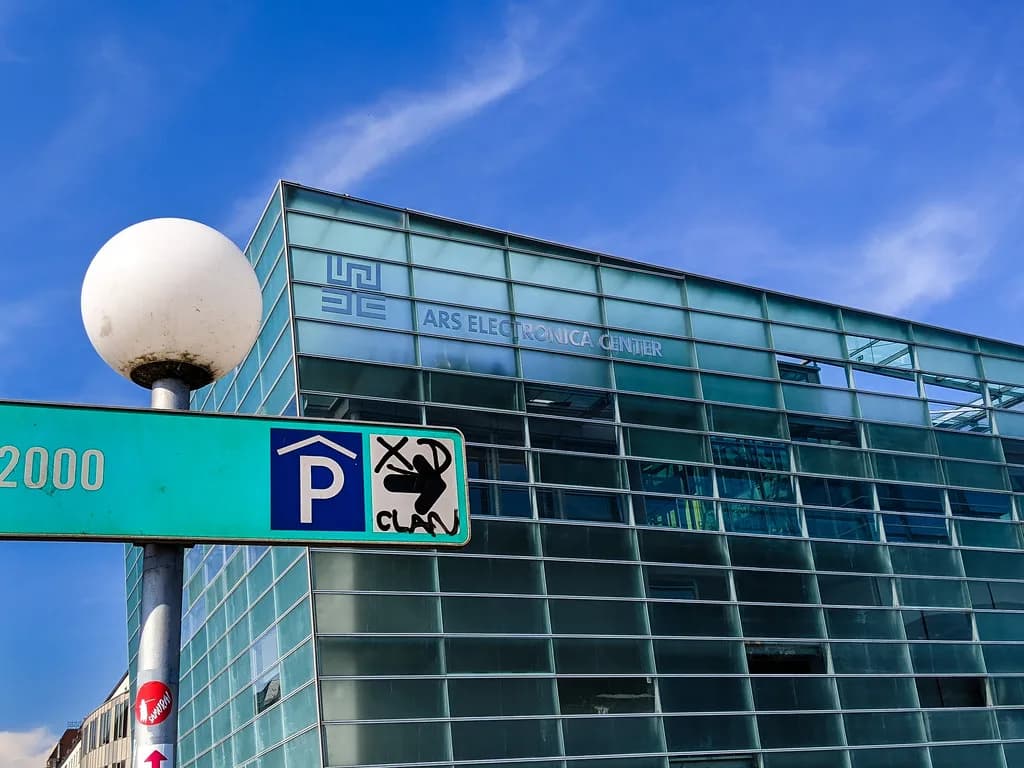
Ars Electronica Center Linz: What to See Inside the Museum of the Future
The Ars Electronica Center is Linz's museum of the future, and it earns the name with content rather than branding: AI and neuroscience, robotics, autonomous mobility, genetic engineering and biotechnology, plus immersive projection in Deep Space 8K. It sits on the north bank of the Danube at Ars-Electronica-Straße 1. This guide covers what is inside, which spaces deserve your time, how long to allow and how to fit the museum into a walking day.
What the Ars Electronica Center is and where it sits
The building is the public museum arm of Ars Electronica, an Austrian institute for new media art founded in Linz in 1979; the same organization runs the annual festival, the Prix Ars Electronica competition and the Futurelab studio. For a visitor, the practical point is that the Center is a year-round attraction with its own exhibitions and program, separate from the festival. Address it to Ars-Electronica-Straße 1, 4040 Linz, in Upper Austria.
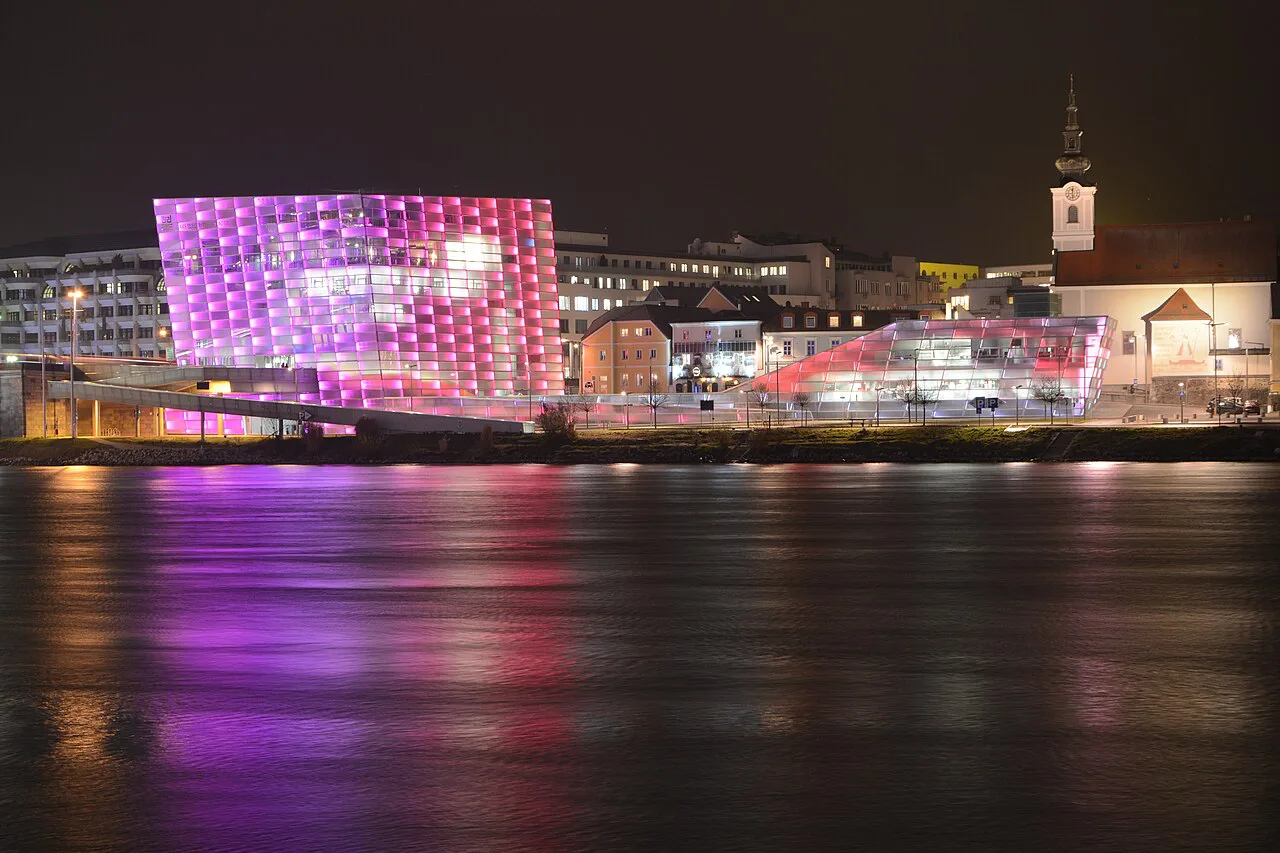
Its position is one of the best in the city for a walking route: the museum faces the Danube, with the old town directly across the water, so you can pair it with the historic center in a single loop rather than treating it as a separate trip.

How to get there from the old town
From the Hauptplatz Linz, walk north to the river and cross the Nibelungen Bridge; the museum stands on the far bank. The walk is short enough to fold into a sightseeing day, and it puts you on the embankment where the building's illuminated facade faces the water after dark. No tram or bus is needed for this crossing.
If you are coming from further out, the museum's own site publishes its address and contact details. Plan the river crossing on foot regardless, because the bridge approach is the simplest orientation. Check the museum's site for arrival instructions before a late-evening visit.

What's inside: the exhibition floors
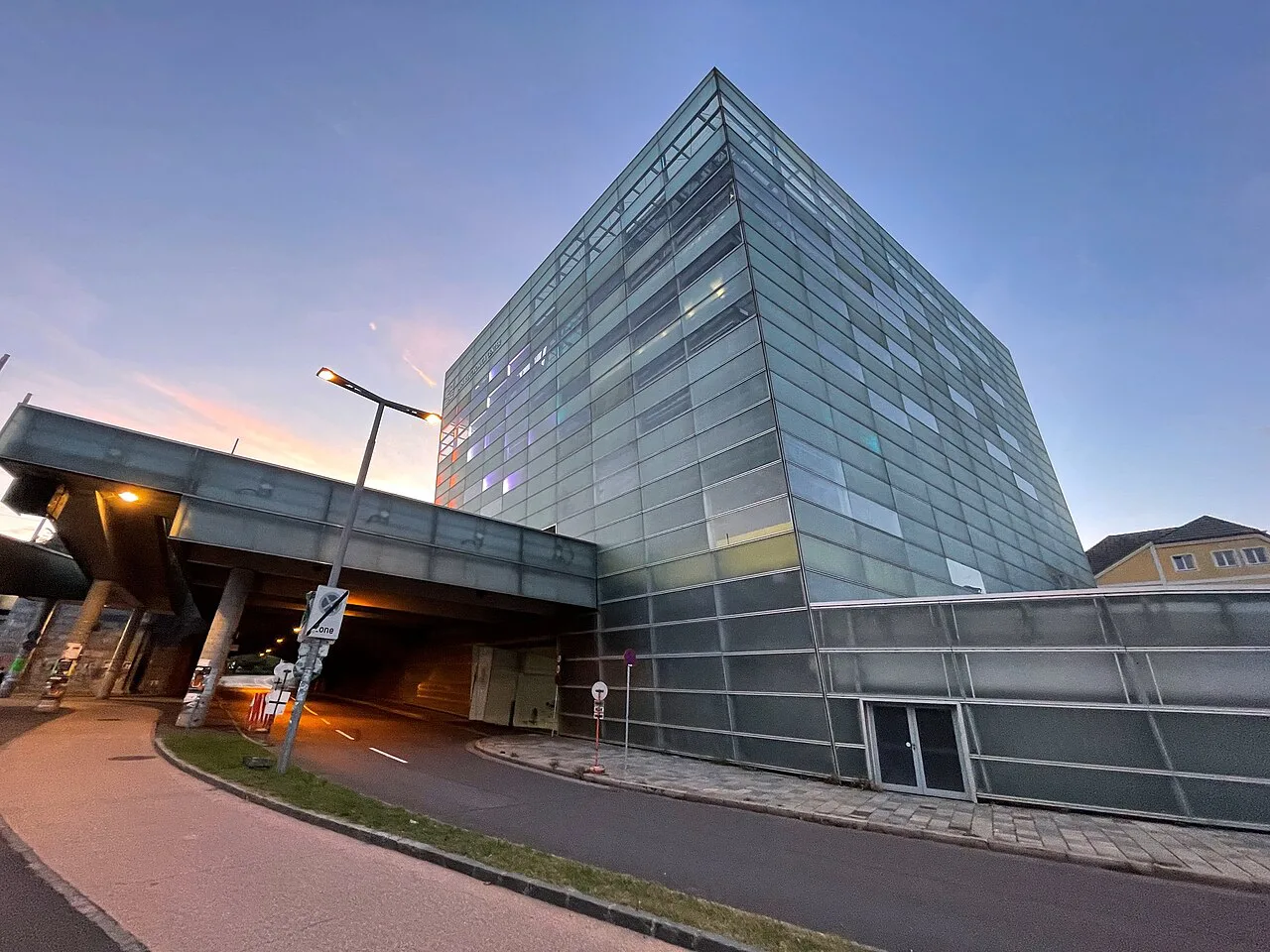
Exhibitions at the Center are organized around how technology reshapes daily life: artificial intelligence, neuroscience, robotics, autonomous mobility, biotechnology and immersive worlds all appear as themes. The tone is explanatory rather than precious, aimed at giving visitors a working attitude toward fast-moving fields. Expect interactive stations and changing temporary shows rather than a fixed historic collection.
Because much of the content rotates, the exhibitions list on the museum's own site is the reliable source for what is on during your dates. Read it before you commit a half day, since a single headline exhibition can change the character of a visit. Temporary shows sit alongside standing spaces such as Deep Space 8K and the robotics areas.
Deep Space 8K
Deep Space 8K is the Center's large-scale immersive projection space, presenting visual worlds at high resolution on walls and floor. It is the reason many visitors come, and it is a timed experience rather than something you wander into at will. Build your visit around a Deep Space slot rather than squeezing it in at the end.
The Deep Space program changes, and the Center's news page shows the range, from immersive cultural-heritage productions to new commissions. Confirm the current Deep Space program and any session times on the museum's site before you buy, since a missed slot costs you the highlight on a short stay.
RoboLab and RoboArena
Two named spaces handle humanoid robotics: in the RoboLab, machines are taken apart to show how they work, while the RoboArena is where visitors meet them face to face. The Center frames the pair around a set of questions about why engineers build human-like bodies at all. Treat them as the hands-on counterweight to the exhibition floors.
The Center scheduled an opening for the RoboLab and RoboArena on November 30, 2026, announced on its own news page, which signals that both are recent additions with evolving content. Whether they are open, ticketed separately or included with admission on your date is something to confirm on the tickets and program pages. Do not assume a fixed configuration from one season to the next.
Guided tours and workshops
The Center runs guided tours and workshops as distinct formats alongside general admission, and it also publishes programs for families and for schools. A guided format suits visitors who want context on the media-art and research background rather than reading every label. Workshops suit anyone who prefers building or testing to looking.
Tour and workshop schedules change, and some run only at set times or on set days. Check the Center's program pages for what runs during your visit, and book ahead if a specific workshop is the reason for your trip.
The QUBE restaurant on the top floor
The QUBE occupies the top floor of the museum, serving regional, seasonal cooking with a focus on pastry, according to the Center. Its position makes it a sensible lunch or coffee stop without leaving the building mid-visit. That is useful if you are booking a Deep Space slot and want to avoid recrossing the bridge.
Restaurant hours and menus are separate from museum admission, so confirm service times on the Center's site before planning a meal around it. If the timing does not work, the old town across the river has alternatives.
How long to allow
Budget around three hours for the exhibitions, Deep Space and one hands-on area, and add time if you join a guided tour or workshop. A tighter visit of about two hours works if you target Deep Space plus one floor. The museum rewards a focused plan more than an exhaustive sweep.
Sequence the day so the museum comes first and the old town second, or the reverse, so you cross the Danube once in each direction rather than shuttling. A morning museum slot leaves the afternoon free for the Hauptplatz and the riverside. If you are also visiting the Lentos Kunstmuseum Linz on the south bank, split the two across different days rather than cramming both.
Tickets and opening hours
The Center publishes admission prices and opening hours on its own Tickets / Opening Hours page, which is the only place to rely on for current figures. Rates and hours can change by season, so check them in the week you plan to go rather than working from an old figure. Book around Deep Space slots where possible, since those drive the shape of a visit.
The museum also marks its anniversary year in 2026, with special programming announced on its news page, so a visit that year may include extras beyond the standing exhibitions. Confirm what is running and whether anything requires a separate ticket. Group and school visits follow their own booking routes.
Nearby after your visit
Walk back across the Nibelungen Bridge into the old town and finish on the Hauptplatz, Linz's main square, where the baroque facades and the riverside setting make an easy contrast with the museum's technology. From there the lanes around the square lead to the cathedral.
If you want more art after the Center, the Lentos Linz sits on the south bank facing the river and is a short walk from the bridge. The Linz Cathedral (Mariendom), one of Austria's largest churches, sits uphill in the old town. Both make natural continuations on foot rather than separate outings.
Should the Ars Electronica Center anchor your Linz day?
Yes, if you want one attraction that is genuinely specific to Linz rather than a church or square you could find in any Austrian town. It is also the easiest way to spend a rainy morning productively before the old town. Plan around a Deep Space slot, confirm tickets and hours on the Center's own page, and leave the afternoon for the Hauptplatz and the riverbank; for more of the city, see Linz Attractions: 5 Visitor Guides.
Explore more Linz guides
Frequently Asked Questions
Is the Ars Electronica Center different from the Ars Electronica Festival?
Yes. The Center is the museum of the future, open year-round with exhibitions, Deep Space 8K and the robotics areas. The festival is a separate annual event run by the same organization, with its own program and tickets announced on the Ars Electronica site.
How do I get to the Ars Electronica Center from Linz's main square?
Walk north from the Hauptplatz to the Danube and cross the Nibelungen Bridge. The museum stands on the north bank at Ars-Electronica-Straße 1, directly across the river from the old town.
Do I need to book Deep Space 8K in advance?
Deep Space runs as a timed experience, so check the current program and any session times on the Center's site, and plan your visit around a slot. Whether advance booking is required depends on the session and season, so confirm it before you travel.